Types Of Neon Tetras – Top Picks for Your Tank
The primary types of neon tetras include the common Neon Tetra, Cardinal Tetra, and Green Neon Tetra. These species differ in size, color intensity, and water requirements, with several selectively bred color morphs also available.
Few fish have defined the aquarium hobby quite like the neon tetra.
Since they were first introduced to hobbyists decades ago, these shimmering gems have become a staple in almost every community aquarium.
In my ten years of maintaining various aquatic setups, I have found that understanding the different types of neon tetras is the first step toward creating a eye-catching underwater landscape.
These fish belong to the family Characidae and are known for their schooling behavior and iridescent stripes.
While most people recognize the classic blue and red stripe, there is actually a surprising amount of variety within this group.
Whether you are setting up your first neon tetra aquarium fish display or looking to add some rare color morphs to a planted tank, choosing the right variety is essential for success.
At a glance: Neon tetra (Paracheirodon innesi)
- Temperature
- 72–78°F (22–26°C)
- Water pH
- 6.0–7.0
- Adult size
- 1.5 in (4 cm)
- Minimum tank
- 10 gal (20 gal for a proper school)
- Group size
- Groups of 8+
- Temperament
- Peaceful
- Diet
- Omnivore: micro pellets, flakes, frozen daphnia
- Lifespan
- 5–8 years
Keeper’s tip: Add neons only to a fully cycled, stable tank; they are among the first fish to suffer from ammonia swings.
Understanding the Primary Types of Neon Tetras
When we talk about the different types of neon tetras, we are usually referring to three distinct species found in the wild, as well as several captive-bred varieties.
Each species has evolved to do well in specific water conditions, often involving the presence of tannic acid from decaying leaf litter.
Learning to identify these fish by their physical traits, such as the presence or absence of the adipose fin, can help you provide the best care possible.
The Classic Neon Tetra (Paracheirodon innesi)
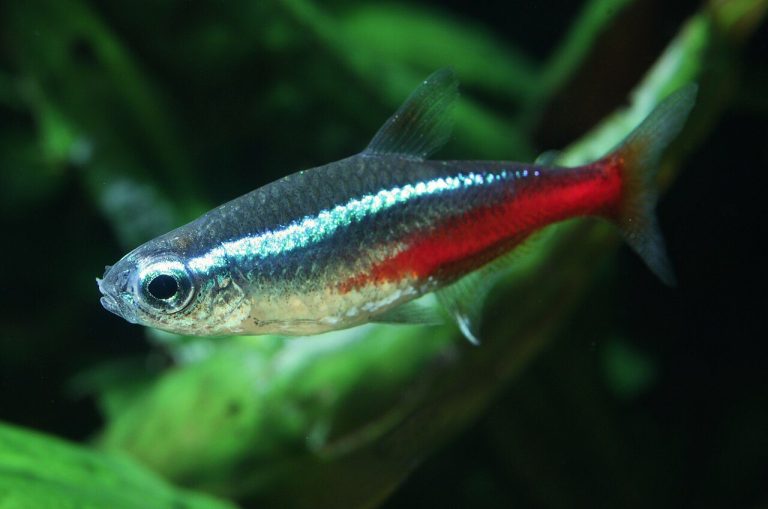
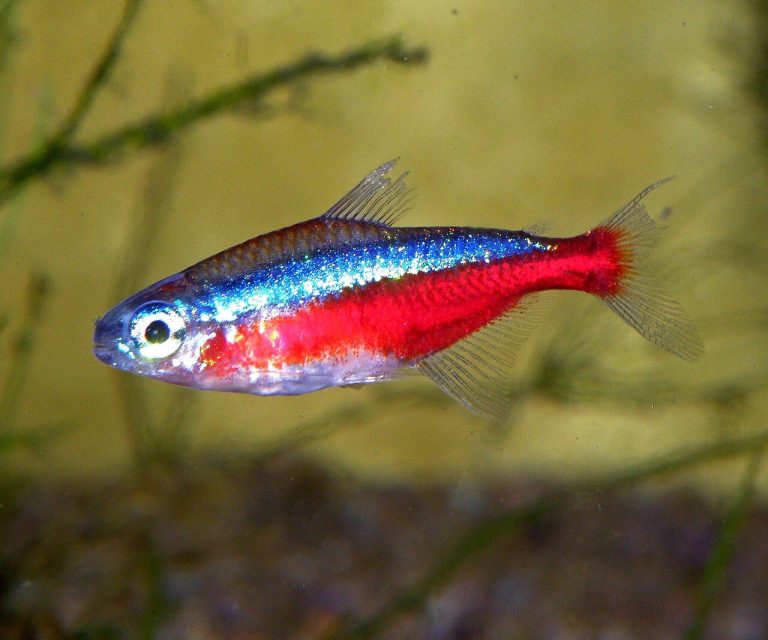
The Paracheirodon innesi is the fish that started it all.
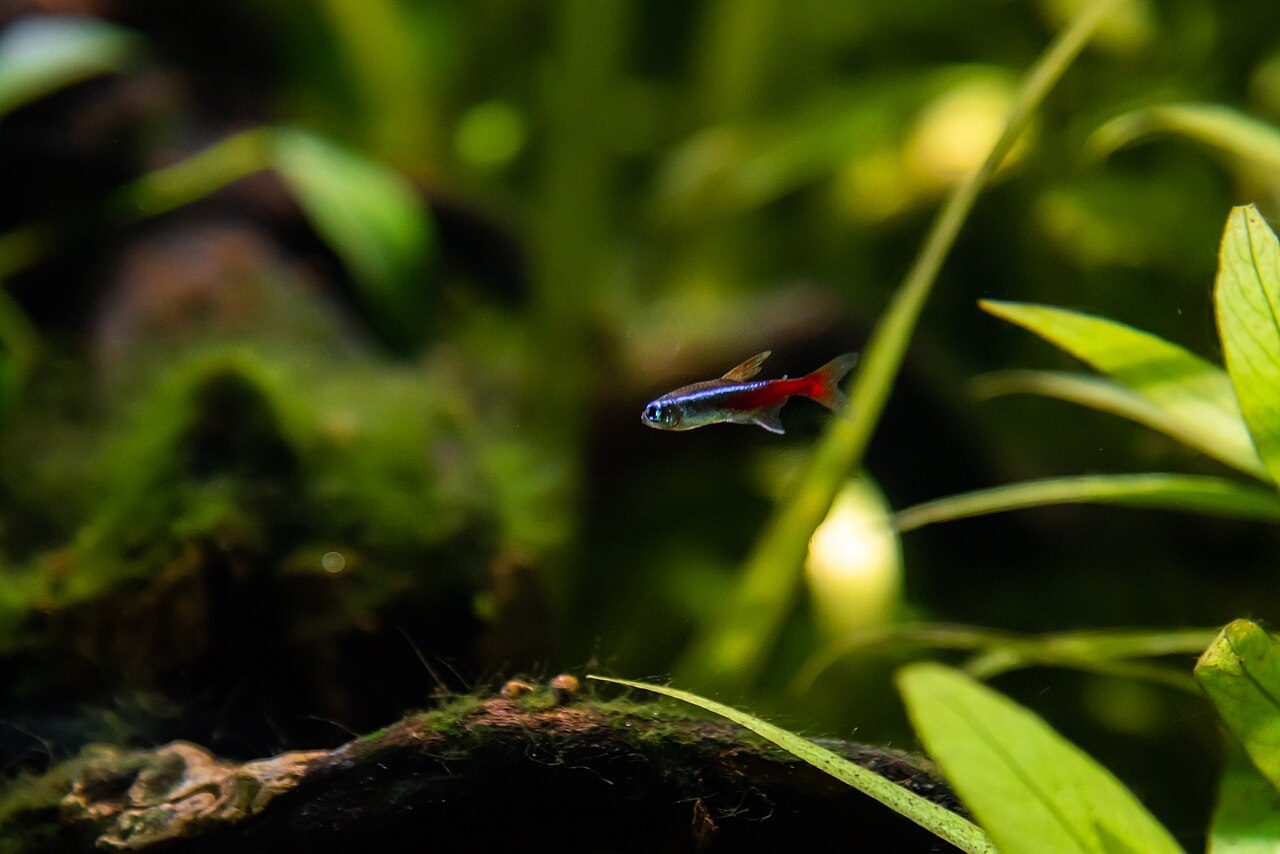
It is characterized by a bright blue horizontal stripe over a silver-white belly, with a red stripe that only extends halfway along the body.
In my experience, these are often the heartiest of the group because they have been commercially bred for generations.
They are relatively small, making them perfect for a tetra community tank where they can school together in groups of ten or more.
Because they are so popular, they are widely available and generally very affordable for beginners.
The Cardinal Tetra (Paracheirodon axelrodi)
Many hobbyists mistake the Cardinal Tetra for the standard Neon, but they are quite different upon closer inspection.
The Paracheirodon axelrodi features a red stripe that runs the entire length of its body, from the nose to the tail.
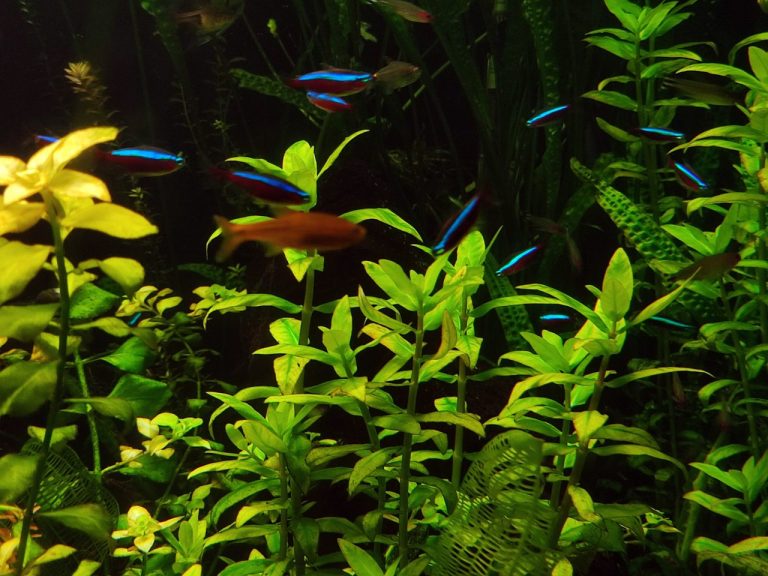
This creates a much more intense “glow” in the tank, especially under high-quality LED lighting.
I have noticed that Cardinals tend to grow slightly larger than standard Neons and often prefer slightly warmer water.
They are the “premium” choice for many aquascapers who want that unbroken line of vivid color.
Pro Tip: When buying Cardinal Tetras, always check for “wild-caught” versus “tank-raised” labels. Wild-caught Cardinals often require a lower specific conductance and softer water to stay healthy compared to their captive-bred cousins.
The Green Neon Tetra (Paracheirodon simulans)
The Green Neon Tetra, or Paracheirodon simulans, is the hidden gem of the hobby.
Instead of a deep blue stripe, this species displays a brilliant turquoise or greenish-blue sheen.
The red pigment is much more muted or sometimes entirely absent, giving them a very sleek and modern look.
These fish are slightly smaller and more delicate than the other two species.
They are often found in blackwater biotope environments where the water is stained dark by organic matter.
Comparing Neon Tetra Varieties and Requirements
To help you decide which of these types of neon tetras is right for your home, I have put together a comparison of their ideal parameters.
Maintaining stable water conditions is the single most important factor in keeping these fish healthy and vivid.
| Species Common Name | Scientific Name | Max Size | Ideal pH Range | Temperature Range |
|---|---|---|---|---|
| Classic Neon Tetra | Paracheirodon innesi | 1.5 inches | 6.0 – 7.0 | 70°F – 78°F |
| Cardinal Tetra | Paracheirodon axelrodi | 2.0 inches | 4.5 – 6.5 | 73°F – 82°F |
| Green Neon Tetra | Paracheirodon simulans | 1.0 inches | 5.0 – 6.5 | 75°F – 84°F |
Selectively Bred Variations and Color Morphs
Beyond the wild species, breeders have developed several unique types of neon tetras through selective breeding.
These variants offer a different aesthetic while maintaining the same basic body shape and schooling behavior.
If you want something that stands out from the standard blue and red, these morphs are excellent options.
The Gold Neon Tetra
The Gold Neon Tetra is a result of a xanthic mutation.
This mutation suppresses the dark melanin in the fish, leaving behind a creamy, golden body.
They still retain a faint hint of the blue and red stripes, but the overall effect is much lighter and brighter.
In my experience, Gold Neons look particularly striking in tanks with dark substrates and heavy green foliage.
They are just as hardy as the standard P. innesi and can be mixed into a school of regular neons for a varied look.
The Diamond Neon Tetra
Diamond Neons are bred to have a concentrated patch of iridescent scales on the “forehead” area, just above the eyes.
This patch sparkles like a gemstone when the fish turns in the light.
The rest of the body typically follows the classic neon pattern, but that extra shimmer adds a layer of depth to the school.
I have found that these are often slightly more expensive than standard neons.
However, the visual payoff when they school together under a high-quality light is well worth the investment.
Longfin Neon Tetra
As the name suggests, this variety has been bred for elongated dorsal, anal, and caudal fins.
While they are beautiful, they are much slower swimmers than their short-finned counterparts.
If you choose this variety, you must make sure their tank mates are not “fin nippers” like some larger barbs or certain tetras.
Designing a Habitat for Success
To see the best colors from these types of neon tetras, you need to mimic their natural environment.
Most of these fish originate from the Amazon basin, where the water is soft, acidic, and often tea-colored.
Creating a blackwater biotope is one of the best ways to keep your tetras stress-free and rich.
The Role of Tannic Acid and Substrate
Adding dried catappa leaves or alder cones to your aquarium releases tannic acid into the water.
This lowers the pH naturally and also provides antibacterial properties that protect the fish’s delicate skin.
I have noticed that my neons show much deeper reds and brighter blues when the water has a slight amber tint.
Using a dark substrate, such as black sand or dark fluorite, also helps.
When the environment is dark, the fish feel more secure and do not feel the need to “wash out” their colors to blend into a bright background.
Filtration and Water Flow
While these tetras enjoy clean water, they are not strong swimmers against heavy currents.
In the wild, they often inhabit slow-moving streams or flooded forest floors.
I recommend using a sponge filter or a hang-on-back filter with an adjustable flow rate to keep the water moving without blowing the fish around.
Common Mistake: Many beginners assume that because neons are small, they don’t need much filtration. In reality, their high metabolic rate and sensitivity to nitrate mean they need consistent, high-quality filtration to avoid diseases.
Health Challenges: Avoiding Neon Tetra Disease
One of the biggest hurdles when keeping different types of neon tetras is a condition known as Pleistophora hyphessobryconis.
Commonly called Neon Tetra Disease, this is a microsporidian parasite that can devastate a school.
Symptoms include a loss of color, cysts on the body, and difficulty swimming.
Unfortunately, there is no known cure for this disease, so prevention is the only effective strategy.
Always quarantine new fish for at least two weeks before adding them to your main display.
Keeping your water parameters stable and feeding a high-quality diet will also keep their immune systems strong.
Selecting the Right Tank Mates
Because all types of neon tetras are peaceful and relatively small, they make excellent residents for community tanks.
However, you must be careful not to house them with fish large enough to eat them.
In fish keeping, if a fish can fit in another’s mouth, it eventually will.
Good tank mates include:
- Corydoras catfish
- Small rasboras
- Honey gouramis
- Peaceful shrimp species (though baby shrimp may be eaten)
Before adding new species, I always consult a tetra fish compatibility chart to keep everyone will get along.
Avoid aggressive cichlids or large goldfish that prefer much colder water and different pH levels.
FAQ: Frequently Asked Questions about Neon Tetra Types
Can I mix different types of neon tetras in the same tank?
Yes, you can mix them, and they will often school together, especially if their sizes are similar.
However, they usually prefer to stay with their own species if they have the choice.
A mixed school of Cardinals and standard Neons can look very interesting, but make sure the water parameters satisfy both.
How many neon tetras should I keep together?
You should keep a minimum of 6 to 10 fish.
In my experience, the larger the school, the more natural and confident the fish will act.
A school of 20 or more in a larger tank is one of the most beautiful sights in the aquarium hobby.
Why are my neon tetras losing their color at night?
This is a completely natural behavior.
Tetras “turn off” their iridescent colors when they sleep to avoid being spotted by predators.
They will regain their full vibrancy within 15 to 30 minutes of the lights coming back on in the morning.
What is the difference between a Neon and a Cardinal Tetra?
The easiest way to tell is the red stripe.
On a Neon Tetra, the red stripe only goes halfway.
On a Cardinal Tetra, the red stripe runs the full length of the body.
Where that leaves you
Exploring the various types of neon tetras opens up a world of color and personality for your aquarium.
Whether you choose the classic simplicity of the Paracheirodon innesi or the intense glow of the Cardinal Tetra, these fish bring life and movement to any setup.
If you focus on stable water parameters, a natural diet, and a stress-free environment, you can enjoy these shimmering jewels for many years.
The key to a successful aquarium is patience and observation.
Watch your fish daily, keep up with your water changes, and don’t be afraid to try a new variety once you have mastered the basics.
Your tetras will reward you with a spectacular display of light and color that never gets old.

- 2003First tank
- 20+Years keeping
- 40+Tanks kept
- 0Sponsored picks
Howard set up his first 10-gallon planted tank in 2003 and lost half of it within six weeks. Two decades and more than forty aquariums later, he writes the guides he wished he had then: clear numbers, the reasons behind them, and what actually goes wrong in home tanks.