Neon Tetra Aquarium Fish – Top Picks for Your Tank
Neon tetra aquarium fish are small, colorful freshwater characins that settle in in schools of six or more. They require stable, soft, acidic water and plenty of plant cover to display their iconic iridescent blue and red colors.
The neon tetra aquarium fish is arguably the most recognizable species in the entire fish-keeping hobby. Their brilliant, glowing stripes have captivated aquarists since they were first discovered in the Amazon basin in the 1930s.
In my ten years of maintaining community tanks, I have found that few things compare to the sight of a large school of these fish darting through a heavily planted aquarium. They bring a sense of motion and electricity that larger, slower fish simply cannot replicate.
However, while they are often sold to beginners, they do have specific requirements that must be met to make sure they live a long, healthy life. This guide will walk you through everything I have learned about keeping these shimmering gems successfully.
At a glance: Neon tetra (Paracheirodon innesi)
- Temperature
- 72–78°F (22–26°C)
- Water pH
- 6.0–7.0
- Adult size
- 1.5 in (4 cm)
- Minimum tank
- 10 gal (20 gal for a proper school)
- Group size
- Groups of 8+
- Temperament
- Peaceful
- Diet
- Omnivore: micro pellets, flakes, frozen daphnia
- Lifespan
- 5–8 years
Keeper’s tip: Add neons only to a fully cycled, stable tank; they are among the first fish to suffer from ammonia swings.
Understanding the Biology of Paracheirodon innesi
The scientific name for the neon tetra aquarium fish is Paracheirodon innesi. They belong to the Characidae family and are native to the blackwater streams of South America, particularly in Brazil, Peru, and Colombia.
One of the most interesting anatomical features of these fish is the adipose fin. This is a small, fleshy fin located between the dorsal fin and the tail, which is a characteristic they share with many other characins and salmonids.
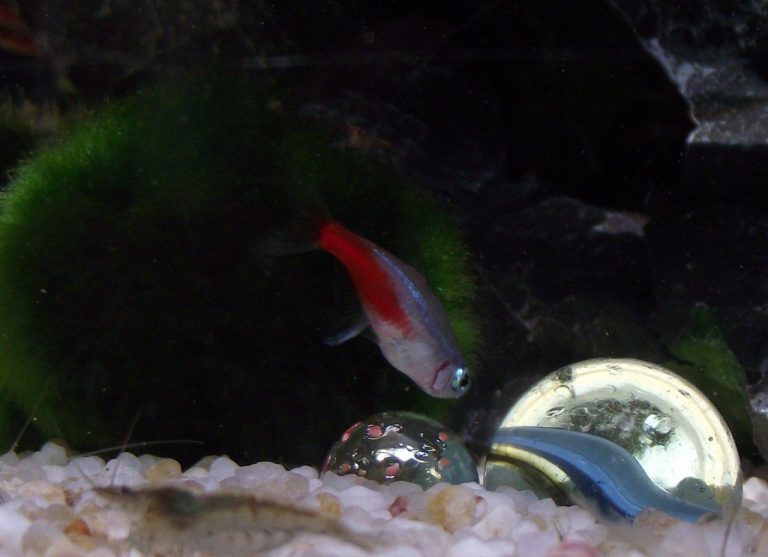
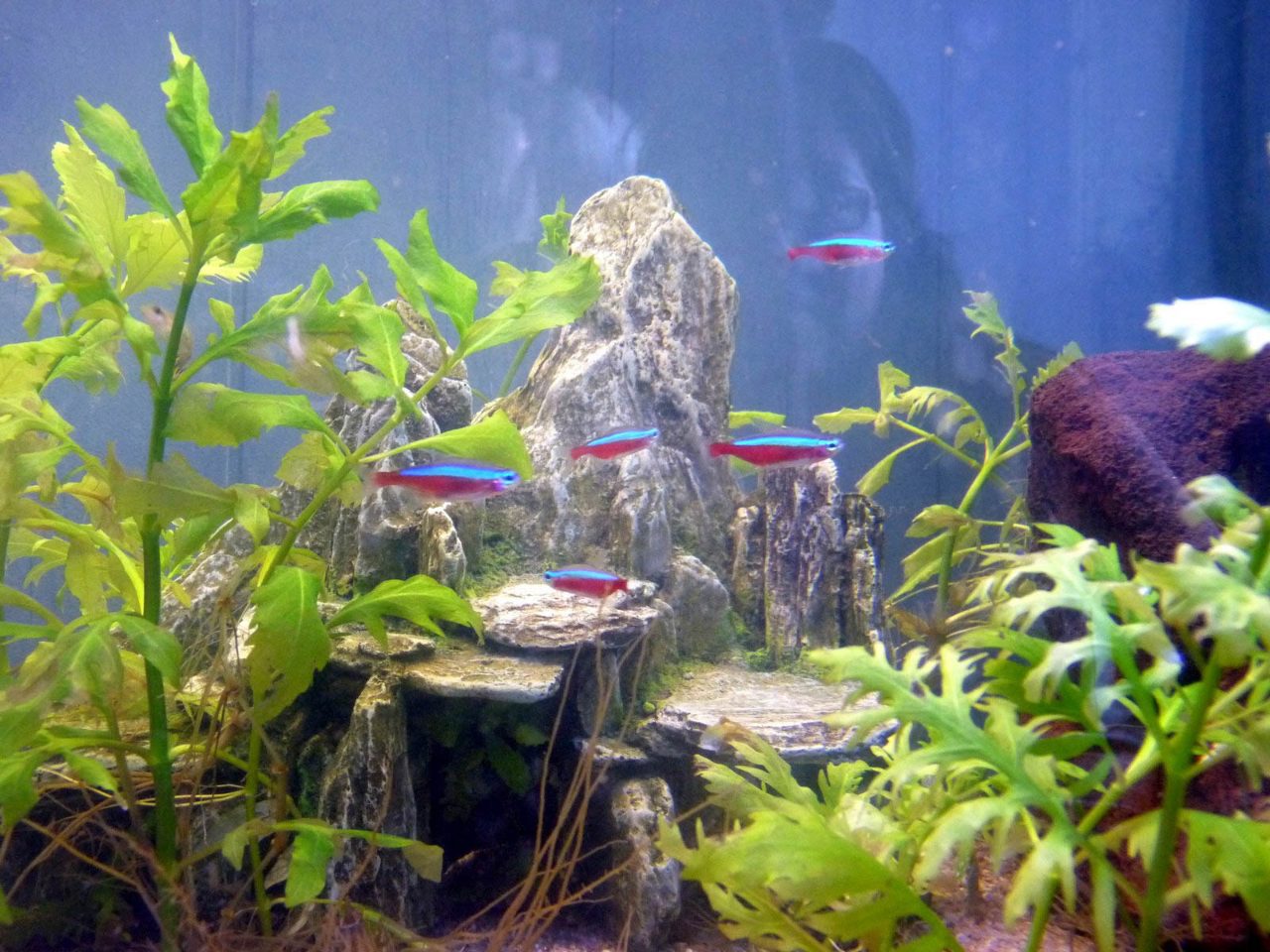
It is also important to distinguish them from their close relative, the Cardinal Tetra (Paracheirodon axelrodi). While they look similar, the neon tetra’s red stripe only extends halfway along its body, whereas the Cardinal’s red stripe runs the full length.
The Role of Iridescence
The blue stripe on a neon tetra isn’t actually a pigment, but rather a structural color created by light-reflecting crystals. This evolution allows them to stay visible to one another in the murky, tea-colored waters of their natural habitat.
In a home aquarium, this iridescence serves as a “canary in the coal mine.” If you notice the colors fading or looking dull, it is often the first sign that your water parameters are off or the fish are experiencing stress.
Ideal Water Parameters for Neon Tetra Aquarium Fish
Creating the perfect environment starts with understanding the chemistry of the water. In their natural habitat, these fish live in very soft water with high levels of organic compounds.
To replicate this, you should focus on maintaining a low dGH (General Hardness) and dKH (Carbonate Hardness). High mineral content can lead to kidney issues and general poor health in wild-caught specimens especially.
| Parameter | Ideal Range |
|---|---|
| Temperature | 70°F to 81°F (21°C – 27°C) |
| pH Level | 6.0 to 7.0 |
| Hardness (dGH) | 2 to 10 degrees |
| Ammonia / Nitrite | 0 ppm (Strict) |
| Nitrate | < 20 ppm |
The Importance of Stability
While neons can adapt to a range of pH levels, they are extremely sensitive to sudden fluctuations. I always recommend drip-acclimating new arrivals for at least an hour to prevent osmotic shock.
If your tap water is naturally very hard, you might consider using an Reverse Osmosis (RO) system and remineralizing the water to achieve the proper dGH levels. This extra step can significantly increase the lifespan of your school.
Pro Tip: Never add neons to a brand-new, uncycled aquarium. They lack the hardiness to survive the nitrogen cycle and are much more likely to flourish in an “established” tank that has been running for at least 2-3 months.
Designing the Perfect Blackwater Biotope
In the wild, neons are often found in a blackwater biotope. This environment is characterized by slow-moving water, sandy substrates, and a carpet of fallen leaves and wood.
The decaying organic matter releases humic acid and tannic acid into the water. This tints the water a beautiful amber color and also provides natural antibacterial and antifungal properties that benefit the fish’s immune system.
Choosing the Right Decor
To make your neon tetra aquarium fish feel at home, use dark substrates and plenty of driftwood. Floating plants like Frogbit or Salvinia are excellent for diffusing light, which makes the fish feel more secure.
When neons feel safe, they will spend more time in the middle of the water column. If the light is too bright and there is no cover, they will often hide or huddle in the corners, which is a clear sign of stress.
Live Plants are Essential
I’ve noticed that neons show their best colors when surrounded by live greenery. Plants like Java Fern, Anubias, and various Cryptocoryne species are perfect because they do well in the same low-to-medium light conditions that neons prefer.
Not only do plants provide hiding spots, but they also help manage nitrate levels. A heavily planted tank creates a biological buffer that keeps the environment stable for these delicate characins.
One of the most common mistakes I see is keeping neons in groups that are too small. These are social creatures that rely on shoaling behavior for safety and social interaction.
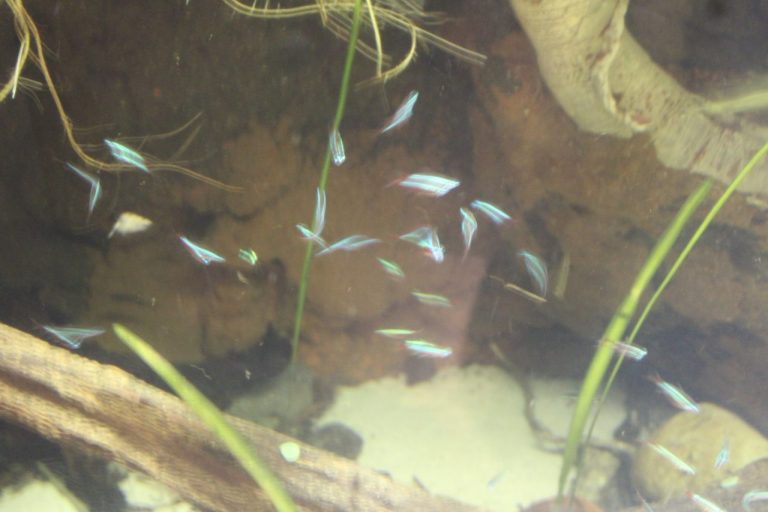
In the wild, they school in the thousands. In a home aquarium, you should aim for a minimum of 6 to 10 individuals, though a school of 20 or more is where you will see their natural personality shine.
Why Schools Matter
When kept in large groups, the “stress load” is distributed across the school. If a neon is kept alone or in a pair, it will become lethargic, lose its appetite, and its immune system will eventually collapse.
Watching a large school move in unison is one of the most satisfying aspects of this hobby. They don’t just swim; they communicate through subtle movements and changes in position within the group.
Pro Tip: If you notice your neons “nipping” at each other, it is often a sign that the school is too small or the tank is too cramped. Increasing the group size often solves aggression issues by redirecting their energy into natural shoaling.
Feeding and Nutrition for Colorful Health
To maintain those glowing colors, you must provide a varied and high-quality diet. In nature, they are omnivores, feeding on small crustaceans, insect larvae, and algae.
In the aquarium, I recommend a base of high-quality micro-pellets or crushed flakes. Using a specific neon tetra fish food helps make sure they get the right particle size for their small mouths.
Supplementing with Live and Frozen Foods
While dry foods are convenient, nothing beats the nutritional boost of live or frozen treats. I’ve found that feeding Daphnia or Baby Brine Shrimp once or twice a week significantly improves their spawning condition and color intensity.
You can also find the best fish food for tetras that contains color enhancers like spirulina or carotenoids. These natural pigments help the red and blue stripes pop against the green of your plants.
Selecting Compatible Tank Mates
Because of their small size and peaceful nature, choosing the right companions is vital. You should never house neon tetra aquarium fish with large or aggressive species like Oscars or Jack Dempseys, as the neons will quickly become an expensive snack.
Ideal tank mates include other small, peaceful community fish. Good options include Harlequin Rasboras, Corydoras catfish, and small species of Gouramis.
Keeping Neons with Other Tetras
Mixing different tetra species can create a beautiful visual display. I often pair them with Rummy Nose Tetras or Ember Tetras. For more detailed advice on maintaining these delicate fish, you can check out my guide on neon tetra fish care.
If you are a shrimp enthusiast, neons are generally safe with adult Cherry Shrimp or Amano Shrimp. However, they may snack on tiny shrimp shrimplets if they can find them, so ensure there is plenty of moss for the babies to hide in.
Common Health Issues and Neon Tetra Disease
Every experienced aquarist knows the dread of “Neon Tetra Disease.” This is caused by a microsporidian parasite called Pleistophora hyphessobryconis.
It is a devastating condition that is often introduced through infected fish or contaminated live food. Symptoms include a loss of color in a specific patch, cysts on the body, and a curved spine.
Preventing Disease Outbreaks
Unfortunately, there is no known cure for Pleistophora hyphessobryconis. The best approach is prevention. Always quarantine new fish for at least two to four weeks before adding them to your main display tank.
If you see a fish exhibiting these symptoms, it is vital to remove it immediately. This prevents other fish from consuming the tissue of the infected individual, which is how the parasite primarily spreads.
Maintaining Water Quality
Most other common ailments, such as Ich or Fin Rot, are usually the result of poor water quality. Regular 25% weekly water changes are the best defense you have against disease.
I have found that neons kept in water with a slight “tea” tint from tannins are generally more resilient. The natural acids help keep the bacterial load in the water lower, giving the fish a natural advantage.
Breeding Neon Tetra Aquarium Fish
Breeding neons is considered a milestone for many intermediate hobbyists. It is much more difficult than breeding livebearers like Guppies, as it requires very specific water conditions.
To trigger spawning, you will need extremely soft water (almost 0 dGH) and a slightly acidic pH (around 5.5 to 6.0). The breeding tank should be dimly lit, as the eggs are sensitive to light.
Raising the Fry
Neons are egg scatterers and do not provide any parental care. In fact, they will eat their own eggs if given the chance. Once the eggs are laid among fine-leaved plants or a spawning mop, the adults must be removed.
The fry are microscopic and require “infusoria” or liquid fry food for the first few days. As they grow, you can transition them to freshly hatched brine shrimp. It is a challenging but incredibly satisfying process.
Questions I get asked a lot
How many neon tetras can I keep in a 10-gallon tank?
In a 10-gallon tank, I recommend a school of 6 to 8 neons. While they are small, they are active swimmers and need enough horizontal space to school comfortably.
Do neon tetras need a heater?
Yes, they are tropical fish and require stable temperatures. A heater set between 72°F and 78°F is ideal for keeping their metabolism and immune systems functioning properly.
Why are my neon tetras losing their color at night?
This is perfectly normal! Neons “turn off” their colors when they sleep to avoid being seen by predators. They will regain their brilliance within 15-30 minutes of the lights coming on.
Can neon tetras live with Bettas?
Generally, yes, but it depends on the Betta’s temperament. Because neons are fast and peaceful, they often coexist well, provided the tank is at least 10-20 gallons with plenty of hiding spots.
How long do neon tetra aquarium fish live?
With proper care, stable water, and a good diet, they can live for 5 to 8 years. Many people lose them early due to poor acclimation or unstable water chemistry in new tanks.
Final thoughts
The neon tetra aquarium fish remains a staple of the hobby for good reason. Their unmatched color and remarkable social behavior make them a joy to observe every single day.
While they do require a bit more attention to water chemistry than some other species, the effort is well worth it. If you provide soft, acidic water, a stress-free environment with plenty of plants, and a high-quality diet, you can enjoy a healthy school for many years.
Successful fish keeping is about patience and observation. Watch your neons closely, maintain your water changes, and you will be rewarded with a shimmering, living jewel in your home.

- 2003First tank
- 20+Years keeping
- 40+Tanks kept
- 0Sponsored picks
Howard set up his first 10-gallon planted tank in 2003 and lost half of it within six weeks. Two decades and more than forty aquariums later, he writes the guides he wished he had then: clear numbers, the reasons behind them, and what actually goes wrong in home tanks.