Neon Tetra Aquarium – Setup Checklist
A successful neon tetra aquarium requires a minimum of 10-20 gallons, stable soft water with a pH of 6.0 to 7.0, and dense live plants to mimic their natural Amazonian blackwater habitat.
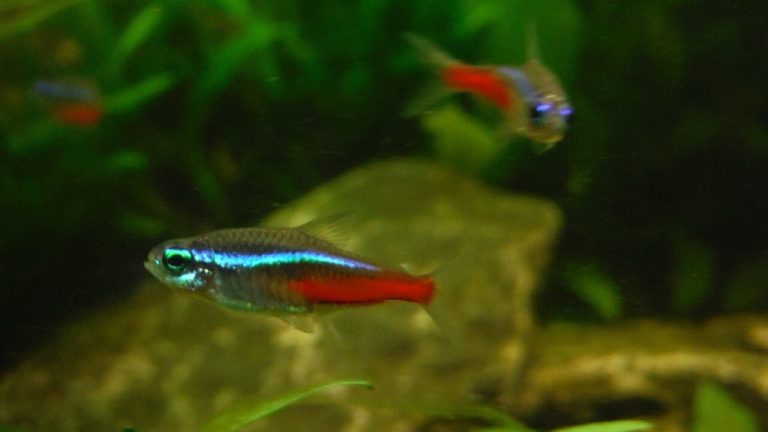
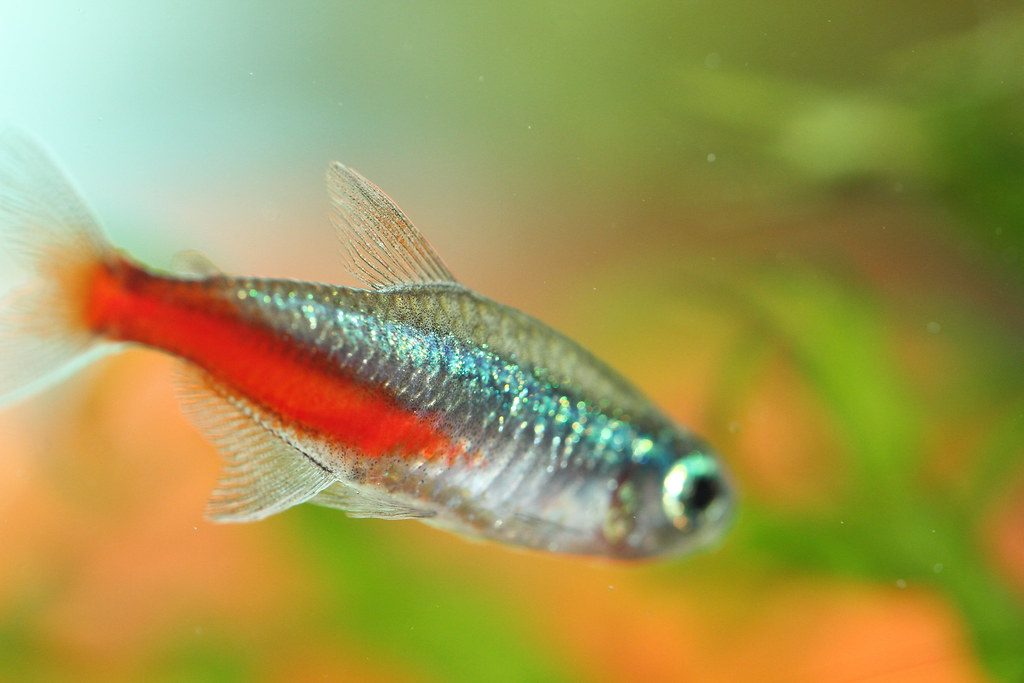
Few sights in the fish-keeping world are as iconic as a shimmering school of Paracheirodon innesi darting through a lushly planted tank.
For over ten years, I have watched these tiny jewels transform simple glass boxes into colorful underwater landscapes.
Setting up a neon tetra aquarium is a rite of passage for many, yet it requires a nuanced understanding of their specific biological needs to see them settle in.
In this guide, I will share the exact strategies I use to maintain healthy, long-lived neons that display the deepest blues and brightest reds possible.
At a glance: Neon tetra (Paracheirodon innesi)
- Temperature
- 72–78°F (22–26°C)
- Water pH
- 6.0–7.0
- Adult size
- 1.5 in (4 cm)
- Minimum tank
- 10 gal (20 gal for a proper school)
- Group size
- Groups of 8+
- Temperament
- Peaceful
- Diet
- Omnivore: micro pellets, flakes, frozen daphnia
- Lifespan
- 5–8 years
Keeper’s tip: Add neons only to a fully cycled, stable tank; they are among the first fish to suffer from ammonia swings.
Understanding the Neon Tetra (Paracheirodon innesi)
The neon tetra is native to the clearwater and blackwater streams of the Amazon basin in South America.
In the wild, they are found in environments with high concentrations of tannic acid and humic acid, which leach from fallen leaves and wood.
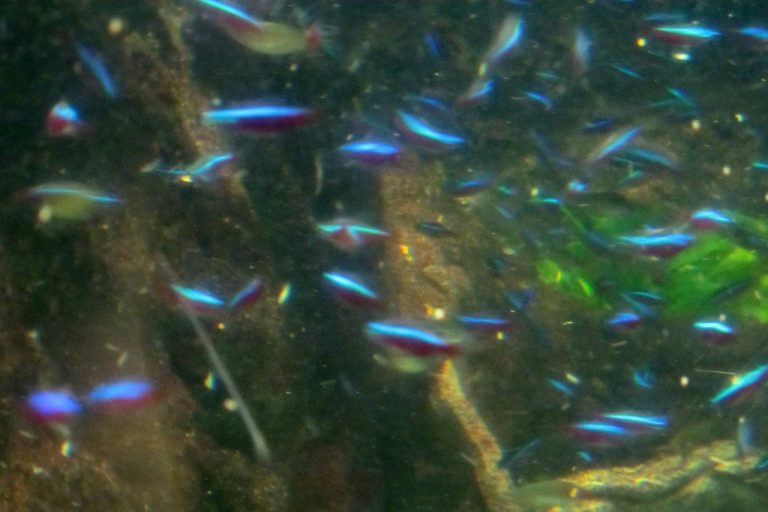
This environment has shaped their shoaling behavior, as staying in large groups provides protection against predators in the dim, stained water.
The Biological Advantage of Schooling
When you keep neons in a group of at least six to ten, you are catering to their psychological well-being.
I have noticed that isolated neons become pale and prone to stress-induced illnesses, while a large group displays much more active, confident movement.
A larger school also allows for the natural social hierarchy to form without any single fish being bullied.
Pro Tip: Always aim for a school of 10 or more if your tank size allows. In my experience, the visual impact and the health of the fish improve exponentially once you move past the “minimum” of six.
Setting Up Your Neon Tetra Aquarium
Choosing the right equipment is the first step toward long-term success with these delicate characins.
While they are small, they are active swimmers that need horizontal space to move comfortably.
I generally recommend starting with a 20-gallon setup to provide the stability and swimming room these fish deserve.
Selecting the Right Tank Size
A 10-gallon tank is often cited as the minimum, but it leaves very little room for error regarding water chemistry.
Smaller volumes of water fluctuate rapidly in temperature and toxicity, which can be fatal for sensitive neons.
A 20-gallon “long” aquarium is the gold standard because it maximizes the horizontal swimming path.
| Feature | Minimum Requirement | Ideal Recommendation |
|---|---|---|
| Tank Volume | 10 Gallons | 20+ Gallons |
| Tank Shape | Standard Rectangular | Long / Horizontal |
| Filtration | Sponge or HOB Filter | Gentle Flow Canister Filter |
Substrate and Lighting
In their natural habitat, the forest canopy creates a dappled, low-light environment.
I always suggest using a dark substrate, such as black sand or dark fluorite, to make their colors pop.
Bright, white gravel can often wash out their neon stripes and cause the fish to feel exposed and stressed.
Water Chemistry and Environmental Parameters
Maintaining a neon tetra aquarium requires a commitment to consistency over perfection.
These fish prefer soft, acidic water, but they can adapt to a range of conditions as long as they are stable.
Monitoring your General Hardness (GH) and Carbonate Hardness (KH) is just as important as checking your pH.
The Importance of Soft Water
In my years of keeping characins, I have found that high mineral content often leads to shorter lifespans and duller colors.
If your tap water is exceptionally hard, you might consider using RO (Reverse Osmosis) water mixed with a small amount of tap water.
This allows you to control the mineral levels and keep the environment closer to their native Amazonian streams.
| Parameter | Best Range |
|---|---|
| Temperature | 72°F to 78°F (22°C – 26°C) |
| pH Level | 6.0 to 7.0 |
| General Hardness (GH) | 2 to 10 dGH |
| Carbonate Hardness (KH) | 1 to 4 dKH |
Utilizing Peat Filtration and Botanicals
To mimic the wild, many advanced keepers employ peat filtration or add Indian Almond leaves to the tank.
These botanicals release tannins that lower the pH naturally and provide antibacterial properties.
While the water may take on a tea-colored tint, this Blackwater biotope style is the most natural way to house neons.
Aquascaping and Plant Selection
A well-designed neon tetra aquarium should provide a balance of open swimming space and dense hiding spots.
Neons are mid-water dwellers, meaning they spend most of their time in the center of the water column.
Providing a backdrop of tall plants gives them a sense of security, knowing a hiding place is only an inch away.
Floating Plants and Shade
I highly recommend including floating plants like Limnobium laevigatum (Amazon Frogbit).
The long, trailing roots of these plants provide excellent cover and help suck up excess nitrates from the water.
The shade provided by floating plants also helps prevent algae growth while making the neons feel safe enough to swim in the open.
Rooted Plants for Contrast
Plants with fine leaves, such as Java Fern, Anubias, and various species of Cryptocoryne, work wonderfully.
These plants do not require high light, which aligns perfectly with the lower light preferences of the tetras.
In my experience, a heavily planted tank reduces aggression and encourages the fish to explore every corner of the aquarium.
Common Mistake: Many beginners leave the center of the tank completely empty. While neons need room to school, they feel vulnerable in wide-open spaces; adding a piece of spider wood or a tall plant in the mid-ground can actually make them more active.
Diet, Nutrition, and Feeding Habits
Feeding a neon tetra aquarium is relatively simple, but variety is the key to rich health.
In the wild, they are omnivores, consuming small insects, larvae, and some plant matter.
In the home aquarium, you should provide a high-quality micro-pellet or flake as the daily staple.
Supplementing with Live and Frozen Foods
To see the best colors and encourage natural behaviors, I always supplement with frozen daphnia or baby brine shrimp.
Live foods are even better, as they trigger the tetras’ hunting instincts and provide essential fats.
If you are interested in breeding these fish, a high-protein diet is absolutely mandatory to condition the females.
Feeding Frequency
I prefer to feed my neons twice a day in very small amounts.
Only provide what they can consume in about two minutes to prevent excess food from rotting in the substrate.
Overfeeding is one of the quickest ways to crash a small aquarium’s biological filter and cause a spike in ammonia.
Health Management and Disease Prevention
Neon tetras are generally hardy once established, but they are susceptible to a few specific conditions.
The most notorious is “Neon Tetra Disease,” caused by the microsporidian parasite Pleistophora hyphessobryconis.
Understanding the signs of stress and illness can save your entire school from disaster.
Identifying Neon Tetra Disease
Symptoms of Pleistophora hyphessobryconis include a loss of color in the stripes, restlessness, and curved spines.
Unfortunately, there is no known cure for this specific parasite, so prevention is the only effective strategy.
Quarantining all new fish for at least two to four weeks is the best way to help you don’t introduce this to your main tank.
Common Stress Indicators
If you notice your neons “glass surfing” (swimming up and down the glass) or hiding constantly, check your water parameters immediately.
High nitrates or sudden temperature swings are the most common culprits for stress in a neon tetra aquarium.
Regular 25% weekly water changes are the most effective tool in your arsenal to keep these issues at bay.
Selecting Compatible Tank Mates
Building a community around your neons requires choosing species that share their peaceful nature and water requirements.
Because neons are small, they should never be kept with large or aggressive fish that might view them as a snack.
I always look for peaceful tank mates that occupy different levels of the aquarium.
Bottom Dwellers and Cleanup Crew
Corydoras catfish are the perfect companions for neons as they stay at the bottom and keep the substrate clean.
Small shrimp, like Amano shrimp or Cherry shrimp, also do well in the same soft-water conditions.
Just ensure there is plenty of moss for the shrimp to hide in, especially if you have a very large school of tetras.
Other Mid-Water Schooling Fish
You can mix neons with other small tetras or rasboras, such as Harlequin Rasboras or Ember Tetras.
However, be careful not to overcrowd the middle section of the tank, or the “schooling” effect will become a chaotic mess.
Stick to one or two schooling species in a 20-gallon tank to maintain a clean, aesthetic look.
Things people often ask
How many neon tetras can I keep in a 10-gallon tank?
In a 10-gallon tank, you can safely keep 6 to 8 neon tetras. However, I strongly recommend a 20-gallon tank for a larger school of 12 to 15, which provides a much more stable environment.
Do neon tetras need a heater?
Yes, they are tropical fish and require a stable temperature between 72°F and 78°F. Sudden drops in temperature can weaken their immune systems and lead to Ich outbreaks.
Why are my neon tetras losing their color at night?
This is a natural phenomenon called “sleep coloration.” Neons dim their colors at night to avoid being spotted by predators while they rest. Their color should return within an hour of the lights coming on.
Can neon tetras live with Bettas?
It depends on the individual Betta’s temperament. While they share similar water requirements, some Bettas may be too aggressive for the fast-moving neons, or the neons may nip at the Betta’s long fins.
How long do neon tetras live in a home aquarium?
With excellent care, stable water, and a proper diet, neon tetras can live for 5 to 8 years. Most premature deaths are due to poor water quality or stress during the acclimation period.
The short version
Creating a well-kept neon tetra aquarium is a rewarding experience that brings a slice of the Amazon into your home.
If you focus on soft water, dense vegetation, and a stress-free environment, you can enjoy the eye-catching dance of these fish for many years.
Remember that consistency is your best friend; keep your water changes regular and your parameters stable.
Good luck with your new school, and enjoy the rich life they bring to your aquarium!

- 2003First tank
- 20+Years keeping
- 40+Tanks kept
- 0Sponsored picks
Howard set up his first 10-gallon planted tank in 2003 and lost half of it within six weeks. Two decades and more than forty aquariums later, he writes the guides he wished he had then: clear numbers, the reasons behind them, and what actually goes wrong in home tanks.