Paracheirodon Axelrodi Breeding – Step-by-Step Guide
Successful paracheirodon axelrodi breeding requires mimicking the Amazon’s blackwater conditions with soft, acidic water and low light. Focus on conditioning the pair with live foods and maintaining extremely low electrical conductivity for egg viability.
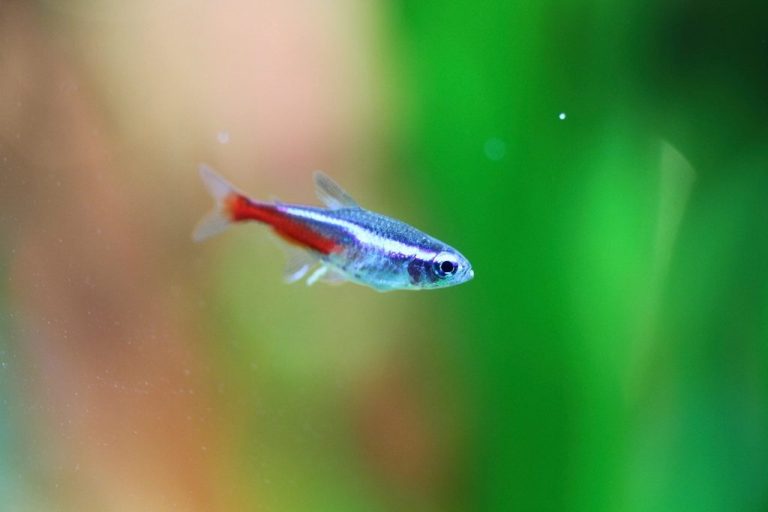
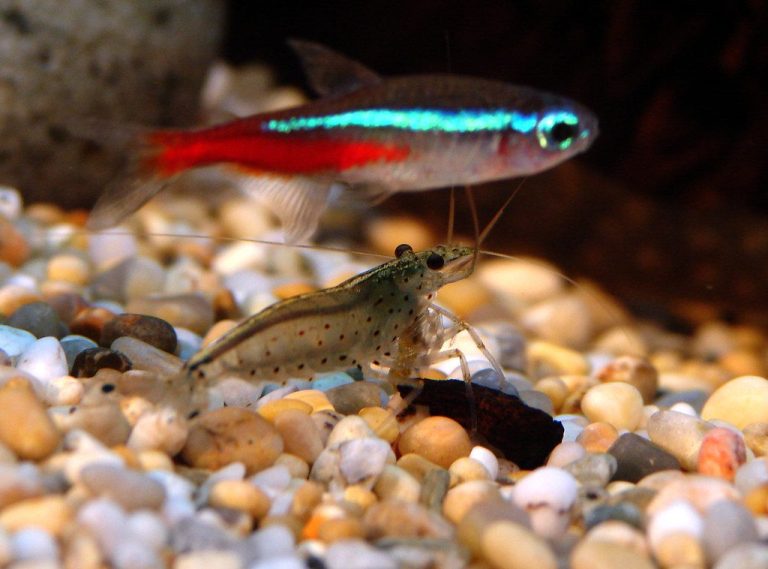
Breeding the Cardinal Tetra, scientifically known as Paracheirodon axelrodi, is often considered a “holy grail” for many freshwater aquarists. While their cousins, the Neon Tetras, are frequently bred in commercial ponds, Cardinals are more demanding and sensitive to their environment.
In my experience, the journey of paracheirodon axelrodi breeding is one of the most rewarding challenges you can undertake. It requires patience, precision, and a deep understanding of the delicate balance within a blackwater ecosystem.
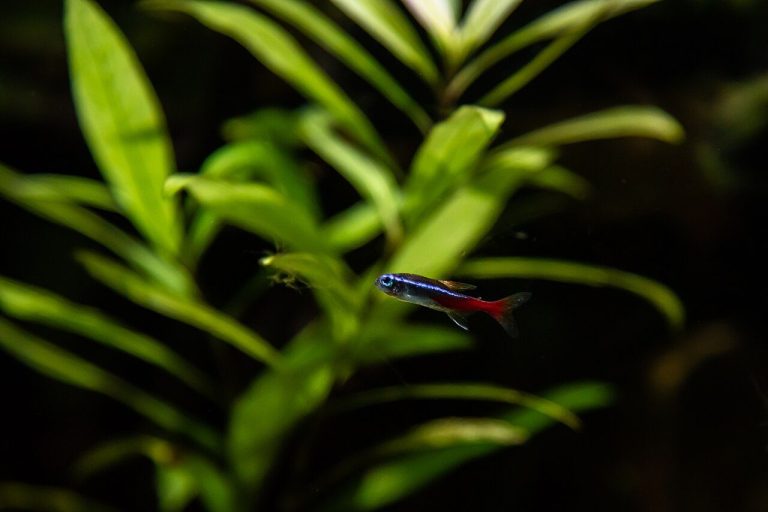
When I first attempted this over a decade ago, I realized that standard tap water simply wouldn’t cut it. To see those shimmering blue and red streaks in a tiny fry is proof of your skill as a fish keeper.
At a glance: Cardinal tetra (Paracheirodon axelrodi)
- Temperature
- 76–84°F (24–29°C)
- Water pH
- 4.5–7.0
- Adult size
- 2 in (5 cm)
- Minimum tank
- 20 gal
- Group size
- Groups of 8+
- Temperament
- Peaceful
- Diet
- Omnivore: small pellets, flakes, frozen bloodworm
- Lifespan
- 4–6 years
Keeper’s tip: Cardinals like it warmer and softer than neons, so they are a poor match for cool-water tank mates.
Understanding the Natural Habitat of Cardinal Tetras
To succeed with paracheirodon axelrodi breeding, we must first look at where these fish come from. They are native to the upper Orinoco and Rio Negro rivers in South America.
These waters are stained dark by fallen leaves and decaying organic matter. This environment is rich in tannic acid and humic substances, which naturally lower the pH and keep bacterial counts very low.
In these “blackwater” streams, the water is incredibly soft. This means the mineral content is almost non-existent, leading to very low electrical conductivity levels.
Pro Tip: Most failed breeding attempts happen because the water is too hard. The egg membranes of Cardinal Tetras are designed for mineral-poor water; if the water is too hard, the eggs may fail to be fertilized or will harden and die.
Preparing Your Breeding Pair for Success
You cannot simply move two random fish into a tank and expect results. Proper conditioning is the secret sauce to successful spawning.
Start by selecting healthy, mature adults that are about a year old. Females will be noticeably rounder when viewed from above, while males remain slim and sleek.
I recommend separating the males and females for about 7 to 10 days before the intended spawning date. During this time, you must provide high-quality nutrition to keep the female produces plenty of eggs.
| Food Type | Benefits for Breeding | Frequency |
|---|---|---|
| Live Baby Brine Shrimp | High protein and fat for egg production. | Twice daily |
| Daphnia | Acts as a natural laxative and keeps fish active. | 3 times a week |
| Frozen Bloodworms | Excellent for bulking up the female. | Daily |
If you follow a strict feeding regimen, you can help your fish have the energy reserves needed for the taxing reproduction process of similar species and your Cardinals specifically.
The Ideal Breeding Tank Setup
The breeding tank should be small, typically between 5 and 10 gallons. It needs to be carefully clean, as the fry are extremely susceptible to bacterial infections.
I always use reverse osmosis water (RO water) to achieve the necessary softness. You are aiming for a GH (general hardness) of 1 or 2 and a KH (carbonate hardness) near zero.
To lower the pH naturally, I utilize peat filtration. You can place aquarium-safe peat in a mesh bag inside a small sponge filter or even just let it sit in the corner of the tank.
The bottom of the tank should remain bare to make cleaning easier. However, you must provide a medium for the eggs to fall into so the parents don’t eat them.
Using Spawning Mops and Plants
Cardinal Tetras are egg scatterers. They do not care for their young and will gladly snack on their own eggs if given the chance.
I’ve found that using spawning mops made of dark synthetic yarn works wonders. Alternatively, a thick clump of Taxiphyllum barbieri (Java Moss) provides a perfect natural trap for the eggs.
The moss or mop should be sterilized before use. You want to ensure no snails or hydra are introduced to the delicate breeding environment.
Water Parameters for Paracheirodon axelrodi Breeding
Consistency is everything when you are trying to trigger a spawn. Fluctuations in temperature or chemistry can cause the fish to “reabsorb” their eggs.
In my years of keeping these fish, I’ve found that a slight increase in temperature can mimic the onset of the rainy season. This is often the final trigger needed to start the dance.
| Parameter | Target Value | Method of Control |
|---|---|---|
| Temperature | 80°F – 82°F (26.5°C – 28°C) | Adjustable submersible heater. |
| pH Level | 4.5 – 5.5 | Peat moss or humic acid extracts. |
| Conductivity | Below 50 µS/cm | Pure RO water mixed with trace minerals. |
| Lighting | Extremely Dim / Nearly Dark | Floating plants or tank covers. |
Achieving these paracheirodon axelrodi breeding conditions might seem daunting. However, once you dial in your RO unit and peat levels, maintaining stable water conditions becomes second nature.
The Spawning Ritual and Egg Care
Once the pair is introduced to the breeding tank, usually in the evening, you should turn off the lights. The actual spawning usually occurs in the very early hours of the morning.
The male will drive the female toward the moss or spawning mops. They will vibrate against each other, and the female will release a small batch of eggs that the male immediately fertilizes.
This process is repeated until the female is spent. Once you see the female looking slim again, it is vital to remove the parents immediately.
Dealing with Photophobic Eggs
One of the most unique aspects of paracheirodon axelrodi breeding is that the eggs are photophobic. This means they are literally killed by light.
If you shine a bright flashlight on the eggs or leave the room lights on, the embryos will likely perish. I recommend wrapping the tank in black construction paper or a dark towel for the first 48 hours.
Common Mistake: Many beginners check for eggs by turning on the light. This often ruins the entire clutch; instead, use a very dim red light if you absolutely must inspect the tank.
To prevent fungus from attacking the eggs, some breeders add a drop of Methylene blue. In my experience, if the water is acidic enough (below pH 5.5), the acidity itself acts as a natural antifungal agent.
Raising the Tiny Cardinal Tetra Fry
The eggs will typically hatch within 24 to 36 hours. At first, you won’t see much; the fry are microscopic and will cling to the glass or the moss.
During the first 3 to 4 days, the fry will survive on their yolk sacs. You do not need to feed them during this period.
Once they become free-swimming, the real work begins. Cardinal Tetra fry are significantly smaller than most other fish fry, meaning they cannot eat standard baby brine shrimp yet.
The Importance of Infusoria
Your first food source must be infusoria. These are microscopic organisms that you can culture at home using lettuce or potato skins in a jar of aquarium water.
I usually start an infusoria culture a week before I expect a spawn. This makes sure a steady supply of “living dust” for the fry to eat.
After about 10 days of feeding infusoria, the fry should be large enough to transition to microworms. Eventually, they will take freshly hatched brine shrimp, which will help them grow rapidly.
| Fry Age | Recommended Food | Feeding Strategy |
|---|---|---|
| Days 1-4 | None (Yolk Sac) | Do not disturb the tank. |
| Days 5-14 | Infusoria | Small amounts 4-6 times daily. |
| Days 15-30 | Microworms / Vinegar Eels | Transition slowly from infusoria. |
| Day 30+ | Baby Brine Shrimp | Provide high-quality nutrition for color. |
Maintaining Water Quality During Fry Growth
As you feed the fry multiple times a day, the water quality can degrade quickly. However, you cannot do large, fast water changes.
The fry are extremely sensitive to changes in electrical conductivity and temperature. I use a small airline tube to siphon out waste and very slowly drip-feed new water back into the tank.
The new water must match the breeding tank parameters exactly. Even a slight jump in pH can be fatal for a two-week-old Cardinal Tetra.
Troubleshooting Common Breeding Issues
If you find that your eggs are turning white, they are likely unfertilized or have been attacked by fungus. This is often a sign that your water is too hard.
If the parents are not spawning, try a “cool water” change. Replacing 20% of the tank water with water that is 2 degrees cooler can simulate a rainstorm, which often triggers the behavior.
Sometimes, the fry may stop growing or die off suddenly. This is usually due to a lack of food density. Because the fry are so small, they need to be “swimming” in their food to find it easily.
Questions I get asked a lot
How can I tell if my Cardinal Tetras are ready to breed?
The female will appear very “thick” or bloated behind the pectoral fins. The male will become more active and may start “shimmering” or dancing around the female in the evenings.
Can I breed Cardinal Tetras in a community tank?
It is almost impossible. The eggs are photophobic and will be eaten by other fish or killed by the light. A dedicated, darkened breeding tank is a requirement for success.
How many eggs does a Cardinal Tetra lay?
A healthy, well-conditioned female can lay anywhere from 100 to 500 eggs in a single spawning session. However, the survival rate for beginners is often much lower.
What is the best pH for breeding Cardinal Tetras?
For successful paracheirodon axelrodi breeding, you should aim for a pH between 4.5 and 5.5. This low pH helps prevent bacterial growth on the eggs and mimics their natural habitat.
How long does it take for the fry to show color?
You will start to see the characteristic blue line appear around 4 to 6 weeks of age. The vivid red color usually develops shortly after as they transition to more complex foods.
Final thoughts
Mastering paracheirodon axelrodi breeding is a journey that requires attention to detail and a commitment to water chemistry. If you provide a dark, acidic, and mineral-poor environment, you are giving these beautiful fish the best chance to propagate.
While the process is more complex than breeding many other tropical fish, the sight of a school of home-bred Cardinals is worth every bit of effort. Remember to focus on your infusoria cultures and make sure that light away from the eggs.
If you stay patient and follow these steps, you will soon join the elite group of aquarists who have successfully cracked the code of the Cardinal Tetra.

- 2003First tank
- 20+Years keeping
- 40+Tanks kept
- 0Sponsored picks
Howard set up his first 10-gallon planted tank in 2003 and lost half of it within six weeks. Two decades and more than forty aquariums later, he writes the guides he wished he had then: clear numbers, the reasons behind them, and what actually goes wrong in home tanks.