Male And Female Neon Tetra – How to Tell Them Apart
To distinguish between a male and female neon tetra, observe the blue lateral stripe and body shape. Males are slender with a straight blue line, while females are rounder with a distinctly curved blue line.
Identifying the differences between a male and female neon tetra is a milestone for many aquarists. After keeping these shimmering gems for over a decade, I still find their subtle nuances remarkable.
Whether you are looking to start a breeding project or simply want to understand your school better, knowing who is who is essential. These members of the Characidae family may look identical at first glance, but close observation reveals clear distinctions.
In this guide, I will share the exact techniques I use to sex these fish. We will cover everything from their physical anatomy to the specific environmental triggers needed for a successful spawning event.
At a glance: Neon tetra (Paracheirodon innesi)
- Temperature
- 72–78°F (22–26°C)
- Water pH
- 6.0–7.0
- Adult size
- 1.5 in (4 cm)
- Minimum tank
- 10 gal (20 gal for a proper school)
- Group size
- Groups of 8+
- Temperament
- Peaceful
- Diet
- Omnivore: micro pellets, flakes, frozen daphnia
- Lifespan
- 5–8 years
Keeper’s tip: Add neons only to a fully cycled, stable tank; they are among the first fish to suffer from ammonia swings.
Understanding Sexual Dimorphism in Neon Tetras
In ichthyology, sexual dimorphism refers to the physical differences between males and females of the same species. For Paracheirodon innesi, these differences are not as obvious as they are in guppies or cichlids.
When I first started keeping tetras, I thought they all looked exactly the same. It took several months of quiet observation during feeding times to notice the subtle variations in their silhouettes.
The primary differences lie in the ventral profile and the appearance of the iridescent blue line. Females tend to be larger and deeper-bodied, whereas males maintain a sleek, torpedo-like shape throughout their lives.
Pro Tip: Always observe your fish when they haven’t eaten for a few hours. A full belly from a heavy meal can make a male look like a gravid female, leading to a common misidentification.
Visual Differences: How to Spot a Male and Female Neon Tetra
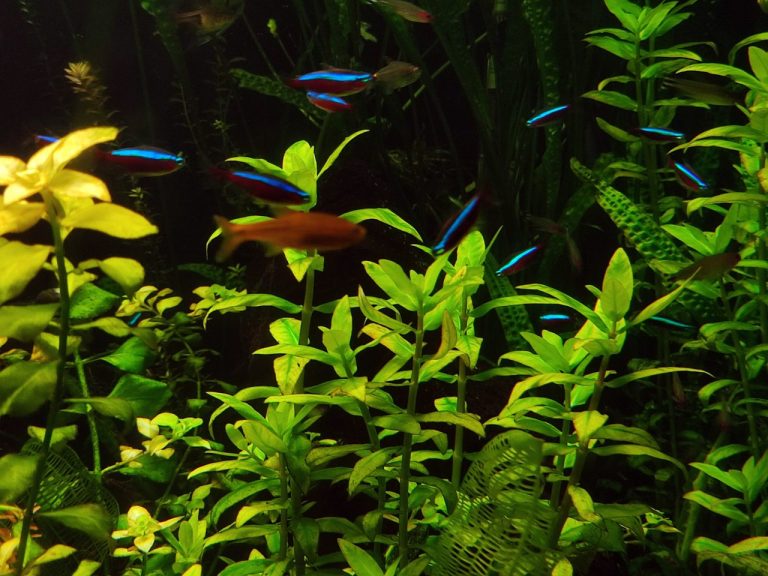
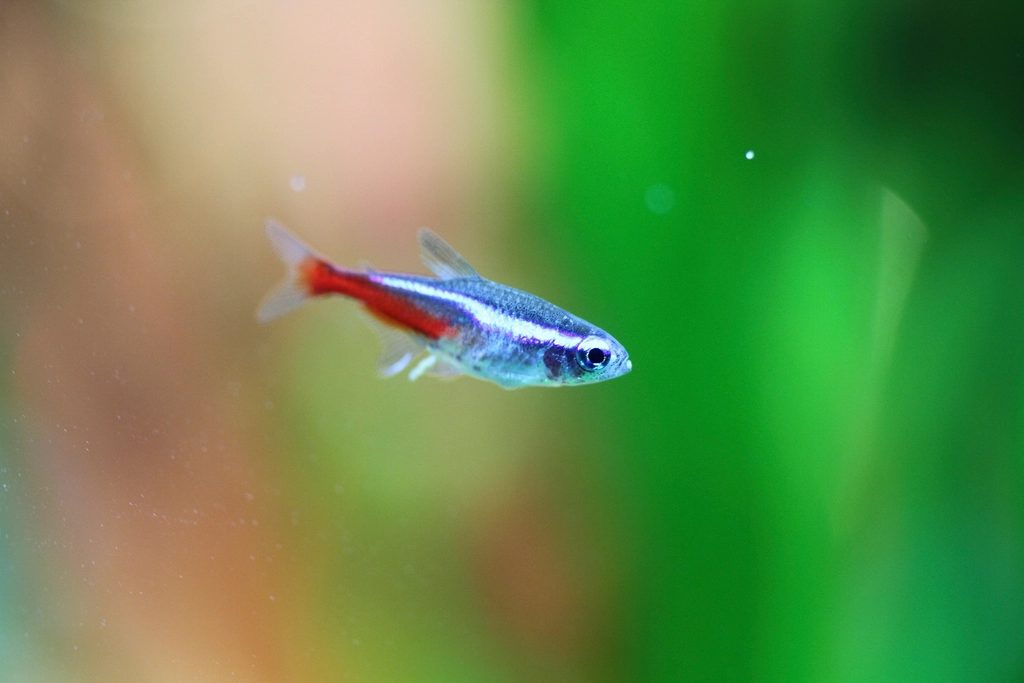
The most reliable way to tell them apart is by looking at the blue line that runs from the nose to the adipose fin. In a healthy environment, this line is a bright, electric blue that reacts to the light.
In males, this line is almost perfectly straight because their bodies are thin. In females, the line develops a noticeable “kink” or curve upward as it passes over their rounded abdomen.
Beyond the line, the overall body mass is a dead giveaway. Females are often described as “stout,” while males are the “marathon runners” of the tank, staying lean and agile.
| Feature | Male Neon Tetra | Female Neon Tetra |
|---|---|---|
| Body Shape | Slender, thin, and streamlined. | Rounder, deeper, and more solid. |
| Blue Stripe | Straight and horizontal. | Bent or curved upward in the middle. |
| Overall Size | Generally smaller in length. | Slightly longer and much wider. |
| Swim Pattern | Quick, darting movements. | Slower, more deliberate swimming. |
Analyzing the Ventral Profile
The ventral profile is the bottom curve of the fish’s body. If you look at your tetras from the side, the male’s belly will be relatively flat or only slightly curved.
A mature female will have a very pronounced, rounded belly, especially when she is carrying eggs. This is the most consistent marker I use when selecting pairs for a breeding tank.
The Role of the Adipose Fin
While the adipose fin (the small fin between the dorsal and tail fin) is present on both sexes, it can help you orient your gaze. Looking just below this fin is where you will see the end of the blue and red stripes.
On a female, the transition between the blue stripe and the red tail often looks more “stretched” due to her body depth. This visual stretching is a great secondary indicator when the fish are moving quickly.
Behavioral cues are often more subtle than physical ones, but they are just as important. During the early morning hours, you might notice the males becoming more active and “displaying” to one another.
This “sparring” involves two males swimming side-by-side or circling each other with their fins flared. It is a natural way for them to establish dominance within the school.
Females, on the other hand, tend to stay toward the middle of the school, focusing more on foraging. If you see one fish being chased gently by several others, it is likely a female being courted by eager males.
Pro Tip: If you notice your tetras are hiding or looking pale, check your water parameters immediately. Stress can cause them to lose their color, making it impossible to distinguish the male and female neon tetra.
Preparing Male and Female Neon Tetras for Breeding
Breeding neon tetras is often considered the “holy grail” for intermediate hobbyists. It requires patience and a very specific understanding of how to trigger their natural instincts.
The first step is conditioning your fish. In my experience, a diet of high-quality flakes is not enough; you must provide live or frozen foods like daphnia or brine shrimp.
Feeding these protein-rich foods for two weeks will help the females produce eggs and the males develop high-quality sperm. You will notice the females becoming noticeably “plump” during this period.
It is also the perfect time to check if your tetras are ready to spawn by observing their interaction levels. Eager pairs will stay close to each other, often hovering near fine-leaved plants.
Selecting the Right Breeding Pair
Once the fish are conditioned, select the most sturdy female and the most vivid male. I usually look for the female with the largest belly and the male with the most intense blue glow.
Isolating them in a separate tank is necessary because neon tetras are notorious egg-eaters. If you leave them in a community tank, the eggs will be consumed before they even hit the substrate.
The Ideal Breeding Tank Setup
To successfully breed a male and female neon tetra, you must mimic their natural Amazonian habitat. This means very soft, acidic water and low lighting levels.
I always recommend using a 10-gallon tank dedicated solely to spawning. The bottom should be covered with a spawning mop or a layer of marbles to protect the eggs from the parents.
Using peat filtration is a classic trick I’ve used for years to lower the pH and soften the water. The peat releases tannic acid, which stains the water a “tea” color and provides natural anti-fungal properties for the eggs.
Water Parameter Requirements for Spawning
The water must be pristine and very specific. I recommend using Reverse Osmosis (RO) water remineralized to a very low level to achieve these targets.
| Parameter | Ideal Range for Breeding |
|---|---|
| Temperature | 75°F – 77°F (24°C – 25°C) |
| pH Level | 5.0 – 6.0 |
| Hardness (dGH) | 1 – 2 degrees |
| Lighting | Extremely Dim / Darkened |
The use of tannic acid from Indian Almond leaves can also help achieve that perfect acidic environment. Once the pair is introduced, keep the tank dark, as neon tetra eggs are light-sensitive (photophobic).
The Spawning Process and Beyond
Spawning usually occurs in the early morning hours. The male will drive the female toward the spawning mop or plants, where she will release up to 100-130 tiny, transparent eggs.
As soon as you notice the female is “slim” again, you must remove the parents. They have no parental instincts and will begin searching for the eggs to eat immediately.
Success in breeding these bright fish depends heavily on this transition. Keep the breeding tank dark for the next 24 to 36 hours until the eggs hatch.
Raising the Fry: The First Weeks
Once the fry hatch, they will look like tiny slivers of glass. They will survive on their yolk sacs for a day or two before they need external food.
Because they are so small, they cannot eat crushed flakes. You must provide infusoria or specialized liquid fry food for the first week of their lives.
As they grow, you can transition them to vinegar eels and eventually baby brine shrimp. Maintaining perfect water quality during this stage is critical, as the fry are extremely sensitive to nitrate.
Common Health Issues and Prevention
Even with a perfect male and female neon tetra pair, health issues can arise. The most dreaded is Neon Tetra Disease, caused by the microsporidian parasite Pleistophora hyphessobryconis.
This disease is often incurable and spreads quickly through a school. Symptoms include loss of color, cyst-like lumps, and difficulty swimming.
I have found that the best prevention is a strict quarantine for all new fish. Always keep your tank clean and avoid overfeeding, as decaying food can lead to bacterial blooms that stress the fish.
Quick answers
Can I keep just one male and one female neon tetra together?
Neon tetras are schooling fish and should be kept in groups of at least 6 to 10. A single pair will likely become stressed, hide constantly, and may even succumb to illness due to a lack of social security.
How old do they need to be to breed?
Generally, neon tetras reach sexual maturity around 6 to 9 months of age. At this point, the physical differences between the male and female neon tetra become much more apparent to the naked eye.
Do neon tetras change sex?
No, neon tetras do not change sex. Their gender is determined at birth. If a fish appears to change shape, it is likely due to growth, egg production, or unfortunately, a health issue like dropsy.
Why is my female neon tetra so fat?
If she is acting normally and eating well, she is likely “gravid,” meaning she is carrying eggs. However, if her scales are sticking out like a pinecone, she may be suffering from a bacterial infection called dropsy.
How can I tell if the eggs are fertilized?
Fertilized eggs will remain clear or slightly amber. Unfertilized eggs will turn a fuzzy white within 24 hours as fungus begins to grow on them.
Final Steps for Your Neon Tetra Success
Distinguishing between a male and female neon tetra is a skill that improves with time and observation. By looking at the blue line and the body depth, you can accurately sex your school.
Providing a stress-free environment with soft, acidic water is the key to seeing their natural behaviors. Whether you want to breed them or just enjoy their colors, a healthy school is a beautiful addition to any tank.
Keep your water clean, feed a variety of foods, and always observe your fish daily. With these steps, you are well on your way to becoming a neon tetra expert.
If you are ready to take the next step, start by setting up a dedicated conditioning tank. Your journey into the satisfying world of tetra breeding starts with that first correctly identified pair.

- 2003First tank
- 20+Years keeping
- 40+Tanks kept
- 0Sponsored picks
Howard set up his first 10-gallon planted tank in 2003 and lost half of it within six weeks. Two decades and more than forty aquariums later, he writes the guides he wished he had then: clear numbers, the reasons behind them, and what actually goes wrong in home tanks.