Diamond Tetra Tank Size (Adult) – Minimum Tank Size Explained
The recommended diamond tetra tank size (adult) is a minimum of 20 to 30 gallons for a school of six. Larger tanks are preferred to accommodate their active swimming nature and deep-bodied adult shape.
The Diamond Tetra, scientifically known as Moenkhausia pittieri, is one of the most underrated gems in the freshwater hobby. When you see them as juveniles in a pet store, they often look like simple, silvery fish with little to offer.
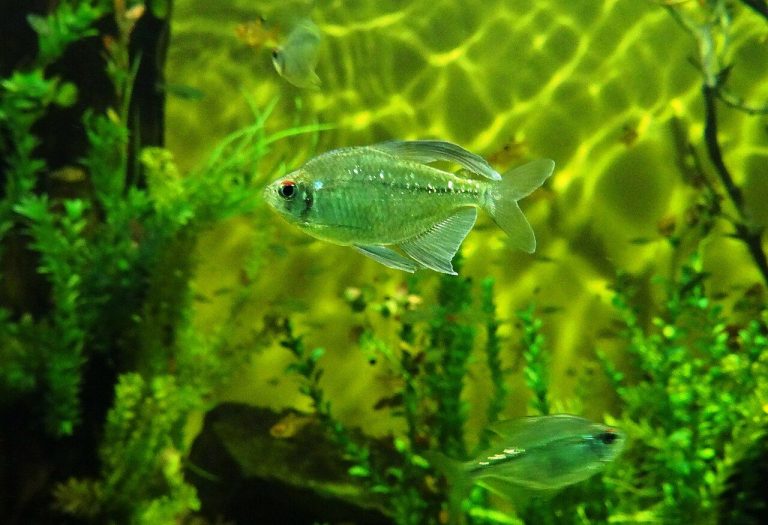
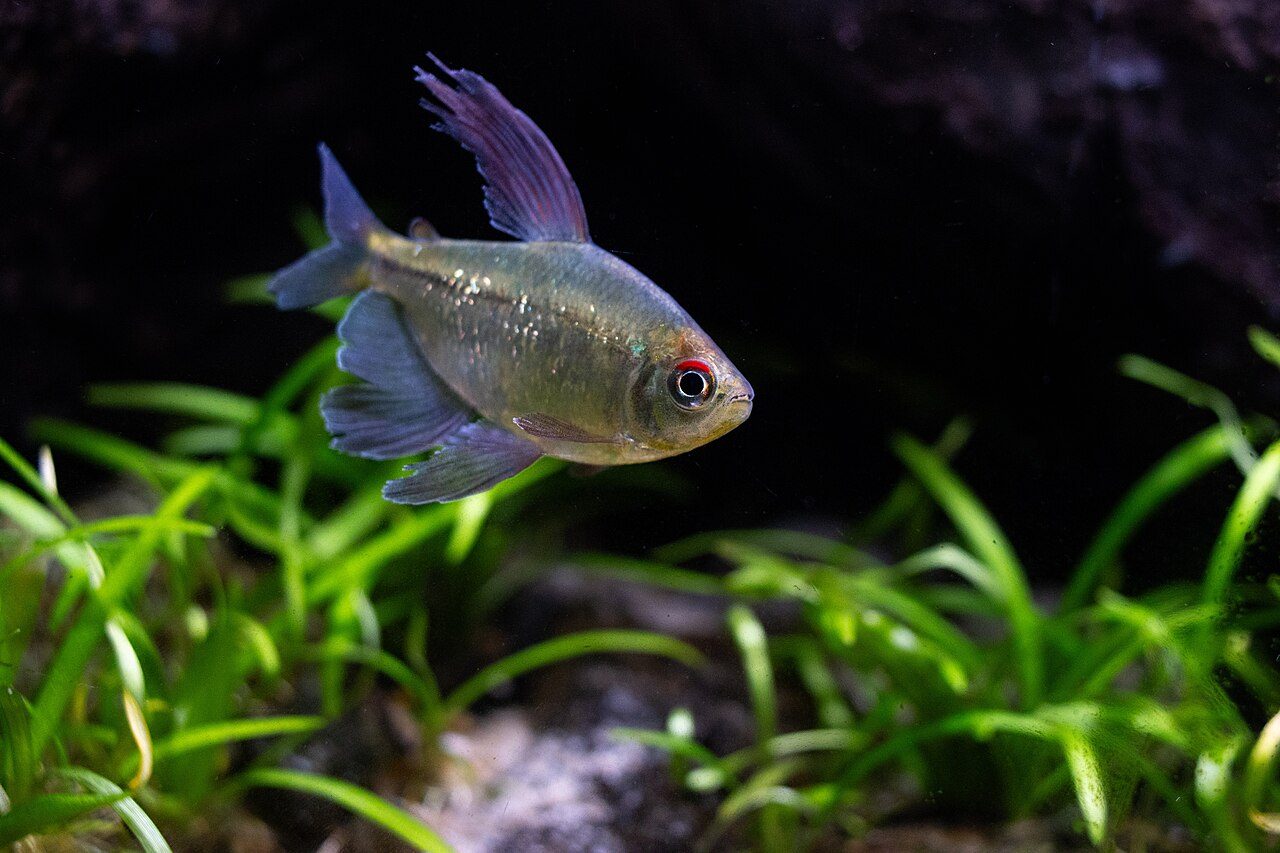
However, once they reach maturity and settle into a proper environment, they transform into striking specimens with scales that reflect light like crushed diamonds. In my experience, providing the right diamond tetra tank size (adult) is the single most important factor in seeing this transformation.
In this guide, I will share everything I have learned over the last decade about keeping these shimmering members of the Characidae family. We will cover everything from water chemistry to the specific dimensions required for their high-energy lifestyle.
At a glance: Diamond tetra (Moenkhausia pittieri)
- Temperature
- 75–82°F (24–28°C)
- Water pH
- 6.0–7.5
- Adult size
- 2.5 in (6 cm)
- Minimum tank
- 20 gal
- Group size
- Groups of 6+
- Temperament
- Peaceful
- Diet
- Omnivore: flakes, pellets, live and frozen foods
- Lifespan
- 5–6 years
Keeper’s tip: The sparkling scales take months to develop; young fish in stores look fairly plain.
Understanding Diamond Tetra Tank Size (Adult) Requirements
When discussing the diamond tetra tank size (adult), we have to look beyond just the length of the fish. While they only reach about 2 to 2.5 inches in length, they are “deep-bodied” fish, meaning they are much taller than your average Neon Tetra.
This body shape, combined with their incredible activity levels, means they require more lateral swimming space than many beginners realize. They are constant movers, darting through the mid-water levels of the aquarium in tight, shimmering groups.
I have found that a 20-gallon “Long” tank is the absolute minimum for a small group, but a 29-gallon or 40-gallon breeder is where they shine. These larger volumes provide the stability and space needed for their fins to develop those characteristic trailing edges.
| School Size | Minimum Tank Size | Recommended Dimensions |
|---|---|---|
| 6 – 8 Fish | 20 Gallons (Long) | 30″ x 12″ x 12″ |
| 10 – 12 Fish | 29 – 30 Gallons | 30″ x 12″ x 18″ |
| 15+ Fish | 40 – 55 Gallons | 36″ to 48″ Length |
Why Swimming Space Matters
Diamond Tetras are not “stationary” fish; they are Olympic sprinters of the tetra world. If the tank is too short, you will notice the fish becoming skittish or even aggressive toward one another as they compete for space.
When I first started keeping these, I tried a group in a standard 15-gallon tall tank. I quickly realized that the lack of horizontal distance prevented them from schooling naturally, leading to frayed fins and duller colors.
By moving them to a 30-gallon setup, the change was almost immediate. Their colors deepened, and the males began their spectacular “sparring” displays, which are harmless but visually eye-catching.
Replicating the Natural Habitat of Lake Valencia
To succeed with these fish, we must look at where they come from. Unlike many tetras that hail from the blackwater streams of the Amazon, Moenkhausia pittieri is endemic to Lake Valencia and its surrounding tributaries in Venezuela.
This lake is unique because it is an endorheic basin, meaning it has no natural outflow. This creates a specific water chemistry that is slightly harder and more alkaline than the typical soft-water tetra habitat.
In the home aquarium, this means they are quite adaptable. However, they still benefit from the addition of humic substances to mimic the leaf litter found in the slow-moving streams that feed the lake.
Pro Tip: To get the best sparkle out of your Diamond Tetras, use a dark substrate and plenty of floating plants. The subdued lighting created by the plants makes their iridescent scales pop while making the fish feel secure enough to swim in the open.
Water Parameters for Long-Term Health
While they are hardy, keeping an eye on carbonate hardness and specific conductance is key if you plan on breeding them or maximizing their lifespan. High levels of dissolved organic compounds can lead to stress, which invites disease.
I recommend using a high-quality external canister filter or a large sponge filter to maintain high dissolved oxygen levels. These fish flourish in well-oxygenated water with a gentle to moderate current.
| Parameter | Ideal Range |
|---|---|
| Temperature | 74°F – 82°F (23°C – 28°C) |
| pH Level | 6.0 – 7.5 |
| Hardness (dGH) | 4 – 12 dGH |
| Ammonia / Nitrite | 0 ppm |
| Nitrate | < 20 ppm |
Decorating for the Adult Diamond Tetra
Setting up the environment is just as vital as the diamond tetra tank size (adult) itself. These fish love a “planted” look but require a massive open area in the center of the tank for their schooling displays.
I suggest planting heavily along the back and sides of the aquarium using species like Amazon Swords or Vallisneria. This creates a “horseshoe” of safety where the fish can retreat if they feel startled.
The use of driftwood can also help provide structure. If your tap water is exceptionally hard, using peat filtration can help gently lower the pH and add beneficial tannins to the water column.
Lighting and Visibility
Diamond Tetras are famous for their “diamond” effect, which is caused by specialized guanine deposits in their scales. Under harsh, direct lighting, this effect can actually be washed out.
I’ve noticed that when I use a light that emphasizes the blue and red spectrums, the fish look incredible. Avoid keeping them in “bare” tanks with bright white sand, as this often causes them to “wash out” their colors to blend in with the background.
When you look at different kinds of tetra fish, few can match the Diamond’s ability to change appearance based on the angle of the light. It is a satisfying sight for any dedicated hobbyist.
Diet, Nutrition, and Growth
To reach the full potential of your diamond tetra tank size (adult), you must feed them a diverse and high-quality diet. In the wild, they are omnivores, consuming small insects, crustaceans, and plant matter.
In my tanks, I provide a base of high-quality flake food or small pellets. However, the “secret sauce” for that diamond shine is definitely live or frozen foods.
I feed mine bloodworms, daphnia, and brine shrimp at least three times a week. This extra protein and fat are what allow the males to grow those spectacular, elongated dorsal and anal fins.
Pro Tip: Don’t forget the greens. Diamond Tetras have been known to occasionaly nibble on soft-leaved plants if they aren’t getting enough vegetable matter. I include a spirulina-based flake once a day to keep them satisfied and away from my delicate plants.
Diamond Tetras are social creatures that must be kept in groups. I have found that a group of at least 6 to 8 is necessary to prevent “fin-nipping” behaviors.
When kept in too small a group, a dominant male may become overly assertive. In a larger school, this energy is dispersed throughout the group, resulting in a much more peaceful community.
They make excellent tank mates for many other species. If you are considering a more unique setup, you might wonder about keeping a diamond tetra with betta fish. While possible in a large enough tank, you must ensure the tank size is sufficient to prevent the active tetras from stressing the slower-moving betta.
Best Tank Mates
- Other medium-sized tetras (like Bleeding Heart or Rummy Nose).
- Corydoras catfish (for the bottom layer).
- Peaceful Dwarf Cichlids (like Apistogramma or Rams).
- Loricariids (Bristlenose Plecos).
Avoid keeping them with very large or aggressive fish like Oscars or large Jack Dempseys. Even though the Diamond Tetra is deep-bodied, it can still become a snack for a determined predator.
Common Health Issues and Prevention
The Diamond Tetra is generally strong, but they are not immune to common freshwater ailments. Because they are active and have a high metabolism, they require very clean water to do well.
One of the most common issues I see in overcrowded tanks is Ichthyophthirius multifiliis, more commonly known as Ich. This parasite often takes hold when the fish are stressed due to poor water quality or a cramped diamond tetra tank size (adult).
Regular 25% weekly water changes are the best defense. Always use a high-quality water conditioner to remove chlorine and chloramines, which can irritate their sensitive gills.
Monitoring for Stress
If you notice your Diamond Tetras hovering near the surface or breathing rapidly, check your dissolved oxygen levels immediately. These fish are often the “canaries in the coal mine” for oxygen depletion.
Ensuring your filter return creates enough surface agitation is usually enough to prevent this. If you have a heavily planted tank, keep in mind that plants consume oxygen at night, so an air stone on a timer can be a lifesaver.
Common questions
Can I keep Diamond Tetras in a 10-gallon tank?
No, I strongly advise against it. An adult Diamond Tetra is too active and deep-bodied for a 10-gallon aquarium; they will likely become stressed, stunted, and prone to disease in such a small volume.
How long do Diamond Tetras live?
Looked after properly and a healthy diamond tetra tank size (adult), they can easily live for 3 to 6 years. Some hobbyists have even reported them reaching 8 years in exceptionally well-maintained systems.
Are Diamond Tetras fin nippers?
They are generally peaceful but can be “nippy” if they are bored or kept in groups that are too small. Keeping them in a school of 8 or more usually eliminates this behavior entirely.
Do they need a heater?
Yes, they are tropical fish. You should maintain a stable temperature between 74°F and 82°F to keep their immune systems functioning correctly.
A last word
The Diamond Tetra is a masterclass in why we shouldn’t judge a fish by its appearance in a pet store tank. If you provide the correct diamond tetra tank size (adult) and mimicking their natural Venezuelan waters, you get a level of beauty rarely seen in freshwater aquariums.
Space is the greatest gift you can give these active swimmers. A 20-gallon long or 29-gallon tank is the perfect canvas for their shimmering displays.
If you are just starting out, they are one of the best tetra fish for beginners who want something a bit more substantial than a Neon or Glowlight. Treat them well, keep their water clean, and they will reward you with a sparkling show every single day.

- 2003First tank
- 20+Years keeping
- 40+Tanks kept
- 0Sponsored picks
Howard set up his first 10-gallon planted tank in 2003 and lost half of it within six weeks. Two decades and more than forty aquariums later, he writes the guides he wished he had then: clear numbers, the reasons behind them, and what actually goes wrong in home tanks.