Cardinal Tetra Breeding – Step-by-Step Guide
To achieve cardinal tetra breeding, you must provide soft, acidic water (pH 5.0-6.0) and very low conductivity (under 50 microsiemens). Use a dark tank, a spawning grate, and condition parents with live foods for successful egg-laying.
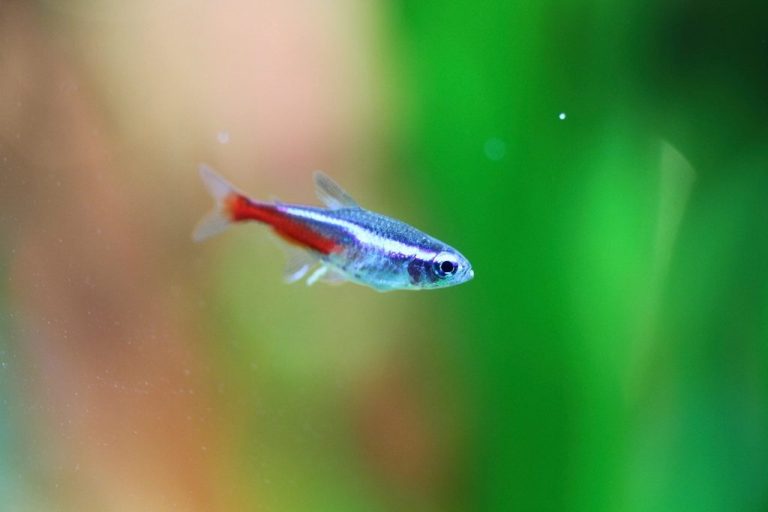
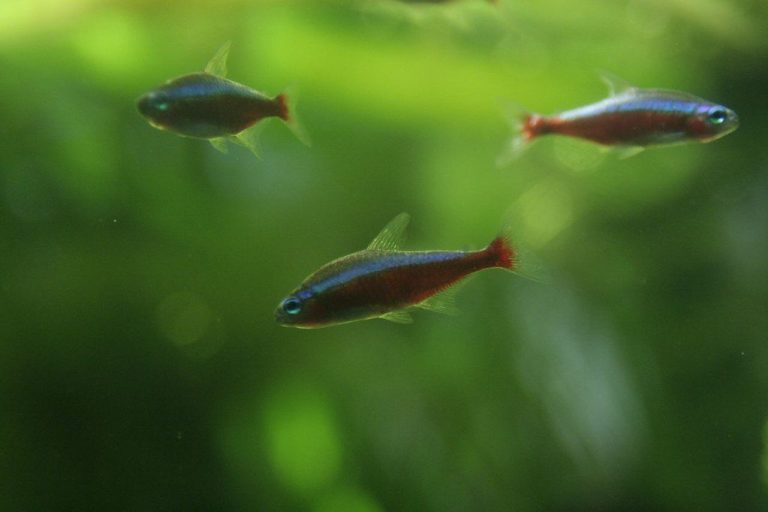
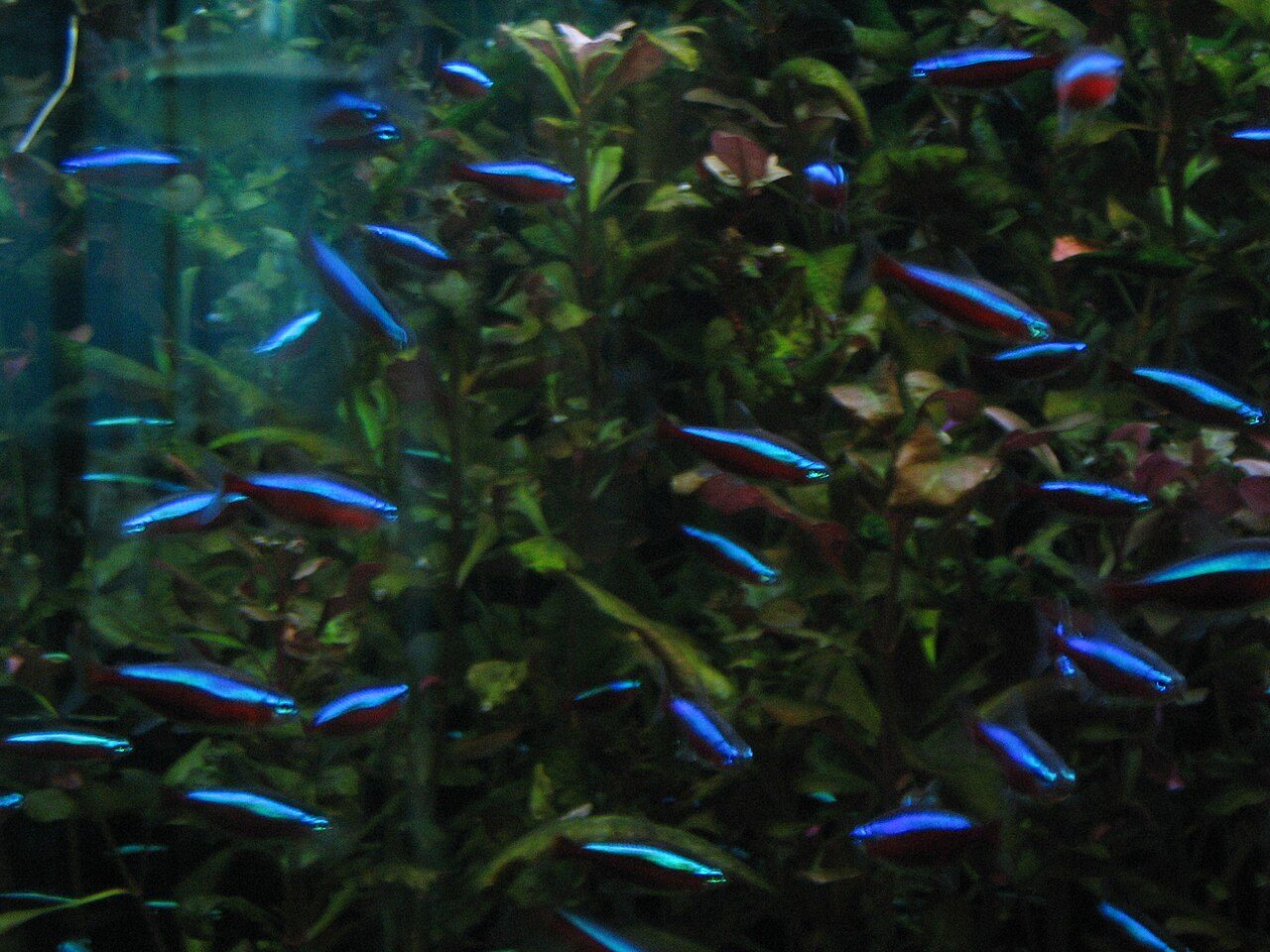
The Cardinal Tetra, scientifically known as Paracheirodon axelrodi, is often considered the crown jewel of the freshwater aquarium. Its brilliant blue and deep red stripes bring a level of color that few other species can match.
While many hobbyists are content just watching them school, the challenge of cardinal tetra breeding is a rite of passage for many serious aquarists. It is significantly more difficult than breeding their cousins, the Neon Tetras, but the reward is incredibly satisfying.
In my experience, the what really counts lies in replicating the blackwater environments of the Rio Negro. If you can master the water chemistry, you are halfway to seeing your first batch of fry.
At a glance: Cardinal tetra (Paracheirodon axelrodi)
- Temperature
- 76–84°F (24–29°C)
- Water pH
- 4.5–7.0
- Adult size
- 2 in (5 cm)
- Minimum tank
- 20 gal
- Group size
- Groups of 8+
- Temperament
- Peaceful
- Diet
- Omnivore: small pellets, flakes, frozen bloodworm
- Lifespan
- 4–6 years
Keeper’s tip: Cardinals like it warmer and softer than neons, so they are a poor match for cool-water tank mates.
The Science of Cardinal Tetra Breeding Parameters
Before you even move a pair of fish into a breeding tank, you must understand the specific environment they require. These fish are highly sensitive to water hardness and mineral content.
In the wild, they inhabit waters that are almost chemically pure, often referred to as “distilled water with a tea stain.” This is why reverse osmosis (RO) water is practically mandatory for this project.
The table below outlines the strict parameters you should aim for to trigger spawning and ensure egg viability.
| Parameter | Ideal Range |
|---|---|
| Water Temperature | 80°F – 82°F (26.5°C – 28°C) |
| pH Level | 5.0 – 6.0 |
| Carbonate Hardness (KH) | 0 – 1 dKH |
| General Hardness (GH) | 1 – 2 dGH |
| Conductivity | Under 50 Microsiemens |
Pro Tip: Many breeders fail because their water is too “clean” but too hard. Always use a TDS meter to check conductivity; if it is above 100 microsiemens, the eggs will likely fail to fertilize or will harden and die.
Setting Up the Breeding Tank for Success
A dedicated breeding tank is essential because you cannot breed these fish in a community setting. A 5 to 10-gallon tank is usually sufficient for a single pair or a small group.
The tank should be bare-bottom to make cleaning easier, as fry are extremely sensitive to bacteria. I often use peat filtration or add Indian Almond leaves to leach humic acid into the water, which provides natural anti-fungal properties.
Since Cardinal Tetras are an egg scatterer species, they have no parental instincts and will eat their own eggs. To prevent this, you should install a spawning grate or a thick layer of marbles at the bottom.
Managing Light and Photophobia
One of the most unique aspects of cardinal tetra breeding is the photophobia of the eggs and fry. The eggs are light-sensitive and will “burn” or fungus if exposed to bright light.
I recommend painting the sides of the breeding tank black or wrapping it in dark construction paper. During the spawning process and the first few days of fry development, the room should remain almost completely dark.
When I first tried this, I made the mistake of using a standard aquarium light. Not a single egg survived, which taught me the importance of total darkness during the early stages.
Conditioning the Breeders for Spawning
You cannot simply move fish from a display tank and expect them to spawn immediately. They need to be “conditioned” with high-quality, protein-rich foods for at least two weeks.
Live foods are the gold standard here. Focus on feeding them live daphnia, bloodworms, and brine shrimp to encourage the females to produce eggs.
You can learn more about best feeding practices to make sure your fish are in peak physical condition. A well-conditioned female will appear noticeably rounder when viewed from above.
Pro Tip: Separate the males and females for a week during the conditioning phase. When you finally introduce them into the breeding tank together, the sudden presence of a mate often triggers an immediate spawning response.
How to Identify Male and Female Cardinals
Telling the difference between genders can be tricky for beginners. Males are generally slimmer and have a very straight blue line running down their bodies.
Females are larger, deeper-bodied, and their blue line may appear slightly curved due to the weight of the eggs. Making sure you have a healthy, mature pair is the foundation of cardinal tetra breeding success.
If you are unsure about your water quality during this phase, checking specific water requirements can help you fine-tune the environment before the fish are introduced.
The Spawning Process and Egg Care
Once the pair is introduced to the breeding tank, spawning usually occurs during the early morning hours or in total darkness. The male will drive the female toward fine-leaved plants like Java Moss or over the spawning grate.
The female will release up to 500 tiny, transparent eggs. Once the act is complete, you must remove the parents immediately to prevent them from hunting down any stray eggs.
This is the most critical time for the cardinal tetra breeding project. The tank must remain dark, and you should avoid any sudden changes in water temperature.
From Egg to Wriggler
The eggs will typically hatch within 24 to 36 hours depending on the temperature. At this stage, they are not yet swimming; they are “wrigglers” that survive on their yolk sacs.
During this period, do not attempt to feed them. Adding food now will only foul the water and kill the delicate larvae.
I’ve noticed that using a tiny bit of methylene blue can help prevent fungus on unfertilized eggs. However, if your water is soft and acidic enough, the humic acids should do this work for you naturally.
Raising the Fry: The First Two Weeks
Feeding the fry is the most difficult part of cardinal tetra breeding. They are far too small to eat crushed flakes or even baby brine shrimp initially.
You must provide infusoria or specialized liquid fry foods for the first 4 to 7 days. These microscopic organisms are the only thing small enough for their tiny mouths.
Once they start swimming freely and look a bit larger, you can transition them to vinegar eels or microworms. Consistency is key here; small, frequent feedings are better than one large one.
Maintaining Water Quality for Fry
While the fry need clean water, they are also terrified of change. Use a small airline tube to drip-feed new water into the tank during water changes.
Large, sudden water changes can shock their systems and lead to mass die-offs. In my experience, changing 10% of the water daily using the drip method is the safest approach.
As they grow, you can refer to the guide on how to breed tetra fish for general tips on transitioning young fish to a grow-out tank.
Troubleshooting Common Breeding Pitfalls
Even with the best preparation, things can go wrong. Understanding why a spawn failed is part of becoming an expert.
The most common issue is “egg binding” or the eggs simply turning white. This usually points back to the carbonate hardness or the conductivity being too high.
Another issue is the fry disappearing after a few days. This is almost always due to starvation or poor water hygiene.
| Problem | Likely Cause | Solution |
|---|---|---|
| Eggs turning white/fuzzy | Water too hard or fungus | Use RO water and humic acids |
| Parents not spawning | Poor conditioning | Feed live foods for 2 weeks |
| Fry dying after 3 days | Starvation | Start Infusoria cultures early |
Frequently asked questions
How many eggs do Cardinal Tetras lay?
A healthy, mature female can lay between 150 and 500 eggs in a single spawning session. However, survival rates in a home aquarium are typically much lower.
Can I breed Cardinal Tetras in tap water?
In most cases, no. Tap water usually has too much mineral content and a pH that is too high. Successful cardinal tetra breeding almost always requires reverse osmosis water.
How long does it take for fry to show color?
You will start to see the faint glimmer of the blue neon line after about 3 to 4 weeks. The full red coloration usually develops by the 8-week mark.
Why do I need to keep the tank dark?
The eggs and newly hatched fry have a condition called photophobia. Exposure to light can cause developmental defects or kill the embryos entirely.
My final take
Mastering cardinal tetra breeding is a significant achievement that proves your skills as an aquarist. It requires patience, precision, and a deep understanding of water chemistry.
If you focus on soft, acidic water and protecting the light-sensitive eggs, you can successfully raise a new generation of these eye-catching fish. The journey is just as important as the result.
Don’t be discouraged if your first few attempts don’t result in a tank full of fry. Each failure is a lesson that brings you closer to becoming a master breeder.
Keep your water soft, your tank dark, and your live cultures ready. With these steps, you are well on your way to a successful spawn.

- 2003First tank
- 20+Years keeping
- 40+Tanks kept
- 0Sponsored picks
Howard set up his first 10-gallon planted tank in 2003 and lost half of it within six weeks. Two decades and more than forty aquariums later, he writes the guides he wished he had then: clear numbers, the reasons behind them, and what actually goes wrong in home tanks.