Long Fin Red Minor Tetra – The Ultimate Expert Care Guide
The long fin red minor tetra is a eye-catching, deep-red variant of Hyphessobrycon eques known for its flowing fins. These hardy schooling fish do well in well-planted aquariums with stable water parameters and peaceful tank mates.
The long fin red minor tetra is one of those fish that stops people in their tracks. Whenever I have visitors look at my display tanks, these are almost always the first fish they ask about.
Their deep, ruby-red coloration combined with those elegant, trailing fins creates a visual impact that few other freshwater fish can match. In my ten years of keeping members of the Characidae family, I have found these tetras to be both resilient and satisfying.
Whether you are just starting your first tank or looking to add some flair to a seasoned setup, understanding their specific needs is the biggest factor. In this guide, I will share everything I have learned about keeping these beautiful fish healthy and vivid.
At a glance: Tetras (general) (Family Characidae and relatives)
- Temperature
- 72–80°F (22–27°C) for most species
- Water pH
- 6.0–7.5 for most species
- Adult size
- 1–3 in (2.5–8 cm)
- Minimum tank
- 10–30 gal depending on species
- Group size
- Groups of 6–10+
- Temperament
- Mostly peaceful schooling fish
- Diet
- Omnivores: quality flakes or micro pellets plus frozen foods
- Lifespan
- 3–8 years
Keeper’s tip: Schooling size matters more than tank size for most tetras: small groups hide, nip and stress.
Understanding the long fin red minor tetra
To care for the long fin red minor tetra, we first have to look at where they come from. These fish are a selectively bred color and fin variant of Hyphessobrycon eques, commonly known as the Serpae tetra.
In the wild, their ancestors inhabit the Amazon basin, specifically areas with slow-moving water and plenty of submerged vegetation. They are accustomed to environments rich in organic matter and soft, slightly acidic water.
Because they are a “long fin” variety, they require a bit more attention than their short-finned cousins. Their delicate finnage can be a target for aggressive tank mates or can become damaged by sharp decor.
Physical Characteristics and Appearance
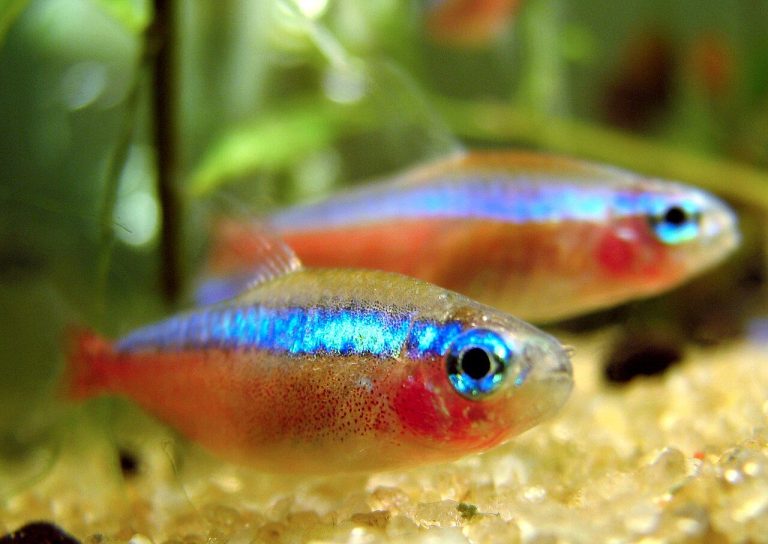
The most striking feature of this fish is, of course, its color. A healthy specimen should display a rich, saturated red across its entire body, often accented by a dark “comma” shape behind the gills.
The “long fin” trait means the dorsal and anal fins are significantly elongated compared to the standard wild type. These fins often have a black edge tipped with white, which provides a beautiful contrast against the red body.
In my experience, the intensity of their red color is a direct reflection of their diet and stress levels. If your tetras look pale, it is usually a sign that something in their environment needs adjusting.
Ideal Tank Setup and Water Parameters
Setting up a home for the long fin red minor tetra requires a balance between aesthetics and biological needs. While they are hardy, providing a “blackwater” style environment often brings out their best behavior.
I always recommend starting with at least a 20-gallon aquarium for a proper school. While they are small, they are active swimmers and need horizontal space to establish their social hierarchy.
Using a dark substrate, such as black sand or fine gravel, will make their red colors pop. Adding dried catappa leaves or alder cones can release humic substances into the water, mimicking their natural habitat.
| Parameter | Ideal Range |
|---|---|
| Temperature | 72°F to 82°F (22°C – 28°C) |
| pH Level | 5.5 to 7.5 (6.5 is ideal) |
| Water Hardness | 5 to 15 dGH / dKH 2-8 |
| Minimum Tank Size | 20 Gallons |
Filtration and Water Flow
These tetras prefer gentle to moderate water flow. High-powered powerheads can sometimes exhaust fish with long fins, as the extra surface area creates more drag when they swim.
I have had great success using peat filtration to naturally lower the pH and soften the water. This method also introduces tannic acid, which has natural antifungal and antibacterial properties that protect those long fins.
Regular water changes are essential to keep nitrates low. I typically aim for a 25% water change every week to make sure the water remains pristine and clear.
Pro Tip: If you notice your tetras hiding or looking stressed, try adding more floating plants like Amazon Frogbit. The diffused light mimics the canopy of the Amazon and makes them feel much more secure.
One of the most common mistakes I see beginners make is keeping too few of these fish together. The long fin red minor tetra is a social species that relies on a “safety in numbers” mentality.
You should aim for a minimum of 6 to 8 individuals, though a group of 10 or more is even better. In a larger group, their natural “pecking order” is spread out, which reduces individual stress.
They are known for a behavior often called “playful nipping” among themselves. This is usually harmless posturing, but it can become an issue if the school is too small.
The Truth About Fin Nipping
There is a bit of a reputation surrounding this species regarding fin nipping. While they can be nippy, this behavior is almost always triggered by boredom, hunger, or a cramped environment.
When kept in a large enough school, they mostly focus their energy on each other rather than their tank mates. However, I would avoid keeping them with very slow-moving fish like male Bettas or Fancy Guppies.
If you are looking for a community setup, it is best to choose peaceful tetra species or fast-moving fish that can hold their own. Corydoras catfish and Bristlenose Plecos make excellent bottom-dwelling companions.
Diet and Nutritional Requirements
To maintain that brilliant red hue, a high-quality, varied diet is non-negotiable. In the wild, they are opportunistic omnivores, eating small insects, crustaceans, and plant matter.
I recommend a base of high-quality flake food or micro-pellets formulated for tetras. Look for foods that contain natural color enhancers like spirulina or carotenoids.
Feeding live or frozen foods once or twice a week will make a massive difference in their health. I’ve noticed that my tetras become much more active and rich after a meal of frozen bloodworms or brine shrimp.
Feeding Schedule and Portions
I prefer to feed my tetras twice a day in small amounts. Only provide what they can completely consume within two minutes to prevent excess food from rotting in the substrate.
Overfeeding is a quick way to crash your water quality and cause health issues like bloating. If you see food hitting the bottom and staying there, you are likely feeding too much at once.
Varied nutrition also supports their immune system, which is vital for preventing common ailments. A well-fed fish is a resilient fish that can fight off pathogens naturally.
Pro Tip: Try “target feeding” if you have bottom dwellers. Drop some food in one corner for the tetras, then use a tube to place sinking pellets in another corner for your catfish to avoid competition.
Common Health Issues and Prevention
Like many tropical fish, the long fin red minor tetra can be susceptible to certain parasites and infections. The most common issue I see in newly purchased fish is Ichthyophthirius multifiliis, commonly known as Ich.
Ich appears as small white spots on the body and fins, looking much like grains of salt. Because of their long fins, these tetras can also develop fin rot if the water quality is poor or if they are being nipped by others.
Prevention is always easier than a cure. Quarantining new fish for two weeks before adding them to your main display is the single best thing you can do for your aquarium’s health.
Maintaining a Stress-Free Environment
Stress is the primary precursor to almost all fish diseases. Rapid changes in temperature or pH can weaken a tetra’s slime coat, making them vulnerable to bacteria.
Using a high-quality water conditioner during water changes is vital for removing chlorine and heavy metals. I also suggest keeping a consistent lighting schedule to help regulate their natural biological clock.
If you do need to treat for a disease, be cautious with medications. Some “long fin” varieties can be sensitive to certain copper-based treatments, so always read the labels carefully and start with a half-dose if unsure.
Breeding the long fin red minor tetra
Breeding these fish can be a remarkable challenge for the intermediate hobbyist. They are substrate spawning fish, meaning they scatter their eggs among fine-leaved plants or over a mesh grate.
To trigger spawning, I usually start by “conditioning” a pair or a small group with high-protein live foods for a week. You will notice the females becoming noticeably rounder as they fill with eggs.
You will need a separate breeding tank with soft water and a low pH. I find that a layer of Java Moss on the bottom provides the perfect place for the eggs to land and stay protected from the parents.
Raising the Fry
Once the eggs are laid, the adult fish must be removed immediately. Like most tetras, they have no parental instincts and will eat their own eggs if given the chance.
The eggs usually hatch within 24 to 36 hours. The tiny fry will initially survive on their yolk sacs before needing very small foods like infusoria or liquid fry food.
As they grow, you can transition them to baby brine shrimp. If you want to learn more about the general process, you can read about spawning tetras at home to get a better handle on the basics.
Common questions
How long do long fin red minor tetras live?
With proper care and a stable environment, these tetras typically live between 5 and 7 years. Providing a high-quality diet and keeping stress levels low are the two most important factors in maximizing their lifespan.
Are they aggressive toward other fish?
They are generally considered semi-aggressive. While they aren’t predators, their nipping behavior can stress out slow-moving or long-finned tank mates. Keeping them in a large school is the best way to mitigate this.
Can I keep them in a 10-gallon tank?
I strongly advise against a 10-gallon tank for this species. They are very active and need the swimming room provided by at least a 20-gallon “long” aquarium to do well and display natural behaviors.
Do they need a heater?
Yes, as tropical fish from the Amazon, they require a consistent temperature between 72°F and 82°F. A reliable aquarium heater with a thermostat is essential for their health.
A last word
The long fin red minor tetra is a satisfying species that brings life and color to any freshwater aquarium. Their deep red tones and flowing fins make them a standout choice for anyone willing to meet their specific needs.
If you provide a well-planted tank, stable water parameters, and a large enough school, you can enjoy these “jewels of the Amazon” for many years. The secret to their health lies in mimicking their natural environment as closely as possible.
Whether you are enjoying their playful interactions or attempting to breed them, these tetras offer a unique window into the beauty of the aquatic world. I hope this guide helps you feel confident in welcoming these beautiful fish into your home.

- 2003First tank
- 20+Years keeping
- 40+Tanks kept
- 0Sponsored picks
Howard set up his first 10-gallon planted tank in 2003 and lost half of it within six weeks. Two decades and more than forty aquariums later, he writes the guides he wished he had then: clear numbers, the reasons behind them, and what actually goes wrong in home tanks.