What Do Neon Tetra Eggs Look Like – Breeding Guide
Neon tetra eggs are tiny, semi-transparent spheres measuring approximately 1mm in diameter. They possess slight adhesive properties, appearing like clear, jelly-like beads scattered among fine-leaved plants or spawning mops, often becoming visible only under careful inspection.
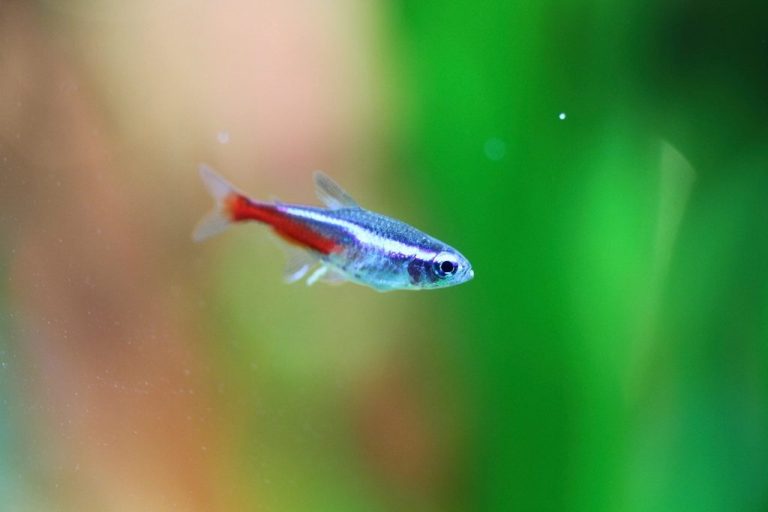
The neon tetra, scientifically known as Paracheirodon innesi, is perhaps the most iconic fish in the freshwater hobby. Their colorful blue and red stripes have captivated aquarists for decades, but breeding them remains a badge of honor for many.
If you are reading this, you are likely wondering what do neon tetra eggs look like and whether your school has finally decided to expand. In my ten years of maintaining these delicate characins, I have learned that spotting the eggs is often the hardest part of the process.
Identifying these tiny “water pearls” is the first step toward successfully breeding tetras at home. Let’s look closely at the visual cues, biological structures, and environmental factors that will help you identify and protect your future fry.
At a glance: Neon tetra (Paracheirodon innesi)
- Temperature
- 72–78°F (22–26°C)
- Water pH
- 6.0–7.0
- Adult size
- 1.5 in (4 cm)
- Minimum tank
- 10 gal (20 gal for a proper school)
- Group size
- Groups of 8+
- Temperament
- Peaceful
- Diet
- Omnivore: micro pellets, flakes, frozen daphnia
- Lifespan
- 5–8 years
Keeper’s tip: Add neons only to a fully cycled, stable tank; they are among the first fish to suffer from ammonia swings.
What Do Neon Tetra Eggs Look Like?
When you first look for neon tetra eggs, do not expect to see a large, obvious clump like you might find with snails or even some cichlids. Instead, you are looking for something much more subtle and easily overlooked by the untrained eye.
The eggs are incredibly small, usually around 1 millimeter in diameter, which is roughly the size of a pinhead. They are spherical and initially appear almost completely transparent, making them blend in perfectly with the water and foliage.
Color, Clarity, and Texture
A healthy, freshly laid neon tetra egg is crystal clear. This transparency is due to the vitelline membrane, which protects the developing embryo while allowing for gas exchange with the surrounding water.
| Feature | Description |
|---|---|
| Size | Approximately 1.0mm to 1.2mm in diameter. |
| Shape | Perfectly spherical beads. |
| Adhesion | Weakly adhesive; they stick to moss but fall easily. |
| Fertile Color | Clear to slightly amber-tinted. |
| Infertile Color | Opaque white or fuzzy gray. |
These eggs have slight adhesive properties when they are first expelled. However, they are not as “sticky” as those of other species, and many will simply tumble through the leaves of a plant and settle on the substrate.
Pro Tip: To better see the eggs, use a small LED flashlight and shine it at an angle from the side of the tank. The light will catch the edges of the vitelline membrane, making the clear eggs “glow” against dark moss or substrate.
Distinguishing Between Fertile and Infertile Eggs
In my experience, not every egg laid will result in a swimming fry. Within 12 to 24 hours, you will begin to notice a distinct difference between the viable eggs and those that have failed.
Fertile eggs will remain clear, though you might see a tiny dark speck developing inside after the first day. This speck is the beginning of the embryo’s eyes and spinal cord, signaling that life is taking hold.
Infertile eggs, on the other hand, will quickly turn an opaque, milky white color. These eggs are no longer alive and are highly susceptible to Saprolegnia, a common water mold that looks like white fuzz.
The Threat of Saprolegnia
If you see white, fuzzy eggs, it is vital to act quickly. This fungus can spread from the dead eggs to the healthy, clear ones, effectively wiping out the entire clutch.
Using a turkey baster to gently remove the white eggs is a common practice among breeders. I’ve noticed that maintaining a very low dGH (degree of General Hardness) also helps prevent the egg membranes from hardening too quickly or becoming prone to fungal attacks.
Understanding the Spawning Process of Paracheirodon innesi
To know what do neon tetra eggs look like in your specific setup, you first need to know where to look. Neon tetras are egg-scatterers, meaning they do not build nests or provide parental care.
Spawning usually occurs in the early morning hours, often triggered by the first light of day. The male will chase the female into thickets of fine-leaved plants, where they will shimmy together and release the eggs and milt.
Preferred Spawning Locations
In a naturalistic setup, they prefer plants like Java Moss or Hornwort. The dense “fingers” of these plants catch the eggs and hide them from the hungry mouths of the adult fish.
Many professional breeders prefer using a spawning mop made of dark synthetic yarn. This mimics the dense roots or mosses found in their natural habitat while making it much easier for the hobbyist to move the eggs to a separate hatching tank.
Pro Tip: If you use a spawning mop, choose a dark green or black color. The contrast makes the clear, light-reflecting eggs much easier to identify than on a light-colored material.
The Role of Water Chemistry in Egg Development
The appearance and health of neon tetra eggs are directly tied to the water they are laid in. These fish are native to “blackwater” environments in the Amazon, which are soft, acidic, and rich in organic compounds.
If your water is too hard, the minerals can actually calcify the egg membrane. This prevents fertilization or makes it impossible for the fry to break out of the egg once they are ready to hatch.
| Parameter | Ideal Range for Eggs |
|---|---|
| Temperature | 75°F – 78°F (24°C – 25.5°C) |
| pH | 5.5 – 6.5 |
| General Hardness (dGH) | 1.0 – 2.0 degrees |
| Carbonate Hardness (dKH) | 0 – 1.0 degrees |
Tannic Acid and Humic Substances
I highly recommend adding humic substances to your breeding tank through the use of Indian Almond leaves or peat moss. These release tannic acid, which naturally lowers the pH and provides anti-fungal properties.
This creates the classic “tea-colored” water that neon tetras love. When the water is dark, the clear eggs are protected from light, and the anti-fungal nature of the tannins keeps them safe from mold.
Keeping the environment stable is key to keeping neon tetras healthy and encouraging them to spawn regularly.
The Photophobic Nature of Neon Tetra Eggs
One of the most critical things to understand about what do neon tetra eggs look like and how they behave is their sensitivity to light. Neon tetra eggs are photophobic, meaning light can actually kill the developing embryos.
In the wild, the dense forest canopy and dark blackwater protect the eggs from the sun’s UV rays. In an aquarium, even a standard overhead light can be too intense for the delicate embryos inside those clear shells.
Managing Light Exposure
When you suspect eggs have been laid, you should immediately dim the lights or cover the sides of the tank with dark paper. I have seen entire spawns fail simply because the breeder left the aquarium light on for a full 12-hour cycle.
Keeping the tank in near-total darkness for the first 48 to 72 hours is standard practice. Once the fry hatch and become free-swimming, you can slowly reintroduce very dim ambient light.
From Egg to Fry: The First 48 Hours
Once you’ve identified the eggs and protected them from light, the waiting game begins. Neon tetra eggs typically hatch within 24 to 36 hours, depending on the temperature.
When they hatch, you won’t see miniature fish right away. Instead, you will see “wigglers”—tiny slivers that remain attached to the surface or the bottom of the tank, vibrating as they absorb their yolk sacs.
The Importance of Infusoria
Neon tetra fry are among the smallest in the hobby. They cannot eat crushed flakes or even baby brine shrimp immediately after hatching.
They require Infusoria, which are microscopic organisms that live in established aquarium water. You can culture these yourself or use commercial liquid fry foods designed for egg-layers.
As they grow, you can transition them to larger foods. This is a delicate phase that requires patience and very clean water to make sure the fry survive into adulthood.
Reader questions
How many eggs does a neon tetra lay?
A single healthy female can lay anywhere from 60 to 130 eggs during a single spawning session. However, due to their tiny size and the fact that parents often eat them, you may only find a fraction of that number.
Will neon tetras eat their own eggs?
Yes, neon tetras are notorious egg-eaters. To successfully raise the fry, you must either remove the adults immediately after spawning or use a mesh grate that allows eggs to fall through where the adults cannot reach them.
How long do the eggs take to hatch?
In most cases, the eggs hatch in about 24 hours. If the water is slightly cooler, it may take up to 36 hours, but anything longer usually indicates the eggs were not fertile.
Can I see the eggs in a community tank?
It is very difficult to see neon tetra eggs in a community tank. They are often eaten by other fish or filtered out before you even notice they are there. For the best results, use a dedicated breeding tank.
Final Thoughts on Spotting Neon Tetra Eggs
Understanding what do neon tetra eggs look like is the key to opening up the satisfying experience of breeding these beautiful fish. While they may look like nothing more than tiny bubbles or specks of dust, they represent the start of a new generation.
If you provide soft, acidic water, plenty of dark hiding spots, and protection from bright light, you give these fragile “water pearls” the best chance at survival. Look for clear, spherical beads nestled in your moss, and keep a sharp eye out for the tell-tale white color of infertile eggs.
With some patience and the right environmental conditions, you’ll soon transition from watching tiny eggs to marveling at a school of home-bred neon tetras shimmering in your aquarium.

- 2003First tank
- 20+Years keeping
- 40+Tanks kept
- 0Sponsored picks
Howard set up his first 10-gallon planted tank in 2003 and lost half of it within six weeks. Two decades and more than forty aquariums later, he writes the guides he wished he had then: clear numbers, the reasons behind them, and what actually goes wrong in home tanks.