Neon Tetra Eggs – Breeding Guide
Neon tetra eggs are tiny, translucent spheres that are extremely sensitive to light and prone to fungus. To hatch them successfully, you must provide total darkness and very soft, acidic water during the incubation period.
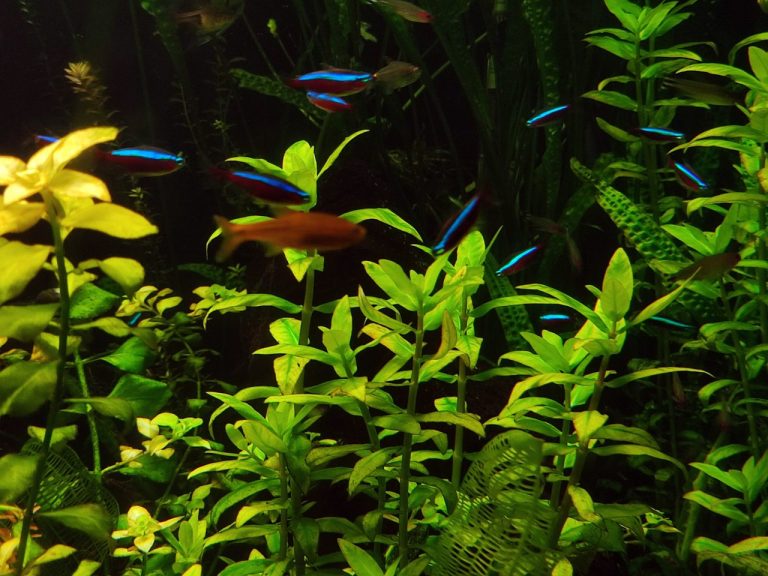
Few sights in the aquarium hobby are as satisfying as seeing a school of rich Paracheirodon innesi darting through a well-planted tank.
For many of us, the dream is to move beyond just keeping them and actually witness the arrival of neon tetra eggs in our own setups.
In my ten years of fish keeping, I’ve found that while these fish are common in shops, successfully breeding them is a true test of an aquarist’s skill.
It requires patience, precision, and a deep understanding of the delicate nature of their reproductive cycle.
If you have already mastered the basics of keeping neon tetras, you are likely ready to try your hand at breeding them.
At a glance: Neon tetra (Paracheirodon innesi)
- Temperature
- 72–78°F (22–26°C)
- Water pH
- 6.0–7.0
- Adult size
- 1.5 in (4 cm)
- Minimum tank
- 10 gal (20 gal for a proper school)
- Group size
- Groups of 8+
- Temperament
- Peaceful
- Diet
- Omnivore: micro pellets, flakes, frozen daphnia
- Lifespan
- 5–8 years
Keeper’s tip: Add neons only to a fully cycled, stable tank; they are among the first fish to suffer from ammonia swings.
Understanding the Nature of Neon Tetra Eggs
The first thing you need to know is that neon tetras are what we call “egg scatterers.”
Unlike some fish that build nests or protect their young, neons simply release their eggs into the water column or among fine-leaved plants.
Neon tetra eggs are incredibly small, often measuring less than a millimeter in diameter, making them very difficult to spot with the naked eye.
When they are first laid, the eggs are slightly adhesive, allowing them to stick to moss or spawning mops.
However, they are also “photophobic,” which means they are highly sensitive to light.
Exposure to even moderate light levels can cause the embryos to fail, which is the most common reason beginners struggle with hatching.
Pro Tip: When searching for eggs, never use a bright flashlight. Instead, use a very dim red light if you must check the tank, as red light is less likely to damage the developing embryos.
Identifying Fertile vs. Infertile Eggs
In my experience, being able to tell the difference between healthy and dead eggs early on can save your entire batch.
Healthy eggs are clear or slightly amber-colored and translucent.
Infertile eggs, or those attacked by bacteria, will quickly turn a solid, opaque white.
If you see white eggs, it is often a sign that Saprolegnia (a common water mold) is starting to take hold.
Preparing the Ideal Breeding Environment
To get your fish to actually produce neon tetra eggs, the environment must mimic the blackwater tributaries of the Amazon.
This means the water needs to be exceptionally soft and acidic.
I’ve noticed that most “failed” breeding attempts happen because the water is too hard, preventing the sperm from penetrating the egg or causing the egg casing to harden too quickly.
To achieve these conditions, many experts utilize peat filtration.
Filtering your water through aquarium-safe peat moss helps naturally lower the pH and releases tannins that protect the eggs.
You should also pay close attention to the specific conductance of the water, aiming for very low mineral content.
| Parameter | Ideal Range for Spawning |
|---|---|
| Temperature | 75°F – 77°F (24°C – 25°C) |
| pH Level | 5.0 – 6.0 |
| Water Hardness (dGH) | 1.0 – 2.0 |
| Lighting | Total Darkness / Very Dim |
Setting Up the Spawning Tank
I always recommend using a dedicated 5 to 10-gallon tank for breeding rather than a community setup.
The bottom of the tank should be bare or covered with a plastic mesh to allow the eggs to fall through where the parents cannot eat them.
Alternatively, you can use a spawning mop made of dark nylon yarn or clumps of Java Moss.
This gives the female a place to deposit the eggs while providing some protection from the light.
Conditioning the Parents for Spawning
You cannot expect healthy neon tetra eggs if the parent fish are not in peak physical condition.
I usually separate the males and females for about a week before I intend to breed them.
During this time, I feed them high-quality live foods such as bloodworms, daphnia, or brine shrimp.
You can tell a female is ready when her belly becomes significantly rounded and her “neon” stripe appears slightly curved.
The males will remain slim and may start showing more intense coloration and “dancing” behaviors.
This conditioning process is very similar to the steps involved in breeding other tetra species successfully.
Pro Tip: When you introduce the pair to the breeding tank, do it in the evening. Neons typically spawn at the first light of dawn, so keeping the tank dark until then mimics their natural rhythm.
The Spawning Process and Egg Deposition
Once the pair is introduced and the conditions are right, the male will begin to chase the female.
They will eventually swim into the plants or spawning mop together.
As they quiver against each other, the female releases the eggs, and the male fertilizes them instantly.
A single spawning session can result in anywhere from 60 to 130 eggs.
As soon as you notice the female looks “spent” or slim again, you must remove the parents immediately.
Neon tetras have no parental instincts and will begin eating the eggs as soon as they are finished spawning.
This is the most critical moment for the survival of the future fry.
Dealing with Photosensitivity
After removing the parents, your biggest enemy is light.
I have seen entire batches of eggs turn white within hours because the room lights were left on.
Cover the tank with a heavy black towel or pieces of cardboard to ensure 100% darkness.
This photosensitivity is a biological adaptation to the dark, tea-colored waters of their native habitat.
Protecting Neon Tetra Eggs from Fungus
Even in total darkness, fungus can be a major issue.
The spores of Saprolegnia are present in almost all aquarium water.
To prevent this, many breeders use a few drops of Methylene blue in the spawning tank.
This antifungal agent helps keep the egg casings clean and prevents the “white fuzz” from spreading.
Another method I’ve used is to make sure very gentle water movement.
A slow-bubbling sponge filter is perfect because it provides oxygenation without sucking up the tiny eggs.
However, make sure the sponge is well-seasoned with beneficial bacteria to keep the water quality pristine.
The Stages of Embryogenesis and Hatching
If all goes well, the embryogenesis process happens very quickly in neon tetras.
At a temperature of around 77°F, the eggs will typically hatch in 24 to 36 hours.
When they first emerge, the fry are essentially tiny slivers with a yolk sac attached.
They are not yet free-swimming and will spend the first few days vibrating against the glass or the bottom of the tank.
During this stage, they do not need to be fed, as they are absorbing nutrients from their yolk sac.
It is vital to keep the tank dark during this period as well, as the newly hatched fry remain sensitive to light.
I usually wait until I see them swimming horizontally before I introduce any light or food.
| Time After Spawning | Developmental Stage |
|---|---|
| 0 – 24 Hours | Egg Incubation (Total Darkness) |
| 24 – 36 Hours | Hatching; Fry are “wrigglers” |
| Day 3 – Day 4 | Yolk sac absorbed; Free-swimming |
| Day 5+ | Active hunting for microscopic food |
Feeding the Newly Hatched Neon Tetras
Once the fry are free-swimming, the real challenge begins.
Neon tetra fry are among the smallest of all aquarium fish fry.
They are too small to eat baby brine shrimp or crushed flakes.
In my early days, I made the mistake of trying to feed them liquid fry food too soon, which just fouled the water.
The best first food for neon fry is Infusoria.
These are microscopic organisms that you can culture at home using lettuce or potato skins in a jar of water.
After about a week of feeding Infusoria, you can transition them to vinegar eels or “green water” (unicellular algae).
As they grow, you will notice their tiny bodies beginning to take shape.
By the end of the second week, they should be large enough to handle newly hatched brine shrimp nauplii.
This high-protein diet will accelerate their growth and help them develop their iconic colors.
Common Problems When Raising Neon Tetra Eggs
One of the most frustrating issues is seeing a batch of eggs simply disappear.
If you didn’t remove the parents, they likely ate them.
However, if the parents are gone and the eggs are missing, check your filter.
Even a small intake can act like a vacuum for these weightless eggs.
Another common problem is “belly sliding.”
This occurs when the fry cannot fill their swim bladders properly.
This is often caused by a thin oily film on the water surface.
I’ve found that using a paper towel to gently blot the surface of the water once a day can help prevent this.
Quick answers About Neon Tetra Eggs
How many eggs do neon tetras lay?
A healthy female can lay between 60 and 130 eggs in a single spawning session. However, in a home aquarium, it is common for only about 30-50% of these to successfully hatch and reach adulthood.
What color are neon tetra eggs?
Fertile eggs are clear to translucent amber. If they turn white or fuzzy, they are dead or infertile and should be removed if possible to prevent fungus from spreading.
Can neon tetra eggs hatch in a community tank?
It is extremely unlikely. In a community tank, the eggs will be eaten by other fish (including the parents) almost instantly. Even if they survive the fish, the bright lights and hard water typically found in community tanks will kill the embryos.
How long does it take for neon tetra eggs to hatch?
Under ideal conditions (77°F), the eggs will hatch in approximately 24 to 36 hours. If the water is cooler, it may take up to 48 hours.
Do I need to use an air stone for the eggs?
Yes, but use it very gently. You want just enough surface agitation to keep the water from becoming stagnant, but not so much that the eggs are tossed around violently.
My final take
Successfully managing neon tetra eggs is one of the most challenging but satisfying milestones for any aquarist.
If you focus on the critical factors—total darkness, soft water, and microscopic first foods—you can turn a simple hobby into a healthy breeding project.
Failure is often part of the process when you first start.
I’ve had many batches fail before I finally saw that first tiny shimmer of blue in a fry tank.
Stay patient, keep your parameters stable, and soon you’ll have a new generation of neon tetras to brighten your aquarium.

- 2003First tank
- 20+Years keeping
- 40+Tanks kept
- 0Sponsored picks
Howard set up his first 10-gallon planted tank in 2003 and lost half of it within six weeks. Two decades and more than forty aquariums later, he writes the guides he wished he had then: clear numbers, the reasons behind them, and what actually goes wrong in home tanks.