Tetra Is How Many – Care Guide
To ensure health and natural behavior, the minimum number for a tetra school is six. For tank stocking, follow the one-inch-per-gallon rule while considering specific species’ bioload and swimming space requirements.
Deciding on the right number of fish for your aquarium is one of the most critical steps for any hobbyist. When asking tetra is how many to keep together, you are tapping into the core of their biological needs and social structures.
In my ten years of maintaining community tanks, I have found that the “how many” question is rarely about a single number. It is about balancing the shoaling behavior of these rich fish with the physical limits of your glass box.
Tetras belong to the family Characidae, a diverse group of fish known for their incredible colors and active personalities. Whether you are looking at the classic Paracheirodon innesi (Neon Tetra) or the solid Black Skirt Tetra, understanding their social dynamics is the key to a healthy tank.
At a glance: Tetras (general) (Family Characidae and relatives)
- Temperature
- 72–80°F (22–27°C) for most species
- Water pH
- 6.0–7.5 for most species
- Adult size
- 1–3 in (2.5–8 cm)
- Minimum tank
- 10–30 gal depending on species
- Group size
- Groups of 6–10+
- Temperament
- Mostly peaceful schooling fish
- Diet
- Omnivores: quality flakes or micro pellets plus frozen foods
- Lifespan
- 3–8 years
Keeper’s tip: Schooling size matters more than tank size for most tetras: small groups hide, nip and stress.
Tetra Is How Many for a Healthy School?
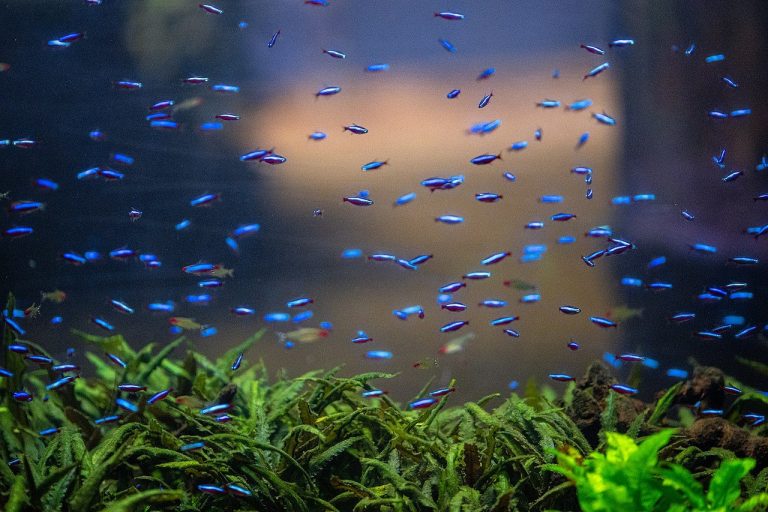
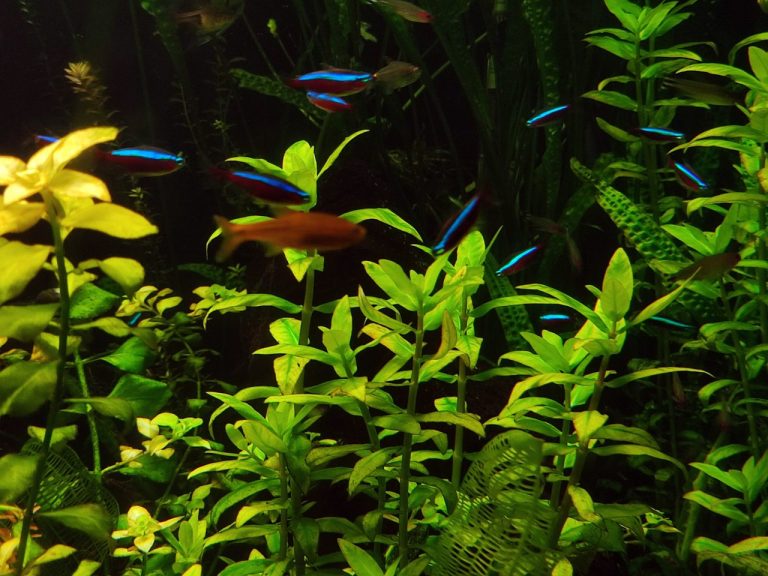
The most important thing to understand about tetras is that they are social creatures that find safety in numbers. In the wild, they live in massive groups to confuse predators and reduce individual stress.
In a home aquarium, the absolute minimum number for any tetra species is six individuals of the same kind. If you keep fewer than six, the fish often become shy, hide constantly, or even develop weakened immune systems due to chronic stress.
I always recommend starting with at least 10 to 12 if your tank size allows for it. When you reach these higher numbers, you will notice a significant change in their schooling dynamics and overall confidence.
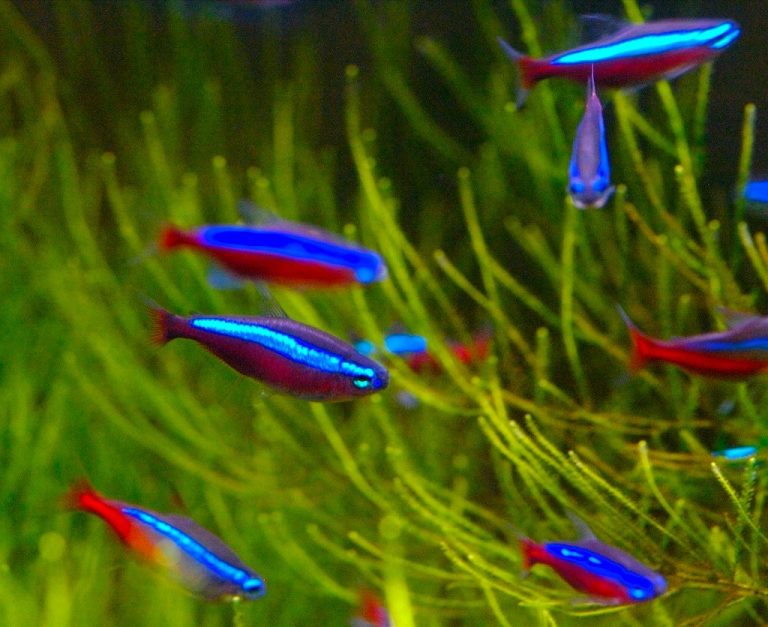
Pro Tip: I’ve noticed that when tetras are kept in groups of 12 or more, they exhibit much more “shimmering” behavior. This is because they feel secure enough to swim in the open water rather than hugging the plants for safety.
Why Conspecifics Matter
When we talk about numbers, we are talking about conspecifics—fish of the exact same species. You cannot simply mix three Neons and three Rummy Nose tetras and call it a school of six.
While they might swim near each other, they do not provide the same social comfort as members of their own species. For the best results, aim for a solid group of one type before adding a second variety.
Calculating Stocking Density: How Many Tetras per Gallon?
Once you know how many tetras make a happy school, you need to know how many your tank can actually support. This involves looking at the stocking density and the total bioload your filtration system can handle.
The “one inch of fish per gallon” rule is a decent starting point for beginners, but it has its flaws. For smaller tetras like the Neon or Ember, this rule works fairly well because they have a low mass and produce little waste.
However, for larger species like the Congo Tetra or Buenos Aires Tetra, you need to be much more conservative. These larger fish need more dissolved oxygen and space to turn around.
| Tank Size | Max Neon Tetras (Approx) | Max Larger Tetras (Approx) |
|---|---|---|
| 10 Gallons | 6-8 | Not Recommended |
| 20 Gallons | 15-18 | 6-8 |
| 29 Gallons | 25-30 | 12-15 |
| 55 Gallons | 50+ | 20-25 |
Understanding Space and Volume
Even if your filtration is amazing, physical space is a limiting factor for active swimmers. Tetras are horizontal swimmers, meaning they need length more than they need depth.
When considering choosing the right tank size, always prioritize a long tank over a tall one. This gives the school room to dart back and forth, which is their natural way of exercising.
Environmental Factors and the Nitrogen Cycle
The question of tetra is how many is also a question of chemistry. Every fish you add increases the amount of ammonia being produced through waste and respiration.
If you add too many fish at once, you risk overwhelming the nitrogen cycle in your aquarium. This can lead to a spike in ammonia toxicity, which is the leading cause of death for new fish.
Always make sure your tank is fully cycled before adding your first school. I recommend adding your tetras in small batches of 5 or 6 at a time, waiting a week between each addition.
Maintaining Dissolved Oxygen
A crowded tank consumes oxygen quickly, especially at night when plants aren’t photosynthesizing. If you see your tetras gasping at the surface, it is a sign that your stocking level is too high for your current aeration.
Maintaining stable water parameters is much easier when the tank isn’t pushed to its absolute limit. A slightly understocked tank is always healthier than a slightly overstocked one.
Tetra Is How Many for Nano Tanks?
Nano tanks (typically under 10 gallons) are very popular but require a careful approach. For a 5-gallon tank, you are very limited in which species you can choose.
I generally advise against keeping standard Neon Tetras in anything smaller than 10 gallons. For a 5-gallon setup, you should look into “micro-tetras” like the Ember Tetra or Green Neon Tetra.
Even with these tiny species, the rule of six still applies. You must be diligent with water changes, as the small water volume can become toxic very quickly if a single fish dies or if you overfeed.
Common Mistake: Many beginners try to keep just two or three tetras in a small bowl. This leads to “fear-biting” where the stressed fish nip at each other’s fins because they don’t feel the protection of a full school.
Schooling Dynamics and Aggression
It might seem counterintuitive, but having more tetras can actually reduce aggression in the tank. In a small group, a dominant fish may pick on a single weaker individual until it dies.
In a larger school, this aggression is “diluted” because the dominant fish has too many targets to focus on. This is particularly true for species like Serpae Tetras, which are known for being a bit nippy.
When you have at least 10 to 12 Serpaes, they spend their time interacting with each other rather than bothering your other community fish. This is why following a proper care guide is so vital for long-term success.
Mixing Different Tetra Species
If you want a diverse tank, you can certainly mix different types of tetras. However, each species needs its own minimum school of six.
If you have a 30-gallon tank, it is much better to have two schools of 10 different species than five groups of 4 different species. The fish will be calmer, more colorful, and much more active.
Essential Tools for Managing Your Tetra School
To keep a large number of tetras healthy, you need more than just a big tank. You need the right equipment to handle the bioload and keep the environment stable.
- High-Quality Filtration: Use a filter rated for a tank one size larger than yours.
- Water Testing Kit: Regularly check for ammonia, nitrites, and nitrates.
- Air Stone: Especially important in heavily stocked tanks to maintain oxygen levels.
- Live Plants: They help absorb nitrates and provide natural hiding spots.
Managing your school’s health also means watching for signs of disease. Overcrowding is the number one trigger for “Neon Tetra Disease” and Ich, as it weakens the fishes’ immune systems.
Questions and answers
Can I keep just one tetra?
No, tetras are obligate schoolers. A single tetra will live in a state of constant fear and stress, which will significantly shorten its lifespan and lead to poor health.
How many tetras can I put in a 10-gallon tank?
In a standard 10-gallon tank, you can safely keep about 6 to 8 small tetras, like Neons or Embers. Avoid larger or more active species like Buenos Aires or Rummy Nose tetras in this size.
Do tetras school with other fish?
Sometimes they will “shoal” loosely with other species of similar size and shape, but they only “school” with their own kind. They need their own species for social comfort and breeding behaviors.
What happens if I have too many tetras?
Overstocking leads to high nitrate levels, low oxygen, and increased aggression. It also makes the tank much harder to maintain, as you will need to perform more frequent and larger water changes.
Can I mix Neons and Cardinal Tetras?
Yes, they have similar requirements and will often swim together. However, you should still aim for at least six of each species to make sure they feel completely secure.
Final Thoughts on Tetra Numbers
Answering tetra is how many is about finding the “sweet spot” where your fish feel safe and your aquarium’s ecosystem remains stable. Always remember the rule of six as your absolute baseline, but strive for 10 or more for the best visual and biological results.
If you respect their need for a school and providing enough swimming room, you will be rewarded with a vivid, active display. The sight of a large, shimmering school of tetras moving in unison is one of the most beautiful experiences in the aquarium hobby.
Take your time, stock slowly, and always prioritize the well-being of these amazing little fish. Your patience will result in a healthy, flourishing aquarium that brings joy for years to come.

- 2003First tank
- 20+Years keeping
- 40+Tanks kept
- 0Sponsored picks
Howard set up his first 10-gallon planted tank in 2003 and lost half of it within six weeks. Two decades and more than forty aquariums later, he writes the guides he wished he had then: clear numbers, the reasons behind them, and what actually goes wrong in home tanks.