Neon Tetra Care Guide – Diet, Tank and Tank Mates
This neon tetra care guide highlights that maintaining soft, acidic water and a stable temperature between 72°F and 78°F is essential for keeping Paracheirodon innesi healthy, colorful, and active in a community aquarium.
Few sights in the aquarium hobby are as iconic as a shimmering school of neon tetras darting through a lushly planted tank.
For over 10 years, I have maintained dozens of South American biotope tanks, and I can tell you that these fish are the heartbeat of a peaceful community.
While they are often labeled as “beginner fish,” mastering their care requires a deeper understanding of their biological needs and natural origins.
In this comprehensive neon tetra care guide, we will explore how to transition from simply “keeping them alive” to helping them settle in with electric coloration.
Success with these fish starts with respecting their ancestry in the blackwater streams of the Amazon basin.
By the end of this article, you will have a professional-level framework for managing their environment, diet, and social structure.
At a glance: Neon tetra (Paracheirodon innesi)
- Temperature
- 72–78°F (22–26°C)
- Water pH
- 6.0–7.0
- Adult size
- 1.5 in (4 cm)
- Minimum tank
- 10 gal (20 gal for a proper school)
- Group size
- Groups of 8+
- Temperament
- Peaceful
- Diet
- Omnivore: micro pellets, flakes, frozen daphnia
- Lifespan
- 5–8 years
Keeper’s tip: Add neons only to a fully cycled, stable tank; they are among the first fish to suffer from ammonia swings.
Understanding the Paracheirodon innesi
The neon tetra, scientifically known as Paracheirodon innesi, is a jewel of the Characidae family.
These fish are native to the clear water and blackwater streams of southeastern Colombia, eastern Peru, and western Brazil.
In these environments, the water is stained tea-color by humic substances leaching from decaying leaf litter and fallen wood.
Understanding this blackwater habitat is the first step toward creating an aquarium that mimics their natural home.
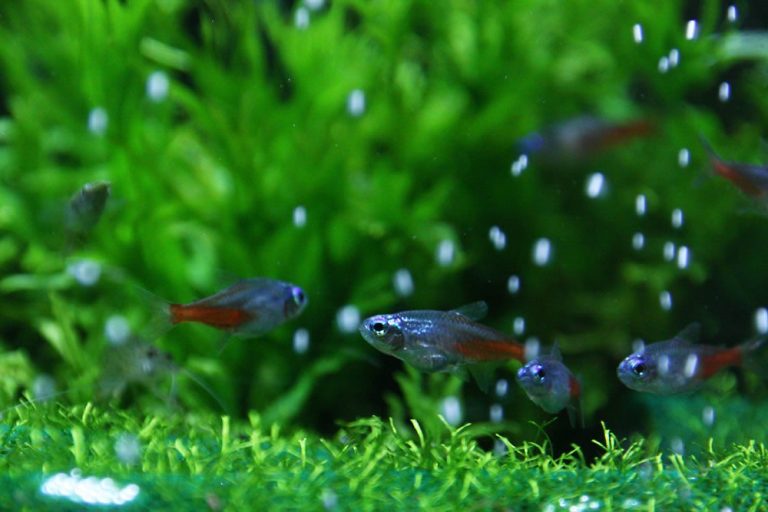
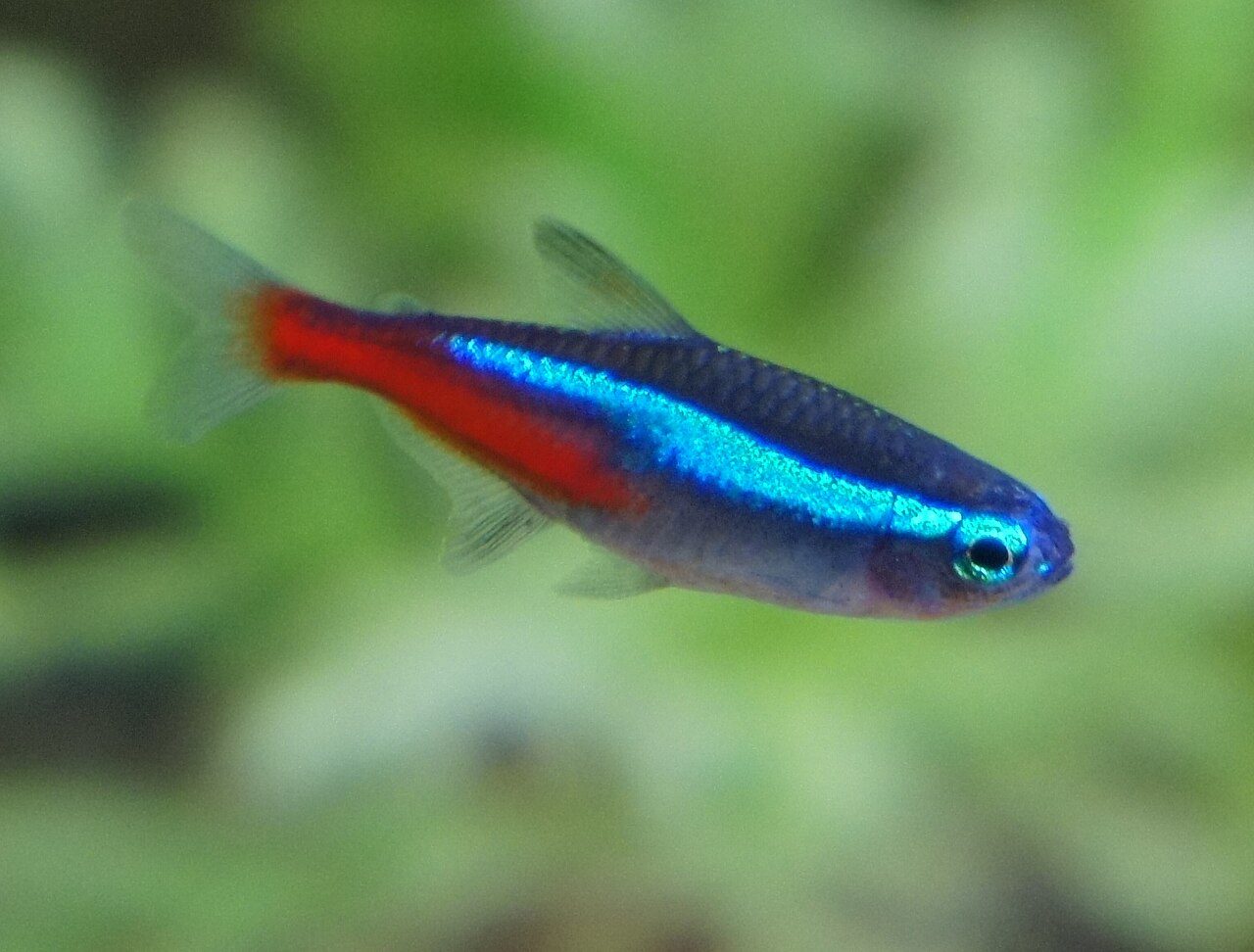
The rich blue stripe and striking red tail aren’t just for show; they help the school stay together in the dim, stained waters of the rainforest.
Pro Tip: In my experience, neon tetras show their best colors when kept over a dark substrate. Light-colored sand often causes their colors to wash out as they attempt to camouflage with the bottom.
neon tetra care guide: Ideal Tank Setup and Environment
Setting up the right environment is the foundation of long-term success with any tetra species.
While you might see them in tiny bowls in some shops, these active swimmers need horizontal space to display their natural shoaling behavior.
A larger volume of water also provides a buffer against rapid changes in chemistry, which is vital for this sensitive species.
Choosing the Right Tank Size
I always recommend starting with at least a 10-gallon tank, though a 20-gallon setup is much better for a large school.
A longer tank is always preferable to a tall one because it provides more swimming room for their energetic bursts.
In a 20-gallon long aquarium, you can comfortably keep a school of 15 to 20 neons, creating a striking visual impact.
Substrate and Decor
Use a fine, dark sand or specialized plant substrate to mimic the riverbeds of the Amazon.
Incorporate plenty of driftwood and dried Catappa leaves to release tannins into the water.
These tannins provide humic substances that have natural anti-fungal and anti-bacterial properties, benefiting the fish’s immune systems.
Live Plants
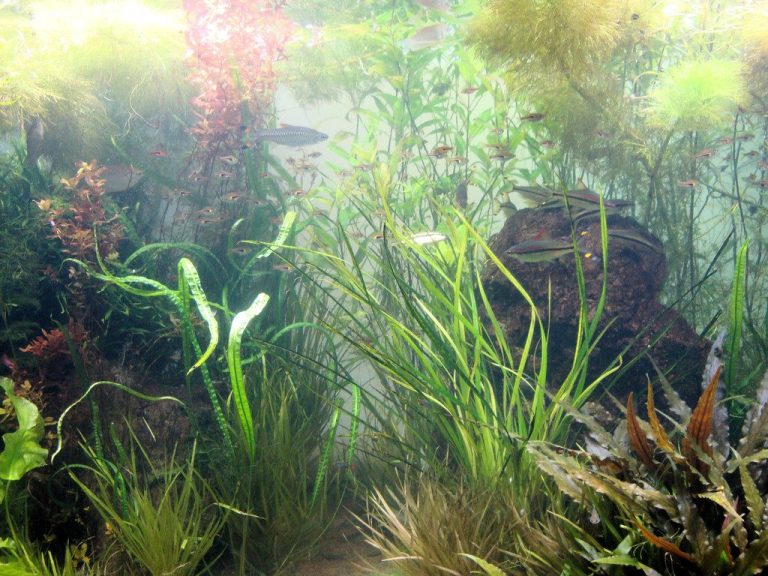
Neon tetras love heavily planted tanks where they can find shade and security.
Species like Amazon Swords, Vallisneria, and various Mosses provide excellent hiding spots.
Floating plants are also a fantastic addition, as they help dim the light, making the neons feel much more secure and bold.
Mastering Water Chemistry and Soft Water Parameters
The most critical part of this neon tetra care guide is water stability.
These fish are adapted to soft water hydrochemistry and can be sensitive to high levels of dissolved minerals.
In the wild, the specific conductivity of their water is extremely low, meaning it is very pure and free of heavy salts.
| Parameter | Ideal Range |
|---|---|
| Temperature | 72°F – 78°F (22°C – 26°C) |
| pH Level | 5.0 – 7.0 |
| Water Hardness (GH) | 2 – 10 dGH |
| Carbonate Hardness (KH) | 1 – 2 dKH |
| Ammonia / Nitrite | 0 ppm (Strict) |
| Nitrate | < 20 ppm |
The Role of Peat Filtration
If your tap water is naturally hard or has a high pH, you might consider peat filtration.
Adding aquarium-safe peat moss to your filter media can help lower the pH and soften the water naturally.
This method also adds that desirable amber tint to the water that mimics their native Amazonian home perfectly.
Maintaining the Nitrification Process
Because neons are sensitive to nitrogenous waste, your nitrification process must be fully established before adding them.
Always make sure your tank is fully cycled, meaning beneficial bacteria are converting ammonia and nitrite into nitrate efficiently.
I’ve noticed that adding neons to a brand-new tank is one of the most common reasons for early losses in the hobby.
Diet, Nutrition, and Feeding Strategies
To keep those neon blues and reds popping, you must provide a varied and high-quality diet.
In the wild, they are omnivores, feeding on small crustaceans, insects, and plant matter.
In the aquarium, they should be fed small, bite-sized morsels that stay suspended in the water column.
Recommended Foods
Start with a high-quality micro-pellet or crushed flake as their daily staple.
Supplement this with frozen or live foods like Artemia salina (brine shrimp) and Daphnia.
Feeding live foods once or twice a week triggers their natural hunting instincts and improves their overall vitality.
Pro Tip: Avoid feeding large pellets. Neon tetras have very small mouths and can easily choke or become stressed if they cannot swallow their food quickly. Always “pinch” your flakes to turn them into a fine powder.
Feeding Schedule
It is better to feed small amounts twice a day rather than one large meal.
Only provide what they can consume in about two minutes to prevent excess food from rotting and spiking ammonia levels.
I’ve found that a hungry neon is a healthy neon, but an overfed neon often suffers from digestive issues.
Common Health Issues and Disease Prevention
One of the most discussed topics in any neon tetra care guide is “Neon Tetra Disease.”
This condition is caused by a microsporidian parasite known as Pleistophora hyphessobryconis.
Symptoms include loss of color, cysts on the body, and erratic swimming away from the school.
Preventing Pleistophora hyphessobryconis
Unfortunately, there is no known cure for this specific parasite, so prevention is your only weapon.
Always quarantine new fish for at least two to four weeks before adding them to your main display.
Keep your water quality pristine, as stress is the primary trigger that allows parasites to take hold of a fish’s immune system.
Dealing with Ich and Fungus
Neons can also be susceptible to Ich (white spot disease) if the temperature fluctuates too much.
Using a reliable heater and performing smaller, more frequent water changes can prevent these temperature shocks.
If you must treat the tank with medication, be aware that tetras can be sensitive to copper-based treatments, so always dose carefully.
Choosing the Right Tank Mates
Neon tetras are the quintessential peaceful fish and should only be kept with equally docile neighbors.
They do not have the speed or size to defend themselves against aggressive or “nippy” tank mates.
Focusing on peaceful tetra fish and other small residents will help a stress-free environment.
Ideal Companions
Good tank mates include other small tetras, rasboras, and corydoras catfish.
If you enjoy invertebrates, they are generally safe with larger shrimp like Amano shrimp, though they may snack on tiny cherry shrimp babies.
Avoid keeping them with large cichlids or even medium-sized fish like Angelfish, which may view them as a natural snack.
The Importance of School Size
Never keep a neon tetra alone or in pairs; they are social creatures that rely on a group for security.
A group of 6 is the absolute minimum, but I highly recommend 10 or more to see their true personality.
A larger school reduces individual stress and prevents any single fish from being bullied by a dominant male.
How to Breed Neon Tetras
While challenging, breeding tetras is a satisfying peak for any aquarist.
Neon tetras are egg-scatterers and require very specific conditions to trigger spawning.
You will need a separate breeding tank with extremely soft water (almost zero hardness) and a very low pH (around 5.5).
The Spawning Process
The breeding tank should be kept dark, as the eggs and fry are light-sensitive.
Parents should be removed immediately after spawning to prevent them from eating the eggs.
The fry are microscopic and will require “infusoria” or specialized liquid fry food for the first few days of their lives.
FAQ: Frequently Asked Questions about Neon Tetras
How long do neon tetras live?
Looked after properly and stable water parameters, neon tetras can live between 5 to 8 years. Many beginner losses are due to poor acclimation or unstable water rather than the fish’s natural lifespan.
Why is my neon tetra losing its color?
Loss of color usually happens at night when they are “sleeping” to save energy. However, if it happens during the day, it is a sign of extreme stress, poor water quality, or the onset of disease.
Can neon tetras live in a 5-gallon tank?
While technically possible for a very small group, it is not recommended. The water parameters in a 5-gallon tank shift too quickly, and there isn’t enough swimming room for their natural behavior.
Do they need an air stone?
If you have a high-quality filter providing surface agitation, an air stone isn’t strictly necessary. However, in a heavily planted tank at night, an air stone can help ensure oxygen levels remain high for the fish.
Final thoughts
Keeping these colorful fish is a journey that teaches every aquarist the value of patience and precision.
If you follow this neon tetra care guide, you are choosing to prioritize the biological needs of Paracheirodon innesi over convenience.
Keep their water soft, their environment stable, and their school large.
When you see that electric blue line glowing across your tank, you’ll know that your hard work has paid off.
Focus on the small details, and your aquarium will be a stable piece of the Amazon for years to come.

- 2003First tank
- 20+Years keeping
- 40+Tanks kept
- 0Sponsored picks
Howard set up his first 10-gallon planted tank in 2003 and lost half of it within six weeks. Two decades and more than forty aquariums later, he writes the guides he wished he had then: clear numbers, the reasons behind them, and what actually goes wrong in home tanks.