Rummy Nose Tetra Care Guide – Diet, Tank and Tank Mates
A successful Rummy Nose Tetra care guide focuses on providing soft, acidic water (pH 5.5-7.0) and stable temperatures between 75-84°F. These sensitive schoolers require at least 20 gallons and impeccable water quality to maintain their colorful red faces.
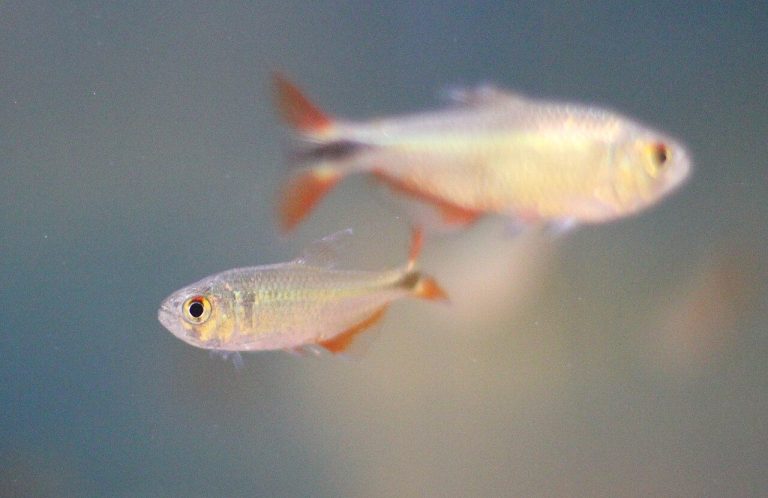
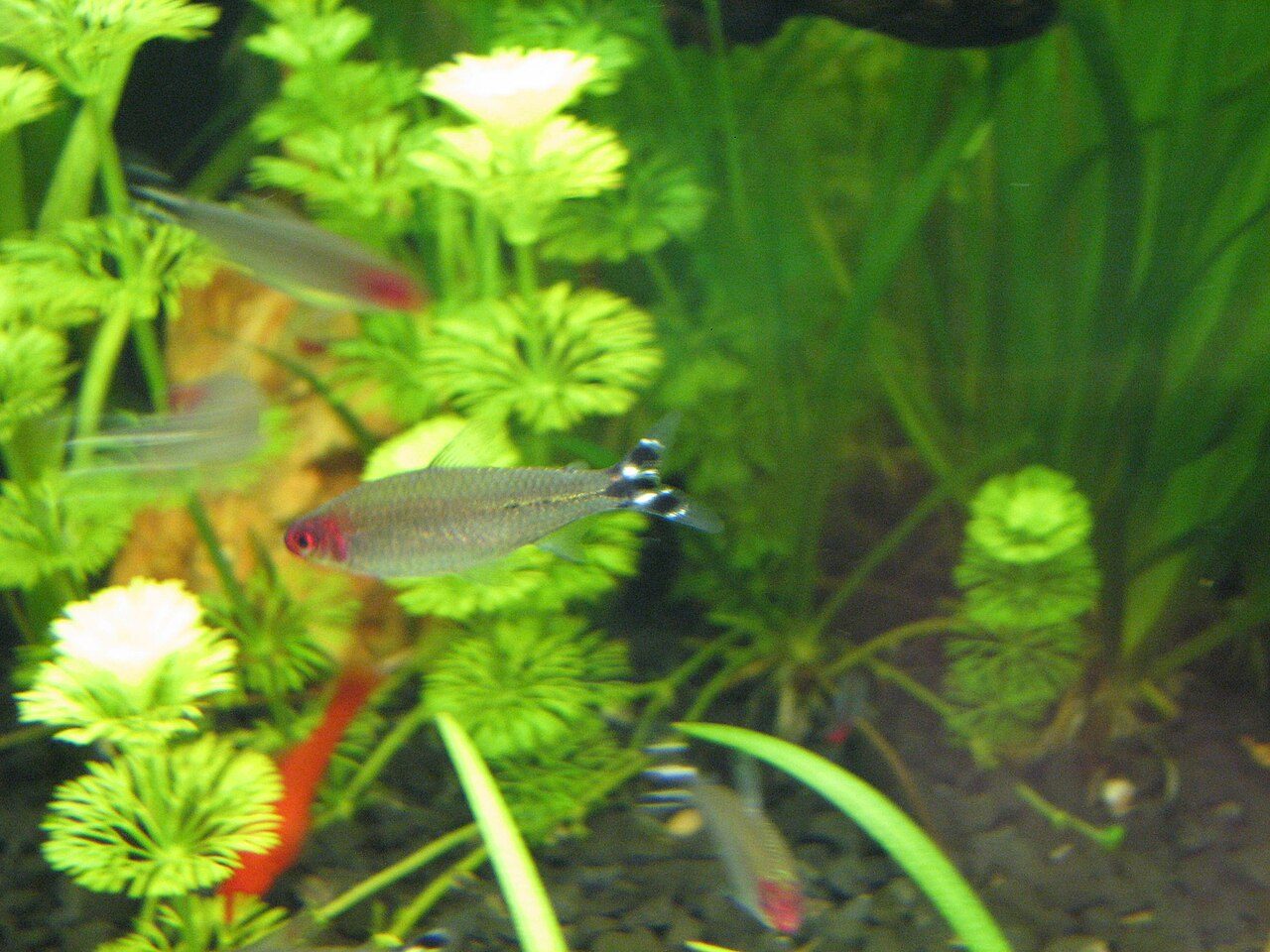
The Rummy Nose Tetra is widely considered one of the most beautiful and satisfying fish in the freshwater hobby. Their striking red “nose,” zebra-striped tail, and tight schooling behavior make them a favorite for aquascapers and community tank enthusiasts alike.
In my fifteen years of keeping South American characins, I have found that few fish are as communicative as these tetras. They act as a living barometer for your aquarium’s health, with their coloration directly reflecting the water quality.
This Rummy Nose Tetra care guide will provide you with the deep-dive knowledge needed to keep these fish not just alive, but stable. We will cover everything from water chemistry to the nuances of their social behavior.
At a glance: Rummy nose tetra (Hemigrammus rhodostomus)
- Temperature
- 75–82°F (24–28°C)
- Water pH
- 5.5–7.0
- Adult size
- 2 in (5 cm)
- Minimum tank
- 20 gal
- Group size
- Groups of 8+
- Temperament
- Peaceful
- Diet
- Omnivore: flakes, small pellets, frozen foods
- Lifespan
- 5–6 years
Keeper’s tip: A fading red nose is often the first sign of poor water quality, so test before you change anything else.
Understanding the Three Species of Rummy Nose
When you walk into a local fish store, you might see fish labeled “Rummy Nose Tetra,” but you could actually be looking at one of three distinct species. While their care requirements are nearly identical, a true expert knows how to spot the differences.
The most common species in the hobby is Hemigrammus bleheri, often called the “Common Rummy Nose.” It is prized because its red coloration often extends past the gill plates and onto the body.
The other two species are Hemigrammus rhodostomus and Petitella georgiae. These are frequently referred to as the “False Rummy Nose” or “False Mouth-Breader Tetra,” though they are all very similar in appearance.
Pro Tip: To identify Hemigrammus bleheri, look at the base of the tail. If the dark horizontal line on the body doesn’t extend into the middle of the tail fins, you likely have the most colorful “true” species.
Regardless of the specific species, all three originate from the Rio Negro and Orinoco river basins. This means they are evolutionarily adapted to soft, acidic environments rich in humic substances.
Rummy Nose Tetra care guide: Water Parameters and Tank Setup
Setting up the environment correctly is the most critical step in your journey. These fish are notoriously sensitive to changes in their environment, especially when first introduced to a new tank.
They flourish in a blackwater habitat, where the water is stained the color of tea by tannic acid. This environment provides the natural chemical balance they need to resist infections and display their best colors.
| Parameter | Ideal Range |
|---|---|
| Temperature | 75°F to 84°F (24°C – 29°C) |
| pH Level | 5.5 to 7.0 |
| Hardness (dGH) | 2 to 10 dGH |
| Ammonia / Nitrite | 0 ppm (Strict) |
| Nitrate | < 20 ppm |
The Importance of Tank Size
While they are relatively small fish, reaching about 2 inches in length, they are incredibly active swimmers. I have noticed that keeping them in a tank smaller than 20 gallons often leads to stress and shorter lifespans.
A long aquarium is always better than a tall one for this species. They need horizontal space to perform their tight, synchronized schooling maneuvers across the length of the tank.
Substrate and Decor
To make their colors pop, use a dark substrate like black sand or fine gravel. In the wild, they swim over leaf litter and sandy bottoms, so providing a similar look will make them feel secure.
Incorporate plenty of driftwood and live plants like Amazon Swords or Java Fern. These provide hiding spots and help break up lines of sight, which reduces stress during the acclimation period.
Managing Nitrate Sensitivity and Water Quality
One of the most important aspects of this Rummy Nose Tetra care guide is understanding their nitrate sensitivity. Unlike some hardier species, Rummy Noses will react quickly to a decline in water quality.
When nitrates climb or oxygen levels drop, the bright red “mask” on their face will begin to fade to a dull pink or gray. This is an early warning sign that you need to perform a water change or check your filtration.
I highly recommend using peat filtration or adding Indian Almond leaves to the tank. These release tannins that naturally lower the pH and provide the humic substances that protect the fish’s delicate slime coat.
Common Mistake: Many beginners perform massive 50% water changes with cold, untreated tap water. For Rummy Noses, it is much better to do smaller, frequent 10-15% changes to keep parameters perfectly stable.
Keep a close eye on your dGH (degree of General Hardness). While they can adapt to moderately hard water, they are far more likely to experience health issues if the water is too mineral-rich.
Diet and Nutrition for Maximum Coloration
To maintain that iconic red nose, you must provide a varied and high-quality diet. In their natural habitat, they are omnivores that feed on small insects, crustaceans, and plant matter.
In the home aquarium, they will readily accept high-quality flake food and micro-pellets. However, relying solely on dry food is a mistake if you want to see their full potential.
I recommend supplementing their diet with frozen or live foods at least three times a week. Bloodworms, brine shrimp, and daphnia are excellent choices that provide the protein and carotene needed for pigmentation.
If you find your fish are looking a bit pale, try feeding them cyclops or specialized color-boosting pellets. You will usually see an improvement in their “glow” within just a few days of a diet upgrade.
Choosing Compatible Tank Mates
Rummy Nose Tetras are peaceful community fish that do best when surrounded by equally calm neighbors. Because they are so active, they can sometimes annoy very slow-moving or shy fish, but they are never aggressive.
They are the perfect companions for other South American species. When choosing compatible community tank mates, look for fish that do well in the same soft-water conditions.
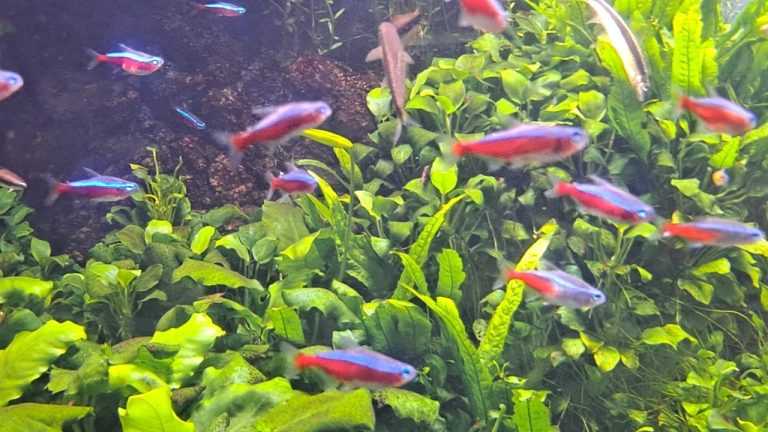
Good options include Discus, Angelfish (if the tetras are large enough not to be eaten), and various Corydoras species. They also pair beautifully with other tetras, such as the Cardinal Tetra.
If you are looking to create a high-impact display, consider the benefits of a large school of mixed tetras. The contrasting colors of the blue-red Cardinals and the red-nosed Rummy Noses create a striking visual.
Avoid keeping them with large, predatory fish or highly aggressive species like Tiger Barbs. Rummy Noses are easily intimidated, and stress is the leading cause of illness for this particular species.
Preventing Disease and Recognizing Stress
Because of their sensitivity, Rummy Nose Tetras can be prone to certain ailments if the water quality slips. One of the most common issues is Columnaris, a bacterial infection that can look like white patches on the body.
If you notice your fish gasping at the surface or if their red faces have completely disappeared, you must act immediately. Check your ammonia levels and help your heater is functioning correctly.
When adding new fish to your tank, always use a quarantine period. It is also helpful to learn about identifying early signs of illness in similar characins to catch problems before they spread.
Stress is often the precursor to disease. Sudden lighting changes, loud noises near the tank, or aggressive tank mates can all weaken their immune systems.
Maintain a consistent light cycle using a timer. This mimics the natural transition of day and night in the rainforest and helps the fish establish a healthy routine.
The Art of Acclimation
I cannot stress enough how important the acclimation process is for this species. Many hobbyists lose their Rummy Noses within the first 24 hours because they rushed the introduction.
The drip acclimation method is the gold standard for these tetras. By slowly adding tank water to their transport bag over the course of an hour, you allow their internal chemistry to adjust to the new pH and dGH.
Never dump the bag water into your display tank. Use a net to gently move the fish into their new home once the acclimation is complete.
Keep the lights off for several hours after adding them. This gives them time to explore their new surroundings without the added stress of bright illumination.
Breeding Rummy Nose Tetras
Breeding this species is a challenge that many intermediate keepers enjoy tackling. They are egg-scatterers and require very specific conditions to trigger spawning behavior.
You will need a dedicated breeding tank with extremely soft water (almost 0 dGH) and a very low pH (around 5.5). The tank should be dimly lit and filled with fine-leaved plants like Java Moss.
The parents do not care for the eggs and will actually eat them if given the chance. Use a mesh grate on the bottom of the tank or remove the adults immediately after spawning occurs.
The fry are tiny and require “infusoria” or liquid fry food for the first week. As they grow, you can transition them to baby brine shrimp and crushed flakes.
Questions I get asked a lot
Why is my Rummy Nose Tetra’s face not red?
This is usually a sign of stress or poor water quality. Check your nitrate levels immediately. It can also happen when the fish are sleeping or if they have just been moved to a new tank.
How many Rummy Nose Tetras should be kept together?
You should keep a minimum of six, but they look and feel much better in groups of 10 to 15. They are one of the few tetras that stay in a very tight school most of the time.
Can Rummy Nose Tetras live with shrimp?
Yes, they are generally safe with adult Neocaridina or Caridina shrimp. However, they may snack on tiny shrimplets if they can find them in the moss.
Do they need a heater?
Absolutely. They are tropical fish from the Amazon and require stable temperatures. They will quickly become susceptible to Ich if the temperature drops below 75°F.
Final thoughts
Following a proper Rummy Nose Tetra care guide is the difference between a struggling tank and a vivid, underwater showpiece. While they require a bit more attention than your average goldfish, the reward is well worth the effort.
If you focus on stable water parameters, a high-quality diet, and a stress-free environment, you can enjoy these “indicator fish” for several years. Their tight schooling behavior and glowing red faces will always be a highlight of your home aquarium.
Patience is your best tool. Take the time to acclimate them properly and keep up with your weekly maintenance, and your Rummy Nose Tetras will reward you with a spectacular display of color and life.

- 2003First tank
- 20+Years keeping
- 40+Tanks kept
- 0Sponsored picks
Howard set up his first 10-gallon planted tank in 2003 and lost half of it within six weeks. Two decades and more than forty aquariums later, he writes the guides he wished he had then: clear numbers, the reasons behind them, and what actually goes wrong in home tanks.