Rummy Nose Tetra Male Vs Female – The Complete Identification
To distinguish a Rummy Nose Tetra male vs female, observe their body shape and belly. Females are noticeably rounder and deeper-bodied, especially when viewed from the side, while males remain slimmer and more streamlined.
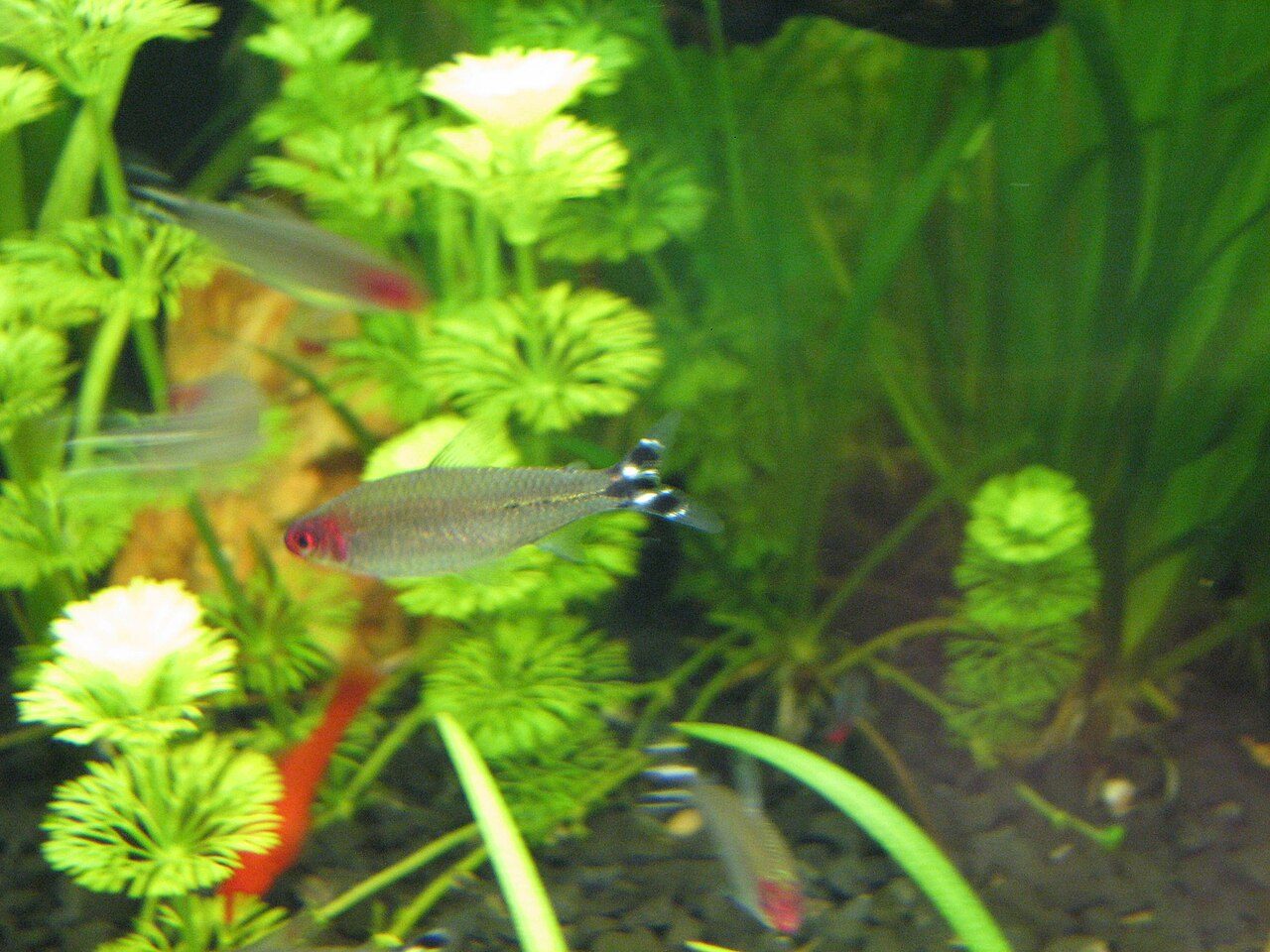
Determining the difference between a Rummy Nose Tetra male vs female is one of the most common challenges for hobbyists looking to breed these iconic fish. While their vivid red faces and striking tail patterns are easy to spot, their sexual dimorphism is incredibly subtle compared to other species.
In my experience, you often cannot tell them apart when they are juveniles at the local fish store. It takes a bit of time, high-quality food, and a stable environment before their physical characteristics begin to manifest.
Once you know what to look for, you will find that these fish are not just beautiful, but also remarkable in their social behaviors. This guide will walk you through every nuance of identifying their sex and how to use that knowledge to create a flourishing community or a successful breeding project.
At a glance: Rummy nose tetra (Hemigrammus rhodostomus)
- Temperature
- 75–82°F (24–28°C)
- Water pH
- 5.5–7.0
- Adult size
- 2 in (5 cm)
- Minimum tank
- 20 gal
- Group size
- Groups of 8+
- Temperament
- Peaceful
- Diet
- Omnivore: flakes, small pellets, frozen foods
- Lifespan
- 5–6 years
Keeper’s tip: A fading red nose is often the first sign of poor water quality, so test before you change anything else.
Understanding the Rummy Nose Tetra Complex
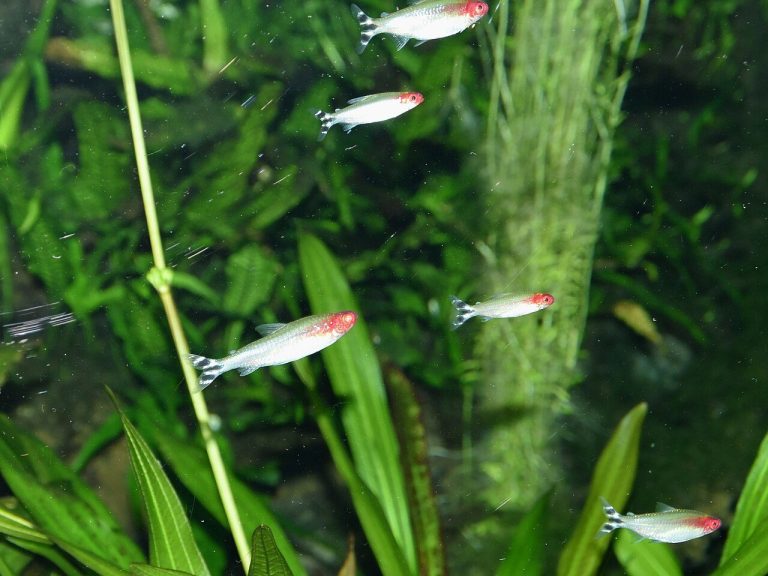
Before we look at the specific physical traits, it is important to understand that “Rummy Nose” actually refers to three very similar species. These are Hemigrammus bleheri, Hemigrammus rhodostomus, and Petitella georgiae.
While they look nearly identical to the untrained eye, Hemigrammus bleheri is the species most frequently found in the aquarium trade. It is known for having the most expansive red coloration, which often extends past the gill covers.
Regardless of which specific species you have, the methods for identifying a Rummy Nose Tetra male vs female remain consistent across the group. They all share similar body structures and reproductive behaviors.
Pro Tip: When trying to sex your fish, observe them in the morning after a feeding. Females will appear much more “plump” as they process nutrients, making their rounded ventral profile far easier to distinguish from the lean males.
Rummy Nose Tetra male vs female: Primary Physical Differences
The most reliable way to tell these fish apart is by looking at their overall silhouette. Because they lack the dramatic color differences found in guppies or cichlids, you must focus on the “plumpness” of the midsection.
The ventral profile refers to the curve of the fish’s belly. In males, this line is relatively straight or only slightly curved, giving them a torpedo-like appearance.
Females, on the other hand, develop a much deeper body. As they reach maturity, their abdomen becomes rounded to accommodate eggs, which is the clearest indicator of their sex.
| Feature | Male Rummy Nose | Female Rummy Nose |
|---|---|---|
| Body Shape | Slim, streamlined, and narrow. | Rounder, deeper, and broader. |
| Abdomen (Ventral Profile) | Relatively flat or straight. | Noticeably convex or “pot-bellied.” |
| Size at Maturity | Slightly smaller on average. | Slightly larger and “heavier” looking. |
| Color Intensity | Often slightly more vivid red. | May appear slightly paler when gravid. |
Analyzing the Caudal Peduncle and Fins
While the body shape is the primary indicator, some experienced keepers look at the caudal peduncle. This is the narrow area where the body joins the tail fin.
In males, this area can appear slightly more muscular. However, this is a very subtle trait that even professionals struggle to use as a definitive marker.
The fins of the Rummy Nose Tetra male vs female are generally identical in shape and color. Unlike other tetra species where fin length might vary, Rummy Noses stay very uniform.
Behavioral Differences in the School
Behavior is another window into the sex of your fish. Rummy Noses are tight-schooling fish, but during the early hours of the morning, you might notice subtle shifts in their dynamics.
Males are often more active and may engage in “sparring” or “dancing” rituals. This involves two males swimming side-by-side in short bursts to establish a loose hierarchy within the school.
Females tend to be less interested in these displays. They usually remain in the center of the school, focusing more on foraging and conserving energy for egg production.
When you are selecting tank mates for your school, it is helpful to have a balanced ratio. I recommend keeping at least two females for every male to ensure no single female is over-pursued during spawning attempts.
The Impact of Health on Identification
It is important to note that a stressed Rummy Nose will lose its color entirely. If the “nose” is pale or white, the fish is likely unhappy, making it nearly impossible to distinguish sex accurately.
Wait until your fish are fully acclimated and displaying a deep, cherry-red color. Only then will the physical differences between the Rummy Nose Tetra male vs female become apparent.
Healthy fish will also show better contrast on their tails. The black and white horizontal stripes on the tail should be crisp, which helps you better visualize the body proportions.
Preparing for Breeding: The Role of Water Chemistry
If your goal is to breed these fish, identifying the sexes is only the first step. Rummy Noses are notoriously difficult to breed because they require very specific water parameters.
In the wild, they inhabit “blackwater” environments rich in humic substances. These substances are released by decaying organic matter and are essential for the health of the eggs.
You should aim for very soft water with a low carbonate hardness (KH). If the water is too hard, the shell of the eggs can harden too quickly, preventing fertilization or hatching.
Pro Tip: Use peat filtration or add Indian Almond leaves to your breeding tank. The tannins released will lower the pH and provide the acidic environment these fish need to feel “in the mood” for spawning.
Setting Up a Dedicated Breeding Tank
I have found that trying to breed Rummy Noses in a community tank is almost always unsuccessful. They are egg-scattering fish, meaning they provide no parental care and will happily eat their own eggs.
A separate 10-gallon tank is usually sufficient for a breeding pair or a small group. Use a mesh bottom or a thick layer of marbles to allow the eggs to fall through to safety.
Maintain a temperature slightly higher than your display tank, around 80-82°F (27-28°C). This temperature increase often acts as a biological trigger for the female to release her eggs.
Step-by-Step Guide to Breeding Rummy Noses
Once you have identified your Rummy Nose Tetra male vs female pairs, you can begin the conditioning process. This is the stage where you provide the best possible nutrition to make sure success.
- Conditioning: Feed the pair high-quality live or frozen foods like brine shrimp or daphnia for 7-10 days.
- Introduction: Move the selected pair to the breeding tank in the evening.
- The Spawning Event: Spawning usually occurs at dawn. The male will drive the female toward fine-leaved plants like Java Moss.
- Egg Protection: As soon as you see the female looking “thin” again and notice tiny clear eggs among the plants, remove the parents immediately.
- Incubation: The eggs are light-sensitive. Keep the tank dark for the first 24-48 hours until they hatch.
Compared to breeding black skirt tetras, Rummy Noses are much more sensitive to light and water fluctuations. Precision is key during this stage.
Raising the Fry
Rummy Nose fry are incredibly small and require “infusoria” as their first food. After a few days, they can graduate to newly hatched brine shrimp.
Growth is relatively slow in the first few weeks. You must perform small, frequent water changes to keep the water pristine without shocking the delicate fry.
I’ve noticed that fry raised in water with high humic content tend to have much stronger immune systems. Don’t be afraid of the “tea-colored” water; it is their natural nursery.
Essential Tank Parameters for Success
To keep both males and females healthy enough to display their sexual characteristics, you must maintain stable conditions. While they are hardy once acclimated, they do not handle ammonia or nitrite spikes well.
| Parameter | Ideal Range |
|---|---|
| Temperature | 75°F – 84°F (24°C – 29°C) |
| pH Level | 5.5 – 6.8 (Acidic is best) |
| Water Hardness | 2 – 10 dGH |
| Ammonia / Nitrite | 0 ppm (Strict) |
| Nitrate | < 20 ppm |
Rummy Noses are often used as “canary” fish in the aquarium. Their red nose will fade the moment water quality begins to dip, giving you an early warning sign to check your filters.
Common Pitfalls and How to Avoid Them
One of the biggest mistakes I see beginners make is trying to sex these fish too early. If the fish are under 1.5 inches, they likely haven’t developed the necessary body mass to show sexual differences.
Another pitfall is confusing a sick, bloated fish with a gravid female. A female carrying eggs will have a smooth, symmetrical roundness. A sick fish often looks “pine-coned” or lumpy.
Finally, keep in mind that Rummy Noses are shoaling fish. They should never be kept in groups of fewer than six. In smaller groups, they become stressed, their colors fade, and their natural behaviors—including spawning—will cease entirely.
Quick answers
Can I tell the sex of a Rummy Nose Tetra by the color of its nose? No, both males and females possess the bright red nose. While some keepers suggest males are slightly more vivid, this depends more on diet and water quality than on gender.
How many Rummy Nose Tetras should I keep together? You should keep a minimum of 6 to 10. In my experience, a school of 15 or more shows the most natural behavior and makes it easier to spot the Rummy Nose Tetra male vs female differences.
At what age do they become sexually mature? They typically reach sexual maturity between 6 and 9 months of age, depending on the temperature and the quality of food provided.
Do Rummy Nose Tetras change sex? No, they are not sequential hermaphrodites. Their sex is determined at birth and remains the same throughout their life.
Why is my Rummy Nose Tetra’s belly so big? If it is a female, she is likely carrying eggs. However, if the fish appears lethargic or the scales are sticking out, it could be a sign of dropsy or an internal infection.
A closing note
Distinguishing a Rummy Nose Tetra male vs female is a rewarding skill that comes with observation and patience. If you focus on the ventral profile and the overall body depth, you can accurately identify the members of your school.
Remember that providing a high-quality environment with soft, acidic water is the best way to bring out these differences. Whether you are looking to breed them or simply want a healthy, balanced school, understanding their biology is the first step toward success.
Keep a close eye on their “noses”—as long as they are glowing red, you know you are doing a great job as an aquarist.

- 2003First tank
- 20+Years keeping
- 40+Tanks kept
- 0Sponsored picks
Howard set up his first 10-gallon planted tank in 2003 and lost half of it within six weeks. Two decades and more than forty aquariums later, he writes the guides he wished he had then: clear numbers, the reasons behind them, and what actually goes wrong in home tanks.