Neon Tetra Care Sheet – Care Guide
A neon tetra care sheet focuses on providing soft, slightly acidic water (pH 6.0-7.0), temperatures between 70-78°F, and a minimum 10-gallon tank. These peaceful schoolers flourish in groups of six or more with high-quality, varied diets.
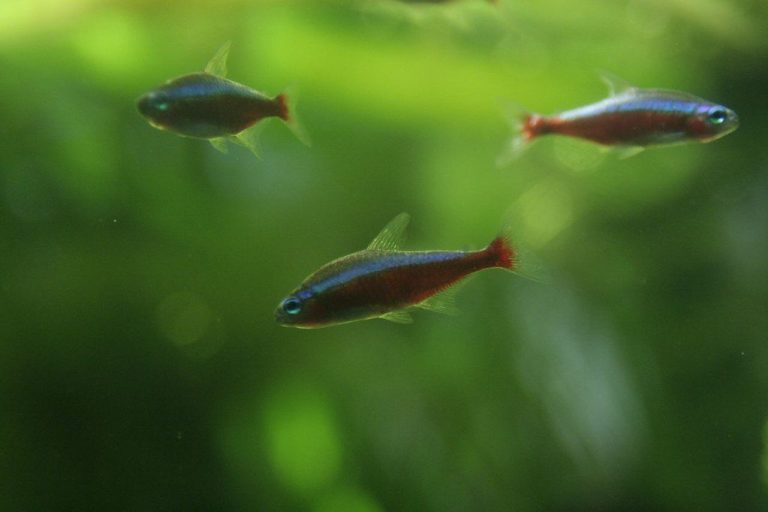
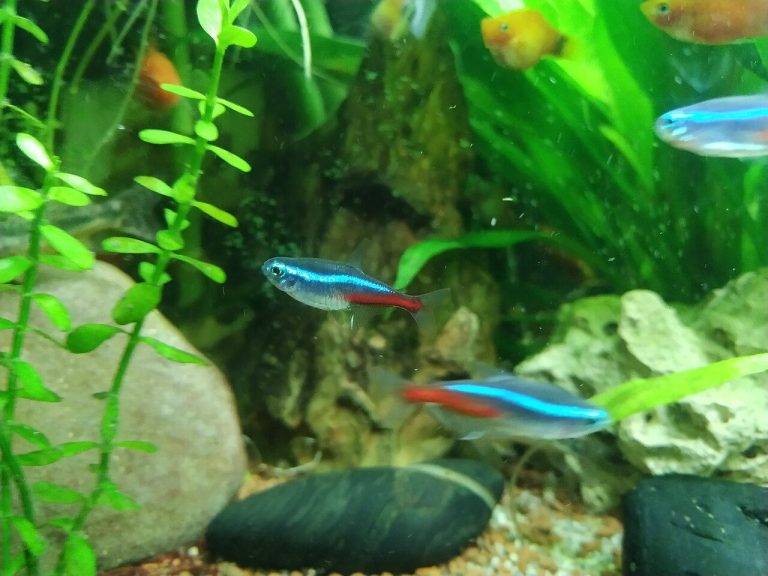
Few sights in the aquarium world are as iconic as a shimmering school of neon tetras darting through a lushly planted tank.
Their scientific name, Paracheirodon innesi, carries a legacy of being one of the most well-loved species in the history of fish keeping.
In my experience, these fish are the perfect bridge between beginner curiosity and intermediate expertise, offering both beauty and a slight challenge in water management.
When I first started keeping these radiant beauties over a decade ago, I quickly learned that their small size belies a need for very specific environmental stability.
This neon tetra care sheet is designed to provide you with the deep-dive knowledge needed to keep your school healthy, colorful, and active for years.
Whether you are setting up your first tank or looking to refine your current setup, understanding the nuances of their habitat is the biggest factor.
At a glance: Neon tetra (Paracheirodon innesi)
- Temperature
- 72–78°F (22–26°C)
- Water pH
- 6.0–7.0
- Adult size
- 1.5 in (4 cm)
- Minimum tank
- 10 gal (20 gal for a proper school)
- Group size
- Groups of 8+
- Temperament
- Peaceful
- Diet
- Omnivore: micro pellets, flakes, frozen daphnia
- Lifespan
- 5–8 years
Keeper’s tip: Add neons only to a fully cycled, stable tank; they are among the first fish to suffer from ammonia swings.
Understanding the Neon Tetra Heritage
Before we look at the technical specifications, it is vital to understand where these fish come from.
Neon tetras are native to the clearwater and blackwater streams of the Amazon basin in South America, specifically in Brazil, Colombia, and Peru.
In these environments, the water is naturally stained by decaying organic matter, creating a unique chemical profile.
The dark, tea-colored water provides a perfect backdrop for their bioluminescent-like stripes to shine, helping them find one another in the gloom.
This evolutionary trait is what makes them so visually striking in our home aquariums today.
Most neons found in local fish stores are now farm-bred, but they still carry the genetic requirements of their wild ancestors.
Pro Tip: When purchasing your fish, look for active swimmers with straight spines and colorful colors. Avoid any tanks where fish appear lethargic or show white, lumpy patches on their skin, as these can be early signs of stress or illness.
Neon Tetra Care Sheet: Ideal Water Parameters
Maintaining stable water conditions is perhaps the most critical aspect of neon tetra care.
In my early years of fish keeping, I noticed that neons are far more sensitive to fluctuations in chemistry than hardier species like danios.
They require a well-cycled aquarium where ammonia and nitrites are consistently at zero.
To make sure your school does well, you should aim for the following specific parameters:
| Parameter | Ideal Range |
|---|---|
| Temperature | 70°F to 78°F (21°C – 25°C) |
| pH Level | 6.0 to 7.0 |
| Water Hardness (dGH) | 2 to 10 dGH |
| Carbonate Hardness (dKH) | 1 to 2 dKH |
| Ammonia / Nitrite | 0 ppm |
| Nitrate | < 20 ppm |
The Importance of Soft Water
Neon tetras are biologically adapted to soft water with low mineral content.
The dGH (General Hardness) and dKH (Carbonate Hardness) are often overlooked by beginners, but they play a massive role in the long-term health of Paracheirodon innesi.
If your tap water is exceptionally hard, you may find that your neons have shorter lifespans or struggle with osmotic stress.
Temperature Stability
While they can tolerate a range of temperatures, I have found that keeping them around 74-75°F is the “sweet spot” for metabolic health.
Sudden drops in temperature can weaken their immune systems, making them susceptible to common parasites.
Always use a reliable heater and a separate thermometer to verify that the water remains consistent throughout the day and night.
Tank Setup and the Blackwater Biotope
Creating the right environment goes beyond just water chemistry; it involves the physical layout of the tank.
A 10-gallon tank is the absolute minimum, but I always recommend a 20-gallon long if you have the space.
The extra horizontal swimming room allows for more natural schooling behavior and better gas exchange.
Incorporating Humic Acids and Tannins
In the wild, neons live in water rich in humic acids and tannins.
You can replicate this by adding driftwood, dried Indian Almond leaves, or using peat filtration in your filter housing.
These elements naturally lower the pH and provide antifungal properties that protect the fish’s delicate slime coat.
This setup is often referred to as a blackwater biotope.
While the water may have a slight yellow or brown tint, it mimics their natural home and significantly reduces their stress levels.
If you prefer clear water, you can still achieve a healthy environment through heavy planting and regular maintenance.
Lighting and Substrate
Neon tetras prefer subdued lighting, as bright lights can make them feel exposed and vulnerable to predators.
Using floating plants like Amazon Frogbit or Salvinia can provide natural shade and cover.
For the substrate, a dark sand or fine gravel is best, as it makes their colors “pop” and prevents light from reflecting harshly off the bottom.
Diet and Nutrition for a Micropredator
In their natural habitat, neon tetras are considered a micropredator.
This means their diet consists largely of tiny invertebrates, crustacean larvae, and various insects that fall into the water.
To keep them healthy in captivity, you must provide a varied diet that replicates this high-protein intake.
High-Quality Staple Foods
A high-quality flake or micro-pellet should form the base of their nutrition.
Look for brands that list whole fish or shrimp as the first ingredient rather than “fish meal.”
Because neons have very small mouths, make sure the food is crushed small enough for them to swallow easily without choking.
Frozen and Live Treats
To see your neons flourish and display their best colors, supplement their diet with frozen or live foods.
I have seen incredible results when feeding my schools baby brine shrimp, daphnia, and cyclops.
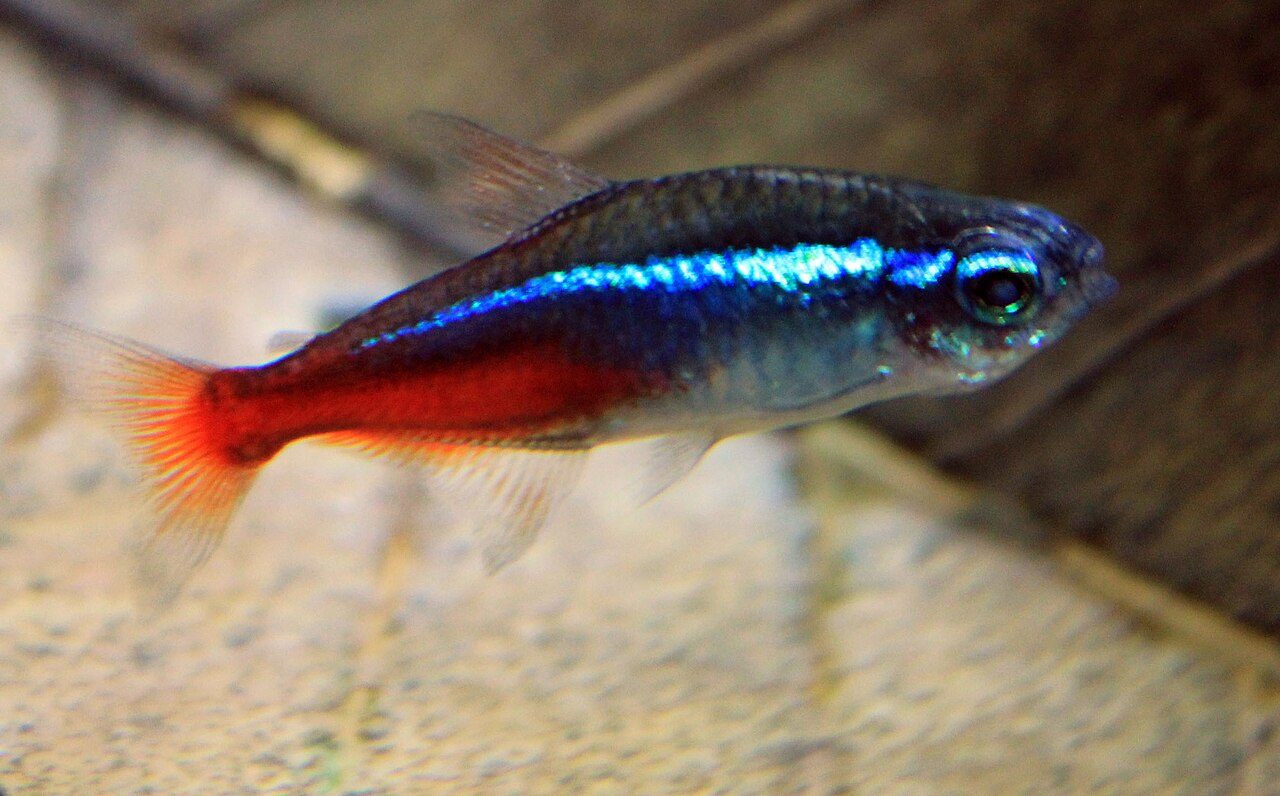
These foods are packed with the nutrients and pigments that bring out the red and blue iridescent scales.
| Food Category | Examples | Frequency |
|---|---|---|
| Dry Staples | Micro-pellets, High-quality flakes | Daily (1-2 times) |
| Frozen Foods | Bloodworms (chopped), Brine shrimp | 2-3 times per week |
| Live Foods | Daphnia, Vinegar eels | Occasional treat |
One of the most important rules on any neon tetra care sheet is the “rule of six.”
Neon tetras are highly social and must be kept in groups of at least six individuals, though ten or more is much better.
When kept in small numbers, they become shy, stressed, and their immune systems can weaken.
In a large school, you will notice a distinct hierarchy and interesting “shoaling” behavior.
They feel safer when surrounded by their own kind, which encourages them to swim in the open areas of the tank.
If you are building a community, make sure their tank mates are equally peaceful.
Choosing Compatible Tank Mates
Neons are small and can easily become a snack for larger, more aggressive fish.
Avoid keeping them with large cichlids, angelfish, or aggressive barbs.
Instead, opt for other small tetras, rasboras, corydoras, or peaceful shrimp.
Always take a moment for checking compatibility before adding new species to your aquarium.
Common Health Issues and Prevention
Despite their popularity, neon tetras can be prone to specific health issues if their environment is not maintained.
The most feared of these is “Neon Tetra Disease,” caused by the microsporidian parasite Plistophora hyphessobryconis.
Symptoms include loss of color, cyst-like lumps on the body, and a curved spine.
Unfortunately, there is no known cure for Plistophora hyphessobryconis, which is why quarantine is so vital.
Another common bacterial infection is Columnaris, which often presents as white, cottony patches around the mouth or fins.
This is usually a sign of poor water quality or high stress levels.
Pro Tip: Always quarantine new fish for at least two to four weeks in a separate tank. This simple step prevents the introduction of parasites and bacteria into your main display tank, saving you from a potential disaster.
Breeding Neon Tetras at Home
Many hobbyists find breeding these small fish to be a rewarding challenge.
It requires a dedicated breeding tank with very specific conditions: extremely soft water (1-2 dGH) and a pH as low as 5.5.
The tank should be kept very dark, as the eggs and fry are light-sensitive.
Neons are egg-scatterers, meaning they will drop their eggs among fine-leaved plants like Java Moss.
The parents do not provide any care and will actually eat the eggs if given the chance.
Once spawning is complete, the adults must be removed immediately to improve the survival of the next generation.
Maintaining Your Neon Tetra Aquarium
Consistency is the hallmark of a successful aquarist.
Weekly water changes of about 25% are standard, but you must help the new water matches the temperature and pH of the tank.
Large, sudden water changes can shock neons, leading to “osmotic shock,” which can be fatal.
During your maintenance routine, check your filter to ensure it isn’t creating too much flow.
Neons prefer calmer waters, and a heavy current can exhaust them.
If your filter is too powerful, you can baffle the output with a sponge or a piece of plastic to create a more comfortable environment.
FAQ: Frequently Asked Questions
How long do neon tetras live? Looked after properly, neon tetras can live for 5 to 8 years. Most premature deaths are caused by poor water quality or the stress of being kept in too small a group.
Can neon tetras live in a 5-gallon tank? I do not recommend it. While they are small, they are active swimmers and need the stability and space that a 10-gallon (or larger) tank provides.
Why are my neon tetras losing their color at night? This is perfectly normal! Neons “turn off” their colors when they sleep to hide from predators. Their vibrancy will return shortly after the lights come back on.
Do neon tetras need a heater? Yes, they are tropical fish and require a consistent temperature. Unless your home stays at a steady 74°F year-round, a heater is necessary.
Where that leaves you
Following a comprehensive neon tetra care sheet is the best way to make sure these Amazonian gems do well in your home.
If you focus on soft, acidic water, a high-quality diet, and the security of a large school, you can enjoy their brilliant colors for many years.
Remember that patience and consistency are your best tools; don’t rush the cycling process and always keep an eye on your water parameters.
As you gain experience, you might even find yourself experimenting with blackwater setups or breeding your own school.
neon tetras is deep and rewarding, offering a glimpse into the incredible biodiversity of the Amazon.
Keep your water clean, your school large, and your curiosity high, and you will find great success with these iconic aquarium fish.

- 2003First tank
- 20+Years keeping
- 40+Tanks kept
- 0Sponsored picks
Howard set up his first 10-gallon planted tank in 2003 and lost half of it within six weeks. Two decades and more than forty aquariums later, he writes the guides he wished he had then: clear numbers, the reasons behind them, and what actually goes wrong in home tanks.