Congo Tetra Disease / Dying / Stress Signs – Causes and Treatment
Congo Tetra stress signs include clamped fins, faded colors, and lethargy, often caused by poor water quality or infections. Immediate recovery requires testing for ammonia, increasing dissolved oxygen, and applying targeted treatments for bacterial or parasitic pathogens.
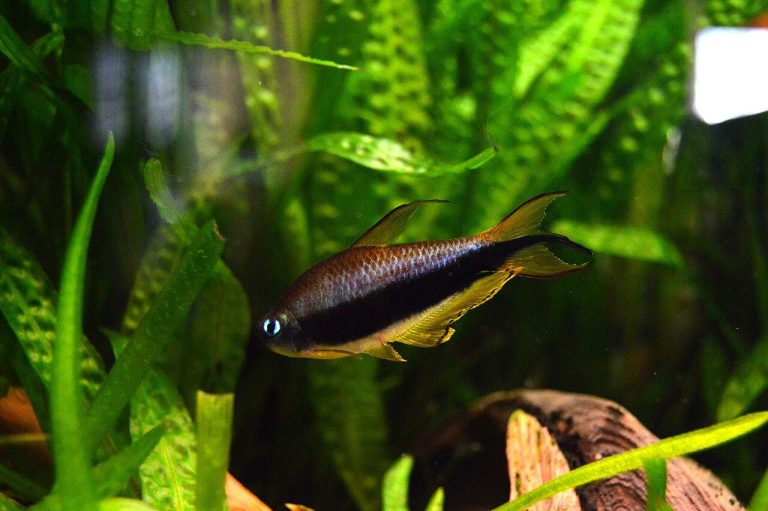
Watching a school of Phenacogrammus interruptus, commonly known as the Congo Tetra, is one of the most satisfying experiences in the hobby. Their iridescent scales and flowing fins create a shimmering spectacle that few other freshwater fish can match.
However, these African beauties are notably more sensitive than your average hardy tetra. In my ten years of keeping them, I have learned that they act as a “canary in the coal mine” for aquarium health.
When something goes wrong, they don’t just hide; they show very specific physiological changes. Understanding Congo Tetra disease / dying / stress signs is the first step toward intervening before it is too late for your school.
Pro Tip: Always observe your Congo Tetras during feeding time. A healthy Congo Tetra is a greedy eater; if one is hovering in the corner or ignoring food, it is almost always the first sign of an underlying health issue or high stress levels.
At a glance: Congo tetra (Phenacogrammus interruptus)
- Temperature
- 73–82°F (23–28°C)
- Water pH
- 6.0–7.5
- Adult size
- 3 in (8 cm)
- Minimum tank
- 30 gal
- Group size
- Groups of 6+
- Temperament
- Peaceful, can nip long fins
- Diet
- Omnivore: flakes, pellets, frozen brine shrimp
- Lifespan
- 3–5 years
Keeper’s tip: Males develop their full colour and fin extensions only in a calm, well-planted tank with dim areas.
Congo Tetra disease / dying / stress signs: Identifying the Red Flags
The key to saving a dying fish is early detection. Because Congo Tetras are larger and more active than species like the Neon Tetra, their behavioral shifts are often more obvious if you know what to look for.
The most common sign of Congo Tetra disease / dying / stress signs is a sudden loss of that signature metallic “shimmer.” When these fish are stressed, their nervous system restricts the pigment cells, making them look dull or even translucent.
You may also notice “clamped fins,” where the dorsal and anal fins are held tight against the body. In a healthy male, these fins should be proudly extended, showing off their ragged, beautiful edges.
Erratic Swimming and Gasping
If you see your fish hanging near the surface or near filter outlets, they are likely struggling with low dissolved oxygen saturation. Congo Tetras have high metabolic rates and require well-oxygenated water to flourish.
Erratic darting or rubbing against decorations (flashing) usually indicates external parasites. This is a clear warning that the fish’s slime coat is being irritated by an invader.
Physical Abnormalities and Lesions
Look closely at the scales and the mouth area. Congo Tetras are prone to physical injuries during transport or “spooking,” which can quickly turn into bacterial infections if the water quality is subpar.
Critical Water Parameters for Congo Tetras
Many issues attributed to “mysterious” deaths are actually the result of osmotic stress or chronic exposure to poor water chemistry. These fish originate from the Congo River Basin, which is characterized by soft, slightly acidic water.
When we keep them in hard water with high carbonate hardness, their kidneys have to work overtime to maintain internal balance. Over months, this weakens their immune system, making them susceptible to common pathogens.
| Parameter | Ideal Range | Danger Zone |
|---|---|---|
| Ammonia / Nitrite | 0 ppm | > 0.25 ppm |
| Nitrate | < 20 ppm | > 40 ppm |
| Temperature | 75°F – 81°F | < 72°F or > 84°F |
| pH | 6.0 – 7.5 | > 8.0 |
The Danger of Nitrite Poisoning
Even a small spike in nitrites can be fatal for these fish. Nitrite poisoning prevents the blood from carrying oxygen effectively, leading to “brown blood disease.”
If you notice your tetras have dark or purple-tinted gills, perform an immediate 50% water change. In my experience, using a dechlorinator that detoxifies nitrite in emergencies can buy you the time needed to fix the biological filter.
Common Bacterial and Fungal Diseases
Because Congo Tetras are schooling fish, a single infected individual can quickly spread a pathogen to the entire group. Understanding the specific bacteria involved helps in choosing the right medication.
Columnaris (Flavobacterium columnare)
This is often mistaken for a fungus because it creates white, fuzzy patches around the mouth or back (Saddleback disease). Flavobacterium columnare is a highly aggressive bacterium that does well in warmer water with high organic loads.
If you see your Congo Tetra dying with white “mold” around its mouth, you must act within 24 hours. Lowering the tank temperature slightly (to about 75°F) can slow the bacteria’s reproduction while you medicate.
Saprolegniasis (Cotton Wool Disease)
Unlike Columnaris, Saprolegniasis is a true fungal infection. It usually attacks fish that have already suffered a physical injury or are dealing with extreme osmotic stress.
You will see white, tuft-like growths that look like cotton wool. Increasing the humic acid concentration in the water through the use of Indian Almond leaves or peat can provide natural antifungal properties.
Aeromonas hydrophila Infections
This bacterium often causes internal issues, such as dropsy (bloating and pineconing scales) or “red pest,” which manifests as bloody streaks on the fins. Aeromonas hydrophila is opportunistic and strikes when the fish’s immune system is compromised by poor diet or dirty water.
Common Mistake: Many hobbyists try to treat dropsy when the fish is already severely bloated. In my experience, once the scales are pineconed, internal organ failure has usually occurred. Focus on the rest of the school by performing deep gravel vacs and improving water quality immediately.
Parasitic Threats: Ich and Velvet
The most common parasite seen in Congo Tetras is Ichthyophthirius multifiliis, commonly known as Ich. These look like tiny grains of salt sprinkled over the fish’s body and fins.
Because Congo Tetras are sensitive to certain dyes and metals, you should be careful with “quick cure” medications. It is often safer to use a heat and salt method or a half-dose of copper-based treatments, provided you monitor the fish closely.
Identifying white spots on fish early is vital, as the parasite’s life cycle accelerates in warm water. If you catch it while it’s only on one or two fish, you can prevent a total tank collapse.
Environmental Stress and Tank Setup
Congo Tetras are easily spooked. I’ve noticed that sudden lights-on or loud noises can cause them to dart blindly into the glass, leading to head injuries.
A tank that is too small will also lead to chronic stress. While some people try to keep them in 20-gallon tanks, they really need a 4-year-old’s energy worth of space. Making sure the correct tank size for active tetras is a prerequisite for long-term health.
The Importance of Cover
In the wild, Phenacogrammus interruptus lives in areas with overhanging vegetation. If your tank is too “bright” or open, they will feel exposed.
Floating plants like Amazon Frogbit or Salvinia are excellent for providing dappled light. This mimics their natural habitat and significantly reduces the Congo Tetra disease / dying / stress signs associated with environmental anxiety.
Step-by-Step Guide to Saving a Dying Congo Tetra
If you find a fish in distress, follow this protocol to maximize its chances of survival.
1. Test the Water: Before adding any chemicals, check Ammonia, Nitrite, and Nitrate. If Ammonia or Nitrite are above 0, perform a 30-50% water change with a high-quality conditioner.
2. Increase Aeration: Add an air stone or move your filter outlet to create more surface agitation. This increases the dissolved oxygen saturation, making it easier for a sick fish to breathe.
3. Quarantine: If only one fish shows signs of Flavobacterium columnare or Saprolegniasis, move it to a hospital tank. This prevents the spread and allows you to treat the individual with more potent medications without crashing your main tank’s cycle.
4. Check the Temperature: Make sure your heater hasn’t malfunctioned. A sudden drop in temperature is a leading cause of Ich outbreaks.
5. Use Natural Conditioners: Adding tannins to the water can be a lifesaver. Tannins lower the pH slightly and provide antibacterial benefits that help the fish’s slime coat recover.
FAQ: Frequently Asked Questions
Why is my Congo Tetra losing its color?
Loss of color is usually a sign of stress, poor diet, or low water quality. It can also happen at night when the fish are “sleeping,” but if it persists during the day, check your nitrate levels and make sure you are feeding a high-quality flake or frozen food.
How long do Congo Tetras live?
With proper care, Congo Tetras can live for 3 to 5 years. Their lifespan is often shortened by keeping them in water that is too hard or by allowing nitrate levels to stay consistently above 40 ppm.
Can I keep Congo Tetras with aggressive tank mates?
No. While they are large, they are peaceful and can be easily bullied by aggressive cichlids or larger barbs. Stress from bullying is a major contributor to Congo Tetra disease / dying / stress signs.
Do Congo Tetras need a school?
Absolutely. They should be kept in groups of at least 6, though 10 or more is better. Keeping them in small numbers causes them to become timid and stressed, which weakens their immune systems.
Why are my Congo Tetras gasping at the surface?
This is almost always due to low oxygen or high nitrite levels. Help your filter is providing enough surface movement and check that your tank is not overstocked.
My final take
Successfully keeping Congo Tetras requires more than just a glass box and some water; it requires an understanding of their specific biological needs. If you keep a close eye on Congo Tetra disease / dying / stress signs, you can intervene before a minor issue becomes a catastrophe.
Water quality is the foundation of all fish health. Most bacterial infections like Columnaris or parasitic outbreaks like Ich only take hold when the fish are already weakened by environmental stress.
In my experience, providing a large, well-planted tank with soft water and high oxygen levels is the best “medicine” you can provide. Treat your Congo Tetras with the respect their beauty deserves, and they will reward you with years of shimmering, iridescent displays in your home aquarium.

- 2003First tank
- 20+Years keeping
- 40+Tanks kept
- 0Sponsored picks
Howard set up his first 10-gallon planted tank in 2003 and lost half of it within six weeks. Two decades and more than forty aquariums later, he writes the guides he wished he had then: clear numbers, the reasons behind them, and what actually goes wrong in home tanks.