Blind Cave Tetra With Betta Fish – Can They Live Together?
Blind Cave Tetras can live with Betta fish in tanks of 30 gallons or larger. Their lack of sight prevents intimidation by the Betta, but their active swimming requires significant space to avoid stressful collisions or fin nipping.
Keeping a Blind Cave Tetra with betta fish is one of the most intriguing challenges an aquarist can undertake. In my fifteen years of maintaining diverse aquatic ecosystems, I have found that this pairing defies many traditional “rules” of community tank building.
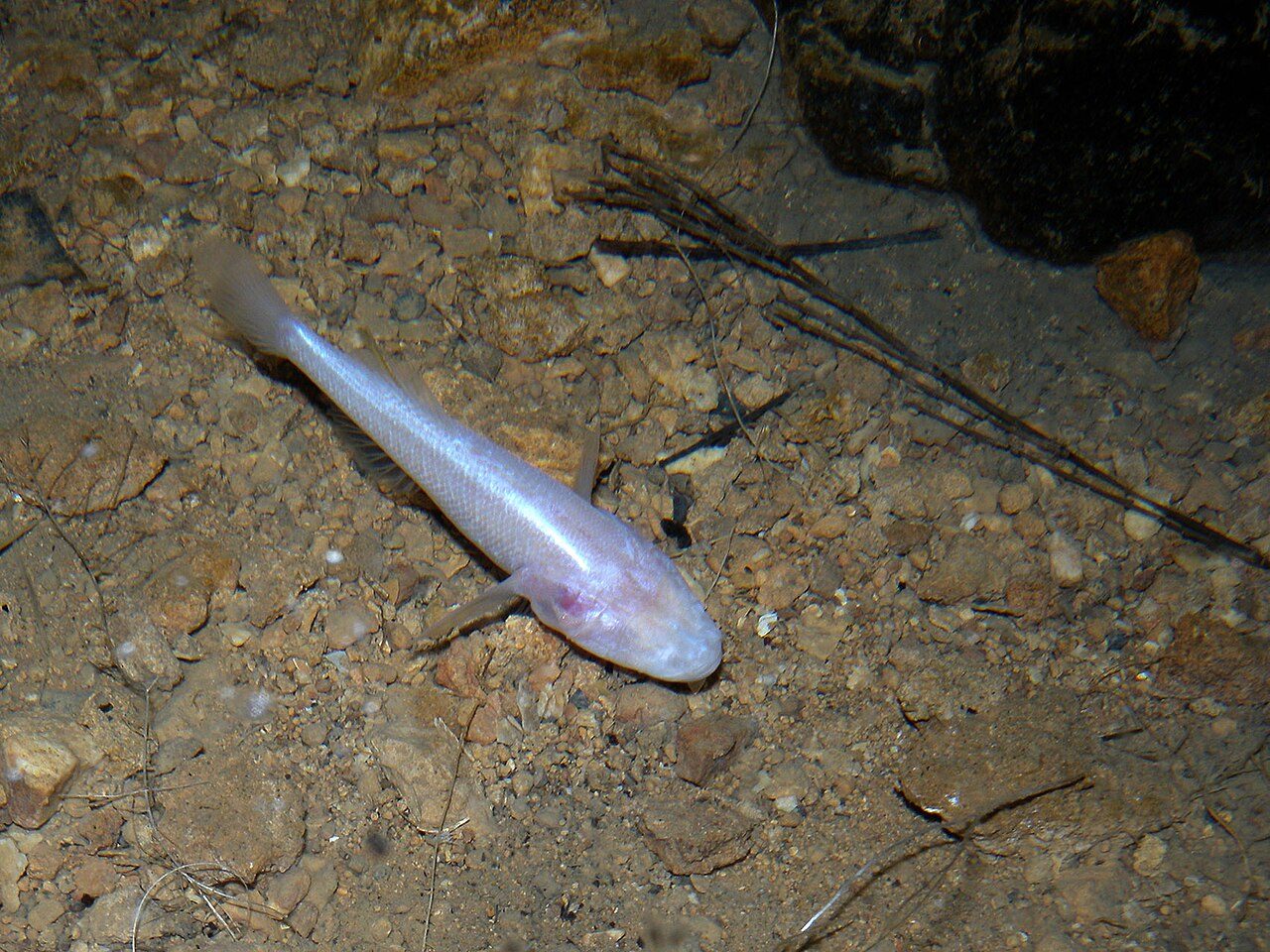
The Blind Cave Tetra, scientifically known as Astyanax mexicanus, is a remarkable creature that has evolved over millennia in total darkness. Because they lack eyes, they do not react to the colorful colors or aggressive posturing of a male Betta splendens.
This unique dynamic creates a unusual environment where the Betta’s typical dominance is effectively ignored. However, success requires a deep understanding of their biological needs and a commitment to precise tank management.
At a glance: Blind cave tetra (Astyanax mexicanus)
- Temperature
- 68–77°F (20–25°C)
- Water pH
- 6.5–8.0
- Adult size
- 3.5 in (9 cm)
- Minimum tank
- 30 gal
- Group size
- Groups of 4+
- Temperament
- Peaceful to semi-aggressive
- Diet
- Omnivore: sinking pellets, flakes, frozen foods
- Lifespan
- 10–15 years
Keeper’s tip: They find food by smell and lateral line, so sinking foods spread across the floor work best.
Understanding the Biology of the Blind Cave Tetra
To successfully keep a Blind Cave Tetra with betta fish, you must first appreciate the incredible troglobitic adaptation of these fish. Originating from the deep cave systems of Mexico, these members of the Characidae family have completely lost their sight and pigmentation.
Instead of eyes, they rely on highly sensitive lateral line mechanoreceptors to work through their surroundings. These receptors allow them to detect minute changes in water pressure and vibrations, making them experts at avoiding obstacles.
In my experience, this “sixth sense” is actually more efficient than sight in a crowded aquarium. I have watched these tetras handle complex hardscapes at high speeds without ever touching a single rock or plant.
Pro Tip: When first introducing Blind Cave Tetras, avoid rearranging your hardscape frequently. They “map” their environment using their lateral lines, and constant changes can cause them significant stress and disorientation.
The Temperament of the Betta Fish
The Betta fish belongs to the Osphronemidae family and is famous for its territorial nature. Unlike the tetra, the Betta relies heavily on its labyrinth organ to breathe atmospheric air and its sharp vision to identify rivals.
When you introduce a Blind Cave Tetra with betta fish, the Betta may initially try to flare or intimidate its new roommates. However, because the tetra cannot see the display, it simply swims away, leaving the Betta confused and often disinterested.
I have noticed that Bettas eventually stop trying to bully the tetras because they get no “feedback” from their targets. This lack of visual communication can actually lead to a more peaceful tank than a pairing with sighted tetras.
Water Parameters and Chemistry
One of the most critical aspects of housing these two species together is finding a middle ground for water chemistry. While both are relatively hardy, they do have slightly different preferences regarding general hardness and carbonate hardness.
Bettas typically prefer softer, slightly acidic water, while the Blind Cave Tetra is accustomed to the mineral-rich waters of limestone caves. Finding a balance is key to preventing diseases like Columnaris or fin rot.
| Parameter | Ideal Range | Notes |
|---|---|---|
| Temperature | 75°F – 80°F | Bettas need the higher end for metabolism. |
| pH Level | 6.8 – 7.5 | Aim for neutral to keep both species happy. |
| General Hardness (GH) | 8 – 15 dGH | Cave tetras prefer slightly harder water. |
| Carbonate Hardness (KH) | 4 – 8 dKH | Provides necessary pH buffering. |
Monitoring these levels weekly is essential for long-term health. If you are new to this, you might find my guide on keeping tetras with bettas helpful for understanding basic community dynamics.
Choosing the Right Tank Size
The biggest mistake I see beginners make with a Blind Cave Tetra with betta fish setup is using a tank that is too small. While a Betta can live in a smaller space, Blind Cave Tetras are incredibly active and fast swimmers.
I recommend a minimum of 30 gallons for this community. This volume provides enough horizontal swimming space for the tetras to school and enough “territory” for the Betta to claim his own corner.
In a smaller tank, the tetras may constantly bump into the Betta’s long fins. This physical contact can stress the Betta and lead to nipping or aggression as a defensive response.
Feeding Strategies for Success
Feeding a Blind Cave Tetra with betta fish requires a strategic approach. Tetras are opportunistic feeders and will use their sense of smell and vibration to find food quickly.
Bettas, on the other hand, are often slower and more deliberate eaters who prefer to take food from the surface. If you simply dump food in, the tetras will likely eat everything before the Betta even realizes it is mealtime.
I use a feeding ring for the Betta to keep his pellets in one place. While he is occupied, I scatter sinking micro-pellets or frozen brine shrimp across the rest of the tank for the tetras.
Common Mistake: Do not overfeed to make sure the Betta gets enough. This leads to ammonia spikes and poor water quality. Instead, use a pair of long aquarium tweezers to target-feed your Betta.
Tank Decor and Aquascaping
When designing a home for a Blind Cave Tetra with betta fish, you should aim for a “cave-like” aesthetic that provides comfort for both. Use smooth rocks, driftwood, and plenty of live plants to break up lines of sight.
Bettas love broad-leafed plants like Anubias or Amazon Swords where they can rest near the surface. Blind Cave Tetras enjoy swimming through “forests” of taller plants like Vallisneria.
Avoid any sharp or jagged decorations. Since the tetras work through by vibration, they may occasionally brush against objects; soft or smooth surfaces help they do not damage their skin or scales.
Potential Health Challenges
Both species are susceptible to common freshwater ailments, but their unique environments can present specific risks. For instance, the high activity level of tetras can sometimes lead to physical exhaustion in long-finned Bettas.
Watch closely for signs of stress, such as clamped fins or loss of appetite. If you notice the Betta hiding constantly, the tetras may be too boisterous for his specific personality.
Maintaining high water quality is the best defense against bacterial infections like Columnaris. Regular water changes of 25-30% weekly will keep nitrate levels low and provide the minerals the tetras need for their skeletal health.
If you are looking for other options, I have found that lemon tetras can sometimes be a calmer alternative if the Blind Cave Tetra’s energy is too high for your Betta.
Blind Cave Tetras should always be kept in groups of at least six. In smaller numbers, they can become neurotic or overly nippy toward their tank mates.
When kept in a proper school, they focus their energy on each other. You will often see them “racing” around the tank in a tight group, which is a sign of a healthy social structure.
The Betta will likely find a favorite spot in the tank and guard it. As long as the tetras have enough room to bypass this area, the two species will coexist in a state of mutual “polite ignoring.”
Questions I get asked a lot
Can Blind Cave Tetras see light at all?
While they lack functional eyes, some studies suggest they have light-sensitive cells in their pineal gland. However, for all practical aquarium purposes, they are completely blind and do not rely on light for navigation.
Do Blind Cave Tetras nip the fins of Bettas?
They can be nippy if they are hungry or if the tank is too small. Keeping them well-fed and in a spacious environment significantly reduces this risk.
What is the lifespan of a Blind Cave Tetra?
With proper care, they can live for 5 to 7 years. This is slightly longer than the average Betta, so plan for a long-term commitment.
Are they compatible with other cave-dwelling fish?
They can be, but adding more species to a Betta tank increases the risk of aggression. Stick to a simple community until you are experienced with their unique needs.
Do I need a special heater for this tank?
A standard high-quality aquarium heater is fine. Just make sure it is consistent, as Bettas are very sensitive to temperature fluctuations.
Final Thoughts on the Blind Cave Tetra and Betta Community
Choosing to keep a Blind Cave Tetra with betta fish is a satisfying way to observe one of nature’s most unique evolutionary paths. It is a tank that teaches you about the “unseen” side of fish behavior.
If you provide a large tank, maintaining stable water parameters, and using targeted feeding techniques, you can create a stable environment. Always keep in mind that every Betta has a unique personality; some are more tolerant than others.
For those who enjoy hardy tetra species, the Blind Cave Tetra offers a level of activity and prehistoric charm that few other fish can match. Monitor your tank daily, enjoy the interesting movements of your blind navigators, and watch your Betta rule his kingdom with a bit more humility.

- 2003First tank
- 20+Years keeping
- 40+Tanks kept
- 0Sponsored picks
Howard set up his first 10-gallon planted tank in 2003 and lost half of it within six weeks. Two decades and more than forty aquariums later, he writes the guides he wished he had then: clear numbers, the reasons behind them, and what actually goes wrong in home tanks.