Blind Cave Tetra Size – The Expert Guide To Growth And Tank
The average Blind Cave Tetra size typically ranges from 3 to 4 inches (7.5 to 10 cm) in length. Providing a high-protein diet and at least 20 to 30 gallons of space helps make sure they reach their full potential.
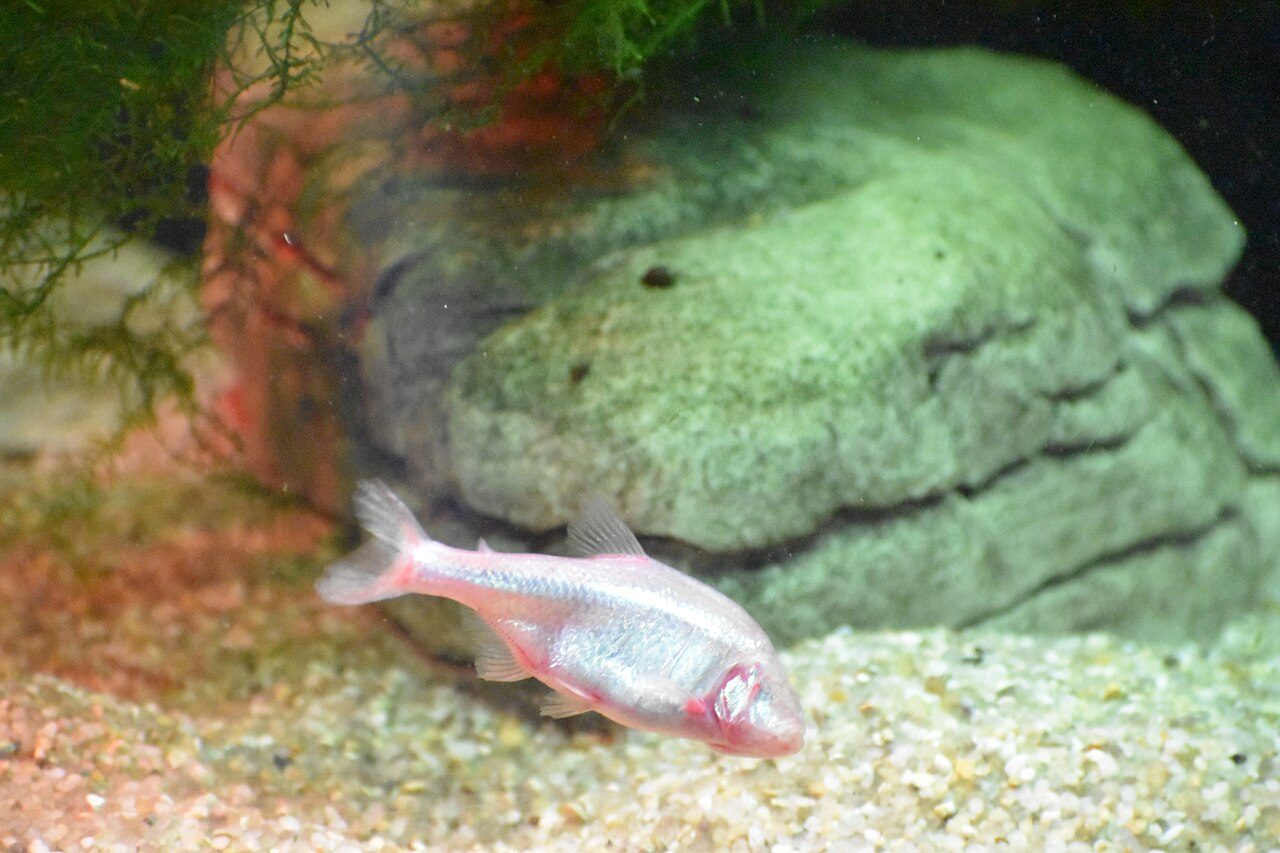
The Blind Cave Tetra, scientifically known as Astyanax mexicanus, is one of the most unusual creatures you can keep in a home aquarium. These fish are famous for their lack of eyes and pigment, a result of thousands of years of evolution in pitch-black subterranean environments.
In my decade of keeping various different kinds of tetra fish, I have found that many hobbyists underestimate how large these unique characins can actually get. Understanding the final Blind Cave Tetra size is vital for planning a tank that accommodates their active swimming style and sensory needs.
While they may start as small, translucent slivers in a pet store bag, they quickly grow into strong, energetic fish. Let’s look at the specifics of their growth, the factors that influence their development, and how to make sure they do well in your care.
At a glance: Blind cave tetra (Astyanax mexicanus)
- Temperature
- 68–77°F (20–25°C)
- Water pH
- 6.5–8.0
- Adult size
- 3.5 in (9 cm)
- Minimum tank
- 30 gal
- Group size
- Groups of 4+
- Temperament
- Peaceful to semi-aggressive
- Diet
- Omnivore: sinking pellets, flakes, frozen foods
- Lifespan
- 10–15 years
Keeper’s tip: They find food by smell and lateral line, so sinking foods spread across the floor work best.
Blind Cave Tetra Size and Growth Expectations
When discussing the Blind Cave Tetra size, we generally look at two measurements: the standard length (from snout to the base of the tail) and the total length (from snout to the tip of the tail). In a well-maintained aquarium, these fish usually reach a total length of 3 to 4 inches.
It is important to keep in mind that these are not “nano” fish like some of their cousins. Because they lack sight, they rely heavily on their lateral line system to handle, which means they are constantly on the move to “map” their surroundings.
Providing enough room for this movement is the first step in ensuring they reach their maximum genetic size. Below is a breakdown of what you can expect during the different life stages of a Blind Cave Tetra.
| Growth Stage | Approximate Size (Inches) | Timeframe |
|---|---|---|
| Fry/Juvenile | 0.5 – 1.5 inches | 0 – 6 months |
| Sub-Adult | 1.5 – 2.5 inches | 6 – 12 months |
| Full Adult | 3.0 – 4.0 inches | 12+ months |
Genetics and Origin
The specific cave population your fish originates from can slightly influence their final size. For example, fish descending from the Pachón cave population might show subtle differences in body depth compared to those from other Mexican cave systems.
Regardless of the cave of origin, these fish belong to the Characidae family. They share many traits with more common tetras but have undergone a distinct troglobitic adaptation that prioritizes sensory organs over vision.
Expert Tip: When you buy these fish at a local shop, they are often only 1.5 inches long. Always assume they will double in size within the first year and choose your tank dimensions accordingly!
The Role of Sexual Dimorphism in Adult Size
In many tetra species, telling the difference between males and females is a challenge until they are fully grown. With the Blind Cave Tetra, sexual dimorphism becomes quite apparent once they hit the 2.5-inch mark.
Females tend to be the larger of the two sexes, not necessarily in length, but certainly in body mass. They develop a much deeper, more rounded “belly” as they mature, especially when they are conditioned for breeding.
Males, on the other hand, usually stay slightly slimmer and more streamlined. If you notice some of your tetras are significantly “chunkier” than others despite eating the same amount, you likely have a mix of genders.
Impact on Tank Dynamics
This difference in size and girth can affect how they interact within their school. Larger females often establish a loose dominance during feeding times, though these fish are generally peaceful compared to other Characidae.
Because they are one of the best tetra fish for beginners due to their hardiness, observing these physical changes is a great way for new keepers to learn about fish biology. You will see their bodies fill out significantly between months six and twelve.
How Troglobitic Adaptation Impacts Space Needs
You might wonder why Blind Cave Tetra size matters so much if they can’t even see the walls of the tank. The answer lies in their incredible sensory adaptations, specifically their neuromast organs.
These are microscopic sensory structures located along the head and the lateral line system. They allow the fish to detect minute changes in water pressure and vibrations, essentially giving them a “3D map” of their environment.
Because they work through by moving, a cramped tank can lead to stress. If the fish is constantly bumping into glass or decorations before it can react to the pressure wave, it may become timid or fail to grow to its full potential.
Creating a “Blind-Friendly” Layout
To support healthy growth, the layout of your aquarium should be open in the center. Avoid placing sharp or jagged plastic plants that could snag their skin as they zip around the tank.
Using smooth river stones, driftwood, or slate caves mimics their natural habitat and provides tactile “landmarks” for them. In my experience, a fish that feels secure in its environment will always eat better and grow faster.
Common Mistake: Many keepers over-decorate the middle of the tank. For Blind Cave Tetras, make sure the center clear so they can swim at high speeds without constant obstruction.
Tank Size and Stocking for Healthy Growth
To achieve a healthy Blind Cave Tetra size, you must provide adequate water volume. While a single fish could technically survive in a 10-gallon tank, these are schooling fish that need to be kept in groups of at least five or six.
A group of six adult Blind Cave Tetras should ideally be housed in a 29-gallon or 30-gallon long aquarium. The extra length of a “long” tank is much more valuable than the height of a “tall” tank for this species.
| Number of Tetras | Recommended Minimum Tank Size | Ideal Tank Dimensions |
|---|---|---|
| 5 – 6 | 20 Gallons (Long) | 30″ x 12″ x 12″ |
| 8 – 10 | 30 Gallons | 36″ x 12″ x 16″ |
| 12+ | 55 Gallons | 48″ x 13″ x 21″ |
The Importance of Water Quality
High levels of nitrates can lead to morphological stunting, where the fish’s internal organs continue to grow while the skeletal frame does not. This is a painful condition that significantly shortens their lifespan.
I always recommend a solid filtration system. Since these fish come from cave environments where water often trickles through limestone, they appreciate slightly harder water with a stable pH.
Regular 25-30% weekly water changes are the “secret sauce” to seeing your tetras hit that 4-inch mark. Clean water stimulates the appetite and ensures that growth hormones aren’t suppressed by metabolic waste build-up.
Dietary Requirements for Maximum Size
The Blind Cave Tetra size is heavily influenced by what you put in the tank during their first year of life. In the wild, they are opportunistic scavengers, eating everything from bat guano to small crustaceans that wash into the caves.
In the aquarium, they are not picky. However, a diet of cheap, low-protein flakes will not result in a strong, 4-inch specimen. You want to provide a variety of high-quality foods.
I have seen the best growth results using a base of high-quality sinking pellets, supplemented with frozen foods like bloodworms, brine shrimp, and daphnia. The protein and healthy fats in these foods are essential for building muscle mass.
Feeding Techniques for Blind Fish
Because they cannot see the food, they rely on smell and the vibrations of the food hitting the water. They are surprisingly efficient at finding food, often beating sighted fish to the prize.
When I first kept these, I worried they would starve. I quickly learned that their neuromast sensors are so sensitive they can “feel” a bloodworm sinking through the water column from several inches away.
Try to feed in the same area of the tank every day. They will quickly learn the “vibration profile” of your footsteps and the lid opening, gathering in anticipation of the meal.
Preventing Morphological Stunting in Your Aquarium
One of the saddest things to see in the hobby is a fish that has been “grown small” due to its environment. Morphological stunting is often irreversible and leads to a weakened immune system.
To avoid this, you must balance three things: space, nutrition, and water cleanliness. If any one of these is lacking, the Blind Cave Tetra size will suffer.
If you notice your fish have stopped growing at 2 inches and they are already over a year old, check your nitrate levels. High nitrates (above 40ppm) are the most common culprit for stunted growth in hardy species like these.
The Myth of “Growing to the Size of the Tank”
It is a common misconception that fish only grow to the size of their container. While their external growth may slow down, their internal organs do not, leading to a premature death.
Always buy a tank based on the adult Blind Cave Tetra size, not the size they are at the pet store. Giving them a 30-gallon home from day one is the best gift you can give them.
If you are looking for other hardy species to fill out your collection, you might also be interested in the buenos aires tetra care guide, as they share some similarities in hardiness and activity levels.
Reader questions
How long does it take for a Blind Cave Tetra to reach full size?
Typically, they will reach their full adult length of 3 to 4 inches within 12 to 18 months. Their growth is fastest during the first six months of life, provided they have a high-protein diet.
Can I keep Blind Cave Tetras in a 10-gallon tank?
I do not recommend it for adult fish. While a 10-gallon might work for a couple of juveniles, adults are too active and grow too large for such a small volume of water. A 20-gallon long is the bare minimum for a small school.
Do they get aggressive as they get larger?
They are generally not aggressive, but they are very boisterous. Their constant swimming and “bumping” into other fish can stress out slow-moving or shy tank mates. It is best to keep them with other active, mid-sized fish.
What is the maximum Blind Cave Tetra size ever recorded?
While 4 inches is the standard maximum in home aquaria, some exceptional specimens in large public aquarium displays have been known to push closer to 4.7 inches, though this is rare.
Before you go
The Blind Cave Tetra size is a vital factor to consider before bringing these prehistoric-looking fish into your home. At a solid 3 to 4 inches, they are a medium-sized tetra that requires more space and better filtration than many people assume.
Once you understand their troglobitic adaptation and providing an environment that caters to their lateral line system, you can ensure your fish live a long, healthy life. Focus on a high-protein diet and maintain pristine water conditions to avoid stunting.
These fish are proof of the wonders of evolution. Watching a school of sightless tetras handle a complex aquascape with surgical precision is one of the most satisfying experiences in the hobby.
Just make sure you have the room for them to grow into the solid, active characins they are meant to be.

- 2003First tank
- 20+Years keeping
- 40+Tanks kept
- 0Sponsored picks
Howard set up his first 10-gallon planted tank in 2003 and lost half of it within six weeks. Two decades and more than forty aquariums later, he writes the guides he wished he had then: clear numbers, the reasons behind them, and what actually goes wrong in home tanks.