Blind Cave Tetra Tank Mates – Compatibility Guide
The best Blind Cave Tetra tank mates are sturdy, peaceful species that do well in alkaline water, including Peppered Corydoras, Bristlenose Plecos, and larger livebearers like Swordtails or Mollies that won’t be bothered by their sightless, active swimming.
Selecting the right Blind Cave Tetra tank mates is a unique challenge that requires an understanding of one of nature’s most interesting evolutionary wonders.
In my 10+ years of maintaining diverse freshwater setups, I have found that these fish, scientifically known as Astyanax mexicanus, are often misunderstood by beginners.
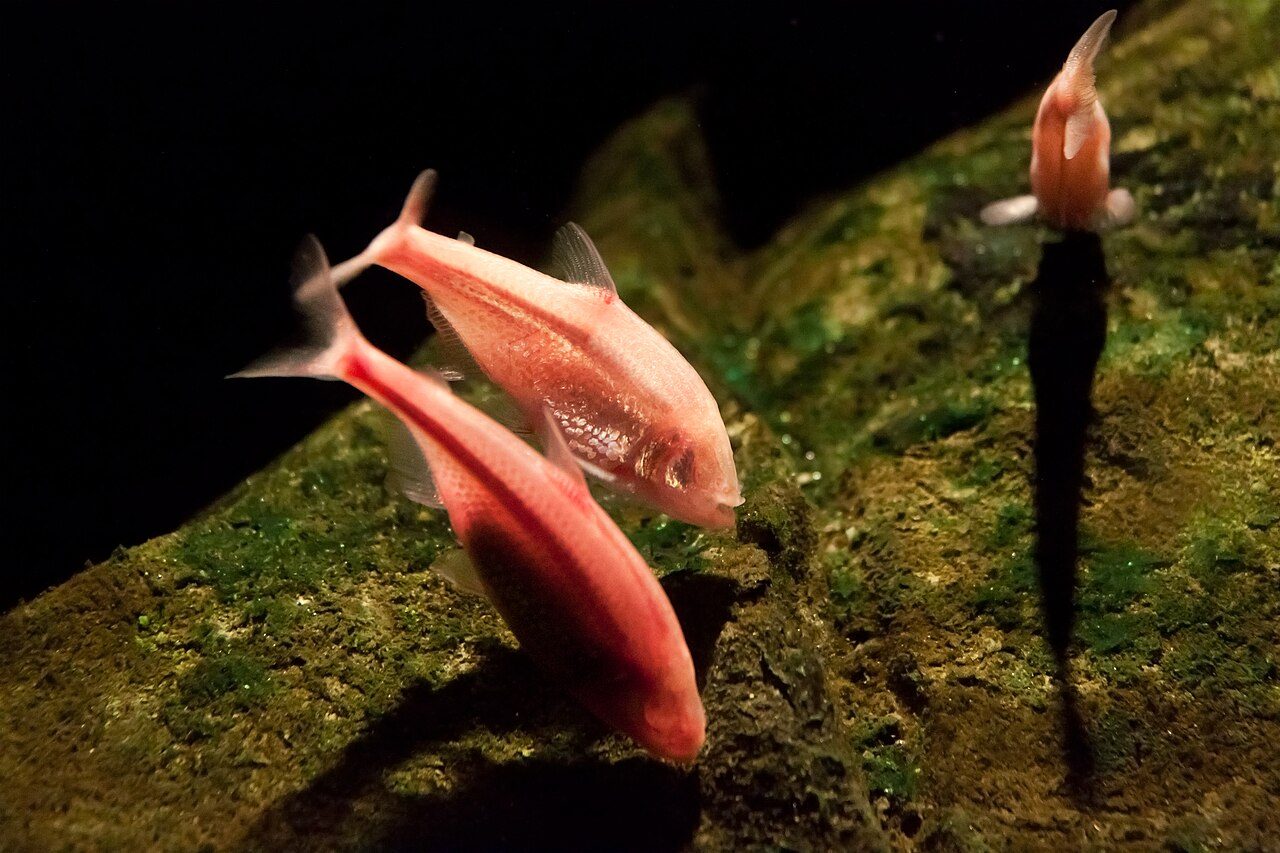
While they lack eyes, they are far from helpless, using a highly developed lateral line system to work through their environment with precision.
Providing a suitable community for these “troglobitic” (cave-dwelling) fish involves more than just picking peaceful species.
You must consider their energetic swimming patterns and their preference for specific water chemistry found in their natural limestone cave habitats.
At a glance: Blind cave tetra (Astyanax mexicanus)
- Temperature
- 68–77°F (20–25°C)
- Water pH
- 6.5–8.0
- Adult size
- 3.5 in (9 cm)
- Minimum tank
- 30 gal
- Group size
- Groups of 4+
- Temperament
- Peaceful to semi-aggressive
- Diet
- Omnivore: sinking pellets, flakes, frozen foods
- Lifespan
- 10–15 years
Keeper’s tip: They find food by smell and lateral line, so sinking foods spread across the floor work best.
Understanding the Blind Cave Tetra (Astyanax mexicanus)
Before we look at the specific Blind Cave Tetra tank mates, we must understand the biology of these fish.
The Astyanax mexicanus is a prime example of Troglobitic adaptation, where a species loses its sight and pigmentation over thousands of years in total darkness.
Instead of sight, they rely on Neuromast sensitivity, which allows them to detect tiny pressure changes and vibrations in the water.
In my experience, this makes them incredibly efficient at finding food, often beating sighted fish to the prize.
They are active, mid-to-bottom dwelling fish that rarely stop moving, which can sometimes stress out more sedentary or nervous tank mates.
Expert Pro Tip: Because they rely on vibrations, avoid keeping them in tanks with excessively loud internal filters or air stones that create massive turbulence. Too much “noise” in the water can overstimulate their lateral lines and lead to increased stress levels.
Ideal Water Parameters for a Cave Community
When building a community around these fish, you must match the water conditions of their natural Mexican cave systems.
These environments are typically rich in minerals, featuring a Karst limestone substrate that naturally buffers the water.
This means your Blind Cave Tetra tank mates must also be comfortable in hard, alkaline water.
| Parameter | Ideal Range |
|---|---|
| Temperature | 68°F – 77°F (20°C – 25°C) |
| pH Level | 7.5 – 8.5 (Alkaline pH parameters) |
| Water Hardness | 12 – 30 General Hardness (dGH) |
| Tank Size | 30 Gallons Minimum |
Maintaining these parameters ensures that your tetras remain healthy and their tank mates flourish alongside them.
If you are looking for other hardy species to add to your collection, you might consider how they compare to the best tetra fish for beginners which often share similar water requirements.
Top Recommended Blind Cave Tetra Tank Mates
Finding the perfect Blind Cave Tetra tank mates involves looking for fish that are sturdy and not easily spooked.
Since the tetras will constantly “bump” into things while mapping their environment, delicate fish with long fins are generally a poor choice.
1. Corydoras paleatus (Peppered Corydoras)
The Corydoras paleatus is an excellent bottom-dwelling companion for the Blind Cave Tetra.
They are incredibly hardy and can tolerate the cooler, harder water that Astyanax mexicanus prefers.
In my own tanks, I have noticed that Peppered Cories simply ignore the tetras’ frantic swimming, continuing their search for food along the substrate.
2. Ancistrus cirrhosus (Bristlenose Pleco)
The Ancistrus cirrhosus is another fantastic choice because of its armored body and peaceful nature.
They occupy the lower levels of the tank and provide a great service by cleaning up algae on glass and rocks.
Their tough exterior means they aren’t bothered if a blind tetra accidentally swims into them during a feeding frenzy.
3. Xiphophorus helleri (Swordtails)
If you want to add some color to your cave-themed tank, Xiphophorus helleri is a top-tier candidate.
Swordtails are active swimmers and stay healthy in the same Alkaline pH parameters as the tetras.
They are large enough to not be seen as prey and fast enough to stay out of the way of the tetras’ constant patrolling.
4. Poecilia latipinna (Sailfin Mollies)
Mollies, specifically the Poecilia latipinna, are well-known for their love of hard, mineral-rich water.
They are chunky, strong fish that can handle the somewhat boisterous nature of a school of Blind Cave Tetras.
Mollies also help keep the tank clean by grazing on hair algae, which can sometimes crop up in limestone-heavy setups.
5. Sturdy Schooling Fish
If your tank is large enough, you can add other fast-moving schooling fish.
Species like the Buenos Aires Tetra tank mates are often compatible because they share a similar level of “attitude” and energy.
Giant Danios are also a great option as they stay mostly in the upper water column, leaving the mid-levels to the blind tetras.
Species to Avoid in a Blind Cave Tetra Tank
While many fish can coexist with these blind wonders, some are a recipe for disaster.
The primary issue is the tetra’s tendency to “investigate” things with their mouths, which can lead to accidental fin nipping.
Avoid Slow-Moving Fish: Species like Bettas or Fancy Guppies will likely have their fins nipped.
The tetras don’t do this out of malice, but their sightless navigation often involves “tasting” the environment.
Avoid Very Small Shrimp: While larger Amano shrimp might survive, smaller Cherry shrimp will likely become a snack.
Even though the tetras are blind, their Neuromast sensitivity makes them expert hunters of anything that moves and fits in their mouths.
Common Mistake: Many hobbyists try to keep these tetras with Discus or Angelfish. This is a mistake because these “regal” fish prefer soft, acidic water and a calm environment, which is the exact opposite of what a Blind Cave Tetra needs.
Designing the Tank for Compatibility
The layout of your aquarium plays a massive role in how well your Blind Cave Tetra tank mates get along.
Since these fish live in caves, they appreciate a scape that features plenty of rockwork, specifically using Karst limestone substrate or Texas Holey Rock.
This mimics their natural habitat and also provides visual barriers for the sighted fish in the tank.
While the tetras don’t need light, your other fish and plants will.
I suggest using low-light plants like Anubias or Java Fern, which can be attached to the rocks.
This creates a “twilight” aesthetic that looks beautiful while keeping the light intensity low enough to satisfy the tetras’ instincts.
If you are curious about how lighting affects other species, you might want to look into diamond tetra sparkle lighting for inspiration on creating dramatic effects.
Feeding Dynamics in a Mixed Tank
Feeding time is when the unique nature of Astyanax mexicanus shines.
They will often be the first to “smell” the food hitting the water and will begin a frenetic search.
To ensure your Blind Cave Tetra tank mates get enough to eat, I recommend a dual-feeding approach.
Use a high-quality floating flake or pellet for the sighted fish in the upper levels.
Simultaneously, drop sinking wafers or pellets for the bottom-dwelling Cories and Plecos.
This distributes the food throughout the water column and prevents the tetras from monopolizing all the nutrients.
Breeding Considerations
If you are lucky, you might see your Blind Cave Tetras spawning in the community tank.
They are egg scatterers and do not provide any parental care.
In a community setting, the eggs will likely be eaten by the Blind Cave Tetra tank mates or the parents themselves.
If you are serious about breeding, a separate tank is necessary, but for a standard hobbyist, the occasional spawning behavior is just a sign of a healthy environment.
A few common questions
Can Blind Cave Tetras live with Neon Tetras?
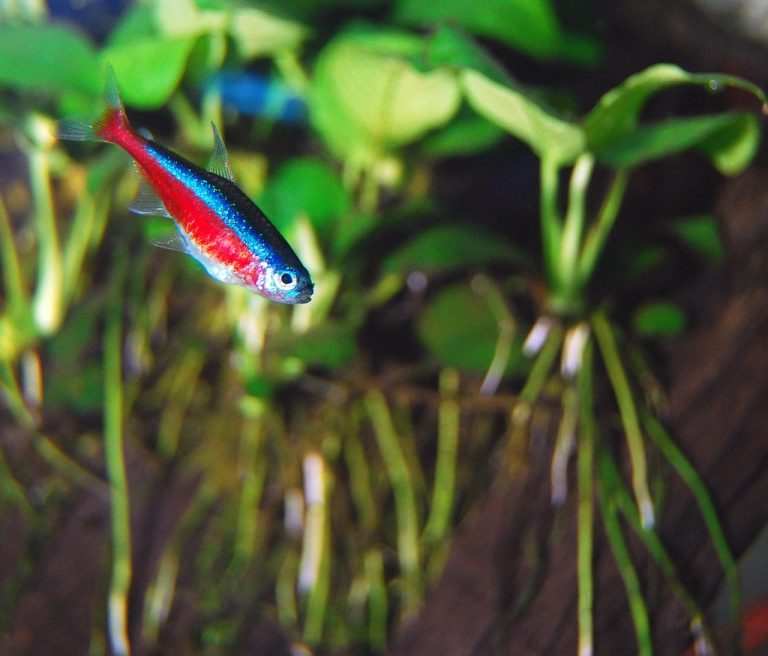
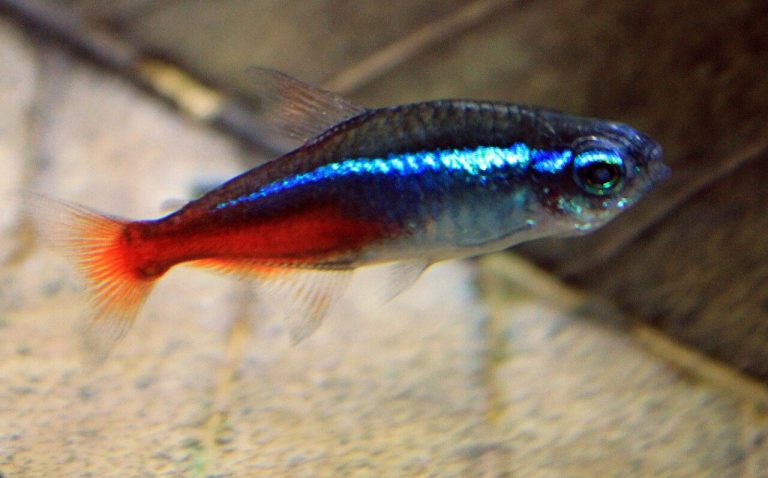
Generally, no. Neon Tetras prefer soft, acidic water, while Blind Cave Tetras need hard, alkaline conditions. Additionally, the blind tetras’ size and energy might stress out the smaller Neons.
Do Blind Cave Tetras need total darkness?
No, they do not require darkness to survive and will stay healthy in a standard lighted aquarium. However, they do appreciate some shaded areas and caves where they can retreat from bright light.
Are Blind Cave Tetras aggressive?
They are not inherently aggressive, but they are “boisterous.” Their constant movement and tendency to nip at things they bump into can be perceived as aggression by more delicate fish.
What is the best substrate for them?
A mix of sand and smooth gravel is best to protect the barbels of their bottom-dwelling tank mates. Incorporating limestone rocks is highly beneficial for maintaining water hardness.
How many should I keep together?
Blind Cave Tetras are schooling fish and should be kept in groups of at least 5 to 6. This reduces individual stress and allows them to exhibit natural behaviors.
In short
Successfully choosing Blind Cave Tetra tank mates is all about balancing their unique sensory needs with the environmental requirements of their companions.
If you focus on hardy, alkaline-loving species like Corydoras paleatus and various livebearers, you can create a remarkable and active display.
Prioritize water hardness and provide a structured environment with plenty of rocks and caves.
In my years of keeping these fish, I have found that they are some of the most satisfying and resilient species in the hobby.
With the right setup, your blind cave community will become a true centerpiece of your home, showing off the incredible adaptability of life.
- 2003First tank
- 20+Years keeping
- 40+Tanks kept
- 0Sponsored picks
Howard set up his first 10-gallon planted tank in 2003 and lost half of it within six weeks. Two decades and more than forty aquariums later, he writes the guides he wished he had then: clear numbers, the reasons behind them, and what actually goes wrong in home tanks.