How Do Neon Tetras Mate – The Ultimate Expert Guide To Breeding
Neon tetras mate by performing a specialized spawning dance where the male pursues the female into fine-leafed plants. They release and fertilize adhesive eggs simultaneously, typically during the dim light of the early morning hours.
Breeding the iconic Paracheirodon innesi, more commonly known as the neon tetra, is often considered the “Holy Grail” for many freshwater hobbyists. While these fish are ubiquitous in local pet stores, getting them to successfully reproduce in a home aquarium requires a blend of patience, precision, and specific environmental triggers.
In my experience, the challenge doesn’t lie in the act of mating itself, but in recreating the very specific conditions of the Amazon basin. When I first tried this years ago, I failed multiple times because I didn’t respect their sensitivity to light and water chemistry.
Understanding how do neon tetras mate is the first step toward witnessing one of the most satisfying behaviors in the fish-keeping world. This guide will walk you through everything from identifying the right pair to raising the tiny fry that result from a successful spawn.
At a glance: Neon tetra (Paracheirodon innesi)
- Temperature
- 72–78°F (22–26°C)
- Water pH
- 6.0–7.0
- Adult size
- 1.5 in (4 cm)
- Minimum tank
- 10 gal (20 gal for a proper school)
- Group size
- Groups of 8+
- Temperament
- Peaceful
- Diet
- Omnivore: micro pellets, flakes, frozen daphnia
- Lifespan
- 5–8 years
Keeper’s tip: Add neons only to a fully cycled, stable tank; they are among the first fish to suffer from ammonia swings.
Understanding Neon Tetra Sexual Dimorphism
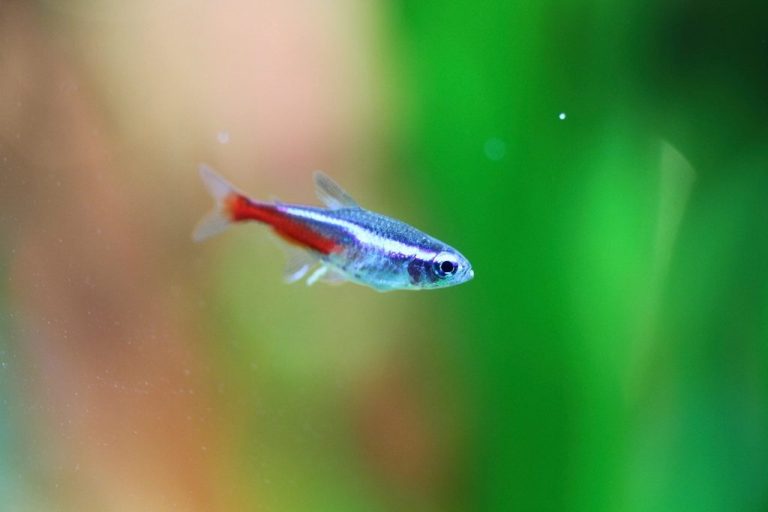
Before you can learn how do neon tetras mate, you must be able to tell the boys from the girls. Unlike some species where colors differ, neon tetras rely on body shape to give away their gender.
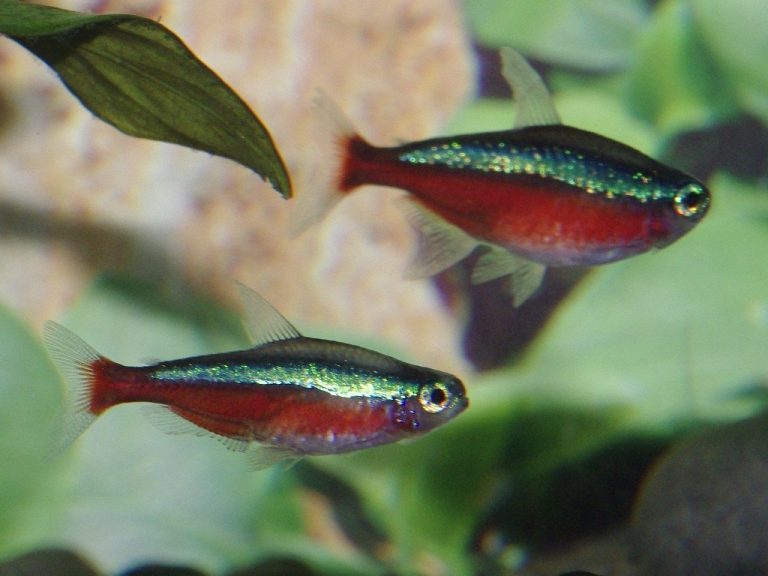
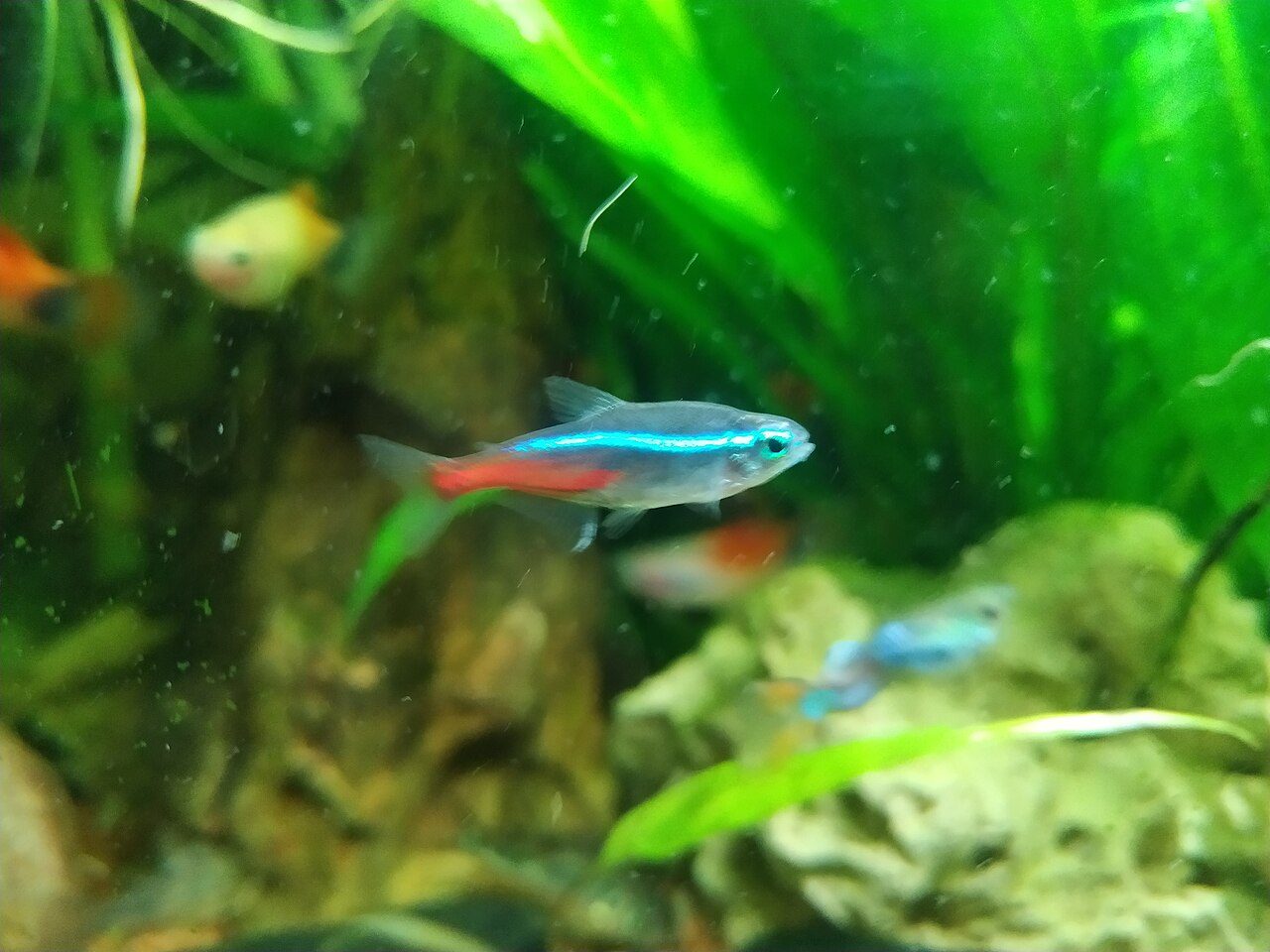
Female neon tetras are generally larger and have a rounder, more sturdy belly. This roundness often causes their signature blue horizontal stripe to appear curved or “kinked” rather than perfectly straight.
Male neon tetras are noticeably slimmer and sleeker than their female counterparts. Their blue stripe remains remarkably straight because they lack the egg-carrying capacity that rounds out the females.
| Feature | Male Neon Tetra | Female Neon Tetra |
|---|---|---|
| Body Shape | Slender and torpedo-like | Rounder, deeper belly |
| Blue Stripe | Straight line | Often appears curved |
| Overall Size | Slightly smaller | Slightly larger/thicker |
Pro Tip: To accurately sex your fish, observe them after a heavy feeding. The females will bulge significantly more than the males, making the distinction much easier for the naked eye.
How Do Neon Tetras Mate in the Wild?
In the wild, the mating cycle of Paracheirodon innesi is tied closely to the rainy season. This period brings an influx of soft, acidic rainwater that lowers the mineral content of the river.
The rising water levels also provide an abundance of live food, signaling to the fish that it is a safe time to bring new life into the world. They search for dense thickets of submerged vegetation to deposit their eggs safely away from predators.
When you ask how do neon tetras mate, you are really asking how to simulate a tropical rainstorm in your living room. Without these specific environmental cues, the fish will simply remain in a “maintenance” mode rather than a “reproductive” mode.
Setting Up the Perfect Breeding Tank
You cannot expect neon tetras to breed in a standard community setup. The eggs are tiny and delicious to other fish, and the water parameters in a community tank are usually too hard for the eggs to survive.
A dedicated breeding tank, usually 5 to 10 gallons, is essential. This tank should be bare-bottom or have a mesh floor to allow eggs to fall through where the parents cannot reach them.
Lighting is a critical factor because neon tetra eggs exhibit photophobia, meaning they are highly sensitive to light. Exposure to bright light can actually kill the developing embryos within hours of fertilization.
| Parameter | Ideal Breeding Range |
|---|---|
| Temperature | 75°F to 77°F (24°C – 25°C) |
| pH Level | 5.0 to 6.0 (Very Acidic) |
| General Hardness (dGH) | 1 to 2 dGH |
| Carbonate Hardness (dKH) | Near 0 |
The Importance of Water Chemistry
To achieve these low hardness levels, I highly recommend using reverse osmosis water. This allows you to start with a “blank slate” and add only the minimal minerals required for life.
Using peat filtration or adding tannins through Indian Almond leaves can help lower the pH and provide natural antifungal properties. The humic acids released by peat are a natural trigger that tells the tetras the “rainy season” has arrived.
If you are new to tetras, you might find that learning how to breed tetra fish in general helps build the foundational skills needed for more difficult species like neons.
Conditioning the Breeding Pair
Mating is an energy-intensive process, especially for the female who must produce hundreds of eggs. Conditioning involves feeding the pair high-quality, protein-rich foods for 7 to 10 days before introducing them to the breeding tank.
Live foods are the gold standard here. Items like daphnia, brine shrimp, and bloodworms will stimulate the production of eggs and milt.
During this phase, keep the males and females separated if possible. This separation builds anticipation and ensures that when they are finally introduced, they are ready to spawn immediately.
Pro Tip: If you cannot get live food, high-quality frozen foods are a suitable substitute. Avoid dry flakes during the conditioning phase as they lack the specific fats needed for ideal egg development.
The Spawning Dance: How Do Neon Tetras Mate?
Once the pair is introduced to the dimly lit breeding tank, the process usually begins within 24 to 48 hours. The most common time for spawning is at dawn or when the first faint light hits the tank.
The male will begin a frantic “dance,” shimmying around the female and trying to lead her toward the spawning mop or fine-leafed plants like Java Moss. He will often nudge her sides to encourage her to release her eggs.
When the female is ready, they will move together in a quick, jerky motion. The female releases between 60 to 130 adhesive eggs, which the male fertilizes instantly in the water column.
Egg Scattering and Parental Care
Neon tetras are egg scatterers, meaning they do not build nests or care for their young. In fact, they have no parental instincts whatsoever and will happily eat their own eggs if given the chance.
The eggs are slightly sticky and will cling to the moss or the spawning mop. Any eggs that miss the vegetation will fall to the bottom of the tank.
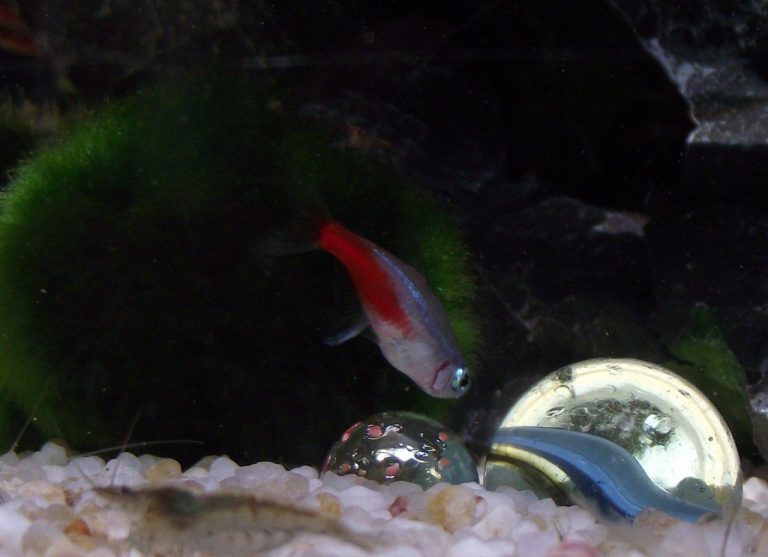
This is why a mesh bottom or a thick layer of marbles is so helpful. It allows the eggs to fall out of reach of the hungry parents.
Managing Post-Spawn Care
The moment you notice the female looks “spent” (slimmer) and the spawning activity has stopped, you must remove the adults. Return them to their main rich neon tetra habitat where they can recover.
The breeding tank must now be kept in total darkness. I often wrap my breeding tanks in heavy black construction paper or towels to keep no light reaches the developing eggs.
Within 24 hours, the fertile eggs will hatch into tiny, transparent larvae. These larvae will spend another 3 to 4 days absorbing their yolk sacs before they become free-swimming.
Preventing Fungus with Saprolegnia Control
One of the biggest hurdles after mating is Saprolegnia, a common water mold that attacks unfertilized eggs. If one egg gets fungused, it can quickly spread to the healthy ones.
Keeping the water incredibly soft and acidic helps inhibit fungal growth. Some breeders also use a tiny drop of Methylene Blue, though I prefer using natural tannins from peat to keep the environment as stable as possible.
Monitoring the eggs is difficult in the dark, but a quick check with a dim flashlight can help you spot and remove any white, fuzzy eggs using a turkey baster.
Feeding the Neon Tetra Fry
Once the fry are free-swimming, the real work begins. Neon tetra fry are microscopic—so small that they cannot eat standard baby brine shrimp for the first week.
You must provide infusoria, which are microscopic organisms that live in aged aquarium water or specialized cultures. This is the only food small enough for their tiny mouths.
After about 5 to 7 days of feeding infusoria, you can transition them to vinegar eels or “green water.” Eventually, they will grow large enough to handle freshly hatched brine shrimp.
Pro Tip: Never overfeed the fry. Because the breeding tank has very little filtration (usually just a slow air-driven sponge filter), excess food will rot and kill the sensitive fry almost overnight.
Common Mistakes When Breeding Neon Tetras
Even experienced aquarists struggle with how do neon tetras mate because of a few common pitfalls. The most frequent mistake is using water that is too hard.
If the water has a high carbonate hardness, the shell of the egg will harden too quickly. This prevents the male’s sperm from penetrating the egg, resulting in zero fertility.
Another mistake is failing to provide a peaceful environment. Any vibration, loud noises, or sudden changes in light can stress the pair and cause them to abort the spawning process or eat the eggs immediately.
If you find that your neons are struggling to cohabitate or show interest in mating, double-check your tank mate compatibility to help they aren’t being bullied in their primary home before the breeding attempt.
Common questions
How often do neon tetras mate?
If conditioned properly and kept in ideal conditions, neon tetras can spawn every 2 to 3 weeks. However, it is best to give the females a longer break to ensure they maintain their health.
How many eggs do they lay?
A healthy female can lay anywhere from 60 to 130 eggs in a single spawning session. However, the survival rate in a home aquarium is often much lower, usually resulting in 10 to 30 viable fry for beginners.
Do I need a heater in the breeding tank?
Yes, a stable temperature is vital. While they can survive in cooler water, the metabolic processes required for mating and egg development are optimized at 75-77°F.
Can neon tetras mate with other tetra species?
No, neon tetras (Paracheirodon innesi) will not cross-breed with other species like Cardinal Tetras or Black Skirt Tetras. They only mate within their own species.
Why are my neon tetra eggs turning white?
White eggs are either unfertilized or have been attacked by fungus. This is usually a sign that the water was too hard or the male was not successfully fertilizing the eggs during the dance.
A last word
Mastering how do neon tetras mate is a journey that requires attention to detail and a deep respect for the natural environment of these beautiful fish. If you focus on soft, acidic water, low light, and high-quality conditioning, you can successfully move beyond just keeping fish to actually raising the next generation.
Patience is your greatest tool. It may take several attempts to get the water chemistry just right, but the sight of tiny, shimmering fry darting through the moss makes every bit of effort worthwhile.
Keep your breeding tank dark, your water soft, and your observations keen. With these steps, you are well on your way to becoming a successful neon tetra breeder.

- 2003First tank
- 20+Years keeping
- 40+Tanks kept
- 0Sponsored picks
Howard set up his first 10-gallon planted tank in 2003 and lost half of it within six weeks. Two decades and more than forty aquariums later, he writes the guides he wished he had then: clear numbers, the reasons behind them, and what actually goes wrong in home tanks.