Diamond Tetra Sparkle / Shimmer Lighting – The Ultimate Guide
To maximize diamond tetra sparkle / shimmer lighting, use point-source LED fixtures and strong surface agitation. This combination creates moving light beams that reflect off the fish’s iridescent scales, producing a beautiful “diamond” effect.
There is nothing quite like the sight of a school of Diamond Tetras (Moenkhausia pittieri) catching the light. When I first started keeping these fish over ten years ago, I was underwhelmed by their appearance in the store tanks.
However, once I brought them home and adjusted my setup, their bodies transformed into living jewels. The secret lies entirely in understanding how diamond tetra sparkle / shimmer lighting interacts with their unique anatomy.
In this guide, I will share the exact techniques I use to bring out that striking iridescence.
At a glance: Diamond tetra (Moenkhausia pittieri)
- Temperature
- 75–82°F (24–28°C)
- Water pH
- 6.0–7.5
- Adult size
- 2.5 in (6 cm)
- Minimum tank
- 20 gal
- Group size
- Groups of 6+
- Temperament
- Peaceful
- Diet
- Omnivore: flakes, pellets, live and frozen foods
- Lifespan
- 5–6 years
Keeper’s tip: The sparkling scales take months to develop; young fish in stores look fairly plain.
Understanding the Science of Diamond Tetra Sparkle / Shimmer Lighting
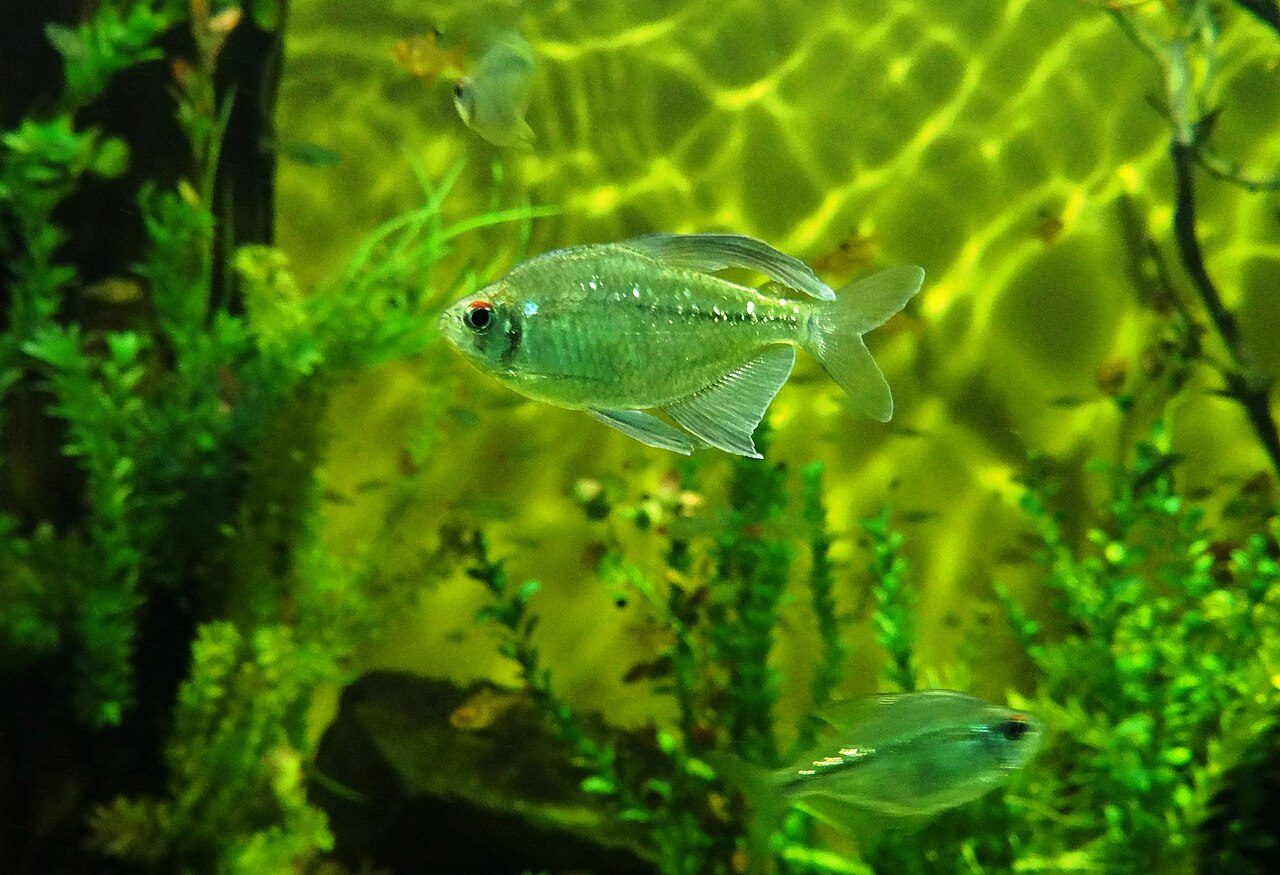
The “sparkle” we see on a Diamond Tetra isn’t just a color; it is a reflection. These fish possess specialized scales that act like tiny mirrors, reflecting light in multiple directions.
To get the most out of this effect, you need a “point source” of light. In my experience, older fluorescent tubes often fail here because they provide “flat” lighting that washes out the fish’s natural brilliance.
When you use a single, concentrated light source, the rays hit the scales at sharp angles. This is the foundation of achieving that coveted diamond tetra sparkle / shimmer lighting effect in a home aquarium.
Pro Tip: If your fish look grey or dull, check your light’s placement. Shifting the light slightly toward the front of the tank makes sure the rays hit the sides of the fish before reflecting back to your eyes.
Choosing the Best Fixtures for Your Aquarium
Not all LED lights are created equal when it comes to shimmering effects. To see those scales dance, you want LEDs that are not heavily diffused.
High-output LED pendants or strips with individual lenses are the gold standard. These create “shimmer lines” in the water, similar to how sunlight looks at the bottom of a clear pool.
| Light Type | Shimmer Quality | Best For |
|---|---|---|
| Standard LED Strip | Medium | General community tanks. |
| Point-Source LED (Pendant) | High | Maximizing scale iridescence. |
| T5/T8 Fluorescent | Low | Low-tech planted tanks without shimmer. |
When I switched from T5 bulbs to modern LEDs, the difference was night and day. The fish went from looking like plain silver coins to looking like they were covered in crushed diamonds.
If you are exploring different species, you will find that Diamond Tetras respond more dramatically to lighting changes than almost any other tetra.
The Role of Surface Agitation in Shimmering Effects
You can have the most expensive light in the world, but without surface movement, you won’t get a shimmer. The “shimmer” is actually the light being bent by waves on the water’s surface.
I always recommend using a spray bar or a powerhead to create a gentle ripple. As the light passes through these moving ripples, it creates dynamic shadows and highlights.
This movement is what activates the diamond tetra sparkle / shimmer lighting. As the fish swim through these moving beams, their scales catch the light intermittently, creating a twinkling effect.
Common Mistake: Many hobbyists keep the water surface too still to prevent CO2 loss for plants. While good for plants, perfectly still water kills the shimmer effect entirely.
Water Clarity and Its Impact on Iridescence
Floating particles in the water act like a fog, scattering light before it can reach your fish. If your water is cloudy, your Diamond Tetras will never reach their full potential.
I have noticed that using fine polishing pads in my filter makes a massive difference. Clear water allows the light to travel straight to the fish’s scales and bounce back clearly.
Regular water changes are also essential. When organic compounds build up, the water can take on a yellow tint, which dulls the cool, silvery sparkle of the fish.
Maintaining pristine water is also vital if you are mixing them with other species that require high water quality.
Boosting Color Through Nutrition and Health
The “sparkle” is a sign of a healthy fish. A stressed or poorly fed Diamond Tetra will have clamped fins and duller scales.
I’ve found that feeding a varied diet rich in carotenoids and proteins helps maintain the integrity of their scales. Stronger, healthier scales provide a better surface for reflection.
| Parameter | Ideal Range | Impact on Sparkle |
|---|---|---|
| Temperature | 75°F – 82°F | Higher activity leads to more movement. |
| pH | 6.0 – 7.5 | Proper pH reduces skin/scale stress. |
| Diet | High Protein/Vitamins | Ensures thick, reflective scale growth. |
Providing high-quality nutrition makes sure that as they age, their “diamond” scales become more prominent and numerous.
Creating the Right Environment for Contrast
The background and substrate of your tank play a huge role in how the sparkle is perceived. In my experience, a dark background is the best way to make these fish pop.
A black or dark blue background creates a high-contrast environment. Against a dark backdrop, the bright reflections from the diamond tetra sparkle / shimmer lighting stand out much more vividly.
I also prefer using dark sand or gravel. Light-colored substrates can reflect too much light upward, which can sometimes wash out the fish’s lateral shimmer.
Managing Algae and Light Intensity
While strong lighting is great for shimmer, it can also lead to algae problems. It is a delicate balance that every aquarist must learn to strike.
I usually run my high-intensity “shimmer” lights for only 6 to 8 hours a day. This is enough time to enjoy the fish without turning the tank into a green soup.
Using a timer or a programmable LED controller can help you simulate a natural sunrise and sunset. This transition is often when the most beautiful shimmering occurs.
Reader questions
Why don’t my Diamond Tetras look like the ones in photos?
Most likely, your lighting is too “flat” or your fish are still young. Diamond Tetras only develop their full “diamond” scales as they reach maturity.
Can I get a shimmer effect with a lid on my tank?
Yes, but help the glass or acrylic lid is perfectly clean. Any salt creep or dust on the lid will diffuse the light and kill the shimmer.
Does the color of the light matter?
Absolutely. A “cool white” light (6500K to 8000K) highlights the silver and blue tones. Warm lights tend to make them look more yellow or dull.
How do I increase the “shimmer lines” on the bottom of the tank?
Increase the surface agitation and use a single-point LED source. The more “choppy” the water surface, the more dramatic the light beams will be.
Before you go
Mastering the diamond tetra sparkle / shimmer lighting is one of the most satisfying challenges in the hobby. It transforms a group of “silver fish” into a eye-catching display of light and movement.
If you focus on point-source LEDs, maintaining high water clarity, and ensuring plenty of surface agitation, you can bring out the true beauty of these amazing tetras.
Health and environment go hand-in-hand. When you provide the right conditions, your Diamond Tetras will reward you with a glistening display that never gets old.

- 2003First tank
- 20+Years keeping
- 40+Tanks kept
- 0Sponsored picks
Howard set up his first 10-gallon planted tank in 2003 and lost half of it within six weeks. Two decades and more than forty aquariums later, he writes the guides he wished he had then: clear numbers, the reasons behind them, and what actually goes wrong in home tanks.