Penguin Tetra Size and School Size – Quick Facts
Penguin tetras reach a maximum size of 3 inches (7.5 cm) and require a minimum school size of 6 to 10 fish. Keeping them in larger groups prevents stress and curbs nipping behaviors.
Few fish bring as much character to a South American community tank as the Penguin Tetra. Known scientifically as Thayeria boehlkei, these active swimmers are famous for their unique “head-up” orientation.
When I first started keeping these characins over a decade ago, I was immediately struck by their distinct penguin tetra size and school size requirements. Many beginners mistake them for smaller tetras, but they actually need quite a bit of room to maneuver.
In this guide, we will look closely at the specific needs of these fish. We will cover everything from their physical growth to the complex social dynamics that make a large school so essential for their well-being.
Whether you are setting up your first biotope aquarium or looking to add a new species to an established tank, understanding these fundamentals is the biggest factor. Let’s explore how to create the perfect environment for these “hockey stick” fish.
At a glance: Penguin tetra (Thayeria boehlkei)
- Temperature
- 72–82°F (22–28°C)
- Water pH
- 6.0–8.0
- Adult size
- 2.5 in (6 cm)
- Minimum tank
- 20 gal
- Group size
- Groups of 6+
- Temperament
- Peaceful, slightly nippy
- Diet
- Omnivore: flakes, small pellets, frozen foods
- Lifespan
- 5 years
Keeper’s tip: They swim at a head-up angle naturally; that tilt is normal and not a swim bladder problem.
Understanding Penguin Tetra Size and School Size in the Home Aquarium
The penguin tetra size and school size are the two most critical factors when planning your aquarium layout. If you get these wrong, you may find your fish becoming overly stressed or even aggressive toward their tank mates.
Most hobbyists see them in pet stores as juveniles, where they appear small and unassuming. However, they grow steadily and their social needs become more apparent as they mature into adulthood.
Maximum Growth Potential and Length
In a well-maintained aquarium, a healthy Thayeria boehlkei will typically reach about 3 inches (7.5 cm) in length. While this might seem small compared to a cichlid, it is relatively large for a common tetra species.
Their body shape is streamlined and elongated, which allows them to be incredibly fast swimmers. This growth happens relatively quickly during the first six months of their lives if they are provided with high-quality nutrition.
I have found that providing a varied diet is the best way to ensure they reach their full potential. When compared to the emperor tetra dimensions, Penguin tetras are slightly slimmer but require just as much horizontal swimming space.
Penguin tetras are obligate schoolers, meaning they do not just prefer company—they require it for their psychological health. In the wild, they move in massive groups to confuse predators and forage more effectively.
In the home aquarium, you should never keep fewer than six individuals. However, in my experience, a group of 10 to 12 is where you really start to see their natural shoaling dynamics shine.
Pro Tip: If you notice your Penguin tetras are hiding or acting lethargic, check your school size first. Increasing the group from 6 to 12 often results in an immediate boost in confidence and activity levels.
The Physical Characteristics of Thayeria boehlkei
To understand why penguin tetra size and school size matter so much, we have to look at how these fish are built. They belong to the family Characidae, which includes many of our favorite aquarium staples.
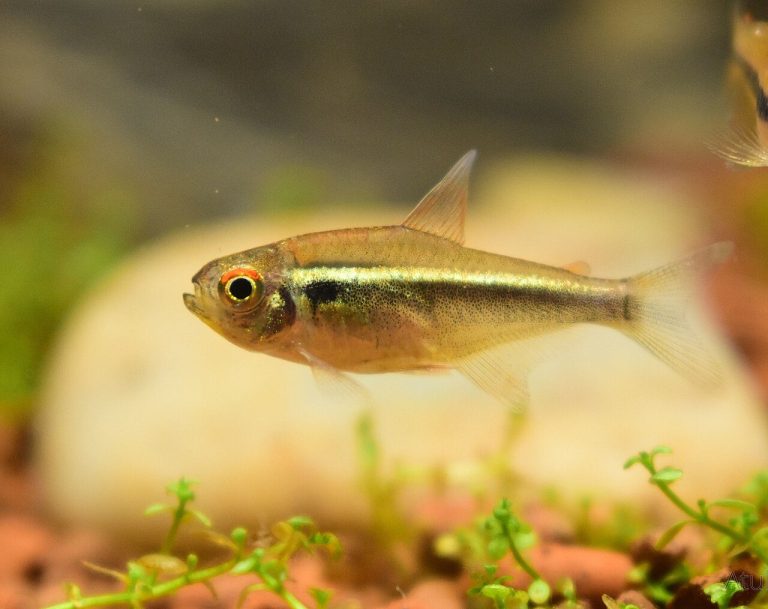
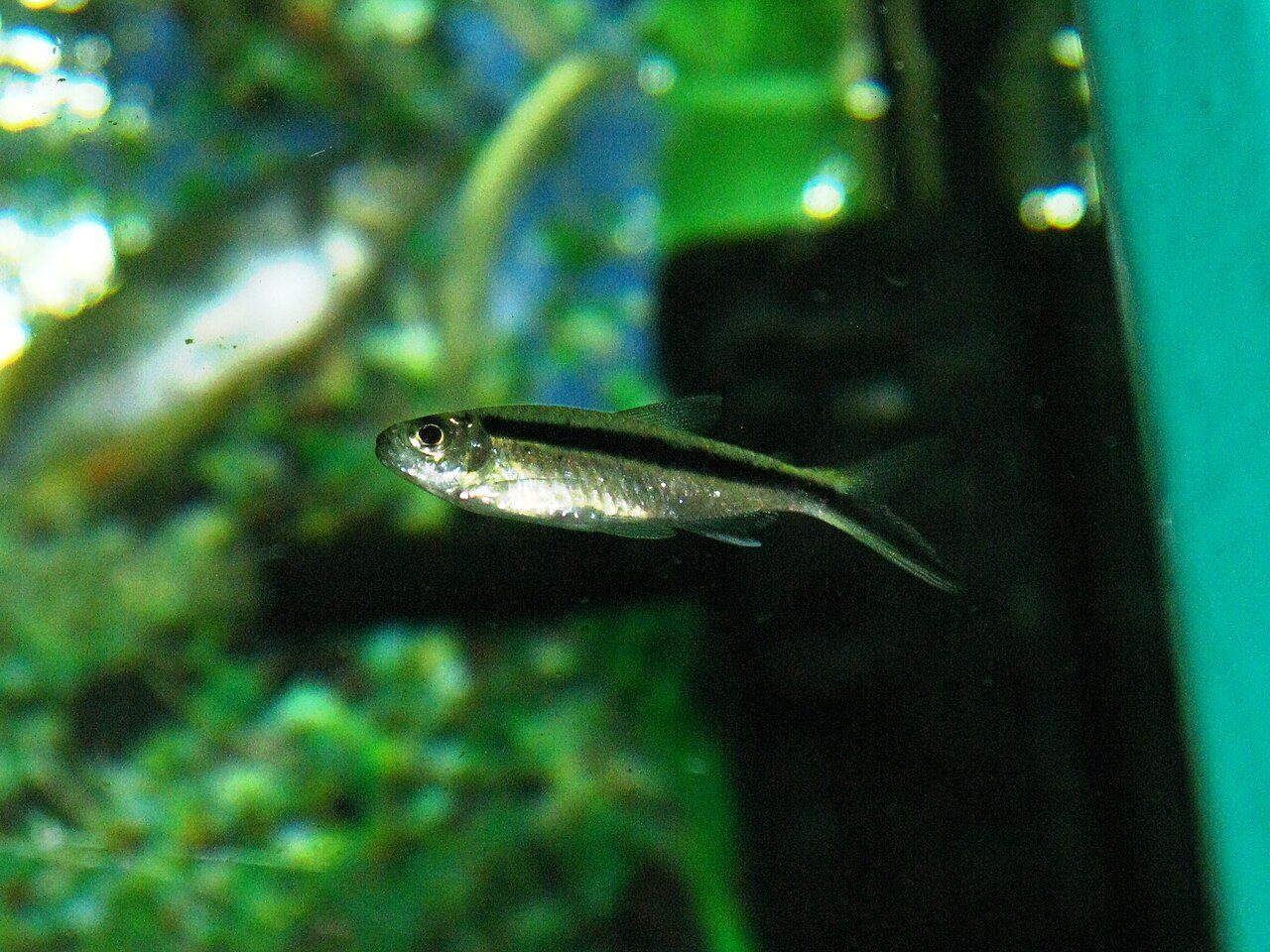
Their most striking feature is the thick black stripe that runs from the gill cover all the way down to the lower lobe of the tail. This unique caudal fin morphology is what gives them the “hockey stick” nickname.
The Famous Oblique Swimming Posture
Unlike most fish that swim horizontally, the Penguin tetra maintains an oblique swimming posture. They usually hang in the water at a 45-degree angle, with their heads pointing toward the surface.
This posture is not a sign of illness; it is a natural adaptation that helps them look for food falling from the surface. It also helps them blend into the shadows of overhanging vegetation in the Amazon Basin.
Distinguishing Males from Females
Telling the difference between genders can be tricky, especially when the fish are young. As they reach their maximum penguin tetra size, the differences become slightly more pronounced.
Females tend to be noticeably rounder and broader, especially when viewed from above. Males are generally slimmer and may show slightly more intense coloration during the breeding season.
| Feature | Male Characteristics | Female Characteristics |
|---|---|---|
| Body Shape | Slim and streamlined | Rounder, deeper belly |
| Size | Slightly smaller on average | Can be slightly longer/bulkier |
| Coloration | High contrast black/silver | Slightly more muted during spawning |
Managing Behavior and Conspecific Aggression
One of the most common mistakes I see with this species is underestimating their activity levels. Penguin tetras are energetic and can sometimes be “nippy” if their environment isn’t right.
This behavior is often linked directly to penguin tetra size and school size issues. When the school is too small, individual fish may feel insecure and lash out at tank mates.
Preventing Fin Nipping
If you keep a group of only three or four, they may start nipping the fins of slower-moving fish like Bettas or Angelfish. By increasing the school size to 10 or more, they focus their energy on interacting with each other.
This internal hierarchy, or “pecking order,” is healthy and keeps them occupied. It is much better for them to chase one another in short bursts than to target more peaceful residents of the tank.
Penguin Tetras as Dither Fish
Because they are so active and spend most of their time in the upper and middle layers of the water, they make excellent dither fish. Their constant movement signals to shy bottom-dwellers that the coast is clear.
I have often used them to draw out timid species like Apistogramma or certain catfish. If the Penguin tetras are out and about, other fish feel much safer exploring the open areas of the aquarium.
Pro Tip: Avoid keeping Penguin tetras with long-finned, slow-moving fish unless your tank is at least 4 feet long. The extra space allows the tetras to burn off energy without bothering their neighbors.
Creating a Natural Amazonian Biotope
To see the best colors and most natural behaviors, you should try to mimic the Amazon Basin environment. These fish do well in “blackwater” or “clearwater” setups where they feel secure.
The penguin tetra size and school size dictate that you need a tank with plenty of horizontal swimming room. A 20-gallon long is the absolute minimum, but a 30-gallon or 55-gallon tank is much better.
Water Parameters and Humic Substances
In the wild, these fish are often found in waters rich in humic substances. These are organic compounds released by decaying leaves, wood, and peat that naturally soften the water and lower the pH.
Adding Indian Almond leaves or driftwood to your tank can provide these benefits. This environment makes the fish feel at home and also helps prevent certain bacterial infections.
| Parameter | Ideal Range |
|---|---|
| Temperature | 72°F to 82°F (22°C to 28°C) |
| pH Level | 5.8 to 7.5 (Prefers slightly acidic) |
| Water Hardness | 4 to 15 dGH |
| Tank Size | 20 Gallon Long (Minimum) |
Aquascaping for Active Swimmers
When designing your tank, keep in mind that these fish need open water. However, they also need “retreat zones” made of dense plants or root tangles.
I recommend planting the background and sides of the tank heavily while leaving the middle section clear. This allows the school to zip back and forth while having a place to hide if they feel threatened.
If you are looking for other easy tetra species to complement your setup, many enthusiasts choose those that occupy different water levels to avoid overcrowding.
Feeding and Nutrition for Best Growth
To reach their maximum penguin tetra size, these fish require a high-protein, varied diet. They are omnivores and are generally not picky eaters, which makes them great for beginner aquarium setups.
In my experience, they prefer feeding at the surface or in the water column. Because of their upward-angled mouths, they struggle to pick food up off the substrate.
Recommended Foods
- High-Quality Flakes: A good staple that stays at the surface for a few seconds.
- Frozen Foods: Bloodworms, brine shrimp, and daphnia are excellent for conditioning.
- Freeze-Dried Options: Mysis shrimp or tubifex worms offer great variety.
- Live Foods: If available, flightless fruit flies are a huge hit with this species.
Feeding small amounts twice a day is better than one large feeding. This keeps their metabolism steady and ensures that all members of the school get a fair share of the food.
Selecting Compatible Tank Mates
Because of their active nature and potential for conspecific aggression, choosing the right neighbors is vital. You want fish that are solid enough to handle their energy but peaceful enough not to start fights.
Avoid very small fry or slow, long-finned fish like Fancy Guppies, as the Penguin tetras might see them as targets for nipping.
| Compatible Tank Mates | Incompatible Tank Mates |
|---|---|
| Corydoras Catfish | Large Cichlids (Oscars, Jack Dempseys) |
| Dwarf Cichlids (Rams, Apistogramma) | Fancy Goldfish |
| Other Tetras (Rummy Nose, Neon) | Very small Shrimp (fry may be eaten) |
| Bristlenose Plecos | Slow-moving Bettas |
Reader questions
What is the minimum tank size for a school of Penguin Tetras?
The minimum size is a 20-gallon long tank. Because they are active swimmers and grow to 3 inches, they need the extra horizontal length that a “long” tank provides compared to a standard “high” tank.
Can Penguin Tetras live alone?
No, Penguin tetras should never be kept alone. Without a school, they will become extremely stressed, lose their color, and likely suffer from a suppressed immune system, leading to disease.
Why are my Penguin Tetras nipping other fish?
Nipping is usually a sign that the school size is too small or the tank is too cramped. Help you have at least 6 to 10 tetras and that there is plenty of space for them to swim freely.
How long do Penguin Tetras live?
With proper care, a stable environment, and a good diet, Penguin tetras can live for 3 to 5 years. Maintaining high water quality is the most important factor in maximizing their lifespan.
Are Penguin Tetras suitable for a planted tank?
Yes, they are excellent for planted tanks. They do not eat plants and their silver bodies provide a beautiful contrast against green foliage. Just ensure there is still plenty of open swimming space.
Before you go
Mastering the penguin tetra size and school size is the first step toward a successful aquarium featuring these unusual fish. If you respect their need for a large group and providing ample swimming space, you will be rewarded with a dynamic and healthy display.
In my experience, few things are as peaceful as watching a large school of Thayeria boehlkei gliding through a well-planted tank. Their unique swimming angle and striking black stripes make them a conversation piece for any visitor.
Keep your water clean, provide plenty of humic substances, and choose their tank mates wisely. If you follow these guidelines, your Penguin tetras will settle in for years to come.
, and may your aquarium always be a source of joy and relaxation.

- 2003First tank
- 20+Years keeping
- 40+Tanks kept
- 0Sponsored picks
Howard set up his first 10-gallon planted tank in 2003 and lost half of it within six weeks. Two decades and more than forty aquariums later, he writes the guides he wished he had then: clear numbers, the reasons behind them, and what actually goes wrong in home tanks.