Neon Fish Disease – The Ultimate Guide To Prevention, Identification
Neon fish disease is a fatal parasitic infection caused by Pleistophora hyphessobryconis. It targets muscle tissue, causing color loss and spinal deformities, and currently has no known cure, making prevention and quarantine the only effective management strategies.
Watching a rich school of tetras dart through a planted tank is one of the greatest joys for any aquarist.
However, few things are as heartbreaking as seeing that shimmer fade due to neon fish disease.
In my ten years of maintaining community tanks, I have learned that this condition is the ultimate test of a keeper’s patience and discipline.
It is a silent invader that often enters a healthy system through a single unquarantined fish.
Understanding how to identify, manage, and prevent this ailment is essential for anyone serious about the hobby.
In this guide, we will look closely at the biology of the parasite and how you can protect your aquatic family.
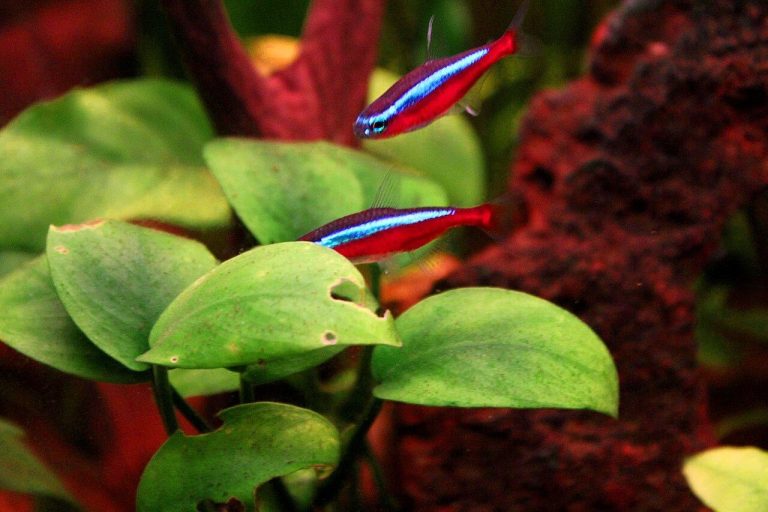
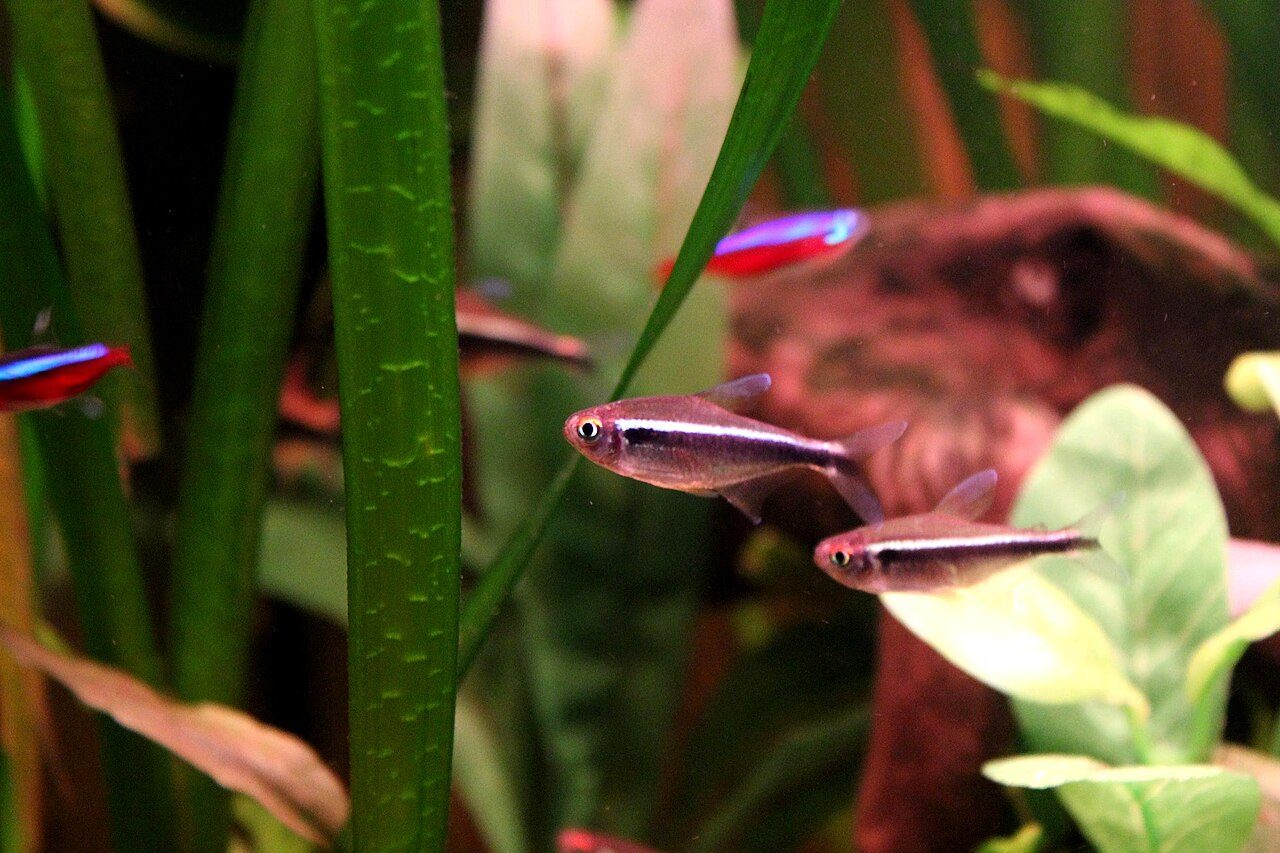
At a glance: Neon tetra (Paracheirodon innesi)
- Temperature
- 72–78°F (22–26°C)
- Water pH
- 6.0–7.0
- Adult size
- 1.5 in (4 cm)
- Minimum tank
- 10 gal (20 gal for a proper school)
- Group size
- Groups of 8+
- Temperament
- Peaceful
- Diet
- Omnivore: micro pellets, flakes, frozen daphnia
- Lifespan
- 5–8 years
Keeper’s tip: Add neons only to a fully cycled, stable tank; they are among the first fish to suffer from ammonia swings.
What Exactly is Neon Fish Disease?
The scientific name for this condition is Pleistophora hyphessobryconis.
It is caused by a microsporidian parasite, which is a type of fungus-like intracellular spore.
While it is most commonly associated with the Neon Tetra (Paracheirodon innesi), it can actually infect many other species.
The parasite enters the fish’s body when they consume infected material, such as the remains of a dead tank mate or live food carrying the spores.
Once inside, the spores migrate to the intestinal tract and eventually settle into the muscle tissue.
This is where the real damage begins, as the parasite begins to multiply and consume the host from the inside out.
Pro Tip: Always observe your fish during feeding time. In my experience, the very first sign of trouble isn’t a physical spot, but a slight change in how a fish competes for food or its position in the school.
Identifying the Symptoms of Neon Fish Disease
Recognizing the symptoms early is the only way to save the rest of your school.
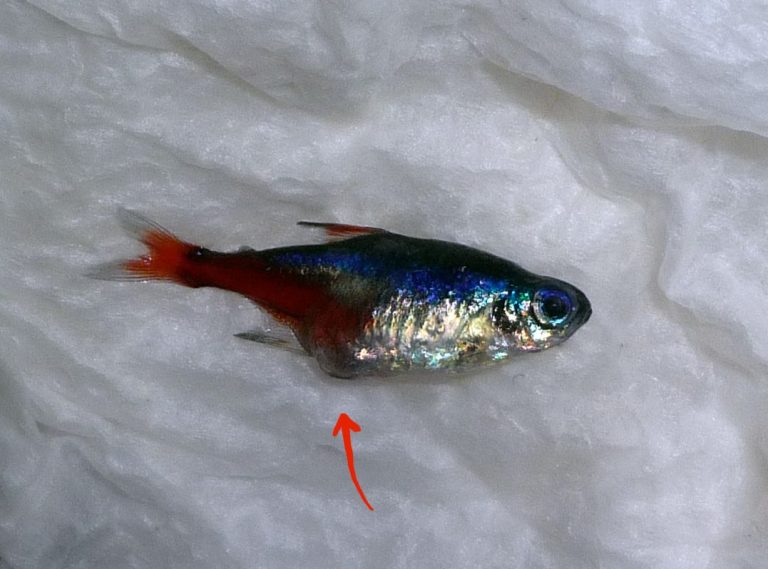
The hallmark of this infection is muscle necrosis, which manifests as white or gray patches beneath the skin.
You might notice dermal depigmentation, where the brilliant neon blue or red stripe begins to look “faded” or “washed out.”
As the parasite destroys the muscle fibers, the fish’s body may begin to warp or curve.
This often leads to spinal scoliosis, making it difficult for the fish to swim in a straight line.
Infected fish often become laggards, separating themselves from the school and hovering near the surface or hiding in corners.
| Symptom Type | Visual/Behavioral Indicators |
|---|---|
| Coloration | Fading stripes, white patches under the skin, dullness. |
| Body Shape | Lumps in the muscle, curved spine, emaciated appearance. |
| Movement | Erratic swimming, inability to stay level, “head-up” hovering. |
| Social Status | Isolation from the school, hiding, lethargy. |
Neon Fish Disease vs. False Neon Tetra Disease
It is key to distinguish between “True” neon fish disease and “False” neon fish disease.
False neon fish disease is actually a bacterial infection caused by Flavobacterium columnare, commonly known as Columnaris.
While both can cause white patches and lethargy, Columnaris is often treatable with antibiotics if caught early.
True Pleistophora infections, unfortunately, do not respond to standard medications.
If you see fuzzy growth around the mouth or fins, it is more likely to be bacterial or fungal.
However, if the “whiteness” appears to be deep within the muscle itself, you are likely dealing with the microsporidian parasite.
Getting the right diagnosis prevents you from dumping unnecessary chemicals into your tank.
Check out our guide on neon tetra care to ensure your tank environment isn’t stressing your fish and making them more susceptible.
The Role of a Quarantine Tank in Prevention
The single most effective tool against neon fish disease is a quarantine tank.
I cannot stress this enough: never add new fish directly to your display aquarium.
When you bring new arrivals home, they should spend at least 2 to 4 weeks in a separate, monitored setup.
This timeframe allows any dormant parasites or bacteria to manifest without risking your established community.
A simple 10-gallon tank with a sponge filter and a heater is all you need for this purpose.
During this period, observe the fish daily for any signs of fading color or erratic behavior.
If a fish does show symptoms in quarantine, it is much easier to manage than an outbreak in a 55-gallon planted tank.
Common Mistake: Many beginners think that if a fish looks healthy at the store, it is safe to add immediately. I’ve seen entire collections wiped out because a single fish was carrying microscopic spores that hadn’t yet caused visible necrosis.
Environmental Factors and Water Quality
While the disease is caused by a parasite, poor environmental conditions act as a catalyst.
Stress weakens the immune system of your fish, making it easier for the Microsporidia to take hold.
Maintaining consistent water parameters is your first line of defense.
Fluctuations in temperature or high levels of ammonia and nitrate can cause chronic stress.
In my experience, fish kept in right conditions can sometimes resist low levels of exposure that would kill stressed fish.
Using a UV sterilizer can also help reduce the number of free-floating spores in the water column.
While a UV sterilizer won’t cure an infected fish, it can prevent the disease from jumping from one host to another.
Is There Any Treatment Available?
I have to be honest with you: there is currently no known cure for neon fish disease.
Because the parasite lives inside the muscle cells, most external and internal medications cannot reach it.
Once a fish is showing advanced symptoms like spinal curvature or heavy necrosis, the most humane option is euthanasia.
Removing the infected fish immediately is vital because the spores are released when the fish dies and is picked at by others.
If you leave a dead, infected fish in the tank for even an hour, the risk of transmission triples.
Some hobbyists attempt to use anti-protozoal medications, but these are rarely successful for Pleistophora.
Your goal should be containment and the protection of the remaining healthy fish.
Step-by-Step Response to a Suspected Outbreak
If you suspect neon fish disease has entered your tank, you must act decisively.
First, identify any fish showing even the slightest hint of color loss or “lumpiness.”
Immediately move these individuals to a hospital tank or a separate container.
Perform a large water change (30-50%) on your main display tank to reduce the spore load.
Siphon the gravel thoroughly, as spores can settle in the substrate.
Stop feeding live foods temporarily, as these can sometimes be a vector for various parasites.
Monitor the remaining fish several times a day for the next few weeks.
If the rest of the school remains healthy, you may have caught it in time.
Choosing Healthy Fish from the Start
Preventing neon fish disease begins at the local fish store.
Take the time to stand in front of the tank for five minutes before asking the employee to bag any fish.
Look for a school that is active, cohesive, and brightly colored.
If you see even one dead fish or one fish with a bent spine in the store tank, do not buy from that batch.
The spores are likely already circulating in that system.
It is also worth noting that “Jumbo” Neons are sometimes more susceptible or may have been exposed longer.
Building a relationship with a reputable breeder or a high-quality local shop is a great investment in your tank’s health.
For more on setting up a safe environment, see our guide on tank setup.
Quick answers About Neon Fish Disease
Can other fish get neon fish disease?
Yes, despite the name, it can affect various species including Rasboras, Angelfish, and even some Barbs. However, Neon and Cardinal Tetras are the most frequent victims.
Does salt help treat the infection?
Aquarium salt can help with external parasites and some bacterial issues, but it has no effect on the internal microsporidian spores of Pleistophora.
Can humans catch this disease?
No, neon fish disease is not zoonotic. It is specific to fish and poses no risk to humans or household pets like cats and dogs.
Should I tear down my whole tank if I find an infected fish?
Not necessarily. If you remove the infected fish promptly and maintain excellent water quality, you can often stop the spread without a full reset.
Is Cardinal Tetra disease the same thing?
Cardinal Tetras are generally considered more resistant to Pleistophora than Neons, but they can still contract it. The symptoms and lack of treatment remain the same.
Best Practices for Long-Term Success
The key to avoiding neon fish disease is a combination of vigilance and high standards of care.
Always maintain a stable water temperature to prevent immune system crashes.
Avoid overstocking your tank, as crowded conditions allow parasites to spread much faster.
Invest in high-quality food to make sure your fish have the vitamins they need to fight off pathogens.
Keep a dedicated “fish-only” net and siphon for each tank to prevent cross-contamination.
If you have multiple tanks, always wash your hands and equipment thoroughly between maintenance sessions.
If you follow these protocols, you create an environment where your tetras can settle in for years.
Where that leaves you
Dealing with neon fish disease is one of the most challenging aspects of the aquarium hobby.
It teaches us the hard lesson that we cannot always rely on “medication in a bottle” to solve our problems.
Instead, we must rely on our skills as observers and our commitment to preventative care.
By using a quarantine tank, choosing healthy stock, and maintaining pristine water, you can keep this parasite at bay.
The goal of a “Successful Aquarium” is to create a stable ecosystem where your fish feel safe and healthy.
Don’t let the fear of disease stop you from enjoying these beautiful creatures; just let it make you a more careful and educated keeper.
With the right approach, your neon tetras will remain the glowing centerpieces of your underwater world for a long time to come.

- 2003First tank
- 20+Years keeping
- 40+Tanks kept
- 0Sponsored picks
Howard set up his first 10-gallon planted tank in 2003 and lost half of it within six weeks. Two decades and more than forty aquariums later, he writes the guides he wished he had then: clear numbers, the reasons behind them, and what actually goes wrong in home tanks.