Neon Tetra Fish Tank Setup – Setup Checklist
A successful neon tetra fish tank setup requires at least a 10-gallon aquarium with stable, slightly acidic water, dense live plants, and dim lighting to mimic their natural Amazonian blackwater habitat and help vivid colors.
Starting a neon tetra fish tank setup is one of the most satisfying projects an aquarist can undertake.
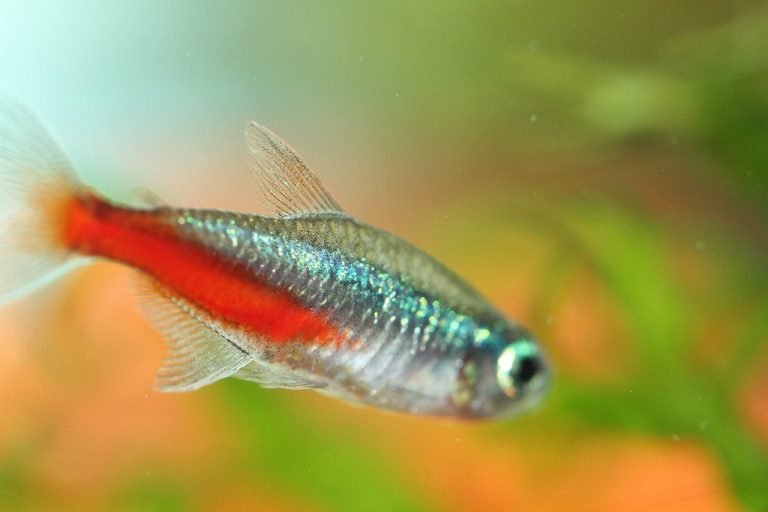
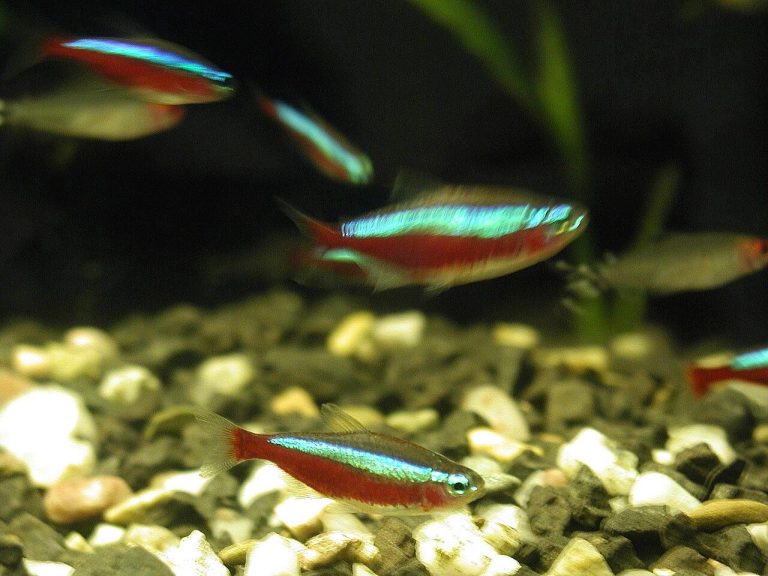
These iconic fish, known scientifically as Paracheirodon innesi, bring a literal “neon” glow to any room with their striking blue and red stripes.
In my fifteen years of keeping characins, I have found that while they are often sold as “beginner fish,” they actually require specific care to flourish and show their best colors.
A proper neon tetra fish tank setup is not just about a glass box and some water; it is about recreating a tiny slice of the Amazon.
When done correctly, your tetras will live for several years and remain active, schooling together in a eye-catching display.
In this guide, I will walk you through every step of the process, from selecting the right equipment to managing complex water chemistry.
At a glance: Neon tetra (Paracheirodon innesi)
- Temperature
- 72–78°F (22–26°C)
- Water pH
- 6.0–7.0
- Adult size
- 1.5 in (4 cm)
- Minimum tank
- 10 gal (20 gal for a proper school)
- Group size
- Groups of 8+
- Temperament
- Peaceful
- Diet
- Omnivore: micro pellets, flakes, frozen daphnia
- Lifespan
- 5–8 years
Keeper’s tip: Add neons only to a fully cycled, stable tank; they are among the first fish to suffer from ammonia swings.
Choosing the Right Aquarium for Your Neon Tetras
The first step in your neon tetra fish tank setup is selecting the tank itself.
While you might see these fish in tiny bowls or nano tanks, they are active swimmers that need horizontal space to school.
I always recommend a minimum of 10 gallons, though a 20-gallon “long” tank is the gold standard for a beautiful schooling display.
| Tank Size | Recommended School Size | Pros |
|---|---|---|
| 10 Gallon | 6 to 8 Tetras | Compact, fits on desks. |
| 20 Gallon Long | 15 to 20 Tetras | Best for schooling behavior. |
| 29 Gallon | 25+ Tetras | Great for community setups. |
In my experience, the extra volume of a larger tetra tank size provides a vital buffer against water quality fluctuations.
Small tanks can crash quickly, which is often fatal for sensitive species like Paracheirodon innesi.
Horizontal length is far more important than height because these fish spend most of their time darting back and forth in the middle of the water column.
Establishing Perfect Water Chemistry
Water quality is the foundation of a healthy neon tetra fish tank setup.
In their natural habitat, neons live in soft, acidic water rich in humic substances and tannic acid from decaying leaf litter.
Replicating these conditions helps them resist disease and maintains the intensity of their iridescent scales.
Understanding pH and Carbonate Hardness
Neon tetras prefer a pH between 6.0 and 7.0, though they can adapt to slightly higher levels if the change is gradual.
Carbonate hardness (KH) should be kept low, ideally between 1 and 4 dKH, to prevent the pH from swinging wildly.
I have noticed that when the KH is too high, the fish often look pale and may experience chronic stress.
If your tap water is exceptionally hard, you might consider using reverse osmosis deionization (RO/DI) water.
By mixing RO water with a small amount of tap water or specialized minerals, you can achieve the perfect specific conductivity for South American fish.
This level of control is what separates a basic tank from a professional-grade neon tetra fish tank setup.
Pro Tip: Drip Acclimation is Key
Neon tetras are highly sensitive to osmotic shock. When bringing them home, never just “float and plopping.” Instead, use a drip line to slowly introduce your tank water to their transport bag over 60 minutes. This gradual adjustment to your specific water parameters drastically reduces Day 1 mortality.
Filtration and the Nitrogen Cycle
A neon tetra fish tank setup cannot succeed without a fully cycled biological filter.
The nitrogen cycle is the process where beneficial bacteria, such as Nitrosomonas, convert toxic ammonia into nitrites and eventually into less harmful nitrates.
I strongly advise against adding fish to a brand-new tank; always perform a “fishless cycle” first using a pure ammonia source.
Choosing the Right Filter
Neons do not like strong currents, as they are small fish that can easily become exhausted.
A sponge filter or a hang-on-back filter with an adjustable flow rate is usually the best choice.
For those wanting to go the extra mile, peat moss filtration can be used within the filter media to naturally soften the water and release beneficial tannins.
| Filter Type | Best For | Flow Impact |
|---|---|---|
| Sponge Filter | 10-gallon setups and shrimp. | Very Low (Gentle) |
| Hang-on-Back | General community tanks. | Moderate (Adjustable) |
| Canister Filter | 20+ gallon planted tanks. | High (Requires baffling) |
Always ensure your filter has plenty of surface area for bacterial colonization.
I’ve found that using high-quality ceramic rings alongside a fine sponge provides the best water clarity and biological stability.
Maintaining a clean filter is essential, but never wash your media in tap water, as the chlorine will kill your Nitrosomonas colonies.
Substrate and Aquatic Plant Selection
To make your neon tetra aquarium look professional, you must focus on the “aquascape.”
In the wild, these fish are found in areas with dark substrates and plenty of overhead cover.
A dark sand or fine gravel substrate will make the blue and red colors of your tetras “pop” much more than a light-colored or neon-painted gravel would.
The Importance of Live Plants
Live plants are not just decorative; they act as a secondary filtration system by consuming nitrates.
The Amazon Sword (Echinodorus grisebachii) is a classic choice for a neon tetra fish tank setup.
These plants grow large, providing the broad leaves that tetras love to hide under when they feel threatened.
Other great plant options include:
- Java Fern: Very hardy and provides excellent mid-ground texture.
- Anubias Nana: Perfect for attaching to driftwood or rocks.
- Floating Plants: Frogbit or Salvinia help dim the light, which neons prefer.
Using driftwood is another excellent way to add structure while releasing humic substances into the water.
I often use Malaysian Driftwood or Mopani wood to create a “roots and branches” look that mimics the flooded forests of the Amazon.
This provides natural territories and reduces aggression within the school.
Lighting and Temperature Control
Neon tetras are tropical fish, meaning they require a consistent temperature to keep their immune systems strong.
I recommend a high-quality submersible heater with a built-in thermostat.
Sudden temperature drops are a leading cause of stress and can trigger outbreaks of Ich or other parasites.
| Parameter | Ideal Range | Why It Matters |
|---|---|---|
| Temperature | 72°F to 78°F | Maintains metabolic rate. |
| Lighting | Low to Moderate | Reduces stress and algae. |
| Photoperiod | 8 to 10 hours | Simulates day/night cycles. |
Regarding lighting, less is often more.
Bright, intense lights can wash out the colors of the fish and make them feel exposed.
If you use high-intensity lights for your Echinodorus grisebachii, be sure to provide plenty of shaded areas using floating plants or tall hardscape.
Stocking and Compatible Tank Mates
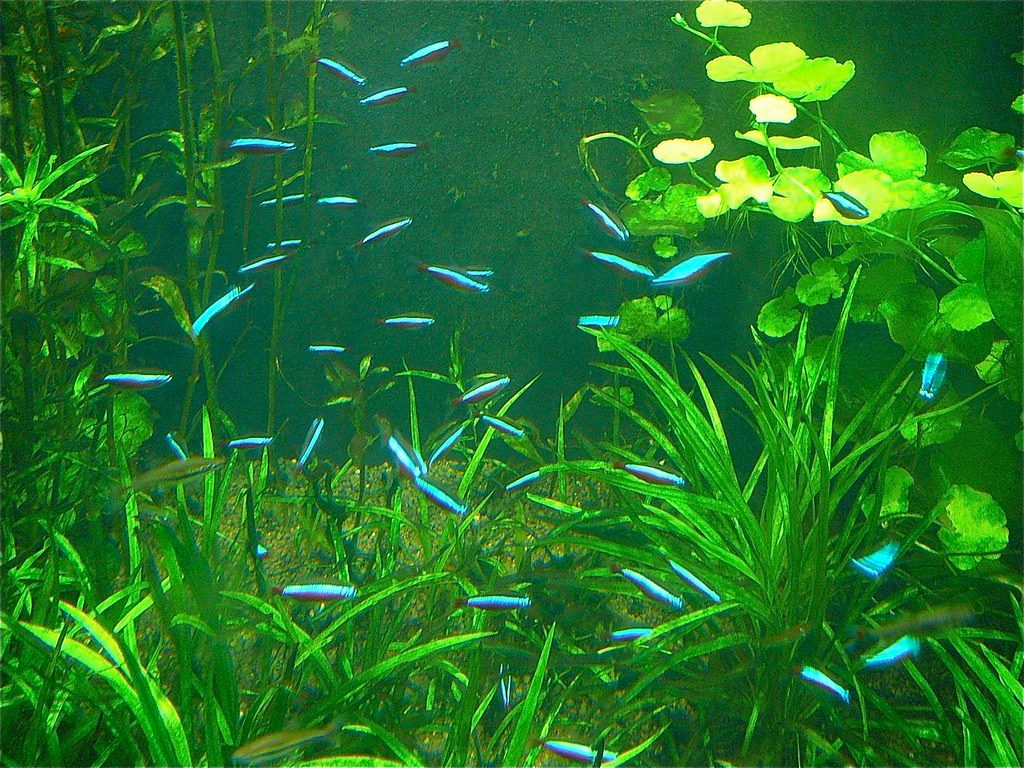
One of the biggest mistakes in a neon tetra fish tank setup is keeping too few fish.
Neons are obligate schoolers; they find safety and comfort in numbers.
I have seen that a group of six is the absolute minimum, but a group of 12 to 15 is where they start to behave naturally.
When choosing tank mates, you must make sure they are peaceful and won’t view your neons as a snack.
Check a reliable tetra compatibility chart before adding new residents.
Excellent choices include Corydoras catfish, Otocinclus, and other small, peaceful tetras.
Pro Tip: The “Dark Background” Secret
I always tell my clients to use a matte black background on the outside of the rear glass. This simple addition creates a sense of infinite depth and makes the fish feel much more secure. When the fish feel safe, they spend more time in the open water rather than hiding in the back corners.
Disease Prevention: The Threat of NTD
In any neon tetra fish tank setup, you must be aware of Neon Tetra Disease (NTD), caused by the parasite Pleistophora hyphessobryconis.
This condition is often incurable and spreads quickly through a school.
Symptoms include a loss of color, cyst-like lumps on the body, and difficulty swimming.
Prevention is the only real cure for NTD.
Always quarantine new arrivals for at least two weeks before adding them to your main display.
If you keep high water quality and feeding a varied diet, you make sure their immune systems are strong enough to fight off most common pathogens.
Routine Maintenance for Long-Term Success
Consistency is the key to a well-kept neon tetra fish tank setup.
I perform a 25% water change every week, making sure the new water is dechlorinated and temperature-matched.
This removes built-up nitrates and replenishes essential minerals that the fish and plants consume.
During your maintenance, check your parameters using a liquid test kit rather than paper strips.
Liquid kits are far more accurate for measuring low levels of ammonia and nitrites.
If you notice a spike, stop feeding for 24 hours and perform an immediate water change.
Quick answers
How many neon tetras can I put in a 10-gallon tank?
For a standard 10-gallon neon tetra fish tank setup, I recommend 6 to 8 tetras. This allows them to school without overstressing the biological filter.
Do neon tetras need an air stone?
While not strictly necessary if your filter provides enough surface agitation, an air stone can help during hot summer months when oxygen levels in the water naturally drop.
Can I use plastic plants for my setup?
You can, but I highly recommend live plants. Plastic plants can sometimes have sharp edges that tear delicate fins, and they offer no biological benefits like nitrate removal.
Why are my neon tetras losing their color at night?
This is perfectly normal. Like many fish, neons “turn off” their colors when they sleep to avoid predators. Their color should return within 30 minutes of the lights coming on.
What is the best food for neon tetras?
A mix of high-quality crushed flakes, micro-pellets, and occasional treats like frozen daphnia or baby brine shrimp will provide the best nutrition.
Final Thoughts on Your Neon Tetra Journey
Setting up a neon tetra fish tank setup is a journey into the heart of the hobby.
If you focus on soft water, dense vegetation, and a stable biological cycle, you create a home where these striking fish can live for five years or more.
The goal is to create an environment that caters to the fish’s instincts, not just our visual preferences.
In my experience, there is nothing more peaceful than watching a well-established school of Paracheirodon innesi glide through a lushly planted aquarium.
Take your time with the cycling process, choose your equipment wisely, and you will be rewarded with a rich, glowing display that serves as the centerpiece of your home.

- 2003First tank
- 20+Years keeping
- 40+Tanks kept
- 0Sponsored picks
Howard set up his first 10-gallon planted tank in 2003 and lost half of it within six weeks. Two decades and more than forty aquariums later, he writes the guides he wished he had then: clear numbers, the reasons behind them, and what actually goes wrong in home tanks.