Silvertip Tetra Breeding – Step-by-Step Guide
Silvertip Tetra breeding is achieved by conditioning a pair with live foods and placing them in a dim, soft-water tank with fine-leaved plants. As egg scatterers, adults must be removed immediately after spawning to protect the eggs.
Successfully mastering Silvertip Tetra breeding is a milestone for many aquarists.
In my fifteen years of maintaining South American setups, I have found these fish to be some of the most energetic and satisfying species to spawn.
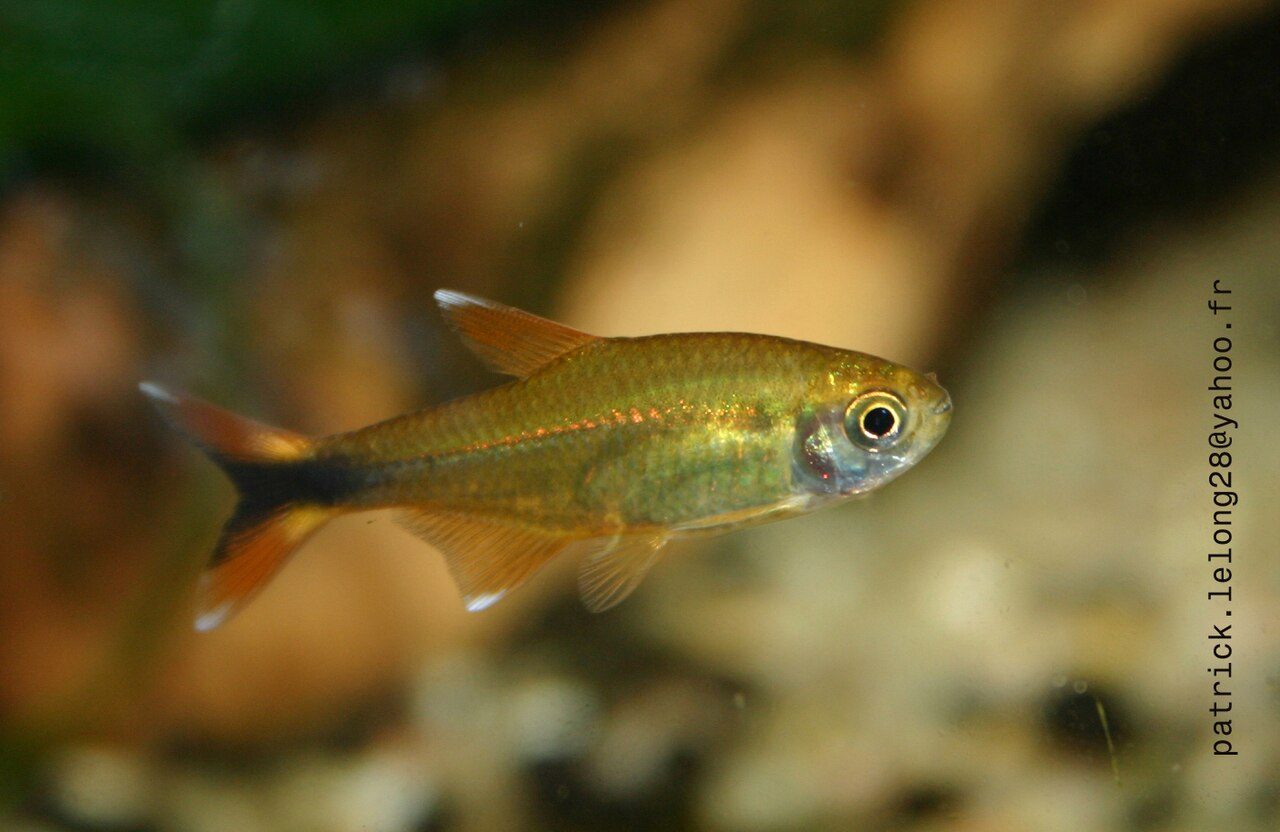
Known scientifically as Hasemania nana, they are unique among tetras because they lack the adipose fin found in most of their cousins.
When you see a shimmering school of these golden fish in a well-planted tank, it is hard not to want to see the next generation.
While they are generally hardy, getting them to successfully reproduce requires a bit of finesse and attention to detail.
In this guide, I will share the exact steps I use to ensure a high survival rate for the fry.
At a glance: Silvertip tetra (Hasemania nana)
- Temperature
- 72–82°F (22–28°C)
- Water pH
- 6.0–8.0
- Adult size
- 2 in (5 cm)
- Minimum tank
- 20 gal
- Group size
- Groups of 8+
- Temperament
- Active, can nip fins
- Diet
- Omnivore: flakes, small pellets, frozen foods
- Lifespan
- 3–5 years
Keeper’s tip: A busy, fast swimmer that does best with other quick fish rather than slow long-finned species.
Understanding Silvertip Tetra Breeding and Biology
Before you set up your breeding tank, it is vital to understand the nature of the fish you are working with.
The Silvertip Tetra is an egg scatterer, meaning they do not provide any parental care to their offspring.
In the wild, they inhabit the blackwater and clearwater streams of Brazil, where the water is naturally soft and acidic.
Identifying the sexes, or sexual dimorphism, is the first step in your journey.
Males are typically more slender and boast a much deeper, coppery-orange coloration.
Females are noticeably rounder in the belly and tend to be a paler, more washed-out yellow.
Pro Tip: Look closely at the tips of the fins. While both sexes have the white “silver” tips, the male’s coloration is significantly more intense, especially when they are competing for female attention.
Setting Up the Perfect Spawning Tank
You should never attempt Silvertip Tetra breeding in a community aquarium if you want the fry to survive.
Other fish, and even the parents themselves, will treat the eggs like a gourmet caviar buffet.
A small, dedicated 5 to 10-gallon tank is perfect for a single pair or a small group.
The water quality is the most critical factor for success.
I have noticed that these fish are much more likely to spawn when the carbonate hardness is kept very low.
Using reverse osmosis (RO) water mixed with a small amount of tap water can help you achieve these specific parameters.
| Parameter | Ideal Range |
|---|---|
| Temperature | 77°F to 82°F (25°C to 28°C) |
| pH Level | 6.0 to 6.5 |
| Water Hardness (GH) | 1 to 5 dGH |
| Lighting | Very Dim / Natural Room Light |
Choosing the Right Substrate and Cover
In the breeding tank, I prefer to use a bare-bottom setup or a layer of glass marbles.
Marbles allow the eggs to fall into the gaps where the parents cannot reach them.
You must also provide plenty of fine-leaved plants like Taxiphyllum barbieri (Java Moss) for the fish to scatter eggs into.
If you don’t have live plants, a synthetic spawning mop made of acrylic yarn works just as well.
The goal is to provide a soft landing spot for the eggs that provides some protection from hungry mouths.
Conditioning Your Silvertip Tetras for Success
To trigger Silvertip Tetra breeding, you must make sure the adults are in peak physical condition.
This process is known as conditioning and usually takes about 7 to 10 days.
I recommend separating the males and females during this time to build up their drive to spawn.
During this period, focus on a high-protein diet.
While they will eat flakes, live or frozen foods are essential for egg production in females.
I have had the best results using bloodworms, brine shrimp, and daphnia.
For more information on general maintenance before you begin the breeding process, you might want to check out my Silvertip Tetra care guide.
Providing a nutritious diet for tetras is the foundation of any successful spawning attempt.
The Spawning Process: From Courtship to Eggs
Once the females are noticeably plump with eggs, move the pair into the breeding tank in the evening.
Spawning typically occurs at dawn or shortly after the lights come on the following morning.
The male will perform a vigorous dance, shimmying alongside the female and nudging her toward the plants.
The female will release several hundred eggs over the course of a few hours.
These eggs are non-adhesive or only slightly sticky, falling deep into the moss or the marble substrate.
As soon as you notice the activity has stopped and the female looks “spent” or thinner, it is time to act.
Pro Tip: Always remove the adult fish as soon as the spawning is complete. Silvertip Tetras are notorious egg eaters and will begin hunting for their own eggs the second the breeding drive subsides.
Protecting the Eggs from Fungus
Silvertip Tetra eggs are very sensitive to light and fungal infections.
I suggest keeping the tank in total darkness for the first 24 to 48 hours.
To further protect the brood, some breeders add a drop of Methylene blue to the water.
Using humic substances, such as those derived from Indian Almond leaves or peat, can also help.
These natural tannins have mild antifungal properties and mimic the fish’s natural environment.
This creates a safer environment for the delicate embryos to develop.
Hatching and Initial Fry Care
The eggs will generally hatch within 24 to 36 hours depending on the water temperature.
At first, the fry will look like tiny “slivers” attached to the glass or plants.
They will survive on their yolk sacs for the first few days and will not require external feeding yet.
Once the fry become free-swimming, usually around day 3 or 4, they are incredibly small.
At this stage, they cannot eat standard fish food or even crushed flakes.
You must provide microscopic food sources to make sure they don’t starve.
Feeding the Newborn Fry
The first food for Silvertip fry should be Infusoria.
I usually culture this a week in advance using organic matter in a jar of old tank water.
After about a week of Infusoria, the fry should be large enough to handle Artemia nauplii (baby brine shrimp).
Feeding small amounts 3 to 4 times a day is better than one large feeding.
This keeps the water cleaner and helps make sure the fry always have access to food.
If you are just starting out with this species, you might find my guide on keeping Silvertip Tetras helpful for long-term care.
Maintaining Water Quality in the Fry Tank
As you feed the fry heavily, the water quality can deteriorate quickly.
However, fry are extremely sensitive to sudden changes in water chemistry and temperature.
I recommend performing very small, daily water changes of about 10%.
Use a small airline tube for siphoning to avoid sucking up the tiny fish.
Always ensure the new water matches the tank water’s temperature and pH exactly.
Consistency is the key to preventing mass die-offs during the first month of life.
| Fry Age | Primary Food Source | Water Change Frequency |
|---|---|---|
| 0-3 Days | Yolk Sac (No feeding) | None (Keep tank dark) |
| 4-10 Days | Infusoria / Liquifry | 10% Daily (Gentle) |
| 10-30 Days | Baby Brine Shrimp / Microworms | 15% Daily |
| 1 Month+ | Finely Crushed Flakes / Golden Pearls | 25% Twice Weekly |
Questions and answers
How many eggs does a Silvertip Tetra lay?
A healthy, well-conditioned female can lay anywhere from 100 to 300 eggs per spawning session. However, survival rates depend heavily on water quality and the speed at which the parents are removed.
Can I breed Silvertip Tetras in a planted community tank?
It is highly unlikely that any fry will survive in a community tank. Between the parents eating the eggs and other fish hunting the fry, the odds are stacked against them. A separate breeding tank is essential.
Why are my Silvertip Tetra eggs turning white?
White eggs are usually a sign of infertility or fungal infection. This often happens if the water is too hard or if the male did not successfully fertilize them. Using Methylene blue or alder cones can help prevent fungus from spreading to healthy eggs.
How long does it take for Silvertip Tetra fry to grow?
With proper feeding, the fry will start to look like miniature adults within 6 to 8 weeks. They generally reach sexual maturity and full coloration at around 6 months of age.
Where that leaves you
Spawning these rich fish is a fantastic way to deepen your hobby experience.
Silvertip Tetra breeding requires patience, the right water chemistry, and a steady supply of microscopic food.
If you follow the steps of conditioning the parents and providing a safe spawning environment, you can successfully raise a new generation of golden beauties.
Keep the water soft, the lighting dim, and the adults away from the eggs once the job is done.
There is nothing quite like the sight of a hundred tiny Silvertips schooling together for the first time in a tank you prepared just for them.

- 2003First tank
- 20+Years keeping
- 40+Tanks kept
- 0Sponsored picks
Howard set up his first 10-gallon planted tank in 2003 and lost half of it within six weeks. Two decades and more than forty aquariums later, he writes the guides he wished he had then: clear numbers, the reasons behind them, and what actually goes wrong in home tanks.