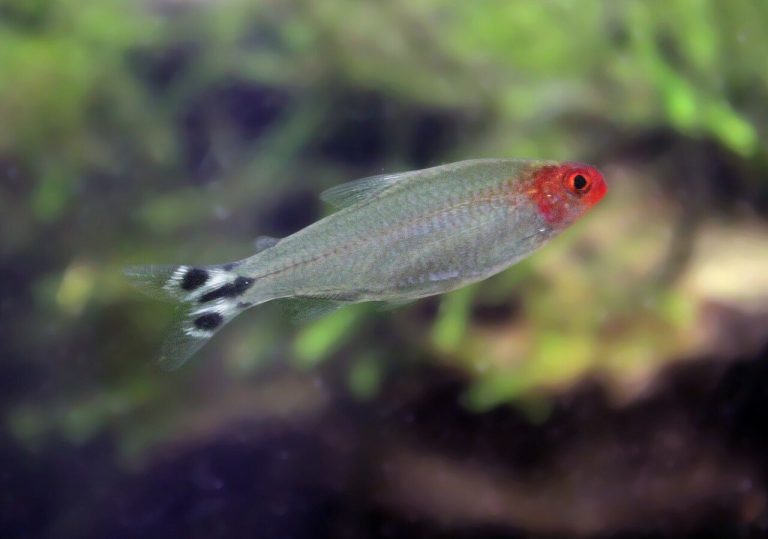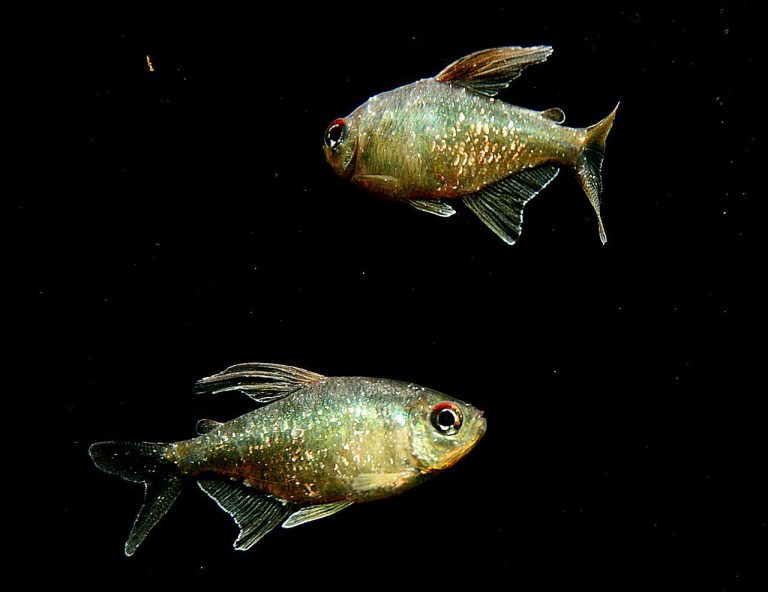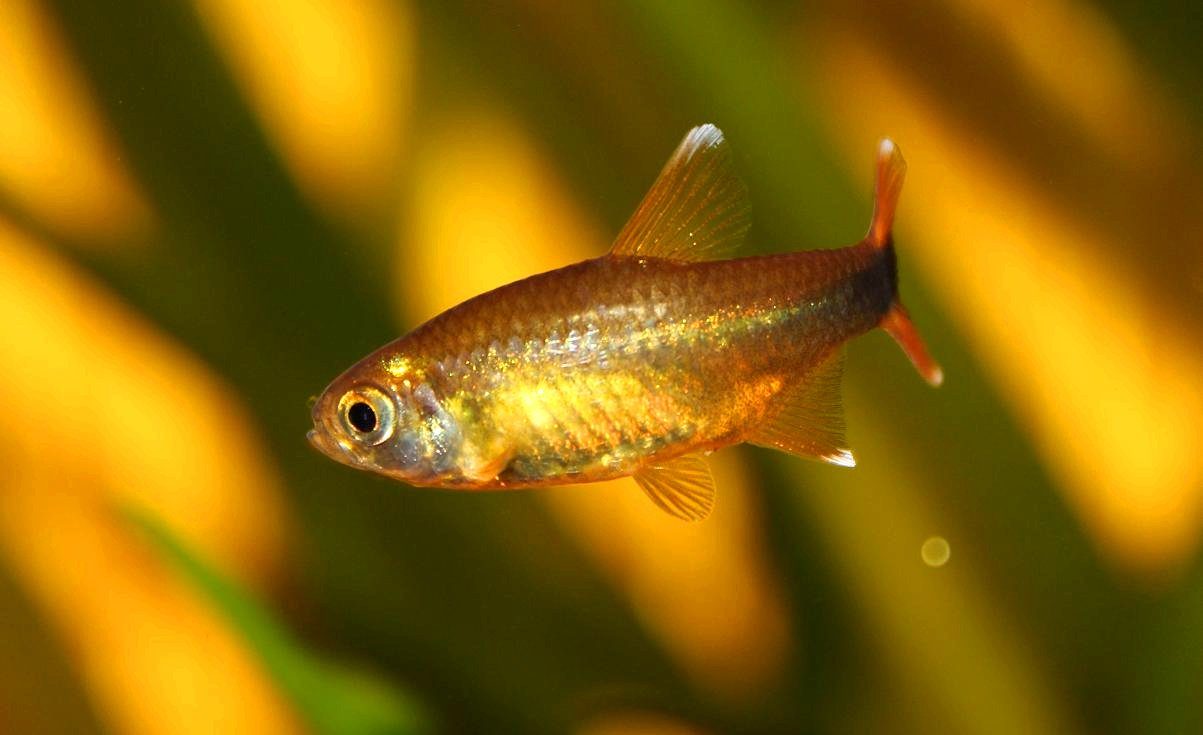
Silvertip Tetra Care Guide – Diet, Tank and Tank Mates
This Silvertip Tetra care guide covers everything from maintaining soft, acidic water to managing their high-energy shoaling behavior. Provide a 20-gallon tank, quality food, and a large group to ensure these rich fish do well.
Welcome to your comprehensive Silvertip Tetra care guide. If you are looking for a burst of golden energy and shimmering silver highlights in your aquarium, you have found the perfect species.
In my decade of keeping various members of the Characidae family, few have impressed me as much as the Silvertip Tetra. Their scientific name is Hasemania nana, and they bring a unique dynamic to any freshwater setup.
These fish are not your typical “sit and look pretty” tetras. They are active, sometimes feisty, and incredibly satisfying to keep when you understand their specific needs and social structure.
At a glance: Silvertip tetra (Hasemania nana)
- Temperature
- 72–82°F (22–28°C)
- Water pH
- 6.0–8.0
- Adult size
- 2 in (5 cm)
- Minimum tank
- 20 gal
- Group size
- Groups of 8+
- Temperament
- Active, can nip fins
- Diet
- Omnivore: flakes, small pellets, frozen foods
- Lifespan
- 3–5 years
Keeper’s tip: A busy, fast swimmer that does best with other quick fish rather than slow long-finned species.
Understanding the Silvertip Tetra (Hasemania nana)
Before we go through the technical details of this Silvertip Tetra care guide, it is vital to know where these fish come from. They are native to the São Francisco River basin in Brazil, where they inhabit both main river channels and smaller tributaries.
One of the most remarkable physical traits of Hasemania nana is that they lack an adipose fin. This is the tiny fin located between the dorsal and caudal fins found on most other tetras.
In my experience, this missing fin is the easiest way to identify them. While most tetras use that fin for stability in moving water, the Silvertip has adapted perfectly to its environment without it.
Pro Tip: When choosing Silvertips at the fish store, look for the ones with the brightest white “tips” on their fins. This usually indicates a healthy, well-fed fish that has been kept in stable water conditions.
Natural Habitat and Water Chemistry
The São Francisco River is known for its varying water conditions, but Silvertips generally prefer “blackwater” or “clearwater” environments. These areas are often rich in humic acids leaching from fallen leaves and wood.
In the home aquarium, mimicking these humic acids can significantly improve their coloration. You can achieve this naturally by adding Indian Almond leaves or driftwood to your scape.
While they are quite hardy, providing a stable environment is the cornerstone of any successful Silvertip Tetra care guide. They settle in when the water mimics the soft, slightly acidic conditions of their Brazilian home.
| Parameter | Ideal Range |
|---|---|
| Temperature | 72°F to 82°F (22°C – 28°C) |
| pH Level | 6.0 to 7.5 |
| Water Hardness (dGH) | 5 to 15 dGH |
| Minimum Tank Size | 20 Gallons (Long preferred) |
Setting Up Your Silvertip Tetra Aquarium
When I first started keeping these fish, I made the mistake of putting them in a small, 10-gallon tank. I quickly realized that their shoaling behavior requires much more horizontal swimming space than you might expect.
A 20-gallon “long” aquarium is the gold standard for a small school. This provides the length they need to dart around without feeling cramped or stressed.
The layout of the tank should include plenty of open swimming space in the center. However, you must also provide dense planting around the edges to give them places to retreat.
Choosing the Right Substrate and Decor
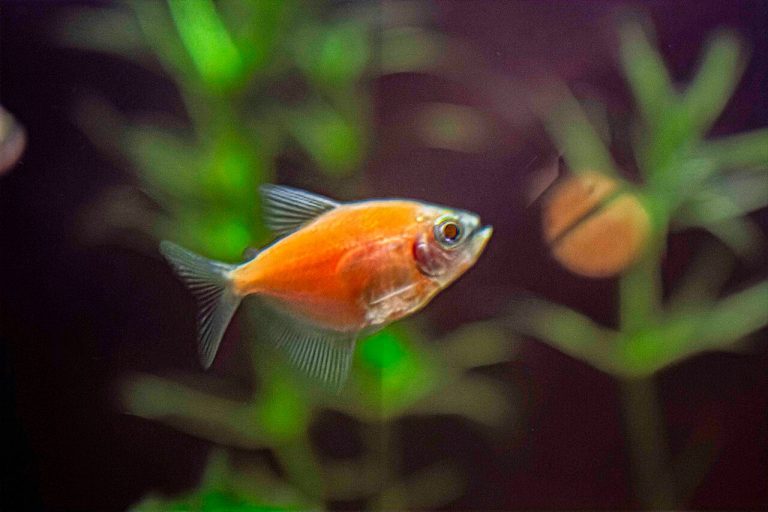
A dark substrate is highly recommended for Silvertip Tetras. The contrast between a dark sand or gravel and their shimmering copper bodies is absolutely eye-catching.
I have noticed that they feel much more secure when the lighting is slightly dimmed. Floating plants like Amazon Frogbit or Salvinia are excellent for creating dappled light patterns.
Using natural materials like Manzanita wood or spider wood adds to the aesthetic and provides territorial markers. These markers are essential for males who may want to claim a small “display” area.
Filtration and Water Flow
Silvertip Tetras come from river systems, so they appreciate a moderate amount of water movement. A high-quality hang-on-back filter or a small canister filter works perfectly.
Keep your filter provides efficient biological filtration to keep ammonia and nitrites at zero. These fish are sensitive to sudden spikes in waste levels, which can lead to stress.
Weekly water changes of about 25% are a non-negotiable part of this Silvertip Tetra care guide. Fresh water helps maintain the low mineral content they prefer and keeps their colors bright.
Diet and Nutritional Requirements
Feeding Silvertip Tetras is generally very easy, as they are opportunistic omnivores. In the wild, they eat small insects, crustaceans, and plant matter.
In the aquarium, they will readily accept high-quality flake foods and micro-pellets. However, for them to shine, you should provide a varied diet.
I highly recommend supplementing their meals with live or frozen foods. Using nutritious fish food makes sure they get the proteins and fats needed for growth.
The Importance of Live Foods
Nothing triggers their natural hunting instincts like live Artemia salina (brine shrimp). Feeding live foods once or twice a week will drastically improve their health and spawning readiness.
You can also offer Daphnia or bloodworms as a treat. These foods are rich in nutrients that support the immune system and boost the “silver” tips on their fins.
Avoid overfeeding, as Silvertip Tetras are very fast eaters. They will often consume everything within seconds, leaving little for slower tank mates.
Pro Tip: If you keep Silvertips with slower fish, try feeding at two different ends of the tank simultaneously. This distracts the fast-moving tetras and allows the other fish to eat in peace.
The shoaling behavior of Silvertip Tetras is one of their most entertaining aspects. They are constantly in motion, interacting with one another in a complex social dance.
To see their best behavior, you must keep them in a group of at least six to eight individuals. In my experience, a larger group of 10 to 12 is even better for diffusing aggression.
Males can be quite competitive and will often “spar” with one another. This is usually harmless posturing, but it can lead to minor fin nipping if the tank is too small.
Compatible Tank Mates
Choosing tank mates for Silvertip Tetras requires some thought. Because they are so active and occasionally “nippy,” they should not be kept with slow-moving fish or those with long, flowing fins.
They are excellent companions for other strong tetras or active bottom dwellers. For example, keeping hardy tetra species alongside them creates a very lively display.
I have successfully kept them with various Corydoras species and smaller Loricariids (bristlenose plecos). These fish occupy the bottom of the tank and are generally ignored by the tetras.
Fish to Avoid
Avoid keeping them with Bettas or Fancy Guppies. The Silvertip’s tendency to nip at long fins can cause significant stress or injury to these species.
While some people try keeping Silvertips with a Betta, it often requires a very large, heavily planted tank to work. For beginners, it is usually best to avoid this combination.
Also, avoid very large or aggressive fish that might see the Silvertips as a snack. Even though they are fast, they can easily be out-competed by large cichlids.
Breeding the Silvertip Tetra
Breeding Silvertip Tetras is a satisfying challenge for intermediate hobbyists. They are egg-scatterers, meaning they do not provide any parental care to their offspring.
To be successful, you first need to identify sexual dimorphism within your school. This is actually quite easy once the fish reach maturity.
Males are generally more slender and exhibit a much deeper, more vivid copper or golden color. Females are rounder, especially when carrying eggs, and have a paler, more washed-out yellow hue.
The Breeding Setup
A separate breeding tank is essential if you want to raise a large number of fry. A small 5 or 10-gallon tank with a sponge filter and plenty of fine-leaved plants like Java Moss is perfect.
The water should be very soft and slightly acidic, with a temperature around 80°F. Dim lighting is also preferred, as the eggs can be sensitive to bright light.
| Step | Action Required |
|---|---|
| Conditioning | Feed high-protein live foods for 7-10 days. |
| Transfer | Move the fattest female and brightest male to the breeding tank at night. |
| Spawning | Check for eggs among the moss or on the substrate the following morning. |
| Removal | Remove the adults immediately after spawning to prevent them from eating the eggs. |
Raising the Fry
The eggs will typically hatch within 24 to 36 hours. Once the fry are free-swimming, they will need very small food like infusoria or commercial liquid fry food.
As they grow, you can transition them to freshly hatched brine shrimp. Keeping the water pristine during this stage is vital for the development of the young fish.
I have found that small, daily water changes in the fry tank help them grow much faster. Just be careful not to suck up the tiny fish during the process!
Common Health Issues and Prevention
Like all freshwater fish, Silvertip Tetras are susceptible to certain diseases. The most common issue I see in newly purchased fish is Ichthyophthirius multifiliis, commonly known as Ich or white spot disease.
Ich presents as small white salt-like grains on the body and fins. It is usually caused by stress from shipping or sudden temperature fluctuations.
To prevent this, always quarantine new fish before adding them to your main display. This 40-day waiting period allows you to observe them for any signs of illness.
Dealing with Fin Rot
Because Silvertips are active and sometimes nippy, they can occasionally suffer from fin rot if water quality is poor. This bacterial infection causes the edges of the fins to look ragged or milky.
The best cure for fin rot is clean water. If the infection persists, you may need to use a dedicated antibacterial treatment.
Always make sure you have plenty of oxygen in the water when treating for disease. Many medications can lower the dissolved oxygen levels in the aquarium.
Stress Management
Stress is the leading cause of death in aquarium fish. For Silvertips, stress usually comes from being kept in a group that is too small or a tank that is too bright.
If you follow this Silvertip Tetra care guide and providing a proper school and hiding spots, you minimize these risks. A happy fish is a healthy fish with a strong immune system.
Questions I get asked a lot
Are Silvertip Tetras aggressive?
They are not aggressive in the way a cichlid is, but they are very “boisterous.” They can be semi-aggressive toward fish with long fins or if they are kept in a group smaller than six.
How long do Silvertip Tetras live?
With proper care, Silvertip Tetras typically live between 3 and 5 years. Providing a high-quality diet and maintaining stable water parameters are the keys to longevity.
Why are my Silvertip Tetras losing their color?
This is usually a sign of stress or poor water quality. It can also happen at night when the fish are “sleeping.” If they are pale during the day, check your ammonia and nitrite levels immediately.
Do Silvertip Tetras need a heater?
Yes, they are tropical fish and require a consistent temperature. A high-quality submersible heater is necessary to keep the water between 72°F and 82°F.
Can I keep Silvertip Tetras in a planted tank?
Absolutely. They look fantastic against the green of live plants. They do not eat plants, though they might occasionally peck at algae or micro-fauna living on the leaves.
Final Thoughts on Silvertip Tetra Care
The Silvertip Tetra is a gem of the aquarium world. Their golden bodies and glowing white fin tips provide a level of activity and beauty that few other small fish can match.
If you focus on a spacious tank, a large school, and a varied diet, you will be well on your way to success. These fish flourish on stability and social interaction.
I hope this Silvertip Tetra care guide has given you the confidence to add these wonderful Hasemania nana to your own aquarium. They have been a staple in my tanks for years, and I am certain they will become a favorite of yours as well.
Keep observing your fish, stay on top of your water changes, and enjoy the shimmering dance of the Silvertip Tetra.

- 2003First tank
- 20+Years keeping
- 40+Tanks kept
- 0Sponsored picks
Howard set up his first 10-gallon planted tank in 2003 and lost half of it within six weeks. Two decades and more than forty aquariums later, he writes the guides he wished he had then: clear numbers, the reasons behind them, and what actually goes wrong in home tanks.