Black Skirt Tetra Male Or Female – How to Tell Them Apart
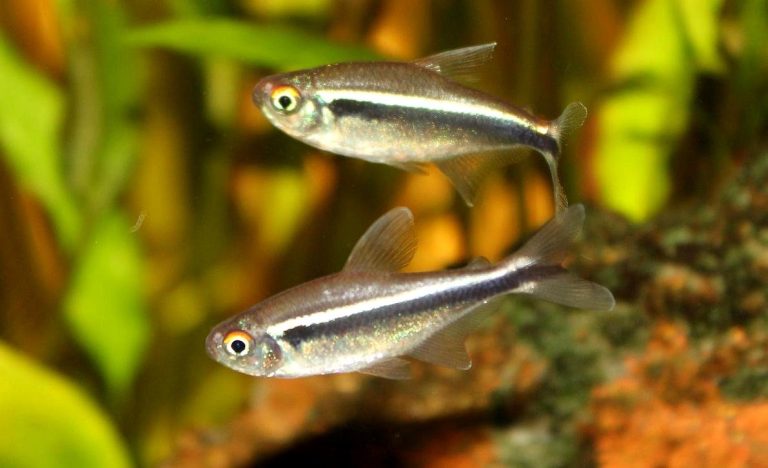
To identify a black skirt tetra male or female, compare their body shapes and fins. Males are generally slimmer with a broader, more pointed anal fin, while females are rounder, larger, and have narrower fins.
Determining whether you have a black skirt tetra male or female is one of the most common challenges for hobbyists looking to breed these iconic fish. These members of the Characidae family are well-loved for their hardy nature and striking “skirted” appearance.
In my experience, sexing these fish becomes significantly easier once they reach maturity. While juveniles look almost identical, adult fish display subtle but distinct physical traits that reveal their gender.
It also helps you manage the social dynamics of your school to prevent unnecessary aggression.
At a glance: Black skirt tetra (Gymnocorymbus ternetzi)
- Temperature
- 70–85°F (21–29°C)
- Water pH
- 6.0–7.5
- Adult size
- 2.5 in (6 cm)
- Minimum tank
- 20 gal
- Group size
- Groups of 6+
- Temperament
- Semi-peaceful, may nip fins
- Diet
- Omnivore: flakes, pellets, frozen foods
- Lifespan
- 3–5 years
Keeper’s tip: Keep them in a proper group; singles and pairs are the ones that harass bettas and angelfish.
Understanding Sexual Dimorphism in Black Skirt Tetras
Sexual dimorphism refers to the physical differences between males and females of the same species. In tetras, these differences are often subtle rather than flashy.
Unlike some cichlids where the male is twice the size and a completely different color, the black skirt tetra male or female distinction requires a keen eye for detail. You must look at the silhouette, the fin structure, and the overall “plumpness” of the fish.
When I first started keeping these fish over a decade ago, I spent hours staring at my school of twelve. I eventually realized that the “thickest” fish were almost always the females carrying eggs.
The Role of Maturity
You cannot accurately sex these fish when they are very young. Most pet store specimens are juveniles and haven’t developed their adult body shapes yet.
Usually, you need to wait until the fish are about six to eight months old. By this time, their hormones have kicked in, and their physical structure has stabilized.
Pro Tip: If you are buying fish with the intent to breed, always buy a group of six or more. This statistically guarantees you will have both males and females without needing to sex them perfectly at the store.
Key Physical Differences: Black Skirt Tetra Male or Female
To master the identification of a black skirt tetra male or female, you need to focus on three main areas: the body shape, the anal fin morphology, and the dorsal fin profile.
Body Shape and Size
The most reliable way to tell them apart is by looking at the belly. Females are naturally larger and much rounder than their male counterparts.
This roundness becomes even more pronounced when the female is “gravid,” meaning she is carrying eggs. Males, on the other hand, maintain a sleek, almost aerodynamic profile throughout their lives.
Anal Fin Morphology
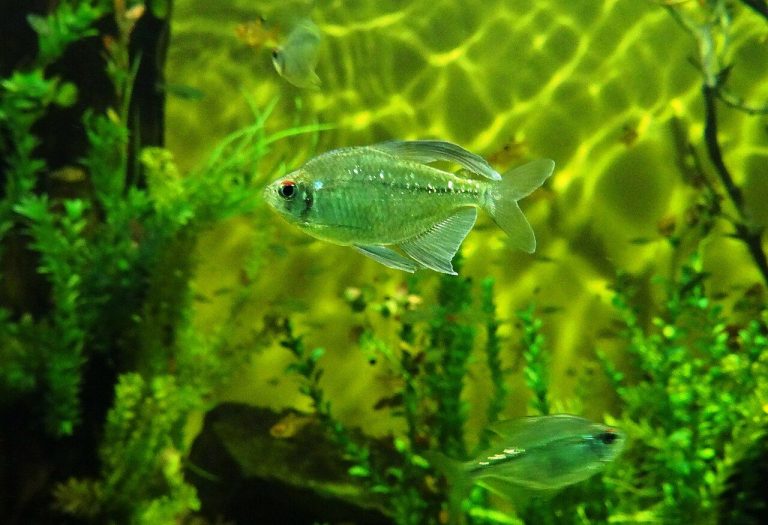
The “skirt” that gives these fish their name is actually an elongated anal fin. In males, this fin is typically broader and comes to a sharper point toward the back.
Females have a slightly shorter anal fin that runs parallel to the body line. If you look closely, the male’s anal fin often appears more “muscular” or prominent during display.
Dorsal Fin Profile
The dorsal fin (the one on top) can also provide clues. In many males, the dorsal fin is slightly more pointed and may appear taller relative to the body size.
Females tend to have a shorter, more rounded dorsal fin. While this isn’t as foolproof as the body shape, it is an excellent secondary indicator when combined with other observations.
| Feature | Male Black Skirt Tetra | Female Black Skirt Tetra |
|---|---|---|
| Body Shape | Slim, sleek, and streamlined. | Round, solid, and deep-bodied. |
| Size | Slightly smaller on average. | Larger and broader. |
| Anal Fin | Wide, broad, and pointed. | Narrower and more rounded. |
| Dorsal Fin | Often more pointed. | Generally shorter and rounded. |
Behavioral Cues in Males and Females
Beyond physical traits, behavior is a great way to confirm if you have a black skirt tetra male or female. During the morning hours, you might notice specific interactions within the school.
Males are often more active and may engage in “sparring” matches. This involves two males circling each other and flaring their fins to establish dominance.
Females are generally more passive. They tend to hang back in the school or stay near the mid-water vegetation while the males display.
Courtship Behavior
When a male is interested in a female, his behavior changes drastically. He will swim in quick, darting patterns around her, trying to nudge her toward a secluded area of the tank.
If the female is receptive, she will allow him to stay close. If she isn’t ready or if the male is too aggressive, she will dart away into the plants.
Breeding the Black Skirt Tetra
Once you can distinguish a black skirt tetra male or female, you might want to try your hand at breeding. These fish are known as an egg-scatterer species.
This means they do not provide parental care. Instead, they scatter their eggs among fine-leaved plants or a spawning mop and then leave them (or try to eat them!).
Setting Up a Spawning Tank
To successfully breed them, you need a separate tank. This prevents the adults or other tank mates from eating the eggs.
I’ve found that a 10-gallon tank is perfect for a single pair or a small group. You should include plenty of moss or a mesh screen at the bottom to catch the falling eggs.
Water Chemistry and Conditioning
Black skirts do well in slightly acidic water. Using peat filtration or adding humic substances (like Indian Almond Leaves) can help trigger the spawning response.
You also need to make sure they are well-fed. High-quality live or frozen foods will help the females produce healthy eggs and the males stay energetic.
Common Mistake: Many keepers forget to remove the parents immediately after spawning. Black skirt tetras are notorious egg-eaters and will consume their entire clutch in minutes if left in the breeding tank.
Health and Longevity Factors
Knowing the sex of your fish can also help you monitor their health. For example, a female that is “too fat” might be egg-bound, which is a serious condition.
Conversely, a male that is losing his sleek shape might be suffering from internal parasites. Understanding their natural biology allows you to spot deviations early.
Potential Diseases
Like all tetras, they can be susceptible to Plistophora hyphessobryconis, commonly known as Neon Tetra Disease. While it affects neons most often, it can spread to other Characidae.
Maintaining pristine water quality is the best defense. Knowing how long black tetras usually live (often 3 to 5 years) helps you set realistic expectations for your school.
Environmental Stress
If your tetras are losing their black coloration and turning grey, they are likely stressed. This can be caused by poor water parameters or an incorrect choosing the right tank size for a schooling group.
Always help you have at least six individuals. This mimics their natural environment and reduces the stress that leads to illness.
Frequently asked questions
Can I keep only males or only females?
Yes, you can keep a single-sex group. However, a mixed group is usually more interesting to watch as it displays more natural schooling and courtship behaviors.
At what age can you tell the difference?
Usually, you can start seeing differences around 4 months, but it becomes definitive at 6 to 8 months.
Do males and females have different colors?
No, both have the same silver and black coloration. However, males may appear slightly darker or more intense when they are displaying for females.
Why is my female black skirt tetra so bloated?
She is likely “gravid” or full of eggs. If she is swimming normally and eating, it is natural. If she looks pineconed or lethargic, it could be dropsy.
Are they aggressive toward each other?
They can be “nippy,” especially if the tank is too small. This is usually just hierarchy building and rarely results in serious injury if the school is large enough.
Final Thoughts on Identifying Your Tetras
Learning to spot a black skirt tetra male or female is a satisfying skill for any aquarist. It deepens your connection to your pets and opens the door to the interesting world of fish breeding.
Focus on the belly shape and the anal fin. Those are your most reliable indicators.
If you provide a stable environment with the right water parameters, you will see your tetras stay healthy. You might even find yourself comparing them to silvertip tetras as you expand your collection of schooling fish.
Keep observing, keep learning, and most importantly, enjoy the process of maintaining your underwater world. Successful fish keeping is all about the small details!

- 2003First tank
- 20+Years keeping
- 40+Tanks kept
- 0Sponsored picks
Howard set up his first 10-gallon planted tank in 2003 and lost half of it within six weeks. Two decades and more than forty aquariums later, he writes the guides he wished he had then: clear numbers, the reasons behind them, and what actually goes wrong in home tanks.