Silvertip Tetra Vs Black Skirt Tetra – Which One to Choose
The silvertip tetra vs black skirt tetra debate comes down to tank size and activity level. Silvertips are smaller, faster, and lack an adipose fin, while black skirt tetras are larger, hardier, and more deep-bodied.
Choosing the right schooling fish can transform a dull tank into a bright, moving ecosystem.
In my ten years of maintaining community tanks, I have found that the silvertip tetra vs black skirt tetra comparison is one of the most frequent dilemmas for hobbyists.
Both species belong to the family Characidae, but they bring entirely different energies and visual aesthetics to your underwater world.
While they are both relatively easy to keep, understanding their distinct social behaviors and physiological needs is vital for long-term success.
I have kept both species in various setups, from heavily planted aquascapes to minimalist breeding tanks, and I’ve noticed several nuances that often go unmentioned in basic care sheets.
In this guide, we will break down everything from water chemistry requirements to the subtle differences in their shoaling behavior.
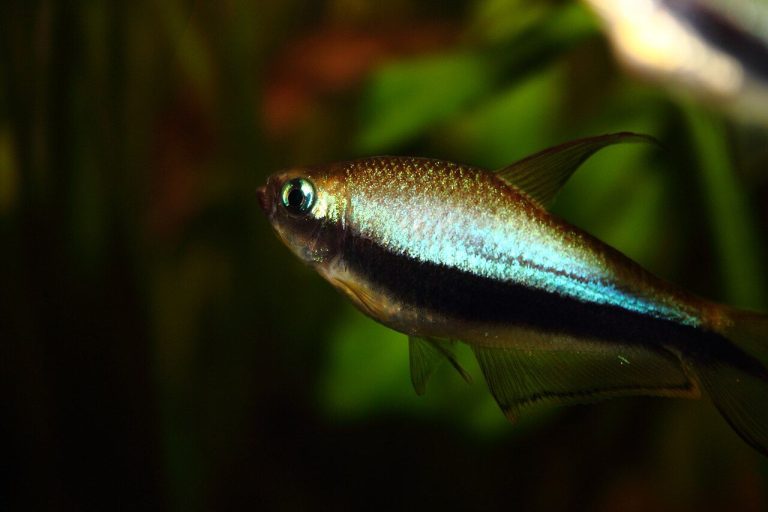
At a glance: Black skirt tetra (Gymnocorymbus ternetzi)
- Temperature
- 70–85°F (21–29°C)
- Water pH
- 6.0–7.5
- Adult size
- 2.5 in (6 cm)
- Minimum tank
- 20 gal
- Group size
- Groups of 6+
- Temperament
- Semi-peaceful, may nip fins
- Diet
- Omnivore: flakes, pellets, frozen foods
- Lifespan
- 3–5 years
Keeper’s tip: Keep them in a proper group; singles and pairs are the ones that harass bettas and angelfish.
silvertip tetra vs black skirt tetra: Key Differences at a Glance
When you are standing at the local fish store, it can be hard to decide between the shimmering gold of the silvertip and the bold, dark presence of the black skirt.
One is a torpedo-shaped speedster, while the other is a disk-shaped powerhouse that commands attention.
To help you visualize these differences, I have compiled a comparison table based on my personal observations and standard ichthyological data.
| Feature | Silvertip Tetra | Black Skirt Tetra |
|---|---|---|
| Scientific Name | Hasemania nana | Gymnocorymbus ternetzi |
| Adult Size | 1.5 – 2 inches | 2.5 – 3 inches |
| Body Shape | Slender, torpedo-like | Deep, disk-shaped |
| Adipose Fin | Absent | Present |
| Activity Level | Very High (Fast-moving) | Moderate (Steady) |
| Minimum Tank Size | 20 Gallons (Long) | 20 – 30 Gallons |
| Lifespan | 3 – 5 Years | 5 – 7 Years |
Understanding the Silvertip Tetra (Hasemania nana)
The silvertip tetra is a gem from the Sao Francisco river basin in Brazil.
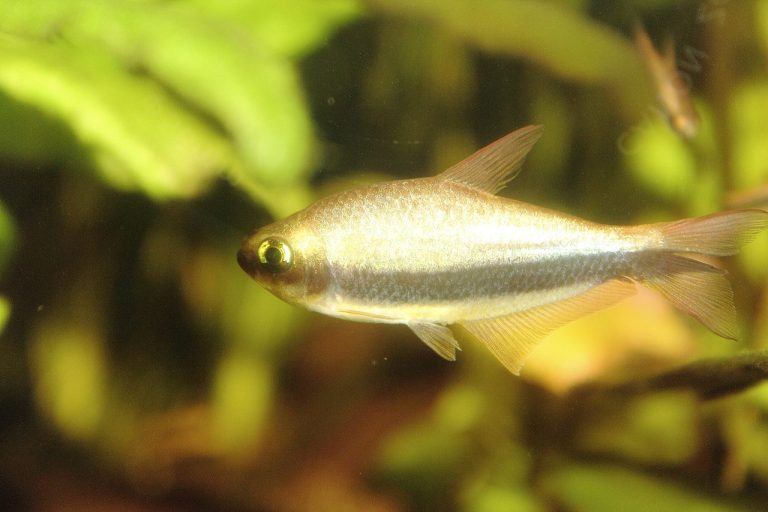
What makes them stand out taxonomically is that they lack an adipose fin, which is the tiny fin located between the dorsal and caudal fins.
In my experience, this doesn’t affect their swimming ability, as they are some of the fastest tetras you can keep.
Appearance and Coloration
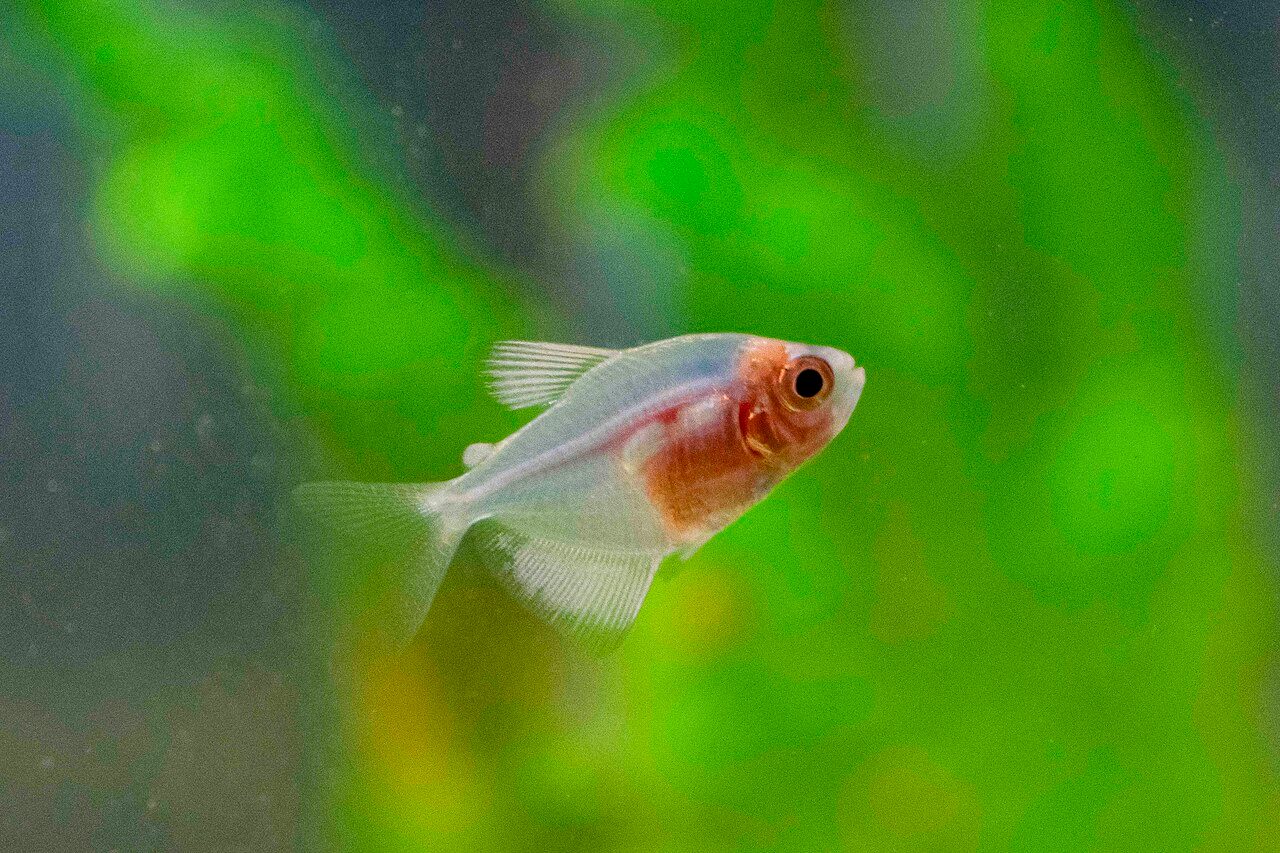
Silvertips have a beautiful copper or amber body that glows under the right lighting.
The tips of their fins are a stark, snowy white, which creates a flickering effect as they dart through the water.
Males are generally more colorful, showing deep burnt-orange hues, while females are a paler yellow.
Behavior and Tank Dynamics
These fish are incredibly active and require a lot of “runway” space to swim.
They are not aggressive in the traditional sense, but their high energy can stress out slower-moving tank mates.
If you want a deeper look at managing their energy, I recommend reading my proper care for silvertips guide.
Pro Tip: Silvertips are notorious for “playful” nipping if kept in small groups. Always keep at least 8 to 10 individuals to disperse their energy and make sure they focus on each other rather than their tank mates.
Getting to Know the Black Skirt Tetra (Gymnocorymbus ternetzi)
The black skirt tetra, often referred to as the black widow tetra, is a staple in the hobby for a reason.
They are members of the Tetragonopterinae subfamily and are known for their extreme hardiness.
They have a much more substantial presence in the tank due to their deep, compressed bodies and large anal fins.
Appearance and Hardy Nature
Juvenile black skirts are striking with deep black vertical bands and a dark posterior “skirt.”
As they age, these colors can fade to a more charcoal grey, but their impressive silhouette remains.
They are excellent for beginners because they can tolerate a wider range of water parameters than many other Characidae.
Black skirts are semi-aggressive, particularly when they reach their full size of nearly 3 inches.
They have a tendency to nip at long-finned fish like Bettas or Angelfish.
I’ve found that keeping them in a larger school helps mitigate this, as they establish a pecking order within their own group.
Common Mistake: Many hobbyists place black skirt tetras in 10-gallon tanks because they look small at the store. In reality, these fish grow quickly and need at least 20 to 30 gallons to prevent territorial aggression.
Water Parameters and Tank Environment
Both species come from South American waters, but they have slightly different preferences when it comes to the “feel” of the water.
Silvertips often come from slightly faster-moving streams, while black skirts are frequently found in slower, murkier waters.
Using peat filtration or adding humic acids through driftwood can benefit both species by mimicking their natural blackwater habitats.
Ideal Water Conditions
Monitoring your dGH (degree of General Hardness) and pH is essential for maintaining the colorful colors of these fish.
While both are adaptable, they will show their best colors in slightly acidic to neutral water.
| Parameter | Silvertip Tetra Range | Black Skirt Tetra Range |
|---|---|---|
| Temperature | 72°F – 82°F | 70°F – 80°F |
| pH Level | 6.0 – 7.5 | 6.0 – 8.0 |
| Hardness (dGH) | 5 – 15 | 5 – 20 |
Tank Setup and Aquascaping
For silvertips, I recommend a “river-style” setup with plenty of open swimming space in the middle.
They love to swim against a moderate current, so a slightly oversized filter or a small powerhead can be a great addition.
Black skirts, on the other hand, prefer more cover and tall plants to weave through.
They feel most secure when they have “anchors” like large pieces of driftwood or tall Amazon Swords.
The most important aspect of keeping either of these fish is their shoaling behavior.
In the wild, being part of a large group is their primary defense mechanism against predators.
In the home aquarium, a lone tetra is a stressed tetra, and a stressed tetra is a sick tetra.
Silvertip Movement
Silvertips move like a single organism, darting back and forth across the length of the tank.
They are highly synchronized, which makes them a fantastic choice for a “show” school in a long tank.
I’ve noticed that they are most active during the morning hours when the light first hits the tank.
Black Skirt Territoriality
Black skirts are a bit more “static” in their shoaling.
They will often hover in one area of the tank, each fish maintaining a small personal space.
If you see them chasing each other, it is usually just a display of dominance within the school.
If you are interested in other strong tetras, you might find the black finned varieties to be a similar but unique alternative.
Diet and Nutrition: Keeping Colors Bright
Both species are omnivores and are generally not picky eaters.
However, to see that brilliant copper in silvertips and the deep charcoal in black skirts, you need to provide a varied diet.
I always suggest a base of high-quality flakes supplemented with frozen or live foods.
Feeding Silvertips
Since they are fast and stay mostly in the middle to upper water column, they will snatch food quickly.
They have small mouths, so make sure any pellets or flakes are crushed to an appropriate size.
They particularly love baby brine shrimp and daphnia.
Feeding Black Skirts
Black skirts are opportunistic feeders and can be quite aggressive during mealtime.
They have much larger mouths than silvertips and can handle larger pellets.
Providing a nutritious diet for tetras is the best way to prevent stress and keep their immune systems strong.
Health and Common Pitfalls
Tetras are generally hardy, but they are susceptible to common freshwater ailments.
The most frequent issue I see in newly established tanks is Ichthyophthirius multifiliis, commonly known as Ich.
Because both species are active and sensitive to sudden changes, stress is the primary trigger for disease.
Managing Stress
When I first started, I made the mistake of adding fish too quickly to a new tank.
Silvertips are especially sensitive to high nitrate levels, which can lead to fin rot.
Black skirts are tougher, but they can become lethargic if the water temperature drops too low.
Disease Treatment
If you notice white spots (Ich), increase the temperature slightly and use a copper-based or malachite green treatment.
Be careful, as tetras can sometimes be “scale-less” in their sensitivity to certain medications.
Always dose at half-strength initially to see how they react.
FAQ: silvertip tetra vs black skirt tetra
Can I keep silvertip and black skirt tetras together? Yes, they can coexist in a large enough tank (30+ gallons). However, help the tank is long enough to accommodate the silvertips’ swimming speed and has enough cover for the black skirts.
Which one is better for a planted tank? Silvertips are generally better for heavily planted tanks. Black skirts are known to occasionally nibble on soft-leaved plants if they are bored or underfed.
Are silvertips or black skirts more likely to nip fins? In my experience, black skirts are more notorious for nipping the fins of long-finned tank mates. Silvertips tend to nip each other more than other species.
Why are my silvertips losing their color? This is usually a sign of stress or poor water quality. Check your ammonia and nitrate levels immediately. It could also be due to a lack of social interaction if the school is too small.
Conclusion: Which One Should You Choose?
The winner of the silvertip tetra vs black skirt tetra battle depends entirely on your tank goals.
If you have a 20-gallon long tank and want a high-energy, shimmering golden school, the silvertip tetra is your best bet.
Their lack of an adipose fin and their unique white-tipped fins make them a interesting conversation piece.
If you have a larger community tank and want a hardy, classic-looking fish with a strong presence, the black skirt tetra is the way to go.
They are the “tanks” of the tetra world—sturdy, reliable, and visually imposing.
Whichever you choose, keep in mind that success starts with a large school and clean water.
In my decade of fishkeeping, I’ve learned that these fish will reward your care with years of colorful movement and personality.

- 2003First tank
- 20+Years keeping
- 40+Tanks kept
- 0Sponsored picks
Howard set up his first 10-gallon planted tank in 2003 and lost half of it within six weeks. Two decades and more than forty aquariums later, he writes the guides he wished he had then: clear numbers, the reasons behind them, and what actually goes wrong in home tanks.