Penguin Tetra For Beginners – Care Guide
Penguin Tetras are hardy, active, and uniquely swimming fish ideal for new hobbyists. To succeed, keep them in a school of six or more in a 20-gallon tank with stable, clean water.
Starting your first aquarium is an exhilarating journey, and choosing the right fish is the most critical step in keeping your success.
When I first started keeping fish over a decade ago, I was immediately drawn to the striking “hockey stick” marking of the Penguin Tetra.
Maintaining a Penguin Tetra for beginners setup is one of the most satisfying ways to learn the ropes of the hobby while enjoying a unique aquatic display.
These fish, scientifically known as Thayeria boehlkei, belong to the Characidae family and are famous for their distinct swimming style.
In this guide, I will share everything I have learned from years of keeping these energetic fish, ensuring your transition into the hobby is smooth and enjoyable.
At a glance: Penguin tetra (Thayeria boehlkei)
- Temperature
- 72–82°F (22–28°C)
- Water pH
- 6.0–8.0
- Adult size
- 2.5 in (6 cm)
- Minimum tank
- 20 gal
- Group size
- Groups of 6+
- Temperament
- Peaceful, slightly nippy
- Diet
- Omnivore: flakes, small pellets, frozen foods
- Lifespan
- 5 years
Keeper’s tip: They swim at a head-up angle naturally; that tilt is normal and not a swim bladder problem.
Understanding the Penguin Tetra for Beginners
The Penguin Tetra is a staple in the aquarium hobby because of its resilience and interesting behavior.
Native to the upper Amazon basin in Brazil and Peru, they are accustomed to environments rich in vegetation and soft water.
One of the first things you will notice is their oblique swimming posture, where they hang in the water column with their heads pointing slightly upward.
In my experience, new keepers often mistake this natural stance for a sign of illness, but it is actually their trademark characteristic.
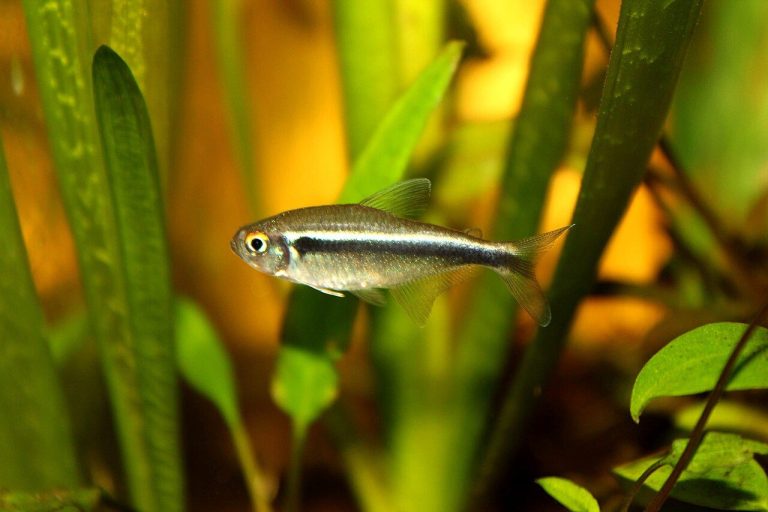
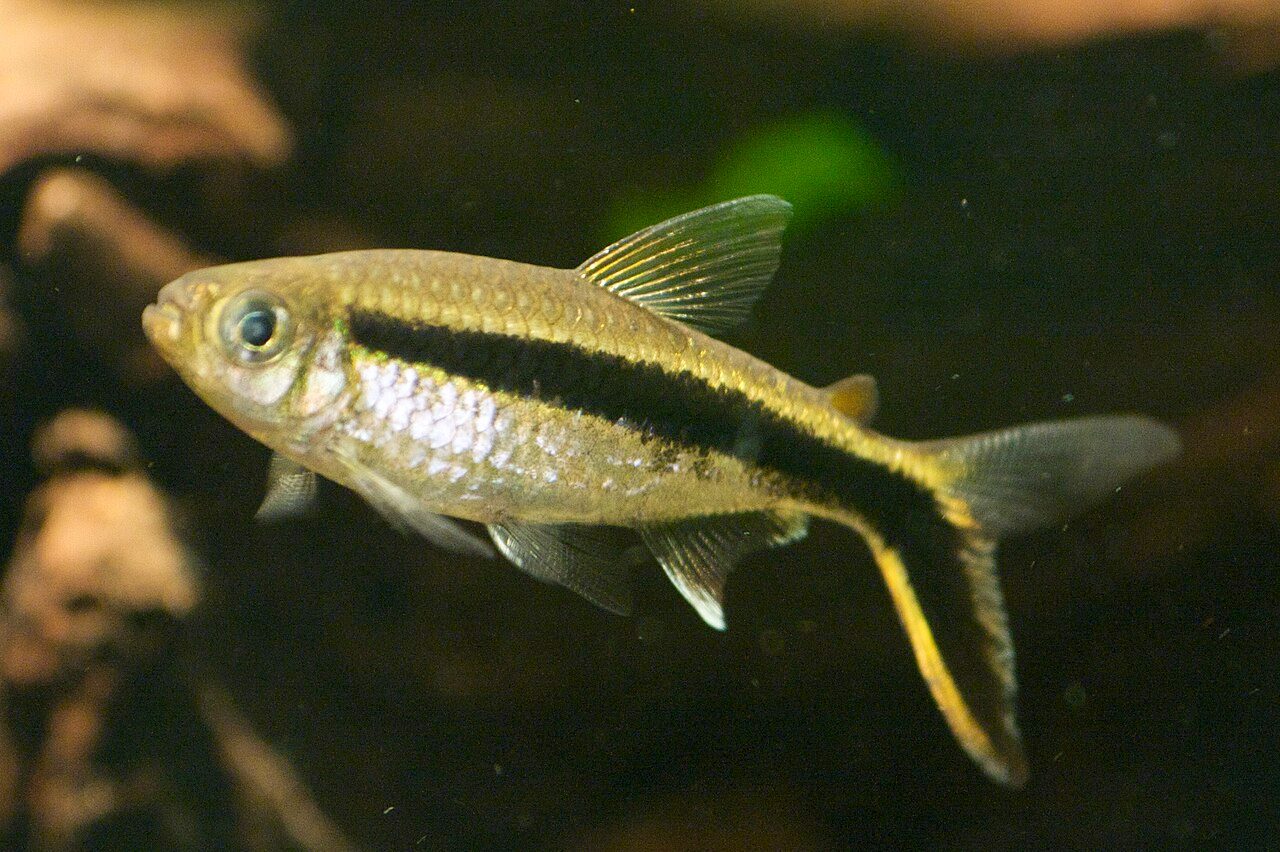
They are streamlined, silvery fish with a bold black stripe that extends from the mid-body down through the lower lobe of the caudal fin.
Because they are schooling fish, their beauty is amplified when you see a group of them moving in unison across the tank.
Pro Tip: Always buy Penguin Tetras in groups of at least six to eight. In my years of keeping them, I have noticed that smaller groups become timid and may even nip at other fish due to stress.
Essential Tank Requirements and Water Chemistry
Before you bring your new fish home, you must understand the environment they need to flourish over the long term.
While they are hardy, they still require a stable environment where the nitrogen cycle has been fully established.
A common mistake I see beginners make is rushing the process, which can lead to spikes in ammonia that these fish cannot tolerate.
For a standard school, I recommend a minimum tank size of 20 gallons to provide enough swimming room for their active nature.
| Parameter | Ideal Range |
|---|---|
| Water Temperature | 72°F to 82°F (22°C to 28°C) |
| pH Level | 5.8 to 7.5 |
| Carbonate Hardness (KH) | 2 to 10 dKH |
| Ammonia / Nitrite | 0 ppm (Strictly) |
| Nitrate | Below 20 ppm |
Maintaining low carbonate hardness is generally preferred, as it mimics their natural soft-water habitats.
However, the most important factor for success is consistency rather than chasing a “perfect” number on a test kit.
If you are looking for other resilient options to start your journey, you might consider some of the best tetra species for newcomers currently available in the trade.
Creating an Amazonian Biotope for Your Tetras
To see your Penguin Tetras at their most bright, you should aim to replicate an Amazonian biotope.
In the wild, these fish live in slow-moving tributaries shaded by overhanging trees and filled with fallen leaves.
This environment is often rich in humic acid, which leaches from decaying organic matter and gives the water a slight tea-colored tint.
You can replicate this using driftwood, dried Indian Almond leaves, or peat moss in your filtration system.
Adding live plants is not just for aesthetics; they provide hiding spots and help manage nitrate levels in the water.
I highly recommend planting Echinodorus grisebachii, also known as the Amazon Sword, as it provides broad leaves for shelter.
Floating plants like Amazon Frogbit are also excellent for diffusing light, which makes the fish feel much more secure.
When the lighting is too bright, Penguin Tetras can become washed out and lose that striking silvery sheen.
Pro Tip: Use a dark substrate, such as black sand or fine gravel. I’ve found that dark floors make the black “hockey stick” stripe on the fish pop much more vividly compared to light-colored gravel.
Diet and Nutrition: Feeding for Color and Energy
One of the reasons I love recommending the Penguin Tetra for beginners is their unpicky appetite.
They are omnivores and will readily accept almost any food you drop into the aquarium.
However, a diet consisting solely of flakes will not bring out their best health or coloration over time.
I always suggest a rotation of high-quality flakes, micro-pellets, and frozen or live treats.
Feeding them Daphnia or brine shrimp once or twice a week provides essential proteins and mimics their natural diet of small insects.
Using a high-quality fish food designed for small characins will help they get the vitamins they need.
Understanding Feeding Behavior
Penguin Tetras are top-to-middle dwellers and are very fast during feeding time.
I have noticed that they can sometimes outcompete slower-moving tank mates for food.
To prevent this, I usually sprinkle food across the entire surface of the water rather than in one spot.
This ensures that even the shyer individuals in the school get their fair share of the meal.
Be careful not to overfeed, as excess food will rot and ruin your water quality, leading to unnecessary stress.
Choosing Compatible Tank Mates
Penguin Tetras are generally peaceful, making them fantastic candidates for a community aquarium.
However, they are very active and can sometimes bother extremely slow or long-finned fish with their constant movement.
When selecting companions, look for other peaceful species that share similar water requirements.
Other small characins, such as various tetra varieties, make excellent neighbors.
Corydoras catfish are perfect for the bottom of the tank, as they stay out of the Penguin Tetra’s way while cleaning up leftover food.
| Compatible Group | Recommended Species |
|---|---|
| Other Tetras | Rummy Nose, Neon, or Ember Tetras |
| Bottom Dwellers | Corydoras, Kuhli Loaches, Bristlenose Plecos |
| Centerpiece Fish | Honey Gourami or Dwarf Cichlids (Apistogramma) |
| Invertebrates | Amano Shrimp or Mystery Snails |
Avoid keeping them with large, aggressive fish like Oscars or large Cichlids that might see them as a snack.
While they are fast, they cannot outrun a determined predator in the confined space of an aquarium.
I have also found that they coexist well with larger shrimp species, though they might pick at tiny shrimplets if the tank lacks cover.
Health Maintenance and Common Problems
Even though the Penguin Tetra for beginners is considered a hardy choice, they are not invincible.
The most common issue I see in newly established tanks is the onset of “Ich,” caused by the parasite Ichthyophthirius multifiliis.
This usually appears as tiny white salt-like spots on the body and fins of the fish.
Ich is often triggered by temperature fluctuations or the stress of being moved to a new environment.
If you notice your fish scratching against the decor, it is time to check your water parameters and consider a treatment.
Regular 25% weekly water changes are the best defense against almost every common aquarium ailment.
Preventing Stress in Your School
Stress is the primary killer of aquarium fish, and for Penguin Tetras, stress often comes from a lack of company.
When kept alone or in pairs, they feel exposed and vulnerable, which weakens their immune systems.
In my experience, a well-fed school in a planted tank rarely gets sick.
Always quarantine new fish before adding them to your main display to make sure you aren’t introducing pathogens.
Keeping a close eye on their oblique swimming posture will also help you spot when something is wrong.
If they start swimming horizontally or struggle to stay upright, it may indicate a swim bladder issue or poor water quality.
Breeding Basics for the Ambitious Beginner
While this guide focuses on Penguin Tetra for beginners, you might eventually want to try your hand at breeding.
They are egg-scatterers, meaning they do not provide parental care and will actually eat their own eggs if given the chance.
To succeed, you would need a separate breeding tank with very soft water and fine-leaved plants or a spawning mop.
Conditioning the parents with live foods like bloodworms or Daphnia is essential for a successful spawn.
The fry are incredibly tiny and require specialized food like infusoria or liquid fry food for the first few days.
While breeding them is more of an intermediate task, it is a remarkable process to witness as you grow in the hobby.
Most hobbyists find that if their main tank is heavily planted, a few fry might occasionally survive to adulthood on their own.
Things people often ask
Why do my Penguin Tetras swim at an angle?
This is their natural oblique swimming posture and is completely normal for the species. They hang in the water with their heads up and tails down to stay alert and ready to move.
How many Penguin Tetras should I keep together?
You should keep a minimum of six, but a group of ten or more is much better. Larger schools reduce aggression and make the fish feel much more secure in their environment.
Are Penguin Tetras aggressive?
They are generally peaceful but can be “nippy” if they are kept in a tank that is too small or if their school is too small. Providing plenty of space and companions prevents this behavior.
Can Penguin Tetras live in a 10-gallon tank?
I do not recommend a 10-gallon tank for this species. They are very active swimmers and need the horizontal space provided by a 20-gallon “long” tank or larger.
What is the lifespan of a Penguin Tetra?
With proper care, stable water parameters, and a good diet, these fish can live for 3 to 5 years in a home aquarium.
The short version
The Penguin Tetra for beginners represents one of the best entries into tropical fish keeping.
Their unique look, hardy nature, and active personality make them a joy to watch every single day.
If you focus on a stable nitrogen cycle, providing a spacious 20-gallon tank, and keeping them in a proper school, you are setting yourself up for success.
Include plenty of plants like Echinodorus grisebachii and keep the water clean through regular maintenance.
Aquarium keeping is a journey of constant learning, and starting with a reliable species like Thayeria boehlkei makes sure that your first steps are confident ones.
I hope this guide helps you create a beautiful Amazonian-inspired home for your new finned friends.
, and welcome to a hobby that I am sure you will love for many years to come!

- 2003First tank
- 20+Years keeping
- 40+Tanks kept
- 0Sponsored picks
Howard set up his first 10-gallon planted tank in 2003 and lost half of it within six weeks. Two decades and more than forty aquariums later, he writes the guides he wished he had then: clear numbers, the reasons behind them, and what actually goes wrong in home tanks.