Asian Rummy Nose Tetra – Care Guide
The Asian rummy nose tetra (Sawbwa resplendens) is a peaceful, blue-hued cyprinid native to Myanmar. They settle in in hard, alkaline water with temperatures between 70-75°F and require a school of at least 8-10 individuals to feel secure.
The asian rummy nose tetra is one of the most unusual “hidden gems” in the freshwater aquarium hobby.
Despite its common name, this fish is not actually a member of the tetra family at all.
It is a specialized cyprinid, often referred to by experts as the naked microrasbora because it completely lacks scales.
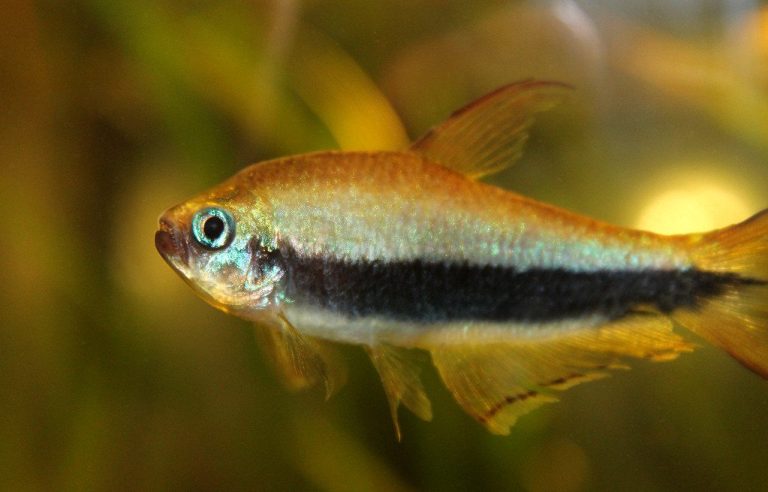
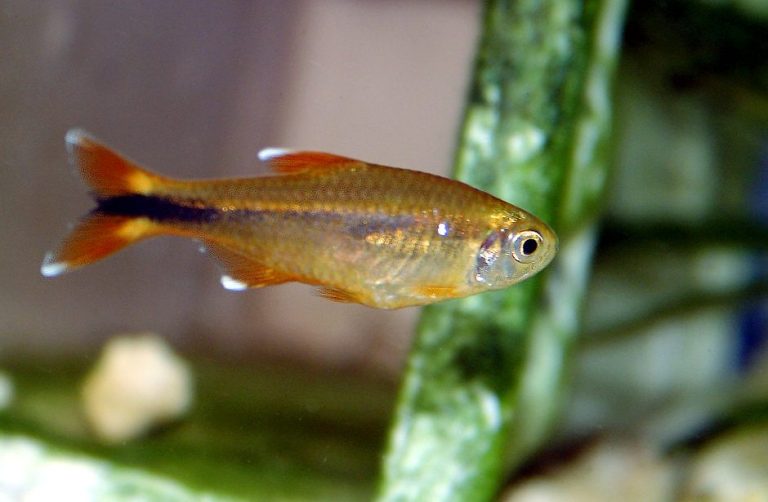
In my experience, many hobbyists are drawn to them because of the striking contrast between the males’ shimmering blue bodies and their bright red “noses” and tail tips.
I still remember the first time I saw a school of these in a heavily planted tank; their movement is fluid and hypnotic.
However, they do have specific requirements that differ from the South American tetras you might be used to.
| Attribute | Details |
|---|---|
| Scientific Name | Sawbwa resplendens |
| Family | Cyprinidae |
| Origin | Lake Inle, Myanmar |
| Adult Size | 1.0 to 1.5 inches |
| Lifespan | 3 to 5 years |
| Diet | Omnivore |
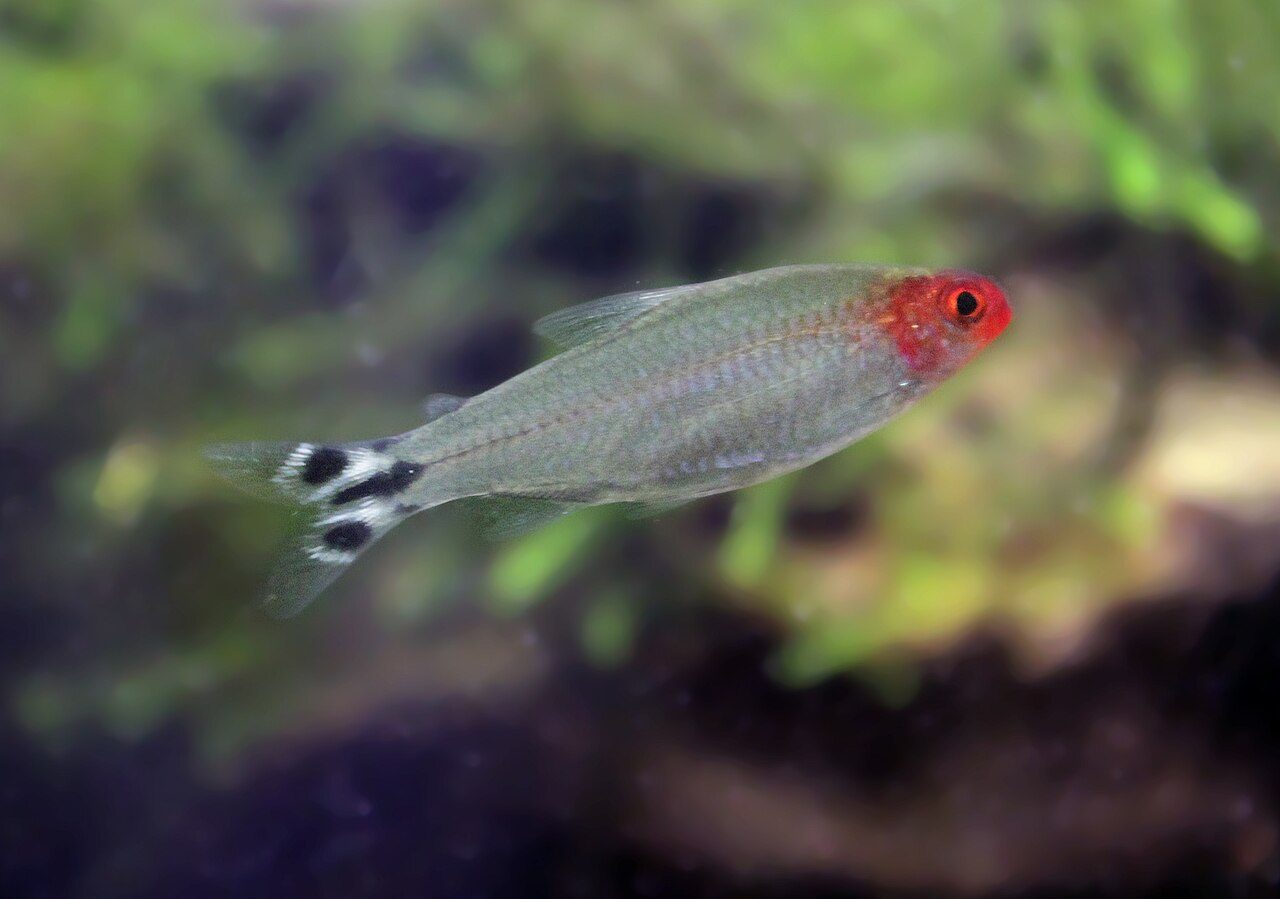
At a glance: Rummy nose tetra (Hemigrammus rhodostomus)
- Temperature
- 75–82°F (24–28°C)
- Water pH
- 5.5–7.0
- Adult size
- 2 in (5 cm)
- Minimum tank
- 20 gal
- Group size
- Groups of 8+
- Temperament
- Peaceful
- Diet
- Omnivore: flakes, small pellets, frozen foods
- Lifespan
- 5–6 years
Keeper’s tip: A fading red nose is often the first sign of poor water quality, so test before you change anything else.
Understanding the Origins of Sawbwa Resplendens
The asian rummy nose tetra hails exclusively from Lake Inle in the Shan State of Myanmar.
This high-altitude lake is unique because it consists of clear, relatively shallow water with a very high mineral content.
Unlike the soft, acidic blackwater streams of the Amazon, Lake Inle is characterized by an alkaline pH and significant carbonate hardness.
Because they evolved in these specific conditions, they lack the protective scales found on most other fish.
This makes them particularly sensitive to water quality and sudden changes in chemistry.
When you bring these fish home, you are essentially keeping a piece of a very rare and fragile ecosystem.
Designing the Perfect Asian Rummy Nose Tetra Habitat
Creating a home for these fish requires a different approach than a standard community setup.
Since they are small, a 10-gallon tank is the absolute minimum, but I always recommend a 20-gallon long if you have the space.
The extra swimming room allows for a larger rich school of fish, which is essential for their social health.
Pro Tip: Use a dark substrate, such as black sand or fine gravel, to make the blue and red colors of the males really “pop.” In a tank with light-colored sand, these fish can look washed out and lose their metallic luster.
Vegetation and Layout
In their natural habitat, they spend much of their time darting through thick patches of aquatic plants.
I suggest using plants that do well in harder water, such as Vallisneria, Anubias, or Java Fern.
Floating plants are also a great addition because they provide shade and help the fish feel secure from perceived overhead threats.
The layout should include open swimming space in the center, surrounded by dense perimeter planting.
This mimicry of the Lake Inle shoreline encourages natural shoaling behavior and reduces stress.
Essential Water Parameters for Health
This is where many beginners struggle with the asian rummy nose tetra.
Most common tetras love soft water, but these fish will fail to stay healthy—and often perish—if the water is too acidic.
Maintaining a stable alkaline pH is the most important factor in their long-term survival.
| Parameter | Ideal Range |
|---|---|
| Temperature | 70°F – 75°F (21°C – 24°C) |
| pH Level | 7.0 – 8.0 |
| Carbonate Hardness (KH) | 5 – 15 dKH |
| General Hardness (GH) | 8 – 20 dGH |
| Ammonia / Nitrite | 0 ppm |
| Nitrate | < 20 ppm |
Temperature Considerations
Interestingly, these fish prefer slightly cooler water than many tropical species.
Keeping them at a constant 72°F often results in better colors and a longer lifespan.
If the water gets too warm (above 78°F), their metabolism speeds up significantly, which can lead to premature aging and increased oxygen demand.
Identifying Male vs. Female: Sexual Dichromatism
One of the most satisfying aspects of keeping the asian rummy nose tetra is observing the clear differences between the sexes.
This species exhibits strong sexual dichromatism, meaning males and females look entirely different.
In a pet store, the females are often overlooked because they lack the flashy colors of the males.
Males are the stars of the show, featuring a milky-blue iridescent body.
They possess a bright red snout and red tips on the upper and lower lobes of their caudal (tail) fin.
Females, on the other hand, are a plain olive or silvery-brown color and do not have the red markings.
Pro Tip: Always aim for a ratio of at least two or three females for every male. If you have too many males, they will spend all their time “sparring” for dominance, which can lead to exhaustion and torn fins.
Diet and Feeding Requirements
In the wild, these fish are micropredators that feed on tiny invertebrates, algae, and zooplankton.
In the home aquarium, they are generally not picky eaters, but their mouths are quite small.
You must provide high-quality, fine-grained foods that they can easily swallow.
I recommend a base of crushed high-quality flakes or micro-pellets.
To see their best colors, you should supplement this with live or frozen foods like baby brine shrimp, daphnia, or cyclops.
I’ve noticed that feeding live baby brine shrimp once or twice a week triggers a much more active “hunting” behavior in the school.
Behavior and Choosing Tank Mates
The asian rummy nose tetra is a shoaling species that finds safety in numbers.
If kept alone or in a small group of three or four, they will become incredibly shy and hide constantly.
A group of 10 or more is where you will see their true personality shine as they play in the filter flow.
When selecting companions for a peaceful community tank, you must choose species that also enjoy hard, alkaline water.
Avoid aggressive or much larger fish that might see these “naked” fish as a snack.
Compatible Tank Mates
- Inlecypris auropurpureus: This is their natural neighbor from Lake Inle and makes a perfect companion.
- Celestial Pearl Danios: These share similar size and temperament.
- Endler’s Livebearers: They settle in in the same hard water parameters.
- Freshwater Shrimp: They are generally safe with Neocaridina shrimp, though they may eat the tiniest shrimplets.
- Corydoras: Specifically species that handle neutral to alkaline pH well.
Breeding the Asian Rummy Nose Tetra
Breeding these fish is a challenge that many intermediate aquarists enjoy.
They are substrate spawning fish, meaning they don’t just scatter eggs into the water column.
Instead, they often prefer to deposit eggs among fine-leaved plants like Java Moss or even on the substrate itself.
To encourage breeding, you should gradually increase the amount of live food in their diet.
A slightly cooler water change can sometimes trigger the spawning process.
Once the eggs are laid, the parents do not provide any care and will likely eat the eggs if given the chance.
For a successful yield, it is best to move a conditioned pair to a separate breeding tank with plenty of moss.
After spawning, remove the adults immediately.
The fry are exceptionally tiny and will require “infusoria” or specialized liquid fry food for the first week of their lives.
Common Health Issues and Prevention
Because they are “naked” and lack scales, the asian rummy nose tetra is more susceptible to skin infections and parasites like Ich.
They are also very sensitive to copper-based medications and many common fish treatments.
Always read the labels carefully before adding any chemicals to their tank.
The best way to prevent disease is to maintain pristine water quality.
I perform a 20-30% water change every week, making sure the new water is dechlorinated and matched for temperature and pH.
Sudden shifts in water chemistry are the leading cause of “mysterious” deaths with this species.
If you notice a fish becoming lethargic or losing its red coloration, it is often a sign of stress or poor water conditions.
Check your ammonia and nitrite levels immediately, as these fish have very little tolerance for waste buildup.
Quick answers
Are Asian rummy nose tetras hardy?
They are moderately hardy once established, but they are very sensitive during the first two weeks in a new tank. Proper acclimation is key to their survival.
Can they live with Betta fish?
It depends on the Betta’s temperament. Because they are fast and peaceful, they can coexist, but the Betta might find their bright red noses tempting to nip.
Why is my Asian rummy nose tetra losing its color?
This is usually due to stress, poor water quality, or a lack of females in the tank. Males lose their color when they don’t feel the need to compete or when they feel unsafe.
Do they need a heater?
Yes, unless your room stays consistently between 70-75°F. A reliable heater with a thermostat is recommended to prevent temperature swings.
How many should I keep in a 10-gallon tank?
In a 10-gallon, I would suggest a school of 8 to 10 fish with no other tank mates to make sure they have enough space.
A closing note
The asian rummy nose tetra is a satisfying species for any aquarist willing to cater to its unique needs.
While they aren’t the “set it and forget it” type of fish, the effort you put into maintaining their alkaline environment will be repaid tenfold by their eye-catching colors and active behavior.
If you focus on a large school, plenty of plants, and stable water chemistry, you can create a healthy slice of Lake Inle in your own home.
Whether you are a nano-tank enthusiast or looking for something different for your community setup, Sawbwa resplendens is a choice you won’t regret.
Always source your fish from reputable breeders or shops to make sure they are healthy and well-acclimated.
Looked after properly, these tiny blue gems will be the highlight of your aquarium for years to come.

- 2003First tank
- 20+Years keeping
- 40+Tanks kept
- 0Sponsored picks
Howard set up his first 10-gallon planted tank in 2003 and lost half of it within six weeks. Two decades and more than forty aquariums later, he writes the guides he wished he had then: clear numbers, the reasons behind them, and what actually goes wrong in home tanks.