Silvertip Tetra Size – The Ultimate Guide To Growth, Space, And Care
The average adult Silvertip Tetra size is between 1.5 and 2 inches (3.8 to 5 cm). These active swimmers require at least a 20-gallon tank to accommodate their energetic schooling behavior and social needs.
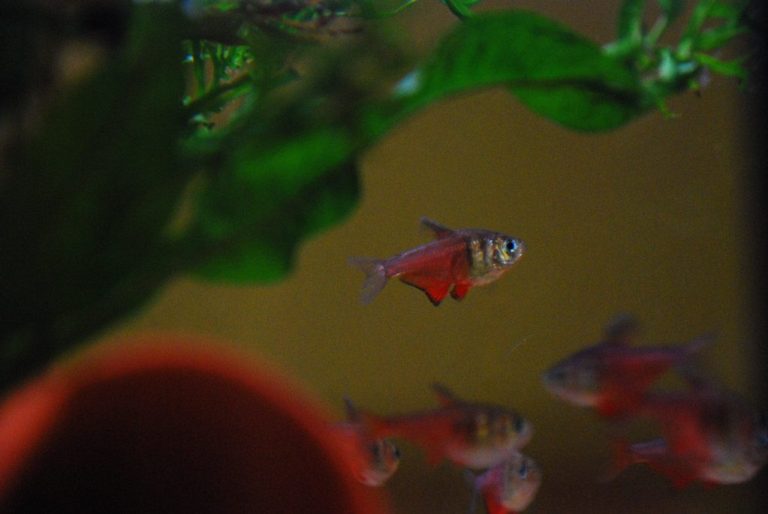
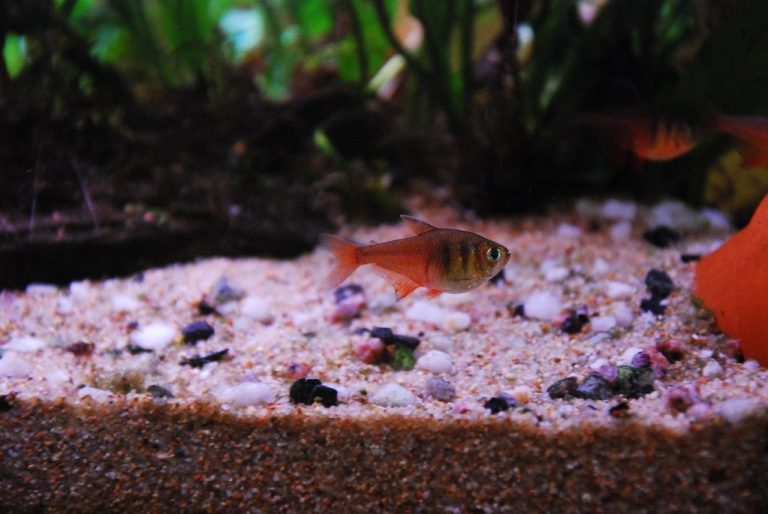
When you first bring home a school of Hasemania nana, you might be struck by their incredible activity levels and shimmering golden bodies. Understanding the maximum Silvertip Tetra size is essential for planning a long-term, healthy habitat that allows them to settle in.
In my experience, these fish often look much smaller in pet store tanks than they do once they reach full maturity in a well-maintained home aquarium. They are a unique member of the Characidae family, known primarily for their lack of an adipose fin—a small fin between the dorsal and caudal fins found on most other tetras.
Over the last decade, I have kept dozens of these “golden gems,” and I have learned that their physical size is only one part of the equation. Their energy and social dynamics mean that even a small fish can take up a lot of “visual space” and physical room in your tank.
At a glance: Silvertip tetra (Hasemania nana)
- Temperature
- 72–82°F (22–28°C)
- Water pH
- 6.0–8.0
- Adult size
- 2 in (5 cm)
- Minimum tank
- 20 gal
- Group size
- Groups of 8+
- Temperament
- Active, can nip fins
- Diet
- Omnivore: flakes, small pellets, frozen foods
- Lifespan
- 3–5 years
Keeper’s tip: A busy, fast swimmer that does best with other quick fish rather than slow long-finned species.
Understanding Silvertip Tetra Size and Growth Rates
The Silvertip Tetra size is relatively modest compared to some of its larger cousins, but they are sturdy for their length. Most adults will top out at just under two inches, though exceptional care can sometimes lead to slightly larger specimens.
When measuring fish, aquarists often distinguish between standard length and total length. Standard length measures the fish from the tip of the snout to the base of the tail, while total length includes the tail fin itself.
For the Silvertip Tetra, the total length is what most hobbyists refer to when discussing tank compatibility. They have a sleek, torpedo-shaped body that allows them to dart through the water with surprising speed.
Pro Tip: When buying young tetras, look for individuals that are at least 0.75 inches long. Very small juveniles can be fragile during the acclimation process and may struggle to compete for food with larger tank mates.
Does Tank Size Affect Silvertip Tetra Size?
A common myth in the aquarium hobby is that fish only grow to the size of their tank. While a cramped environment won’t literally “stop” growth, it can lead to stunted development, spinal deformities, and a shortened lifespan due to high stress and poor water quality.
To reach their full Silvertip Tetra size potential, these fish need plenty of horizontal swimming space. Because they are so active, a standard 10-gallon tank is often too restrictive for a proper school.
I always recommend a 20-gallon long aquarium as the minimum starting point. This provides the “runway” they need to display their natural sprinting behaviors and keeps the schooling biomass manageable.
| Tank Volume | Recommended School Size | Suitability |
|---|---|---|
| 10 Gallons | 6 Fish | Minimum (Not Recommended) |
| 20 Gallons Long | 10-12 Fish | Ideal for Beginners |
| 29-30 Gallons | 15-20 Fish | Excellent for Display |
| 55 Gallons+ | 30+ Fish | Impressive Schooling Effect |
The Importance of Water Volume
Larger tanks offer more stable water parameters, which directly impacts growth. When nitrogenous wastes like nitrate are kept low, the fish can direct more energy toward growth and immune health.
If you are just starting out, I suggest reading a comprehensive Silvertip Tetra care guide to help your setup meets these needs. Proper filtration and regular water changes are the “secret sauce” to seeing your fish reach their maximum size.
Sexual Dimorphism: Does Gender Influence Size?
In Hasemania nana, there is a noticeable difference between males and females, a concept known as sexual dimorphism. While their lengths are similar, their body shapes and colors vary significantly.
Females tend to be slightly larger and “plumper” than males, especially when they are conditioned for breeding. Their bellies become rounded, giving them a more solid appearance compared to the sleek males.
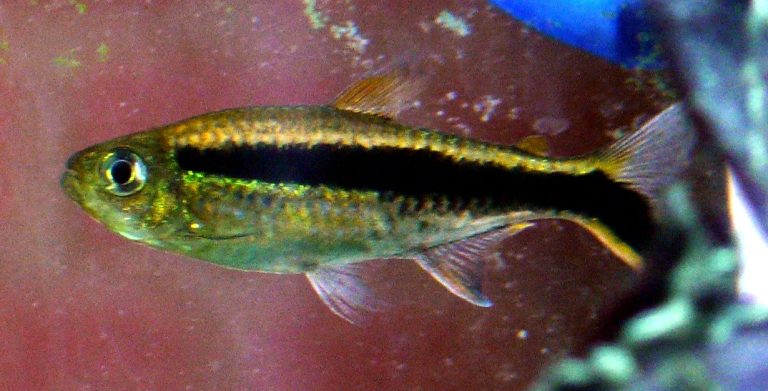
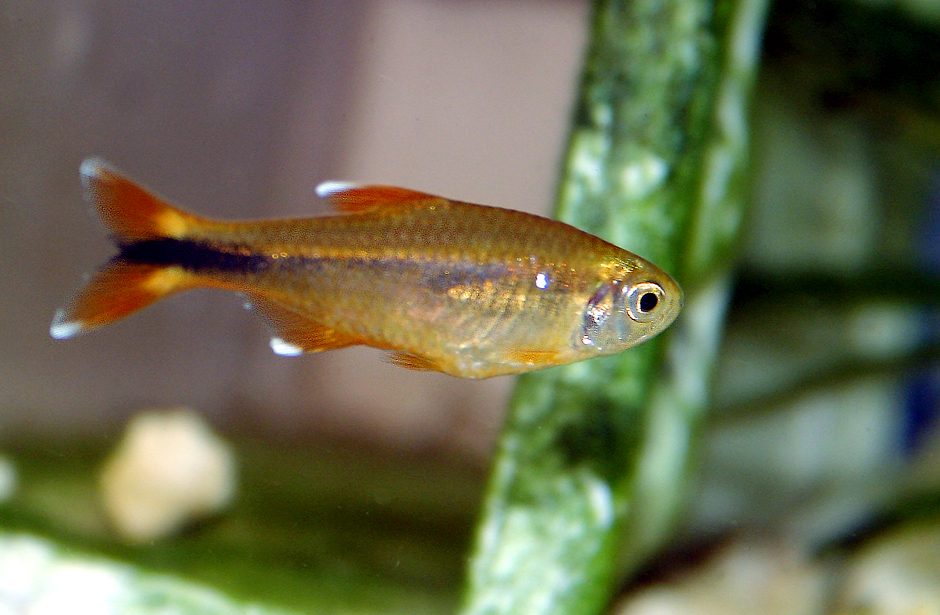
Males, on the other hand, are typically more intensely colored. They display a deep copper or burnt-orange hue, whereas females are a paler, more silvery-yellow.
Identifying the “Silver Tips”
Both genders possess the iconic white or silver tips on their fins. However, in dominant males, these tips can appear much brighter and more defined against their darker body color.
I’ve noticed that in a healthy school, the largest female is often the “matriarch” who keeps the peace during feeding times. Watching these subtle size and color differences is one of the most rewarding parts of keeping a large group.
Diet and Nutrition for Maximum Growth
To make sure your fish reach their full Silvertip Tetra size, you must provide a varied and nutrient-dense diet. In the wild, they are omnivores, feeding on small insects, crustaceans, and plant matter.
In the home aquarium, they are not picky eaters, but “not picky” shouldn’t mean “low quality.” I recommend a base of high-quality flake or micro-pellet food supplemented with frozen or live treats.
Frozen daphnia, brine shrimp, and bloodworms are excellent choices for boosting protein intake. These foods provide the amino acids necessary for muscle development and colorful coloration.
Pro Tip: Feed small amounts two to three times a day rather than one large feeding. This mimics their natural foraging behavior and prevents excess food from rotting and spiking ammonia levels.
Using the best food for tetras will make a visible difference in their growth rate. You will see more intense golds and brighter white tips within just a few weeks of improving their diet.
Creating the Ideal Environment for Growth
Silvertip Tetras originate from the São Francisco River basin in Brazil. To help them reach their potential Silvertip Tetra size, you should aim to replicate their natural “blackwater” or “clearwater” biotope aquarium conditions.
They prefer slightly acidic to neutral water with plenty of cover. Driftwood, leaf litter, and dense plantings around the edges of the tank provide security, which reduces stress.
When a fish feels secure, its metabolism functions more efficiently. Stress is a major growth inhibitor in the aquarium hobby, often leading to signs of illness or stress that can be fatal if not addressed.
| Parameter | Ideal Range |
|---|---|
| Temperature | 72°F to 82°F (22°C to 28°C) |
| pH Level | 6.0 to 7.5 |
| Carbonate Hardness (KH) | 4 to 10 dKH |
| General Hardness (GH) | 5 to 20 dGH |
The Role of the Lateral Line
Like most fish, Silvertip Tetras use their lateral line system to detect vibrations and pressure changes in the water. In a cramped tank, the constant “rebound” of their own movements off the glass can be overstimulating.
Providing a larger environment allows their sensory systems to function naturally. This leads to a calmer school and, ultimately, a healthier growth pattern for every individual in the group.
One aspect of Silvertip Tetra size that beginners often overlook is the “biomass” of the school. These are highly social fish that rely on a group for safety and hierarchy.
In small groups (fewer than six), Silvertip Tetras can become aggressive or nippy. They may harass tank mates or even each other because they don’t feel secure.
When you have a school of 12 or more, the “schooling biomass” creates a sense of security. The energy is dispersed throughout the group, and you will see much more natural behavior.
Dealing with “Nippiness”
Silvertip Tetras have a reputation for being a bit “fin-nippy.” This behavior is usually a result of being in a tank that is too small or having too few companions.
If you keep them in a proper 20-gallon long tank with a large school, this behavior almost entirely disappears. They are too busy interacting with their own kind to bother slower-moving fish like Guppies or Bettas.
Still wondering?
How long does it take for a Silvertip Tetra to reach full size?
Most Silvertip Tetras will reach their adult size of 1.5 to 2 inches within 6 to 8 months. Their growth is fastest during the first 12 weeks of life, provided they have a high-protein diet and clean water.
Can Silvertip Tetras live in a 5-gallon tank?
No, a 5-gallon tank is far too small for Silvertip Tetras. Their high energy and need for a school make them unsuitable for nano tanks of this size. Keeping them in such a small volume will lead to stress and aggression.
Why are my Silvertip Tetras not growing?
Stunted growth is usually caused by one of three things: poor water quality (high nitrates), an inadequate diet, or internal parasites. Make sure you are performing weekly water changes and feeding a variety of high-quality foods.
Are Silvertip Tetras bigger than Neon Tetras?
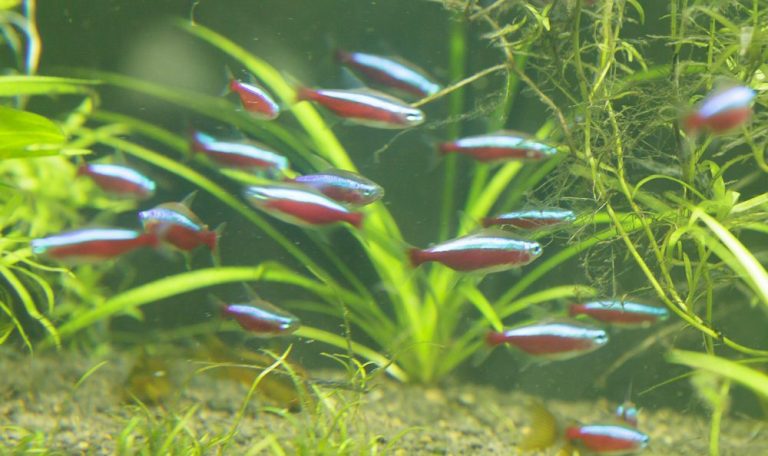
Yes, Silvertip Tetras are generally slightly larger and much deeper-bodied than Neon Tetras. While a Neon Tetra is slim and delicate, the Silvertip is more muscular and active, making it appear much larger in the water column.
Do they need a heater to reach their full size?
Yes, as tropical fish, they require stable temperatures between 72°F and 82°F. Cold water slows their metabolism, which will severely inhibit their growth and weaken their immune systems.
Wrapping up
Understanding the Silvertip Tetra size is the first step toward becoming a successful keeper of these vivid fish. While they only grow to about two inches, their massive personalities and high energy levels require more space than their physical measurements might suggest.
If you provide a 20-gallon tank, a diverse diet, and a large school of at least 10 individuals, you make sure your Hasemania nana will live a long, healthy life. These fish are a joy to watch as they shimmer through the plants, their silver tips flashing like little beacons in the water.
In my years of keeping them, I have found that the extra effort in tank size and water quality pays off tenfold in the beauty they bring to the aquarium. Start with a solid foundation, and you will be rewarded with a flourishing, golden school that remains a centerpiece of your home for years to come.

- 2003First tank
- 20+Years keeping
- 40+Tanks kept
- 0Sponsored picks
Howard set up his first 10-gallon planted tank in 2003 and lost half of it within six weeks. Two decades and more than forty aquariums later, he writes the guides he wished he had then: clear numbers, the reasons behind them, and what actually goes wrong in home tanks.