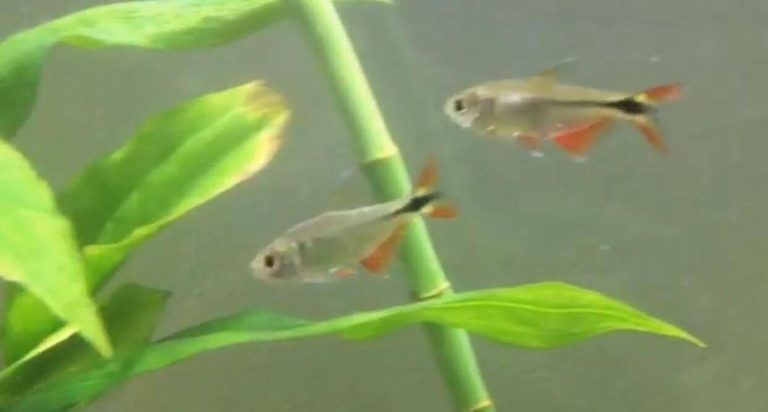
Types Of Neon Fish – Top Picks for Your Tank
The most popular types of neon fish include the classic Neon Tetra, the Cardinal Tetra, the Green Neon Tetra, and the Black Neon Tetra, each known for their iridescent colors and peaceful schooling nature.
Watching a school of shimmering fish dart through a planted tank is one of the most relaxing experiences a hobbyist can have.
In my 10 years of maintaining various setups, I have found that the different types of neon fish are often the crown jewels of any freshwater display.
These small but mighty members of the Characidae family bring a level of movement and “glow” that few other species can match.
At a glance: Neon tetra (Paracheirodon innesi)
- Temperature
- 72–78°F (22–26°C)
- Water pH
- 6.0–7.0
- Adult size
- 1.5 in (4 cm)
- Minimum tank
- 10 gal (20 gal for a proper school)
- Group size
- Groups of 8+
- Temperament
- Peaceful
- Diet
- Omnivore: micro pellets, flakes, frozen daphnia
- Lifespan
- 5–8 years
Keeper’s tip: Add neons only to a fully cycled, stable tank; they are among the first fish to suffer from ammonia swings.
Understanding the Different types of neon fish
When we talk about the various types of neon fish, we are usually referring to several species within the Paracheirodon and Hyphessobrycon genera.
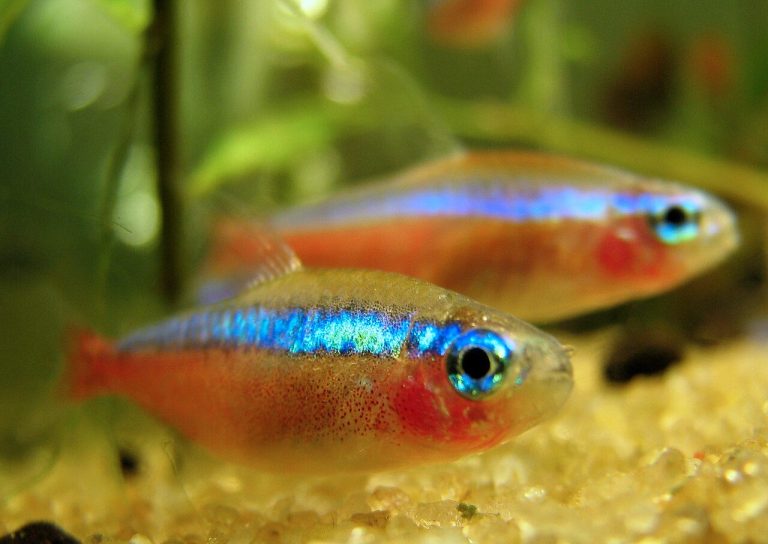
What makes these fish so unusual is their use of Iridophores, which are specialized light-reflecting cells that create that famous neon glow.
In the wild, this shimmer helps them stay visible to their school in the murky, tea-colored waters of South American rivers.
Pro Tip: To see the colors of your neon fish pop, use a dark substrate and plenty of live plants. The contrast makes their iridescent stripes appear much more intense than they do over light-colored gravel.
While they look similar at first glance, each type has distinct requirements regarding temperature, water chemistry, and social behavior.
Choosing the right one depends on your specific tank environment and how much experience you have with delicate water parameters.
The Classic Neon Tetra (Paracheirodon innesi)
The Paracheirodon innesi is the fish that started it all for many of us in this hobby.
I remember my first school of twelve neons; their bright blue and red stripes were the highlight of my living room for years.
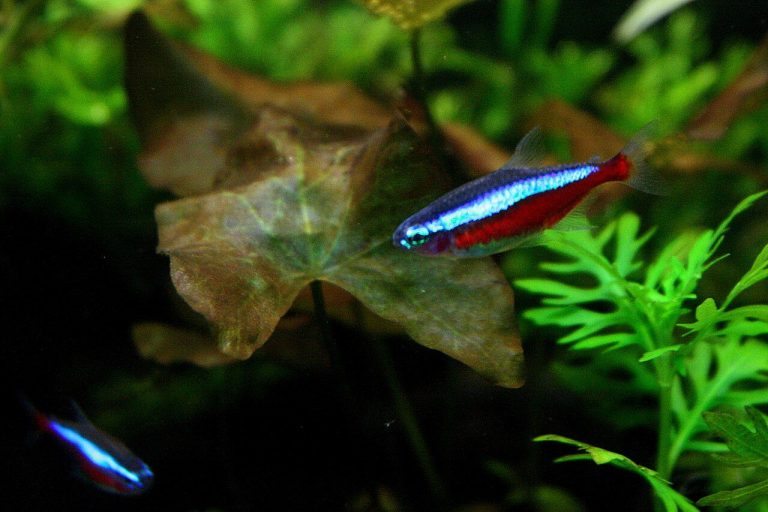
These fish are characterized by a horizontal blue-green neon stripe over a silver body, with a red stripe that only extends halfway from the tail to the mid-body.
| Parameter | Ideal Range |
|---|---|
| Temperature | 70°F – 78°F (21°C – 25°C) |
| pH Level | 6.0 – 7.0 |
| Water Hardness | 2 – 10 dGH |
| Minimum Tank Size | 10 Gallons |
They are generally hardy if the tank is well-established, but they can be sensitive to sudden shifts in water quality.
If you are interested in keeping standard neons, focus on maintaining a stable biological cycle before introducing them.
The Cardinal Tetra: The Vivid Upgrade
Often confused with the standard neon, the Cardinal Tetra (Paracheirodon axelrodi) is arguably the most eye-catching of the types of neon fish.
The key physical difference is the red stripe, which runs the entire length of its body, from the “nose” all the way to the tail.
In my experience, Cardinals are slightly more sensitive than their cousins and prefer warmer water and very soft conditions.
They do well in a Blackwater biotope where the presence of Humic substances helps mimic their natural Amazonian habitat.
These fish are slightly larger than standard neons and require a bit more swimming space to feel secure.
They are excellent additions to a colorful community setup that features other peaceful, soft-water species.
Green Neon Tetras (Paracheirodon simulans)
The Green Neon Tetra, or Paracheirodon simulans, is the hidden gem of the hobby.
They are smaller than the classic neon and lack the vivid red stripe almost entirely, featuring a brilliant turquoise-green line instead.
I have found that these fish are the perfect choice for nano aquariums because of their diminutive size.
They are also strictly soft-water fish and are often found in areas with very low Specific conductance in the wild.
Pro Tip: Green Neons are much more timid than other tetras. Always keep them in groups of at least 10 to 15 to help they feel safe enough to swim in the open areas of your tank.
If you are looking for a fish that provides a “electric” look without the bulk of larger tetras, the Green Neon is your best bet.
Just ensure you have a tight-fitting lid, as these tiny sprinters can occasionally jump when startled.
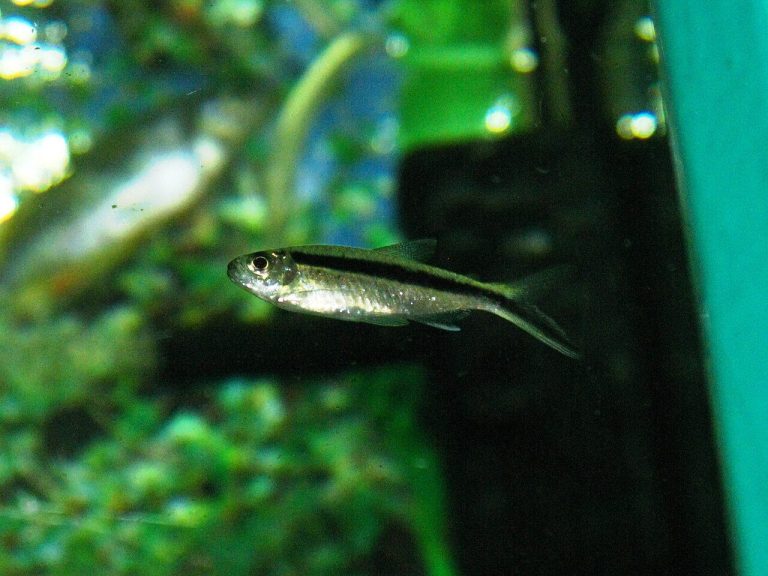
Black Neon Tetras (Hyphessobrycon herbertaxelrodi)
Despite the name, the Black Neon Tetra is actually a different genus than the blue and red varieties.
They feature two distinct horizontal stripes: a glowing white-green top stripe and a thick, velvety black bottom stripe.
They are incredibly hardy and can tolerate a wider range of water parameters than the Paracheirodon species.
I often recommend these to beginners because they are less prone to the common “neon” health issues.
They also possess a very prominent Adipose fin, which is a small, fleshy fin located between the dorsal and caudal fins.
This anatomical feature is common among the Characidae family and is a sign of a healthy, well-developed specimen.
Comparing Popular Neon Species
Choosing between these types of neon fish can be difficult, so I have created a comparison table to help you decide which fits your tank best.
| Species | Max Size | Difficulty | Key Feature |
|---|---|---|---|
| Neon Tetra | 1.5 Inches | Easy/Moderate | Half red stripe |
| Cardinal Tetra | 2.0 Inches | Moderate | Full red stripe |
| Green Neon | 1.0 Inch | Moderate/Advanced | Turquoise glow |
| Black Neon | 1.5 Inches | Easy | Deep black stripe |
When stocking your aquarium, always refer to a compatible tank mates guide to make sure your new neons aren’t bullied by larger fish.
Essential Care for Neon Fish
Regardless of the variety you choose, all types of neon fish share some basic care requirements.
They are schooling fish, meaning they must be kept in groups of at least six, though ten or more is much better for their mental health.
In my years of keeping them, I’ve noticed that lone neons or small groups are significantly more stressed and prone to disease.
Stress in these fish often manifests as faded colors or hiding behind filter intakes and decorations.
Water Quality and Filtration
Neon fish require pristine water conditions to flourish.
Ammonia and nitrite must always be at zero, and nitrates should be kept below 20 ppm through regular water changes.
Since they come from slow-moving waters, avoid high-flow filters that toss them around the tank.
A sponge filter or a hang-on-back filter with an adjustable flow is usually the best choice for these delicate swimmers.
Diet and Nutrition
To maintain those glowing colors, a varied diet is essential.
I recommend a high-quality micro-granule or flake food as the staple, supplemented with frozen or live treats.
Brine shrimp, daphnia, and bloodworms are excellent choices that provide the protein and fats needed for growth and energy.
Small, frequent feedings are better than one large meal, as their tiny stomachs can only hold so much at once.
Common Challenges: Health and Neon Tetra Disease
One of the biggest concerns for anyone making sure these fish is Pleistophora hyphessobryconis, commonly known as Neon Tetra Disease.
This is a microsporidian parasite that can devastate a school quickly.
Symptoms include a loss of color in a specific patch of the body, difficulty swimming, and spinal curvature.
Unfortunately, there is no known cure for this disease, so prevention is the only effective strategy.
Quarantine all new arrivals for at least two to four weeks before adding them to your main display.
Keeping stress levels low through proper water parameters and a high-quality diet will strengthen their immune systems against most pathogens.
Reader questions
Can different types of neon fish school together?
While they may occasionally swim near each other, different species like Black Neons and standard Neons do not typically form a cohesive school. They prefer to stick with their own kind for safety and social interaction.
What is the best tank size for neon fish?
While a 10-gallon tank is the absolute minimum, I always recommend a 20-gallon long aquarium. This provides more horizontal swimming space, which is important for active schooling fish.
Why are my neon fish losing their color at night?
This is a natural defense mechanism. At night, neon fish “turn off” their iridophores to become less visible to predators while they rest. Their color should return within minutes of the lights turning on.
Are neon fish aggressive?
Generally, no. They are very peaceful. However, if they are kept in a tank that is too small or in a group that is too small, they may exhibit fin-nipping behavior due to stress.
Do neon fish need a heater?
Yes, they are tropical fish. Even the classic neon, which can handle slightly cooler water than the Cardinal, still requires a stable temperature between 72°F and 76°F for long-term health.
Final Thoughts on Neon Fish Varieties
Exploring the various types of neon fish is one of the most rewarding journeys you can take in the aquarium hobby.
From the iconic blue and red of the standard neon to the sophisticated shimmer of the Green Neon, there is a species for every tank size and style.
If you focus on water stability, proper schooling numbers, and a diet rich in nutrients, you can enjoy these living jewels for many years.
I have always found that the effort put into their care is returned tenfold by the beauty they bring to the home.
Remember to start with a cycled tank, choose healthy specimens from a reputable source, and keep their environment as natural as possible.
, and may your aquarium always be a colorful, glowing success.

- 2003First tank
- 20+Years keeping
- 40+Tanks kept
- 0Sponsored picks
Howard set up his first 10-gallon planted tank in 2003 and lost half of it within six weeks. Two decades and more than forty aquariums later, he writes the guides he wished he had then: clear numbers, the reasons behind them, and what actually goes wrong in home tanks.