Blind Cave Tetra Care Guide – Mastering The Unique World
A Blind Cave Tetra care guide focuses on providing a dark, cave-like environment with hard, alkaline water. These hardy fish rely on their lateral line system to handle, requiring a 20-30 gallon tank and peaceful, non-nippy tank mates.
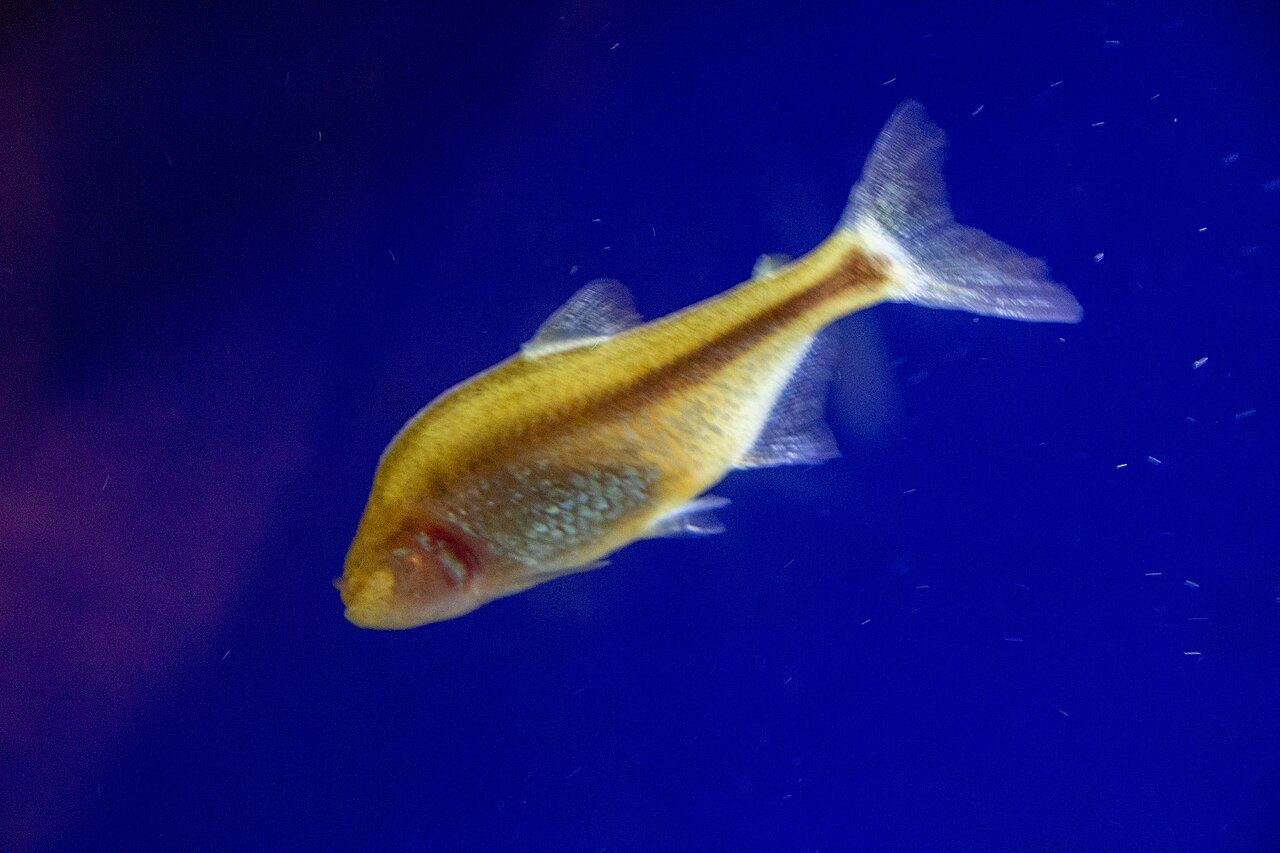
When you first see a Blind Cave Tetra, you might be struck by its unusual appearance. These fish lack eyes entirely, a biological phenomenon known as anophthalmia.
In my decade of keeping fish, I have found that few species spark as much conversation as these troglobitic wonders. They have evolved over millennia in complete darkness, losing their sight but gaining incredible sensory abilities.
This Blind Cave Tetra care guide will walk you through everything you need to know to keep these unique animals stable. We will cover their biological needs, tank setup, and why they are one of the most resilient species you can own.
At a glance: Blind cave tetra (Astyanax mexicanus)
- Temperature
- 68–77°F (20–25°C)
- Water pH
- 6.5–8.0
- Adult size
- 3.5 in (9 cm)
- Minimum tank
- 30 gal
- Group size
- Groups of 4+
- Temperament
- Peaceful to semi-aggressive
- Diet
- Omnivore: sinking pellets, flakes, frozen foods
- Lifespan
- 10–15 years
Keeper’s tip: They find food by smell and lateral line, so sinking foods spread across the floor work best.
Understanding the Biology of Astyanax mexicanus
The Blind Cave Tetra is a cave-dwelling form of the Mexican Tetra, scientifically named Astyanax mexicanus. They originate from the deep, dark cave systems of Mexico, where sunlight never reaches.
Because they live in a subterranean ecosystem, they have no need for pigmentation or vision. Instead, they are a shimmering pinkish-white, which looks striking against a dark substrate.
You might wonder how they move without crashing into glass. They utilize a highly developed lateral line system that detects even the slightest vibrations in the water.
This system is powered by neuromasts, which are sensory organs located along their bodies. These organs allow them to create a “pressure map” of their surroundings, making them surprisingly agile.
Interestingly, while they lack eyes, they still possess a pineal gland. This allows them to sense light levels, even if they cannot form images like we do.
Pro Tip: When you first introduce these fish, don’t be alarmed if they swim laps around the perimeter. They are simply using their lateral line to map the boundaries of their new home.
Designing a Subterranean Habitat
Creating the right environment is the most important part of any Blind Cave Tetra care guide. Since they come from karst topography regions, they are used to rocky, mineral-rich environments.
I always recommend using smooth river stones or slate to create plenty of crevices. While the fish don’t “see” the decor, they enjoy the flow patterns created by rocky outcrops.
Lighting should be kept dim to mimic their natural home. While they aren’t strictly harmed by bright light, they look much more natural under low-intensity LEDs or even “moonlight” blue settings.
| Feature | Recommendation |
|---|---|
| Minimum Tank Size | 20 to 30 Gallons |
| Substrate Type | Dark sand or fine gravel |
| Lighting | Low to Moderate (Dim preferred) |
| Flow Rate | Moderate (to aid their sensory mapping) |
Choosing the Right Substrate
I have found that a dark substrate really makes their pale bodies pop. Since they spend a lot of time “feeling” the bottom for food, avoid sharp or jagged gravel that could damage their sensitive undersides.
A mix of sand and smooth pebbles works best. This mimics the floors of the limestone caves where they originated.
Plants in a Cave Tank?
Most aquarium plants require high light, which contradicts the “cave” aesthetic. However, you can use low-light species like Anubias or Java Fern attached to rocks.
If you want to stay true to their origins, a “hardscape only” tank is perfectly acceptable. These fish are among the easy fish for newcomers because they don’t require complex planted setups.
Water Parameters for Blind Cave Tetras
One common mistake is assuming all tetras need soft, acidic water. In reality, the Blind Cave Tetra does well in water with high alkalinity and significant mineral content.
The limestone caves they inhabit naturally buffer the water. This makes them much more similar to care for hardy tetras found in other rocky regions.
Monitoring your dGH (degree of General Hardness) is key. They prefer harder water, which helps maintain their slime coat and overall metabolic health.
| Parameter | Ideal Range |
|---|---|
| Temperature | 68°F – 77°F (20°C – 25°C) |
| pH Level | 7.5 – 8.5 |
| Water Hardness (dGH) | 12 – 30 dGH |
| Ammonia / Nitrite | 0 ppm |
Keep in mind that while they are hardy, they still require a cycled aquarium. Regular 25% weekly water changes will keep the nitrates low and the fish active.
Diet and Feeding Strategies
Feeding is where the Blind Cave Tetra care guide gets interesting. Since they cannot see the food, they rely on smell and their lateral line to find a meal.
In my experience, they are actually faster at finding food than many sighted fish. As soon as the food hits the water, the vibrations alert them, and they begin a frantic, efficient search.
They are omnivores and will eat almost anything. To ensure they get proper nutrition, I recommend a mix of high-quality dry foods and frozen treats.
Best Foods for Blind Cave Tetras
- High-quality flakes: These should be crushed slightly so they stay in the water column longer.
- Sinking pellets: Great for encouraging their natural foraging behavior on the substrate.
- Frozen Bloodworms: A high-protein treat that they can easily “scent” in the water.
- Brine Shrimp: Excellent for keeping their energy levels high.
Common Mistake: Don’t overfeed just because you think they can’t find the food. They are very efficient scavengers, and excess food will quickly foul your water quality.
Blind Cave Tetras are schooling fish and should be kept in groups of at least 6 to 10 individuals. In a group, they feel more secure and display more natural behaviors.
However, you should be aware that they can be a bit “nippy.” Because they explore the world with their mouths and sensory organs, they may accidentally nip the fins of slower-moving fish.
I have noticed that they do best with other strong, fast-moving species. Avoid keeping them with long-finned fish like Bettas or fancy Guppies.
Recommended Tank Mates
- Buenos Aires Tetras: Equally hardy and fast.
- Danio species: Their speed makes them difficult targets for nipping.
- Corydoras Catfish: They mostly occupy different levels of the tank and have tough skin.
- Larger Rasboras: Sturdy enough to handle the active nature of the cave tetras.
If you are keeping a species-only tank, you will see the most interesting social interactions. They establish a loose hierarchy and spend much of their day handling the currents together.
Breeding the Blind Cave Tetra
Breeding these fish is relatively straightforward, even for intermediate keepers. They are egg scatterers, meaning they do not provide parental care to their young.
To trigger spawning, I usually increase the temperature slightly and provide a diet of live or frozen foods. A separate breeding tank with a mesh bottom or marble substrate is helpful to prevent the adults from eating the eggs.
The eggs usually hatch within 24 to 48 hours. Interestingly, the fry are born with functional eyes that gradually degenerate as they mature.
This is a unusual look into their evolutionary history. It reminds us that they were once surface-dwelling fish that adapted to the dark over millions of years.
Common Health Issues and Maintenance
The Blind Cave Tetra is incredibly resilient, but they are not immortal. Like all freshwater fish, they can suffer from Ich or fungal infections if water quality drops.
Because they lack eyes, you don’t have to worry about eye-related injuries or “cloudy eye” diseases. However, you should monitor their skin for any signs of redness or white spots.
Maintaining a stable alkalinity is key to preventing stress. Large swings in pH can weaken their immune systems, making them susceptible to common pathogens.
| Symptom | Potential Cause | Action Step |
|---|---|---|
| White spots on body | Ich (White Spot Disease) | Raise temp and use Ich medication |
| Lethargy / Not eating | Poor water quality | Perform immediate 50% water change |
| Frayed fins | Nipping or Fin Rot | Check tank mate compatibility |
A few common questions
Can Blind Cave Tetras live with sighted fish?
Yes, they can live with sighted fish as long as the other fish are not aggressive or have long, flowing fins. They handle using vibrations, so they won’t “bump” into their tank mates.
Do they need a heater?
Yes, they are tropical fish and require a stable temperature between 68°F and 77°F. While they can handle cooler water than some tetras, a heater helps make sure they don’t experience dangerous temperature swings.
How big do they get?
Adult Blind Cave Tetras typically reach about 3 to 4 inches in length. This makes them a medium-sized tetra that needs enough swimming space to move comfortably.
Why are they pink?
Their pinkish color is actually their flesh and blood vessels showing through their translucent skin. In their natural dark habitat, producing pigment would be a waste of metabolic energy.
Are they aggressive?
They are not aggressive in a predatory sense, but they are “boisterous.” Their constant movement and occasional nipping can stress out very shy or delicate fish.
In short
The Blind Cave Tetra is a sign of the incredible power of evolution. If you follow this Blind Cave Tetra care guide, you can create a piece of a hidden world right in your living room.
These fish offer a unique perspective on aquatic life, showing us that sight isn’t the only way to experience the world. Their reliance on neuromasts and the lateral line system makes them a marvel of biological engineering.
As long as you provide them with hard, alkaline water, plenty of rocky hiding spots, and a group of their own kind, they will be among the hardiest fish in your collection. They are perfect for anyone looking to move beyond the standard community tank and into specialized, high-interest species.
I encourage you to give these “blind” beauties a chance. You might find that watching them work through their world is more satisfying than watching any sighted fish in your aquarium.

- 2003First tank
- 20+Years keeping
- 40+Tanks kept
- 0Sponsored picks
Howard set up his first 10-gallon planted tank in 2003 and lost half of it within six weeks. Two decades and more than forty aquariums later, he writes the guides he wished he had then: clear numbers, the reasons behind them, and what actually goes wrong in home tanks.