Fish With Neon Colors – Best Tank Mates
Fish with neon colors, such as Neon Tetras and Cardinal Tetras, achieve their brilliance through specialized cells called iridophores and chromatophores. Providing high-quality diet and specific lighting can significantly improve their natural, vivid glow.
When you first walk into a darkened room and see a tank filled with fish with neon colors, the effect is nothing short of hypnotic. These living jewels seem to produce their own light, darting through the water like tiny streaks of electricity.
In my decade of maintaining various setups, I have found that nothing brings an aquarium to life quite like a school of rich, glowing species.
The secret to keeping these colors bright lies in a combination of genetics, water chemistry, and high-quality lighting. In this guide, we will look closely at the best species, the science of their shimmer, and how you can maximize the “wow factor” in your own home.
Pro Tip: When selecting fish at the store, look for individuals with the straightest lines and most consistent color. If the neon stripe appears “broken” or faded, it could be an early sign of stress or poor nutrition.
Why Fish With Neon Colors Are a Hobbyist Favorite
The primary reason enthusiasts seek out fish with neon colors is the sheer visual impact they provide against a planted background. In the wild, these bright colors often serve as a way for schooling fish to stay together in murky waters.
For the home aquarist, these species offer a dynamic energy that more subtly colored fish simply cannot match. Seeing a massive school move in unison creates a sense of professional artistry in any room.
If you are just starting out, you might consider how these colorful species fit into a vivid community tank setup. They generally play well with others, provided their tank mates aren’t large enough to eat them.
The Biological Magic Behind the Glow
The shimmer you see on a Neon Tetra or a GloFish isn’t just a simple pigment like paint on a wall. It is the result of complex biological structures called Iridophores and Chromatophores.
Iridophores are specialized cells that contain crystalline plates. These plates reflect light at specific angles, creating that metallic, iridescent “neon” effect that seems to change as the fish moves.
Chromatophores, on the other hand, are cells that contain actual pigment. When these two cell types work together, the fish can produce colors that look almost fluorescent under the right lighting conditions.
Natural vs. Enhanced Fluorescence
Some fish are naturally brilliant, while others have been biologically enhanced. For example, some species possess Green Fluorescent Protein (GFP) which was originally derived from jellyfish or coral.
This protein allows the fish to absorb light at one wavelength and re-emit it at another. This is the foundation of the modern “GloFish” varieties seen in many local fish stores today.
Top Species of Fish With Neon Colors
Choosing the right species is the most important step in building your neon-themed aquarium. While the Neon Tetra is the most famous, there are several other species that offer incredible color depth.
In my experience, mixing different types of glowing fish can sometimes look cluttered. I usually recommend sticking to one or two primary schooling species to create a more cohesive and professional look.
| Common Name | Scientific Name | Primary Colors | Difficulty |
|---|---|---|---|
| Neon Tetra | Paracheirodon innesi | Blue and Red | Easy |
| Cardinal Tetra | Paracheirodon axelrodi | Full Red and Blue | Moderate |
| GloFish Danio | Danio rerio (var) | Electric Green/Pink/Yellow | Beginner |
| Boesemani Rainbow | Melanotaenia boesemani | Yellow and Blue | Moderate |
Neon Tetras (Paracheirodon innesi)
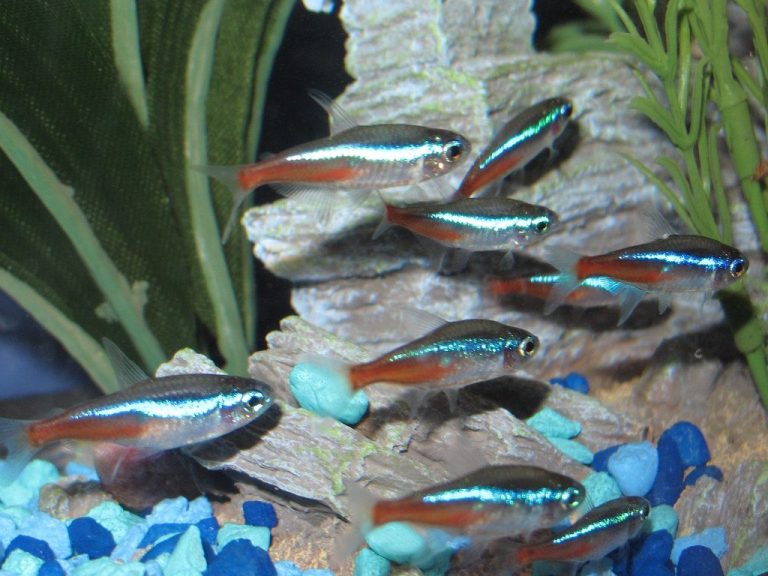
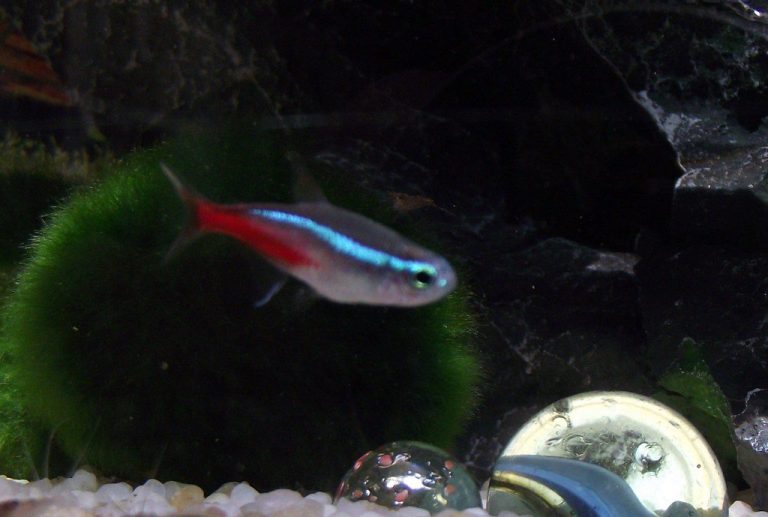
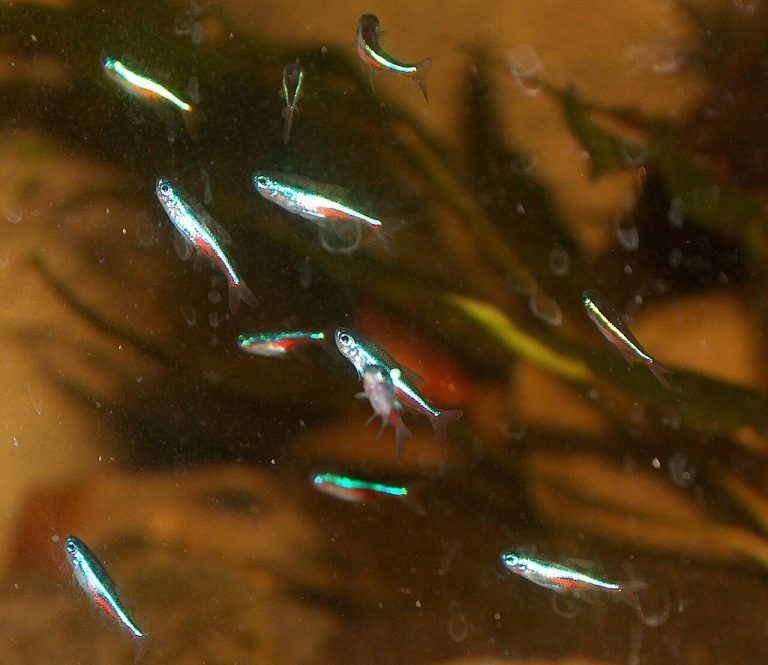
The Paracheirodon innesi, or the classic Neon Tetra, is the gold standard for fish with neon colors. They feature a bright blue horizontal stripe over a silver-white abdomen, with a splash of red near the tail.
These fish are incredibly peaceful and do best in schools of at least six to ten individuals. When I first started keeping them, I noticed they looked much better when provided with plenty of hiding spots and low-light areas.
If you are interested in keeping these iconic fish, you should definitely check out our comprehensive Neon Tetra guide for specific care requirements.
Cardinal Tetras (Paracheirodon axelrodi)
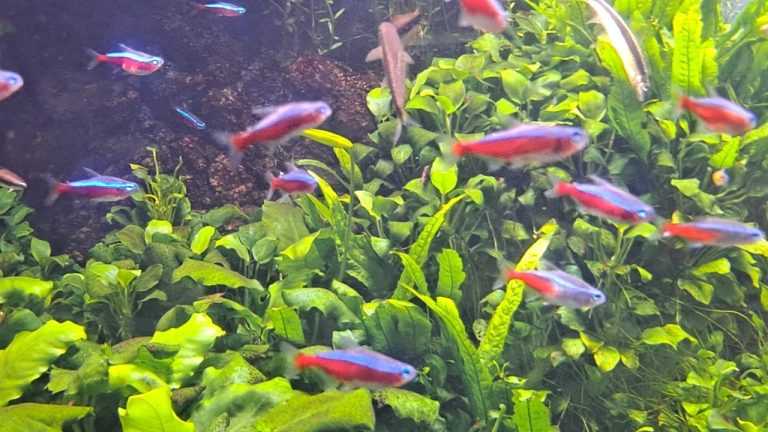
Often confused with the Neon Tetra, the Paracheirodon axelrodi (Cardinal Tetra) is even more rich. The red stripe on a Cardinal runs the entire length of the body, rather than stopping halfway.
They are slightly more sensitive to water parameters than their Neon cousins. They do well in soft, acidic water that mimics their natural Amazonian habitats.
GloFish and Biofluorescence
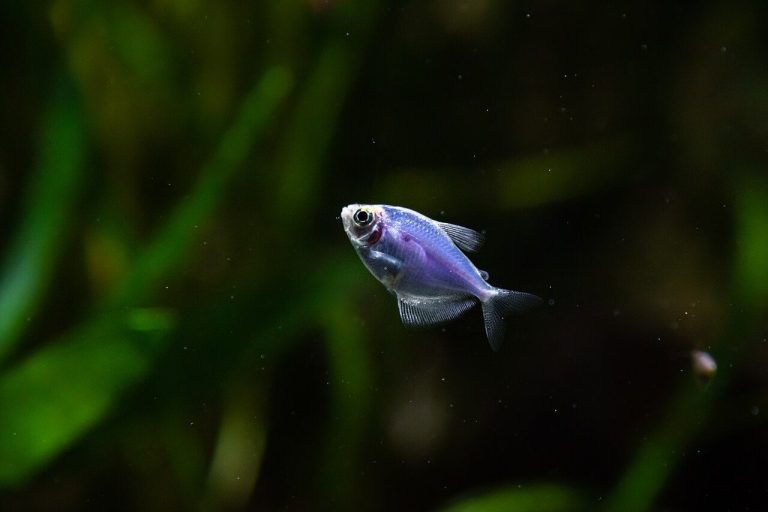
GloFish are perhaps the most controversial but undeniably the brightest fish with neon colors available. These are not dyed; they are bred with a specific gene that allows for Biofluorescence.
They come in varieties of Tetras, Danios, and Barbs. To see them at their best, you need to use specific lighting that highlights their unique genetic makeup.
Creating the Perfect Environment for Colorful Colors
The environment you provide will directly influence how bright your fish appear. Even the most colorful fish will look dull if the water quality is poor or the lighting is incorrect.
I have found that the background of the tank plays a massive role in color perception. A dark or black background makes the neon stripes “pop” significantly more than a clear or light-colored one.
The Role of Actinic Lighting
To make your fish glow, you should consider Actinic lighting. This type of light is heavy in the blue spectrum, which interacts with the iridophores and fluorescent proteins in the fish.
Most modern LED fixtures have a “moonlight” or “blue” setting. Using this in the evening can transform your aquarium into a glowing wonderland.
Blackwater Biotopes and Humic Substances
Many fish with neon colors originate from “blackwater” environments. These waters are stained tea-color by Humic substances and tannins from decaying leaves and wood.
While it might seem counterintuitive to have “dirty” looking water, the tannins actually help the fish feel secure. In this darker water, their neon stripes serve as beacons to their schoolmates, making them appear even brighter to the observer.
Pro Tip: Add Indian Almond leaves or driftwood to your tank to naturally release tannins. This lowers the pH and provides the humic substances that many neon species need to settle in and show their best colors.
Diet and Nutrition for Maximum Brilliance
What you put inside your fish is just as important as the water they swim in. A poor diet leads to fading colors and a weakened immune system.
I always recommend a varied diet that includes high-quality flakes, micro-pellets, and frozen foods. Look for foods that specifically mention “color enhancement” on the label.
Carotenoids and Spirulina
Ingredients like spirulina and crushed crustaceans contain carotenoids. These are natural pigments that the fish absorb into their chromatophores to deepen reds, oranges, and yellows.
Feeding live or frozen brine shrimp and daphnia once or twice a week can make a noticeable difference in color within just a few weeks. I’ve noticed that my Cardinals always look their best after a week of high-protein live feedings.
Common Challenges and Disease Prevention
Keeping fish with neon colors isn’t always easy, as their bright appearance can sometimes mask the early signs of illness. You must be vigilant in monitoring their behavior and physical condition.
Water stability is the most important factor in preventing disease. Fluctuating temperatures or spikes in ammonia can cause immediate stress, leading to a loss of color.
Understanding Neon Tetra Disease
One of the most feared ailments in the hobby is Pleistophora hyphessobryconis, commonly known as Neon Tetra Disease. This is a parasitic condition that causes the fish to lose its color in patches and develop a curved spine.
Unfortunately, there is no known cure for this disease. The best approach is prevention through strict quarantine and maintaining high water quality using top-tier filtration systems.
Stress and Color Loss
If you notice your fish with neon colors looking pale in the morning, don’t panic. Many species “turn off” their colors at night to avoid predators while they sleep.
However, if they remain pale during the day, it is a sign of stress. This could be due to aggressive tank mates, poor water quality, or a lack of schooling partners.
| Symptom | Potential Cause | Recommended Action |
|---|---|---|
| Faded Colors | Stress or Poor Water | Check Ammonia/Nitrite |
| White Patches | Ich or Fungus | Increase Temp/Medicate |
| Clamped Fins | Aggression/Stress | Observe Tank Mates |
Expert-Backed Strategies for Success
To master the art of keeping fish with neon colors, you need to think like a practitioner. It is about the small, consistent habits that lead to a flourishing ecosystem.
Start with a larger tank than you think you need. While many people put Neons in tiny tanks, a larger volume of water is much easier to keep stable, which in turn keeps the fish healthier and brighter.
Step-By-Step Implementation
- Cycle Your Tank: Never add sensitive neon species to a brand-new tank. Make sure the nitrogen cycle is fully established.
- Drip Acclimation: These fish are sensitive to changes in pH and hardness. Use a drip line to slowly acclimate them to your water over 60-90 minutes.
- Optimize Lighting: Use a timer to provide a consistent day/night cycle. Sudden changes in light can shock the fish.
- Maintain Filtration: Keep your water crystal clear. Particulate matter in the water scatters light and reduces the “glow” effect.
Worth knowing before you start
- Captive-bred fish usually adapt to home aquariums more easily than wild-caught fish.
- Stock slowly, a few fish at a time, so the filter bacteria can keep up with the extra waste.
- Fill different levels of the tank: top dwellers, mid-water schools and bottom dwellers spread the bioload and reduce competition.
- Buy from shops with clean tanks and healthy fish; ask how long new stock has been in store.
Questions I get asked a lot
Can I keep different types of neon fish together?
Yes, most fish with neon colors are peaceful and can coexist. However, make sure they have similar water parameter requirements and that the tank isn’t overcrowded.
Why did my Neon Tetras lose their color?
This usually happens due to stress, sleeping, or poor water quality. If they don’t regain color after an hour of lights-on, check your water parameters immediately.
Do GloFish need special food?
While they can eat standard food, using color-improving flakes specifically designed for fluorescent fish will help maintain their intensity.
How long do these fish typically live?
Looked after properly, Neon Tetras can live 5-8 years, while Cardinal Tetras can often reach 4-5 years in a well-maintained home aquarium.
Final thoughts
Keeping fish with neon colors is one of the most rewarding aspects of the aquarium hobby. There is something deeply peaceful about watching a bright school of fish glide through a well-grown, green landscape.
If you focus on high-quality nutrition, stable water parameters, and the right lighting spectrum, you can ensure your underwater world remains a glowing showpiece for years to come.
The biggest factor isn’t just buying the fish; it’s creating an environment where their natural beauty can shine.

- 2003First tank
- 20+Years keeping
- 40+Tanks kept
- 0Sponsored picks
Howard set up his first 10-gallon planted tank in 2003 and lost half of it within six weeks. Two decades and more than forty aquariums later, he writes the guides he wished he had then: clear numbers, the reasons behind them, and what actually goes wrong in home tanks.