Tetra Tank Temperature – Care Guide
The ideal tetra tank temperature for most species is between 75°F and 80°F (24°C–27°C). Consistent warmth is essential for their metabolism and immune health, as sudden fluctuations can cause significant stress or disease.
Getting the water climate right is one of the most critical steps in keeping your fish flourish rather than just survive.
In my ten years of keeping various Characidae species, I have found that tetra tank temperature is the foundation of a healthy ecosystem.
When the temperature is dialed in correctly, your fish will display more bright colors and active schooling behaviors.
Whether you are setting up tetra fish tanks for the first time or refining an existing setup, understanding the nuances of heat is vital.
This guide will walk you through the science of aquarium warmth and how to maintain the perfect environment for your aquatic friends.
At a glance: Tetras (general) (Family Characidae and relatives)
- Temperature
- 72–80°F (22–27°C) for most species
- Water pH
- 6.0–7.5 for most species
- Adult size
- 1–3 in (2.5–8 cm)
- Minimum tank
- 10–30 gal depending on species
- Group size
- Groups of 6–10+
- Temperament
- Mostly peaceful schooling fish
- Diet
- Omnivores: quality flakes or micro pellets plus frozen foods
- Lifespan
- 3–8 years
Keeper’s tip: Schooling size matters more than tank size for most tetras: small groups hide, nip and stress.
Understanding Tetra Tank Temperature and Fish Physiology
Tetras are ectothermic organisms, meaning their internal body temperature is regulated by the water surrounding them.
This ectothermic regulation means that if the water is too cold, their metabolic rate slows down significantly.
Conversely, if the water is too hot, their metabolism speeds up, which can lead to premature aging and increased waste production.
In my experience, many beginners underestimate how much temperature affects osmoregulation.
When the water is outside the ideal range, the fish must work harder to maintain the balance of salts and fluids in their bodies.
This extra effort saps their energy and leaves them vulnerable to opportunistic pathogens in the aquarium.
Pro Tip: Always use a high-quality thermometer placed at the opposite end of the tank from your heater. This ensures you are measuring the overall tetra tank temperature rather than just the warm water immediately surrounding the heating element.
Ideal Temperature Ranges for Popular Tetra Species
While many tetras share similar origins in the Amazon basin, some species have evolved to prefer slightly different climates.
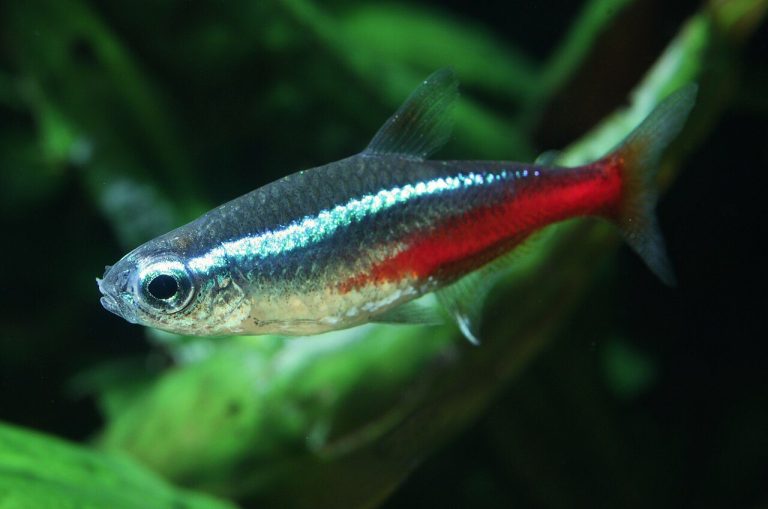
For instance, the Neon Tetra (Paracheirodon innesi) prefers slightly cooler water than its cousin, the Cardinal Tetra (Paracheirodon axelrodi).
Understanding these subtle differences is key when building a colorful tetra community tank.
Below is a breakdown of the preferred temperature ranges for some of the most common species kept in the hobby today.
| Tetra Species | Scientific Name | Ideal Temperature Range |
|---|---|---|
| Neon Tetra | Paracheirodon innesi | 70°F – 78°F (21°C – 25°C) |
| Cardinal Tetra | Paracheirodon axelrodi | 73°F – 82°F (23°C – 28°C) |
| Rummy Nose Tetra | Hemigrammus rhodostomus | 75°F – 84°F (24°C – 29°C) |
| Black Skirt Tetra | Gymnocorymbus ternetzi | 70°F – 80°F (21°C – 27°C) |
| Ember Tetra | Hyphessobrycon amandae | 73°F – 82°F (23°C – 28°C) |
As you can see, there is a significant overlap in these ranges.
I usually recommend aiming for a “sweet spot” of 77°F (25°C) for most mixed-species setups.
This middle ground provides enough warmth for tropical species while remaining safe for those that prefer it slightly cooler.
How Temperature Affects Water Chemistry and Oxygen
One scientific principle every aquarist should know is that dissolved oxygen solubility decreases as temperature increases.
Warm water simply cannot hold as much oxygen as cold water.
If your tetra tank temperature climbs too high during a summer heatwave, your fish may begin gasping at the surface.
In addition to oxygen levels, heat plays a role in nitrifying bacteria efficiency.
The beneficial bacteria in your filter that process ammonia and nitrite are most active in warm water.
However, if temperatures exceed 86°F (30°C), the efficiency of these bacteria can actually begin to drop, potentially leading to a cycle crash.
I have noticed that maintaining a stable temperature also stabilizes the pH of the water over time.
Dramatic swings in heat can cause chemical reactions to occur more rapidly, leading to less predictable water parameters.
This is particularly important when managing the specific needs of neon tetra aquarium fish, which are sensitive to shifts.
Essential Equipment for Maintaining Stable Heat
To keep your tetra tank temperature consistent, you need more than just a cheap heater.
A reliable submersible heater thermostat is the most important piece of equipment in your cabinet.
These devices allow you to set a target temperature, and they automatically toggle on and off to maintain it.
Quality heaters are usually made of shatterproof glass or high-grade plastic to prevent accidents.
I always suggest buying a heater that is appropriately sized for your gallonage, usually 3 to 5 watts per gallon.
If your heater is underpowered, it will run constantly and wear out quickly; if it is overpowered, it may heat the water too fast.
Pro Tip: For tanks larger than 29 gallons, I prefer using two smaller heaters rather than one large one. If one heater fails “on,” it is less likely to cook the fish, and if one fails “off,” the other can maintain a survival temperature until you notice the issue.
Another factor to consider is thermal stratification.
This occurs when layers of water at different temperatures form within the tank, often with cold spots near the bottom.
To prevent this, make sure you have adequate water circulation from your filter or a small powerhead to mix the water thoroughly.
Common Challenges: Overheating and Cold Snaps
Living in a climate with changing seasons presents unique challenges for maintaining the right tetra tank temperature.
During the summer, ambient room temperatures can push an aquarium into the danger zone of 85°F or higher.
In these cases, you might need to use a clip-on fan to blow across the water surface, facilitating evaporative cooling.
Conversely, winter power outages can be a nightmare for tropical fish keepers.
I always keep a few emergency supplies on hand, such as Mylar “space blankets” to wrap around the tank to retain heat.
If the temperature drops below 65°F (18°C), your tetras will become lethargic and their immune systems will shut down.
In my years of keeping fish, I have found that a slow change is always better than a fast one.
If you need to raise the temperature after a cold snap, do it gradually over several hours.
Rapidly dumping warm water into the tank can cause “temperature shock,” which is often fatal for small tetras.
Temperature and Disease Prevention
Temperature is a powerful tool in the fight against parasites, specifically Ichthyophthirius multifiliis, commonly known as Ich.
The life cycle of the Ich parasite is highly dependent on the tetra tank temperature.
By raising the heat to 82°F–86°F, you can speed up the parasite’s life cycle, making it easier to treat with medication.
However, heat alone is not a cure-all and can sometimes backfire.
Some bacterial infections, like Columnaris, actually spread faster in warmer water.
This is why it is essential to identify the specific illness before adjusting your heater.
I’ve observed that fish kept at the lower end of their preferred range often live longer because their metabolism is slower.
However, they may not show the same intensity of color or spawning activity as those kept in warmer water.
Finding the balance between longevity and rich health is part of the art of fish keeping.
Frequently asked questions
What is the absolute minimum temperature for tetras?
Most tropical tetras should not be kept in water below 70°F (21°C) for extended periods. While some hardy species might survive 68°F, it places them under immense stress and stops their growth.
Can tetras live in unheated tanks?
In most modern homes, the ambient temperature is not stable enough for tropical fish. Unless you live in a tropical climate where the room stays consistently above 75°F, a heater is mandatory for a tetra tank.
Does the size of the tank affect temperature stability?
Yes, larger volumes of water hold heat better and change temperature more slowly than smaller volumes. This is why maintaining a steady tetra tank temperature is often easier in a 29-gallon tank than in a 5-gallon nano setup.
How often should I check my aquarium thermometer?
I make it a habit to check the thermometer every morning when I feed the fish. It only takes a second and can save your entire school if the heater has malfunctioned overnight.
Can I use a heater meant for a larger tank in a small one?
It is not recommended. An oversized heater can raise the temperature too rapidly, which is stressful for fish, and the thermostat may struggle to regulate correctly in a small space.
My final take
Mastering the tetra tank temperature is about more than just plugging in a heater; it is about creating a stable, life-supporting environment.
Once you understand how heat impacts everything from oxygen levels to the metabolic rate of your fish, you become a better steward of your aquatic pets.
Remember to choose a quality submersible heater, monitor it daily, and stay prepared for seasonal shifts.
In my experience, the most successful aquarists are those who prioritize stability over perfection.
If your tank stays within a healthy range and doesn’t fluctuate wildly, your tetras will reward you with years of beauty and activity.
Keep a close eye on those thermometers, and enjoy the healthy underwater world you have created.

- 2003First tank
- 20+Years keeping
- 40+Tanks kept
- 0Sponsored picks
Howard set up his first 10-gallon planted tank in 2003 and lost half of it within six weeks. Two decades and more than forty aquariums later, he writes the guides he wished he had then: clear numbers, the reasons behind them, and what actually goes wrong in home tanks.