Bloodfin Tetra Tank Mates – Compatibility Guide
The best Bloodfin Tetra tank mates are peaceful, active species like Zebra Danios, Peppered Corydoras, and White Cloud Mountain Minnows that do well in the same subtropical water temperatures and share their energetic shoaling behavior.
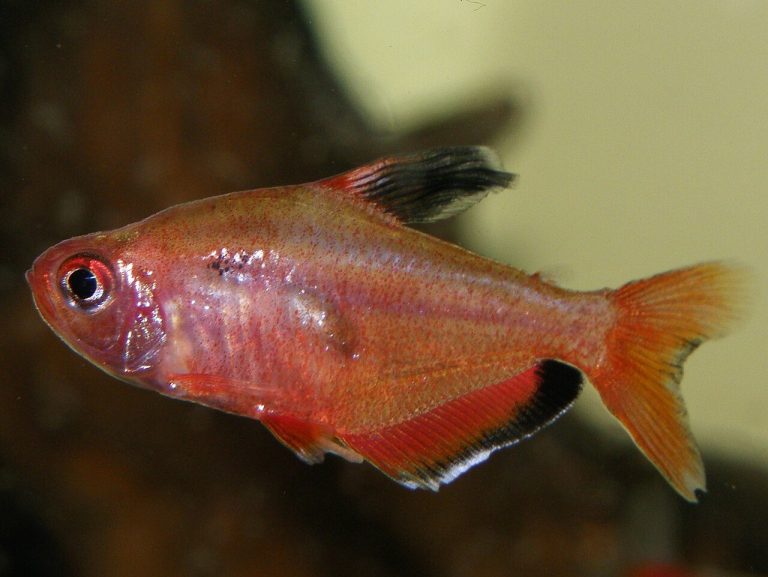
Finding the perfect Bloodfin Tetra tank mates is one of the most satisfying parts of setting up a community aquarium. These hardy, silver-bodied fish with their striking crimson fins are a staple in the hobby for a reason.
In my decade of keeping various members of the Characidae family, I have found that the Bloodfin Tetra (Aphyocharax anisitsi) is perhaps the most resilient of the bunch. They are active, long-lived, and bring a wonderful sense of movement to the upper and middle layers of the tank.
However, because they prefer a slightly cooler subtropical thermal range than many other tropical fish, choosing the right neighbors requires a bit of specialized knowledge. In this guide, I will share my first-hand experience in building a peaceful environment where your Bloodfins can shine.
At a glance: Bloodfin tetra (Aphyocharax anisitsi)
- Temperature
- 64–82°F (18–28°C)
- Water pH
- 6.0–8.0
- Adult size
- 2 in (5 cm)
- Minimum tank
- 20 gal
- Group size
- Groups of 6+
- Temperament
- Active, slightly nippy
- Diet
- Omnivore: flakes, small pellets, frozen foods
- Lifespan
- 5–10 years
Keeper’s tip: One of the hardiest tetras and tolerant of cooler, unheated rooms.
Understanding the Bloodfin Tetra (Aphyocharax anisitsi)
The Bloodfin Tetra is native to the Paraná River basin in South America, which means they are accustomed to waters that fluctuate in temperature. Unlike many of their cousins, they aren’t strictly “tropical” and can comfortably live in temperatures that would make a Neon Tetra shiver.
Their shoaling behavior is one of their most prominent traits. When kept in a group of at least six to eight, they move as a single unit, which helps them feel secure and reduces any potential nipping tendencies.
In my early years of fish keeping, I often used them as dither fish. Their constant, confident swimming encourages more timid species to come out of hiding, signaling that the environment is safe from predators.
Pro Tip: Always aim for a school of 8 or more Bloodfins. In smaller groups, they can become nervous or “nippy” toward tank mates with long, flowing fins. A larger school keeps their focus on each other and creates a much more impressive visual display.
Ideal Water Parameters for Bloodfin Tetra Tank Mates
Before we look at specific species, we must make sure the water chemistry is compatible for everyone. Bloodfins are incredibly adaptable, but they stay healthy when the general hardness (dGH) and pH are kept within a stable range.
They prefer a tank with plenty of swimming space and some hardy plants. I’ve noticed they particularly enjoy swimming through the broad leaves of an Echinodorus amazonicus (Amazon Sword), which provides both cover and a natural aesthetic.
| Parameter | Ideal Range for Bloodfins | Notes for Tank Mates |
|---|---|---|
| Temperature | 64°F – 82°F (18°C – 28°C) | Aim for 72°F-75°F for community success. |
| pH Level | 6.0 – 8.0 | Neutral (7.0) is the “sweet spot” for most mates. |
| Hardness (dGH) | 5 – 20 dGH | Avoid extremely soft or extremely hard water. |
| Ammonia/Nitrite | 0 ppm | Essential for all community inhabitants. |
When you are matching them with other fish, the temperature is usually the biggest factor. While they can survive in 80°F, they are much more active and live longer in the low-to-mid 70s.
Top 10 Best Bloodfin Tetra Tank Mates
Choosing the right companions involves looking for fish that share that subtropical preference. You want fish that are fast enough to keep up with the Bloodfins but peaceful enough not to cause stress.
1. Zebra Danios (Danio rerio)
The Danio rerio is perhaps the most perfect match for a Bloodfin. They are incredibly hardy, love the same cooler water, and occupy the very top of the water column while the Bloodfins stay just below them.
In my experience, the energy levels of these two species complement each other perfectly. They create a “wall of motion” that is striking to watch during feeding time.
2. Peppered Corydoras (Corydoras paleatus)
If you are looking for bottom-dwellers, the Corydoras paleatus is an excellent choice. Unlike many other Cory species that need high heat, the Peppered Cory does well in the cooler temperatures that Bloodfins enjoy.
They are peaceful scavengers that will clean up any leftover flakes that the Tetras miss. Just make sure to provide them with a soft sand substrate to protect their delicate barbels.
3. White Cloud Mountain Minnows (Tanichthys albonubes)
The Tanichthys albonubes is another subtropical gem. These little fish have a similar streamlined shape and a peaceful temperament that makes them ideal Bloodfin Tetra tank mates.
They are exceptionally easy to care for and don’t require a heater in most indoor setups. Their golden-red colors offer a nice contrast to the silver scales of the Bloodfin school.
4. Rosy Barbs
Rosy Barbs are active and colorful, but they can get a bit larger than your Tetras. As long as you have a tank that is at least 30 gallons, they make great companions because they share the same temperature needs.
I have found that keeping Rosy Barbs in a group of five or more prevents them from becoming too boisterous. They are sturdy fish that won’t be intimidated by the Bloodfin’s fast movements.
5. Cherry Barbs
Cherry Barbs are much calmer than Rosy Barbs and add a eye-catching deep red hue to the tank. They tend to stay in the middle to lower levels, leaving the upper areas for the Bloodfins.
When I first introduced Cherry Barbs to my Bloodfin setup, I noticed the Tetras were much more relaxed. The bright red of the male Cherry Barbs complements the red fins of the Aphyocharax anisitsi beautifully.
6. Bristlenose Pleco
For algae control, a Bristlenose Pleco is a solid option. They are very hardy and don’t mind the cooler side of the tropical spectrum.
They mostly keep to themselves, clinging to driftwood or the glass. Make sure you have enough driftwood in the tank, as they need the cellulose for digestion.
7. Golden Dwarf Cichlids (Nannacara anomala)
If you want a “centerpiece” fish that isn’t too aggressive, the Golden Dwarf Cichlid is a fantastic subtropical choice. They are far more peaceful than many other cichlids.
They occupy the bottom third of the tank and usually ignore the fast-moving Tetras above. Just be sure to provide some caves or dense planting for them to claim as territory.
8. Guppies
Guppies are classic aquarium fish that can adapt to a wide range of temperatures. They are colorful and active, making them great neighbors.
However, be cautious if you have a very small school of Bloodfins. If the Bloodfins are bored, they might be tempted to nip at the long, fancy tails of male guppies.
9. Platies
Platies are solid, colorful, and very peaceful. They are livebearers that enjoy slightly harder water, which aligns well with the Bloodfin’s broad general hardness (dGH) tolerance.
I recommend the “Sunset” or “Red Wag” varieties to keep the color theme consistent. They are constantly foraging for algae, which helps keep the tank clean.
10. Swordtails
Swordtails are closely related to Platies but grow slightly larger and are much faster swimmers. This speed makes them very compatible with the energetic Bloodfin Tetra.
They appreciate a well-planted tank with plenty of open space in the middle. Just keep an eye on the male-to-female ratio (1 male to 2-3 females) to prevent aggression.
Species to Avoid with Bloodfin Tetras
While Bloodfins are generally peaceful, they are not suitable for every tank. Their speed and “nippy” potential when stressed can be a problem for certain types of fish.
You should generally avoid very slow-moving fish with long, flowing fins, such as Bettas or Fancy Guppies (unless the tank is large). The constant movement of the Bloodfins can stress out sedentary species.
Additionally, avoid large predatory fish like Oscars or Jack Dempseys. Even though Bloodfins are fast, they are small enough to be viewed as a snack by any fish with a large enough mouth.
Common Mistake: Many beginners try to keep Bloodfins with Discus or German Blue Rams. This is a mistake because those species require very warm water (82°F+), which will significantly shorten the lifespan of your subtropical Bloodfins and cause them metabolic stress.
Aquascaping for a Harmonious Community
The way you decorate your tank can actually influence how well your Bloodfin Tetra tank mates get along. A bare tank makes fish feel exposed and can lead to defensive nipping or hiding.
I always recommend a “heavy on the edges, open in the middle” approach. Use tall plants like Echinodorus amazonicus or Valisneria along the back and sides.
This creates a “safety zone” where fish can retreat if they feel overwhelmed. The open center allows the shoals to swim at full speed, which is vital for their physical health.
Using dark substrate can also help. It makes the silver bodies and red fins of the Tetras pop visually, and many bottom-dwellers like Corydoras feel more secure on a darker floor.
Feeding Strategies for a Mixed Community
When keeping multiple species, you have to help everyone is getting their fair share of food. Bloodfins are aggressive surface feeders and will often gobble up everything before it hits the bottom.
To ensure your bottom-dwellers like the Corydoras paleatus don’t starve, I use a combination of floating flakes and sinking pellets. I usually drop the flakes at one end of the tank to distract the Tetras.
While they are busy, I drop sinking wafers at the other end for the bottom fish. Bloodfins are omnivores and flourish on a variety of foods, including high-quality flakes, daphnia, and brine shrimp.
If you are interested in the specific numbers for your setup, you might want to check out our guide on how many Bloodfins fit in a 10-gallon. However, for a community tank with multiple species, I always recommend at least a 20 or 30-gallon long tank.
Quick answers
Are Bloodfin Tetras fin nippers?
They can be if they are kept in too small a group or in a tank that is too cramped. In a school of 8 or more with plenty of space, they are generally very well-behaved.
Can Bloodfin Tetras live with Shrimp?
Adult Amano shrimp or large ghost shrimp are usually safe. However, baby Neocaridina (Cherry Shrimp) will likely be eaten. If you want to keep shrimp, make sure there is plenty of dense moss for them to hide in.
How long do Bloodfin Tetras live?
Looked after properly and the right Bloodfin Tetra tank mates, they are surprisingly long-lived. It is not uncommon for them to reach 5 to 7 years in a healthy aquarium.
What is the minimum tank size for a community?
While you can keep a small school in a 10-gallon, a community tank should be at least 20 gallons. This provides the horizontal swimming space these active fish require. You can learn more about choosing the right tank size in our detailed breakdown.
Do they need a heater?
If your home stays consistently between 68°F and 75°F, you might not need one. However, a heater is recommended to prevent sudden temperature swings, which can lead to stress and disease.
A closing note
Building a community around the Bloodfin Tetra is a fantastic project for any hobbyist. If you focus on subtropical species like the Danio rerio and Corydoras paleatus, you create an environment where every fish can do well in its natural temperature range.
The biggest factor is a large school, plenty of swimming room, and compatible water parameters. When you get the balance right, the sight of a shimmering silver school with bright red accents darting through your plants is unbeatable.
Before you head to the fish store, make sure you know how to tell your males from your females to keep a good social balance.

- 2003First tank
- 20+Years keeping
- 40+Tanks kept
- 0Sponsored picks
Howard set up his first 10-gallon planted tank in 2003 and lost half of it within six weeks. Two decades and more than forty aquariums later, he writes the guides he wished he had then: clear numbers, the reasons behind them, and what actually goes wrong in home tanks.