Cardinal Tetra Pregnant – Breeding Guide
A cardinal tetra is not technically pregnant because they are egg-scatterers, not live-bearers. Instead, a female becomes “gravid,” meaning her body is swollen with eggs ready for fertilization and spawning in soft, acidic water.
When you notice a sudden bulge in your fish’s midsection, it is natural to wonder if your cardinal tetra pregnant status is a reality. In my decade of keeping characins, this is one of the most common questions I receive from hobbyists transitioning from beginners to breeders.
The truth is that while “pregnant” is the term most people use, these shimmering jewels of the Amazon follow a very different reproductive path than guppies or mollies. Understanding the biological reality of the Paracheirodon axelrodi is the first step toward successfully raising a new generation of fry.
In this guide, I will share the exact methods I use to identify a gravid female and the environmental triggers needed to move from a community tank to a successful spawning event. We will cover everything from water chemistry to the specialized care required for their delicate offspring.
At a glance: Cardinal tetra (Paracheirodon axelrodi)
- Temperature
- 76–84°F (24–29°C)
- Water pH
- 4.5–7.0
- Adult size
- 2 in (5 cm)
- Minimum tank
- 20 gal
- Group size
- Groups of 8+
- Temperament
- Peaceful
- Diet
- Omnivore: small pellets, flakes, frozen bloodworm
- Lifespan
- 4–6 years
Keeper’s tip: Cardinals like it warmer and softer than neons, so they are a poor match for cool-water tank mates.
Understanding the Cardinal Tetra “Pregnancy” Myth
The term cardinal tetra pregnant is technically a misnomer in the scientific community. Unlike live-bearing species where the fry develop inside the mother, cardinal tetras are egg-scattering fish.
This means the female carries thousands of tiny eggs within her body until they are ready to be released into the water column. Once released, the male fertilizes them externally, and the parents provide no further care.
In the hobby, we call a female full of eggs “gravid.” If you see a fish with a rounded, swollen belly, she isn’t “expecting” in the way a mammal does, but she is certainly preparing for a massive metabolic event.
Pro Tip: Don’t confuse a gravid belly with dropsy or bloating. A gravid female will remain active and eat well, whereas a sick fish will often have “pineconing” scales and appear lethargic.
How to Identify a Gravid Cardinal Tetra
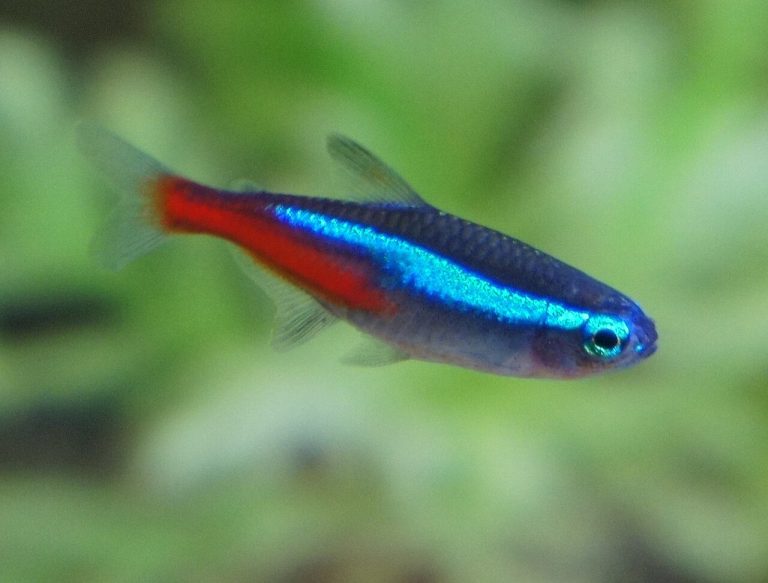
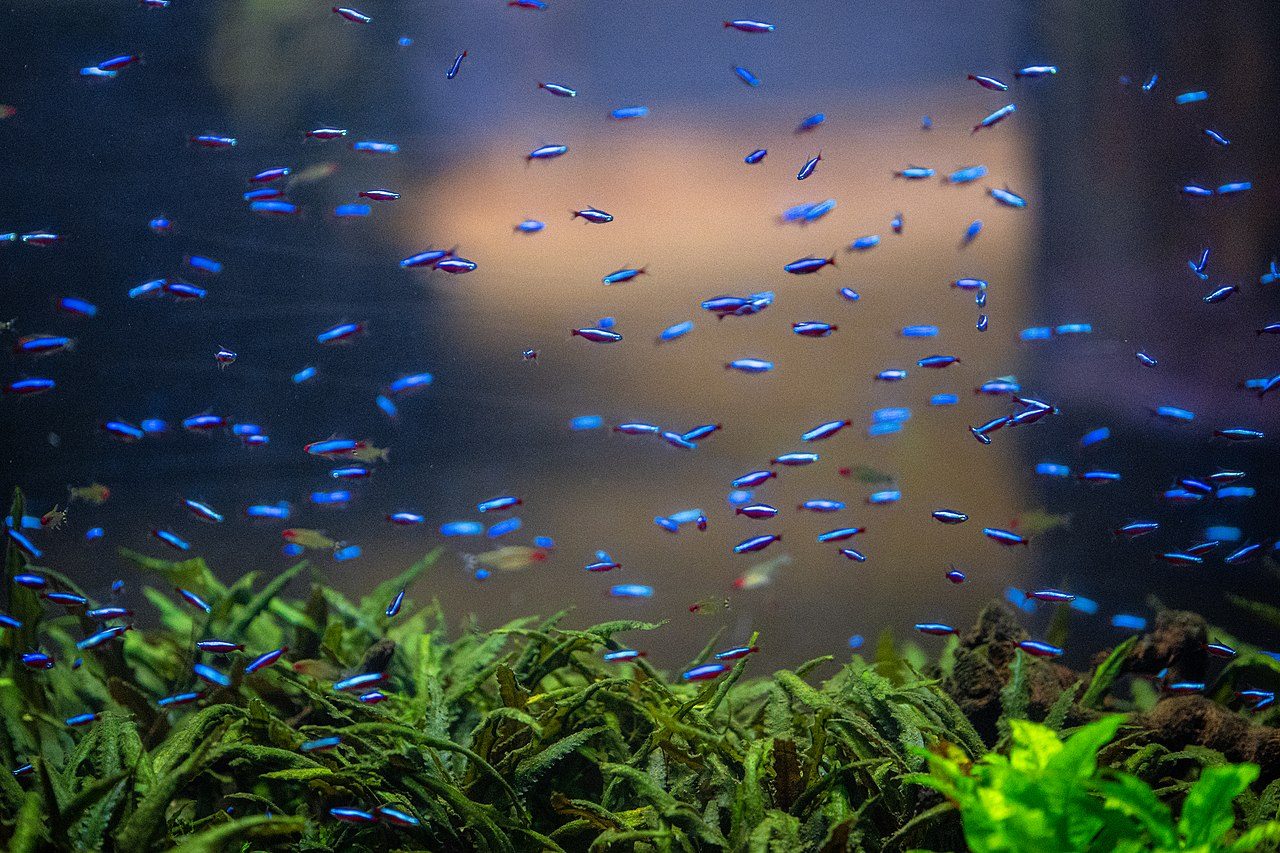
Identifying the sex of a cardinal tetra can be challenging because they are not sexually dimorphic in their coloration. Both males and females sport that iconic, brilliant red stripe and electric blue line.
To determine if you have a cardinal tetra pregnant (gravid) female, you must look closely at the body shape. Females are generally larger and have a much deeper, more rounded body profile than the sleek, slender males.
When a female is carrying eggs, her abdomen will swell significantly, often causing the blue line to appear slightly curved upward. The males will remain “torpedo-shaped” and significantly thinner even after a heavy feeding.
| Feature | Male Cardinal Tetra | Female (Gravid) |
|---|---|---|
| Body Shape | Slender, streamlined, and straight. | Deep-bodied, plump, and rounded. |
| Size | Generally smaller (up to 1 inch). | Slightly larger (up to 1.25 inches). |
| Lateral Line | Blue line stays perfectly horizontal. | Blue line may curve due to belly swell. |
Behavioral Cues of Spawning Readiness
Beyond physical appearance, look for changes in behavior. When a female is gravid, males will often begin “dancing” around her or chasing her into dense vegetation.
This behavior is a sign that the pheromones are active and the fish are ready for a dedicated breeding setup. If you see this in your community tank, it is time to prepare a separate space if you want the eggs to survive.
I’ve noticed that gravid females often hang out near the bottom or in shaded areas, conserving energy for the upcoming spawn. Ensuring they have access to high-quality nutrition like live daphnia or frozen bloodworms will help them produce healthy eggs.
Preparing the Perfect Breeding Environment
If you have a cardinal tetra pregnant female, the biggest mistake you can make is leaving her in a standard community tank. Cardinal tetra eggs are delicious snacks for other fish, and even the parents will eat them immediately.
To successfully breed Paracheirodon axelrodi, you need a dedicated breeding tank (typically 5 to 10 gallons). This tank must replicate the blackwater conditions of their native Orinoco and Rio Negro habitats.
The water must be incredibly soft and acidic. Most successful breeders use Reverse Osmosis (RO) water to achieve a dGH (General Hardness) of less than 2.
The Role of Peat and Humic Acid
In my experience, the secret ingredient to a successful cardinal tetra spawn is peat filtration. Adding aquarium-safe peat moss to your filter or the substrate releases humic acid and tannins into the water.
This not only lowers the pH to a range of 5.0 to 6.0 but also provides antifungal properties that protect the delicate eggs. The water will turn a tea-like color, which provides the security the fish need to feel comfortable spawning.
| Parameter | Ideal Breeding Range |
|---|---|
| Temperature | 80°F to 82°F (26.5°C to 28°C) |
| pH Level | 5.0 – 6.0 (Extremely Acidic) |
| General Hardness (dGH) | 1 – 2 degrees |
Using Spawning Mops and Plants
Cardinal tetras are egg-scatterers, meaning they will drop their eggs randomly over fine-leaved plants. Taxiphyllum barbieri (Java Moss) is an excellent choice for this.
If you don’t have live plants, a synthetic spawning mop made of dark acrylic yarn works just as well. The goal is to provide a soft landing spot for the eggs where they can be hidden from the parents’ sight.
I highly recommend using a “breeding grate” or a layer of glass marbles on the bottom of the tank. This allows the eggs to fall through the cracks where the adult fish cannot reach and consume them.
The Spawning Process: From Eggs to Fry
Once you have moved your cardinal tetra pregnant female and a healthy male to the breeding tank, you should dim the lights. Cardinal tetras usually spawn during the twilight hours or in very low light conditions.
The male will drive the female toward the plants or spawning mop. As she releases her eggs—sometimes up to 500 in a single session—the male will fertilize them instantly.
As soon as the spawning is complete and the female appears “slim” again, you must remove the adults. They have no parental instincts and will begin hunting for the eggs the moment the ritual ends.
Pro Tip: Keep the breeding tank in total darkness after the adults are removed. Cardinal tetra eggs and larvae are highly light-sensitive, often referred to as photophobic embryos.
Protecting Photophobic Embryos
This is the stage where most hobbyists fail. Unlike many other species, the embryos of cardinal tetras can be literally killed by standard aquarium lighting or even strong ambient room light.
I always wrap my breeding tanks in black construction paper or a heavy towel for the first 48 to 72 hours. This makes sure the photophobic embryos develop without UV damage.
The eggs will usually hatch within 24 to 36 hours. At this stage, they look like tiny “slivers of glass” and will stay attached to the glass or plants while they finish absorbing their yolk sacs.
Caring for Cardinal Tetra Fry
Once the fry are free-swimming, which usually takes about 3 to 4 days, they are incredibly small. They are too tiny to eat crushed flakes or even baby brine shrimp at first.
You will need to provide Infusoria, which are microscopic organisms. You can culture these at home or use specialized liquid fry foods designed for egg-layers.
After about a week of feeding infusoria, you can transition them to microworms and eventually newly hatched brine shrimp. This is a critical period where water quality must remain pristine, yet water changes must be done with extreme care.
Maintaining Water Quality for Fry
Since you are feeding small amounts of food frequently, waste can build up quickly. However, the fry are sensitive to changes in water chemistry.
I recommend using a small airline tube to drip-feed fresh, conditioned water into the tank during water changes. This prevents the “shock” of a sudden temperature or pH shift.
Learning general spawning techniques for other species can also give you a broader perspective on how to manage these delicate early stages.
Cardinal tetra pregnant: Common Challenges and Troubleshooting
Even with perfect parameters, you might face hurdles. One of the most common issues is egg fungus, where the eggs turn white and fuzzy.
This usually happens if the water is not acidic enough or if the eggs were unfertilized. Using humic acid from peat or a tiny drop of Methylene Blue can help prevent fungal outbreaks.
Another challenge is “empty” spawns. Sometimes a female appears to be a cardinal tetra pregnant candidate, but she fails to release eggs. This is often due to the water being too hard, which causes the eggshells to harden before they can be fertilized.
| Problem | Likely Cause | Solution |
|---|---|---|
| Eggs turning white | Fungal infection or lack of fertilization. | Lower pH and use tannins/Methylene Blue. |
| Adults eating eggs | Natural predatory instinct. | Use a spawning grate or remove parents immediately. |
| Fry dying after 3 days | Starvation or light sensitivity. | Feed Infusoria and keep the tank dark. |
A few common questions
How many eggs does a cardinal tetra lay?
A healthy, mature female can lay anywhere from 100 to 500 eggs in a single spawning event. However, in a community tank, nearly 100% of these are usually eaten before they hatch.
Can cardinal tetras breed with neon tetras?
No, they are different species (Paracheirodon axelrodi vs. Paracheirodon innesi). While they look similar and may school together, they do not interbreed. For more on their differences, you can check out my guide on breeding similar species.
How often can a cardinal tetra become gravid?
With a high-protein diet and stable conditions, a female can produce a new clutch of eggs every 2 to 3 weeks. However, it is best to give them rest periods to maintain their long-term health.
Why does my “pregnant” cardinal tetra look square?
If the belly looks “boxy” or square when viewed from the side, she is very close to releasing her eggs. This is a sign that you should move her to the breeding tank immediately.
Do I need a filter in the fry tank?
You should use a mature sponge filter. Power filters or HOB filters will suck up the tiny fry instantly. A sponge filter provides gentle aeration and a surface for fry to graze on.
In short
Managing a cardinal tetra pregnant female is one of the most satisfying challenges in the freshwater hobby. While they require specific water parameters and a bit of patience, seeing a cloud of tiny fry in your tank is an unmatched experience.
Success lies in the details: very soft water, low light, and the right first foods. By mimicking the dark, acidic waters of the Amazon, you provide your tetras with the best possible chance to continue their lifecycle.
It will deepen your understanding of aquatic ecosystems and give you a newfound appreciation for the bright life within your aquarium.

- 2003First tank
- 20+Years keeping
- 40+Tanks kept
- 0Sponsored picks
Howard set up his first 10-gallon planted tank in 2003 and lost half of it within six weeks. Two decades and more than forty aquariums later, he writes the guides he wished he had then: clear numbers, the reasons behind them, and what actually goes wrong in home tanks.