Neon Tetra Food – What and How Often to Feed
The best neon tetra food is a high-quality, varied diet consisting of micro-pellets, crushed flakes, and live or frozen treats like daphnia and brine shrimp. This combination makes sure best health, longevity, and brilliant coloration.
Feeding your fish might seem like the simplest part of the hobby, but choosing the right neon tetra food is actually a science. Over my ten years of maintaining South American biotope tanks, I have seen how much a proper diet impacts the vitality of a school.
When I first started keeping Paracheirodon innesi, I made the mistake of feeding whatever was cheapest on the shelf. The result was a group of dull-colored fish that were prone to illness and lacked energy.
Today, I understand that these shimmering gems require a specific nutritional profile to stay healthy. In this guide, I will share the exact feeding regimen I use to keep my tetras healthy, active, and glowing with neon brilliance.
At a glance: Neon tetra (Paracheirodon innesi)
- Temperature
- 72–78°F (22–26°C)
- Water pH
- 6.0–7.0
- Adult size
- 1.5 in (4 cm)
- Minimum tank
- 10 gal (20 gal for a proper school)
- Group size
- Groups of 8+
- Temperament
- Peaceful
- Diet
- Omnivore: micro pellets, flakes, frozen daphnia
- Lifespan
- 5–8 years
Keeper’s tip: Add neons only to a fully cycled, stable tank; they are among the first fish to suffer from ammonia swings.
Understanding the Natural Diet of Neon Tetras
To choose the best neon tetra food, we must first look at what they eat in the wild. Neon tetras originate from the blackwater streams and clearwater rivers of the Amazon basin.
In their natural habitat, they are opportunistic omnivores that feed on a variety of small organisms. Their primary diet consists of Benthic invertebrates, tiny crustaceans, and insect larvae found among the leaf litter.
They also consume small amounts of algae and plant matter that they pick off submerged wood. Replicating this variety in the aquarium is the secret to preventing nutritional deficiencies and keeping them hardy.
Pro Tip: Neons have very small mouths and are “middle-column” feeders. Always ensure your food is small enough for them to swallow and stays suspended in the water for as long as possible.
The Foundation: High-Quality Dry Foods
Dry foods are the most convenient neon tetra food for daily use, but not all brands are created equal. You should look for products where the first few ingredients are high-quality proteins like whole fish or shrimp.
Flakes are a classic choice, but standard flakes are often too large for a neon’s tiny mouth. I always recommend crushing the flakes between your fingers into a fine powder before dropping them into the tank.
Micro-pellets are often a better alternative because they are designed to sink slowly. This allows the fish plenty of time to grab them before they hit the substrate and begin to rot.
| Food Type | Best For | Frequency |
|---|---|---|
| Micro-Pellets | Daily staple nutrition | Once or twice daily |
| Crushed Flakes | Variety and surface feeding | Alternating days |
| Frozen Daphnia | Digestive health and protein | 2-3 times per week |
| Live Brine Shrimp | Conditioning and enrichment | Once per week |
Choosing the Right Ingredients
When reading the label on your neon tetra food, look for Spirulina platensis. This blue-green algae provides essential vitamins and minerals that support a strong immune system.
Avoid foods that use “fish meal” or “wheat flour” as the primary ingredients. These act as fillers and can lead to more waste in your aquarium, eventually polluting the water.
In my experience, using a high-quality staple food significantly reduces the frequency of water quality issues. When the fish digest their food better, they produce less ammonia and solid waste.
Live and Frozen Foods for Peak Vitality
If you want to see the most intense colors possible, you must incorporate live or frozen neon tetra food. These options provide the proteins and fats that processed foods sometimes lack.
Artemia nauplii, or baby brine shrimp, are perhaps the best live food for neons. They are small enough for all ages of tetras and are packed with essential fatty acids.
Frozen Daphnia pulex is another excellent choice that I use at least twice a week. Daphnia acts as a natural laxative, helping to prevent digestive blockages and bloat.
Small Prey for Small Mouths
Other great options include Cyclops and finely chopped Chironomidae larvae, commonly known as bloodworms. Be careful with full-sized bloodworms, as they are often too large for neons to handle.
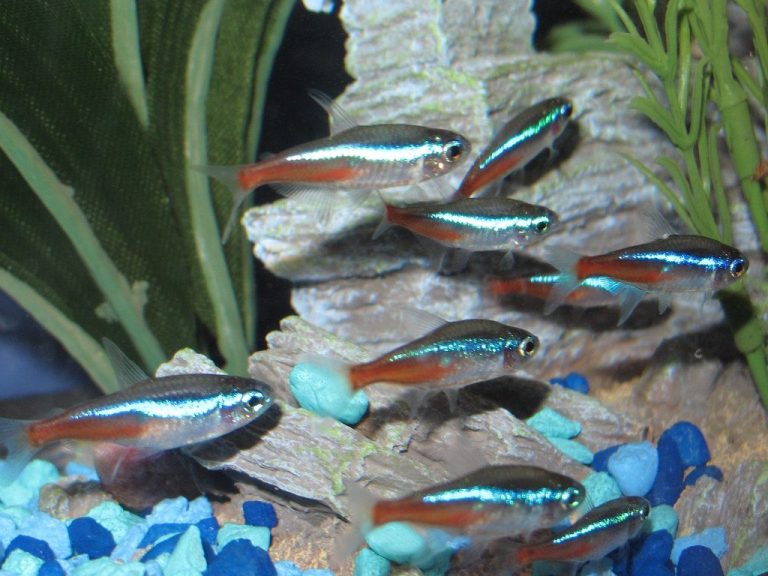
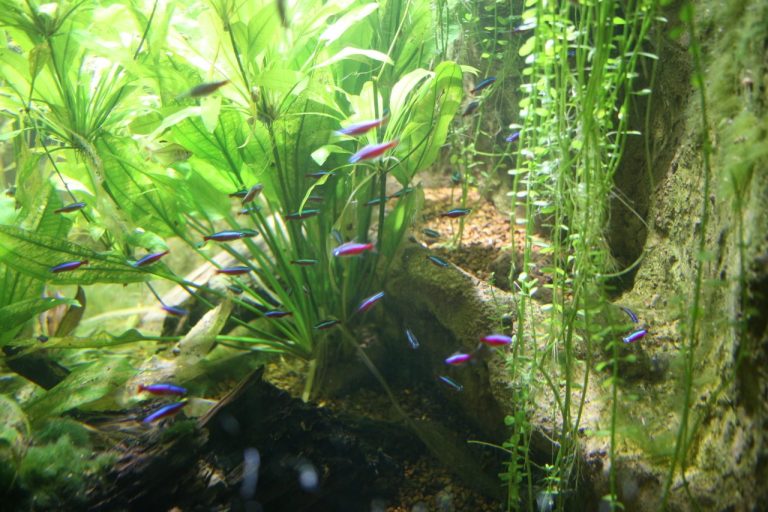
If you are keeping a vivid neon tetra display, watching them hunt live food is a joy. It triggers their natural predatory instincts and keeps them physically active.
I have found that providing these “meaty” treats is particularly helpful when you are learning how to trigger spawning. High-protein diets condition the females to produce healthy eggs.
Improving Colors with Carotenoids
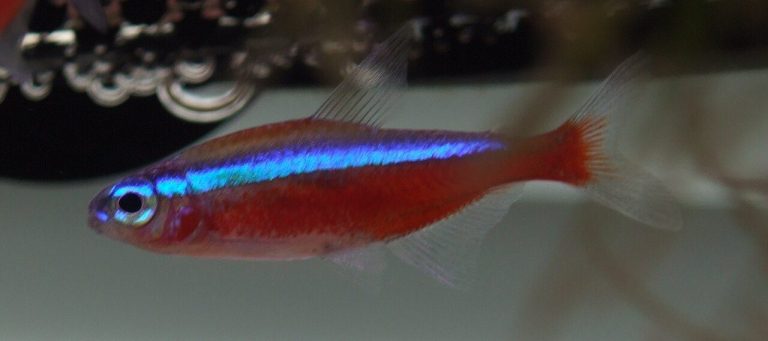
The blue and red stripes of a neon tetra are their most famous features. These colors can be significantly enhanced by the neon tetra food you provide.
Many premium foods contain Astaxanthin, a natural pigment that intensifies red and orange hues. This is a type of Carotenoids often derived from shrimp or algae.
By feeding foods rich in these pigments, you are providing the raw materials the fish need to maintain their “glow.” Without them, their colors will eventually fade, especially as they age.
Pro Tip: Don’t rely on just one “color-improving” food. Rotate between three different high-quality brands to make sure they get a wide spectrum of different pigments and vitamins.
How Much and How Often to Feed
The biggest threat to neon tetras isn’t usually underfeeding, but overfeeding. Because they are so small, their stomachs are roughly the size of their eye.
I recommend feeding your tetras two small meals per day. Each meal should consist of only what they can completely consume within two minutes.
If you see food hitting the bottom and staying there, you are feeding too much. If you are keeping them with other species, check a compatibility guide to ensure everyone is getting fed without over-polluting the tank.
The Importance of Fasting
I have practiced a “fasting day” once a week for years. On this day, I do not provide any neon tetra food at all.
This allows the fish’s digestive tract to completely clear out. It is a simple but effective way to prevent Swim bladder disorder, which can be caused by constipation in small-bodied fish.
During this time, the tetras will often pick at biofilm or algae in the tank. This is natural behavior and is actually very healthy for them.
Signs of Poor Nutrition and Overfeeding
It is important to monitor your fish during and after feeding times. If you notice a fish struggling to stay upright or floating to the surface, it may be a sign of a digestive issue.
Poor quality neon tetra food can cause gas buildup in the intestines. This puts pressure on the swim bladder and makes it difficult for the fish to swim normally.
If your fish look “washed out” or pale, it is usually a sign of stress or poor diet. Check your water parameters first, but then evaluate if they are getting enough vitamins and variety.
Managing Waste and Water Quality
Overfeeding leads to a buildup of organic waste, which can spike your nitrate levels. This is why a high-quality diet and a strict feeding schedule are so important.
If you find yourself constantly battling algae, look at your feeding habits. Uneaten food provides the perfect fuel for algae blooms and can lead to cloudy water.
Always remove any large pieces of uneaten food after five minutes. This prevents the proteins from breaking down into harmful ammonia.
FAQ: Common Questions About Feeding Neon Tetras
Can neon tetras eat Betta food? While they can eat it occasionally, Betta pellets are often too large and hard for neons. It is better to use a dedicated tropical micro-pellet.
How long can neon tetras go without food? Healthy adult neon tetras can easily go 3 to 5 days without food. This is useful to know if you are going away for a short weekend.
Do neon tetras eat plants? No, neons are not known for eating aquarium plants. They may pick at algae or microfilm on the leaves, but they won’t damage your greenery.
Why are my neon tetras not eating? This is often a sign of stress, poor water quality, or the water being too cold. Neons are most active and hungry when the temperature is between 72°F and 78°F.
Conclusion: The Secret to Long-Lived Tetras
Choosing the right neon tetra food is about more than just filling their bellies. It is about providing the building blocks for a healthy immune system and rich aesthetics.
If you combine a high-quality staple micro-pellet with frequent treats of frozen daphnia and brine shrimp, you are mimicking their natural Amazonian diet. This variety prevents boredom and helps make sure they receive all the necessary micronutrients.
Feed sparingly, observe your fish daily, and provide a day of fasting every week. If you follow these steps, your school of neon tetras will remain the glowing centerpiece of your aquarium for years to come.

- 2003First tank
- 20+Years keeping
- 40+Tanks kept
- 0Sponsored picks
Howard set up his first 10-gallon planted tank in 2003 and lost half of it within six weeks. Two decades and more than forty aquariums later, he writes the guides he wished he had then: clear numbers, the reasons behind them, and what actually goes wrong in home tanks.