Neon Tetra Schooling – Group Size and Behavior
Neon tetra schooling is a vital social behavior where these fish swim in synchronized groups for safety and communication. To encourage this, keep at least 6–10 tetras in a calm environment with appropriate water parameters.
Few sights in the freshwater aquarium hobby are as striking as a shimmering group of Paracheirodon innesi moving in perfect unison. Over my ten years of maintaining community tanks, I have found that neon tetra schooling is not just about aesthetics; it is a fundamental requirement for their well-being.
When these fish are kept in insufficient numbers, they become shy, stressed, and more prone to illness. In this guide, we will look closely at the mechanics of their social behavior and how you can replicate their natural environment to see them stay healthy.
Once you understand the biological drivers behind their movement, you can transform a simple fish tank into a rich, living ecosystem. Let’s explore what makes these tiny jewels of the Amazon so special and how to keep them schooling happily for years.
At a glance: Neon tetra (Paracheirodon innesi)
- Temperature
- 72–78°F (22–26°C)
- Water pH
- 6.0–7.0
- Adult size
- 1.5 in (4 cm)
- Minimum tank
- 10 gal (20 gal for a proper school)
- Group size
- Groups of 8+
- Temperament
- Peaceful
- Diet
- Omnivore: micro pellets, flakes, frozen daphnia
- Lifespan
- 5–8 years
Keeper’s tip: Add neons only to a fully cycled, stable tank; they are among the first fish to suffer from ammonia swings.
The Biology Behind Neon Tetra Schooling
To understand why these fish behave the way they do, we have to look at their origins. Neon tetras belong to the family Characidae and are native to the blackwater streams of South America.
In the wild, they are surrounded by predators, making individual survival difficult. This has led to the evolution of shoaling and schooling as a primary defense mechanism.
While people often use the terms interchangeably, there is a subtle difference. Shoaling refers to a group of fish staying together for social reasons, while schooling is the highly synchronized, directional movement we all love to see.
The Lateral Line System
How do dozens of fish turn at the exact same millisecond without colliding? The secret lies in their lateral line system, a specialized sensory organ that detects tiny vibrations and pressure changes in the water.
This “sixth sense” allows each fish to monitor the position and velocity of its neighbors. When one fish moves, the others feel the displacement of water and react instantly to maintain the school’s integrity.
In my experience, a healthy school will appear as one single organism. If you notice a fish struggling to keep up or swimming away from the group, it is often the first sign of stress or a potential health issue.
Pro Tip: If your tetras are scattered across the tank rather than schooling tightly, it usually means they feel completely safe. They only “tighten” the school when they perceive a potential threat or a change in the environment.
Why Group Size Matters for Your School
One of the most common mistakes I see beginners make is buying only two or three neon tetras. These are social creatures that rely on conspecifics (members of their own species) to feel secure.
When kept in small numbers, neon tetras often experience chronic stress. This suppresses their immune system and can lead to a shorter lifespan in your aquarium.
I always recommend a minimum of six fish, but a group of ten to fifteen is where you start to see natural neon tetra schooling behavior. The larger the group, the more confident and bright the fish will appear.
| Group Size | Typical Behavior | Stress Level |
|---|---|---|
| 1 – 3 Fish | Hiding, nipping, pale colors. | Very High |
| 6 Fish | Basic shoaling, occasional schooling. | Moderate |
| 10 – 15 Fish | Active schooling, bold exploration. | Low |
| 20+ Fish | Spectacular synchronized movement. | Very Low |
When you provide a large enough group, you will notice their colors become much more intense. This is because a relaxed fish is a colorful fish, and nothing relaxes a tetra like a large family.
Creating the Perfect Environment for Schooling
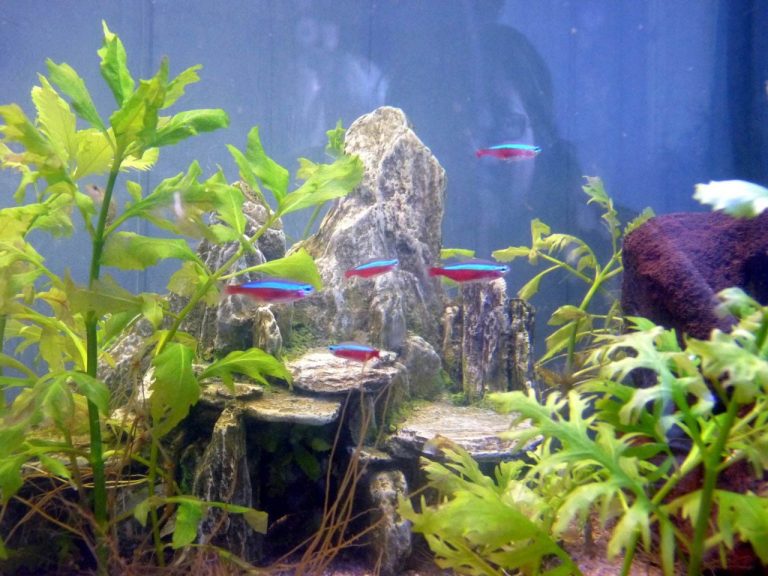
Even with a large group, your tetras won’t school effectively if the environment is wrong. They need plenty of horizontal swimming space to move as a unit.
A 10-gallon tank is often cited as the minimum, but I personally prefer at least a 20-gallon long. The extra length allows for much longer “runs” when the fish decide to swim together.
Properly setting up their tank involves more than just size. It is about replicating the conditions they evolved in over millions of years.
Blackwater Conditions and Tannins
Neon tetras come from blackwater habitats where the water is stained the color of tea by decaying organic matter. This organic matter releases tannic acid and humic substances into the water.
These substances provide natural antibacterial properties and help the fish feel secure. Adding Indian almond leaves or driftwood can help recreate this look and feel.
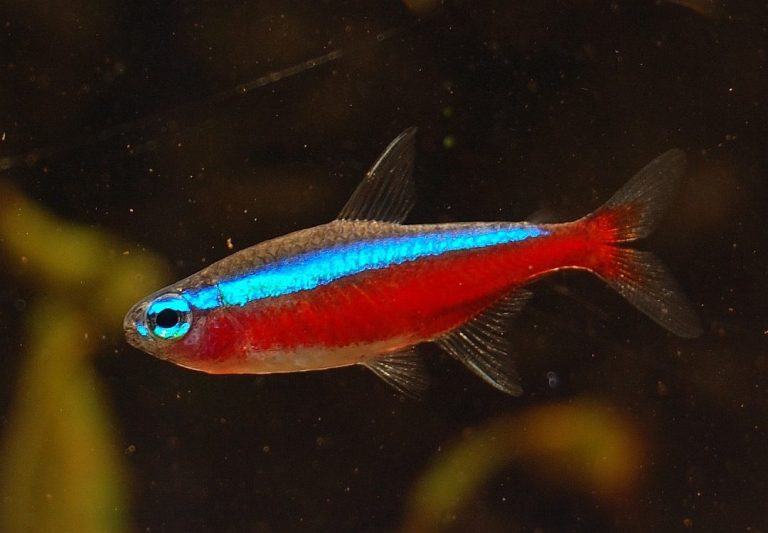
The slightly acidic water and dim lighting make their iridescent blue and red stripes pop. In bright, sterile tanks, they often feel exposed and will hide rather than school in the open.
The Importance of Water Quality
Maintaining proper water chemistry is essential for keeping your school healthy. Neon tetras are sensitive to sudden changes in nitrate levels and pH.
I have found that consistent, small water changes are better than large, infrequent ones. Aim for a stable temperature and soft, slightly acidic water to keep them at their best.
Pro Tip: Use a dark substrate like black sand or fine gravel. Not only does it mimic the riverbeds of their homeland, but it also makes the fish feel less vulnerable from below, encouraging them to swim in the middle of the water column.
Common Reasons Why Schooling Fails
If you have a large group but they aren’t sticking together, don’t panic. There are several reasons why neon tetra schooling might not be happening in your aquarium.
The most common reason is actually a lack of “perceived” danger. In a very peaceful tank with no large fish, the tetras might feel so safe that they wander off to explore individual territories.
However, if the fish look lethargic or are gasping at the surface, the lack of schooling is likely a health issue. Poor water quality is the number one killer of these delicate fish.
Disease and the School
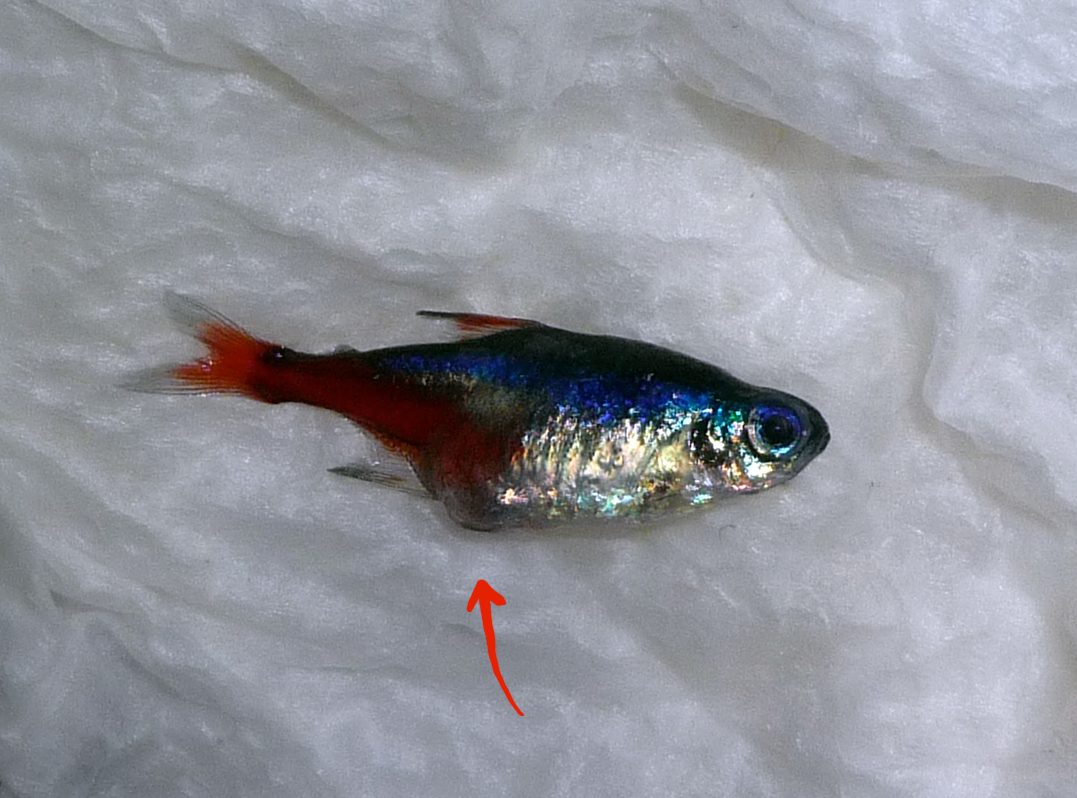
One specific threat to watch for is Pleistophora hyphessobryconis, more commonly known as Neon Tetra Disease. This parasite causes cysts in the muscle tissue and eventually leads to death.
An infected fish will often lose its color and stop schooling with the rest of the group. If you see an individual drifting away or showing a curved spine, it is vital to quarantine them immediately.
Prevention is always better than cure. By ensuring a colorful health through diet and clean water, you can keep the school’s collective immune system strong. Check out my guide on proper nutrition to learn more about the best foods for these fish.
Using Dither Fish to Encourage Movement
If your tetras are hiding in the plants and refusing to come out, you might need “dither fish.” These are active, top-dwelling fish that signal to the tetras that the environment is safe.
When the tetras see other fish swimming calmly in the open, it overrides their instinct to hide. This often triggers more active neon tetra schooling throughout the mid-section of the tank.
Good dither fish are usually small, peaceful species that won’t outcompete the tetras for food. Avoid anything large enough to fit a tetra in its mouth, as that will cause genuine terror rather than organized schooling.
| Compatible Tank Mates | Role in the Tank | Compatibility Level |
|---|---|---|
| Corydoras Catfish | Bottom dweller / Cleaner | Excellent |
| Harlequin Rasboras | Mid-water dither fish | Excellent |
| Honey Gourami | Peaceful centerpiece fish | Good |
| Cherry Shrimp | Invertebrate cleaner | Excellent |
I have personally found that adding a group of Corydoras can really change the dynamic of a neon tetra tank. The constant, busy movement on the substrate seems to encourage the tetras to be more active in the water column.
Maintaining the School Long-Term
Once you have established a beautiful school, the goal is to keep them healthy for their entire lifespan. Neon tetras can live for several years if their needs are met.
Consistent lighting schedules are important. Using a timer to provide a regular day/night cycle helps regulate their circadian rhythms and reduces stress.
I also recommend “refreshing” the school if numbers start to dwindle over the years. Adding new, quarantined fish can revitalize the social hierarchy and keep the schooling behavior tight.
Feeding for Color and Energy
A school that is well-fed will have more energy for swimming. I like to feed a variety of foods, including high-quality crushed flakes and frozen daphnia.
Feeding small amounts twice a day is better than one large feeding. This keeps their metabolism steady and makes sure that even the smaller, shy members of the school get their share.
In the wild, they are micro-predators. They love hunting for tiny moving organisms, so occasional live baby brine shrimp will really get the school excited and active.
Questions and answers
How many neon tetras should I keep together?
You should keep a minimum of six, but ten or more is much better for their health. Larger groups provide a greater sense of security and lead to more frequent schooling behavior.
Do neon tetras school with other types of tetras?
They may shoal together occasionally, but they usually prefer their own species. For example, neon tetras and cardinal tetras look similar but will generally form separate groups within the same tank.
Why are my neon tetras nipping at each other?
Nipping is often a sign of a group that is too small. Without enough members to spread out the social energy, a dominant fish may become aggressive toward its few tank mates.
Can I keep a school of neon tetras in a 5-gallon tank?
In my professional opinion, no. A 5-gallon tank does not offer enough horizontal swimming space for a school to move naturally, which leads to stress and poor health.
Do neon tetras school at night?
No, they generally “disband” at night. They will find a quiet spot near the plants or substrate to rest, and their colors will fade significantly until the lights come back on.
Final Thoughts on Neon Tetra Schooling
Mastering the art of neon tetra schooling is one of the most satisfying experiences for any aquarist. It requires a balance of proper group size, water chemistry, and tank design.
When you see that flash of blue and red moving as one across your aquarium, you know you have succeeded. It is a clear indicator that your fish are happy, healthy, and living in an environment that respects their natural instincts.
Always remember to be patient and observe your fish closely. Every aquarium is a unique ecosystem, and your tetras will tell you exactly what they need if you take the time to watch them.

- 2003First tank
- 20+Years keeping
- 40+Tanks kept
- 0Sponsored picks
Howard set up his first 10-gallon planted tank in 2003 and lost half of it within six weeks. Two decades and more than forty aquariums later, he writes the guides he wished he had then: clear numbers, the reasons behind them, and what actually goes wrong in home tanks.