Neon Tetra Water Parameters – Care Guide
Neon tetra water parameters require a stable temperature of 70-81°F, a pH between 6.0 and 7.0, and soft water with a general hardness (dGH) of 2 to 10 degrees to support long-term health.
Maintaining the perfect environment for your Paracheirodon innesi is the cornerstone of successful fish keeping. After over a decade of breeding and keeping these colorful jewels, I have learned that “perfect” is often secondary to “stable.”
When you first bring home these iconic fish, the excitement is palpable. However, many beginners struggle because they overlook the nuances of neon tetra water parameters. These fish are native to the complex ecosystems of the Amazon, and replicating those conditions is key to their longevity.
In this guide, we will look closely at the chemistry and biology of your tank. We will explore how to balance acidity, manage minerals, and prevent the dreaded osmotic stress that claims so many new schools.
| Parameter Type | Ideal Range | Acceptable Range |
|---|---|---|
| Water Temperature | 72°F – 76°F (22°C – 24°C) | 70°F – 81°F |
| pH Level | 6.0 – 6.8 | 5.5 – 7.2 |
| General Hardness (dGH) | 2 – 6 dGH | Up to 10 dGH |
| Carbonate Hardness (dKH) | 1 – 3 dKH | Up to 5 dKH |
At a glance: Neon tetra (Paracheirodon innesi)
- Temperature
- 72–78°F (22–26°C)
- Water pH
- 6.0–7.0
- Adult size
- 1.5 in (4 cm)
- Minimum tank
- 10 gal (20 gal for a proper school)
- Group size
- Groups of 8+
- Temperament
- Peaceful
- Diet
- Omnivore: micro pellets, flakes, frozen daphnia
- Lifespan
- 5–8 years
Keeper’s tip: Add neons only to a fully cycled, stable tank; they are among the first fish to suffer from ammonia swings.
Understanding the Native Blackwater Habitat
To master neon tetra water parameters, we must first look at the South American rainforests. Neons originate from the blackwater streams of the Amazon basin, where the water is stained the color of tea.
This staining is caused by decaying organic matter like leaves and wood. This process releases tannic acid and humic acid into the water column, creating a unique chemical profile.
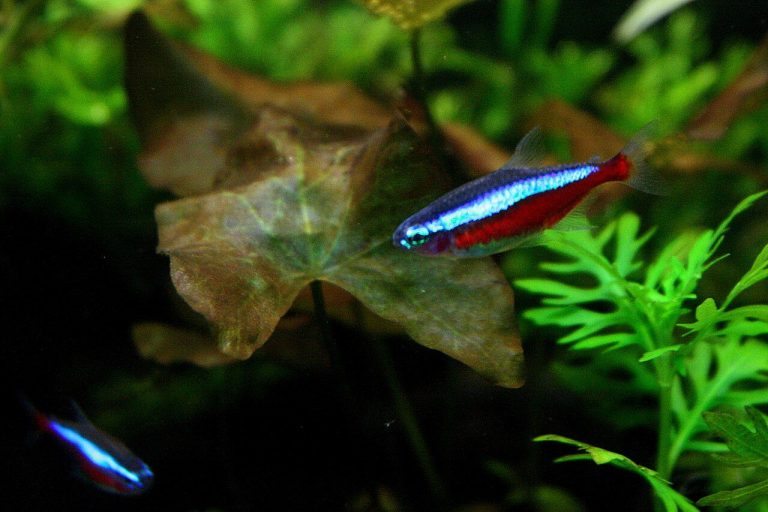
In my experience, fish kept in water that mimics this natural environment show much more rich colors. Their blue stripes seem to glow more intensely against the dark, acidic backdrop of a bright community setting.
The Role of Tannic and Humic Acids
Humic substances are not just for aesthetics; they provide a natural boost to the immune system. They have mild antibacterial and antifungal properties that protect the delicate skin of the Paracheirodon innesi.
When these acids are present, the pH naturally drops into the acidic range. This mirrors the soft, low-mineral environment where neons have evolved for thousands of years.
Recreating the Amazonian Ecosystem
You don’t need a muddy tank to make your fish feel at home. Using driftwood and Indian Almond leaves can introduce these beneficial compounds without making the water look dirty.
This setup helps stabilize the neon tetra water parameters by providing a natural buffer. It creates a “soft” environment that reduces the physiological load on the fish’s organs.
Expert Tip: If you prefer crystal clear water but want the benefits of tannins, consider using a concentrated blackwater additive. This allows you to provide the necessary humic acids without the tea-colored tint.
Key Neon Tetra Water Parameters for Success
Consistency is the most important factor when managing your aquarium. While neons can adapt to a range of conditions, sudden swings in chemistry are often fatal.
I always tell new hobbyists that a steady pH of 7.2 is better than a pH that jumps between 6.0 and 7.0 every day. Your goal is to find a “sweet spot” and maintain it through regular maintenance.
Temperature and Stability
Neons are tropical fish, but they don’t enjoy extreme heat. I’ve noticed that keeping them at the higher end of their range (above 80°F) can actually shorten their lifespan by speeding up their metabolism.
A high-quality, adjustable heater is a non-negotiable tool for your tank. Always use a secondary thermometer to verify that the heater’s internal thermostat is accurate.
pH Levels: Finding the Sweet Spot
The pH scale measures how acidic or alkaline your water is. For neons, an acidic environment is ideal because it limits the toxicity of certain waste products.
In my early years, I struggled with “pH crash” because my water was too soft. If your Carbonate Hardness is zero, your pH can drop rapidly, which is why a small amount of mineral content is actually helpful.
Degrees of General Hardness (dGH) and Carbonate Hardness (dKH)
Degrees of General Hardness refers to the concentration of calcium and magnesium ions. Carbonate Hardness, or dKH, acts as a buffer that prevents the pH from swinging wildly.
Neons prefer “soft” water, meaning low dGH. If your tap water is very hard, you might need to mix it with Distilled or Reverse Osmosis (RO) water to reach the target neon tetra water parameters.
Advanced Chemistry: Osmotic Stress and Conductance
Many aquarists focus only on pH and temperature, but specific conductance is equally vital. This measures the water’s ability to conduct electricity, which is directly related to the total dissolved solids (TDS).
When the mineral content outside the fish is vastly different from the fluids inside the fish, it leads to osmotic stress. This forces the fish’s kidneys to work overtime to maintain balance.
Over time, this exhaustion weakens the fish and makes them susceptible to infections. Keeping your TDS low and stable is a hallmark of advanced neon tetra care.
Managing Nitrogenous Waste
No discussion of water parameters is complete without mentioning the nitrogen cycle. Ammonia and Nitrite must always remain at zero, as neons are particularly sensitive to these toxins.
| Chemical Compound | Safe Level | Danger Level |
|---|---|---|
| Ammonia (NH3) | 0 ppm | > 0.25 ppm |
| Nitrite (NO2) | 0 ppm | > 0.25 ppm |
| Nitrate (NO3) | < 20 ppm | > 40 ppm |
The Importance of Low Nitrates
While Nitrates are less toxic than Ammonia, high levels can stunt growth and dull colors. In a heavily planted tank, your plants will consume much of this Nitrate as fertilizer.
I recommend weekly water changes of 20-30% to keep these levels in check. This is especially important when you are managing a compatibility guide for a busy community tank.
Implementing Peat Filtration and Water Conditioning
If your tap water is naturally alkaline and hard, you may need to intervene. One of the most “old-school” but effective methods is peat filtration.
By placing aquarium-safe peat moss in your filter media bag, you can slowly lower the pH and hardness. This method provides a very gradual change, which is much safer than using liquid “pH Down” chemicals.
Using Peat Moss for Softening
Peat moss works by exchanging ions, essentially “soaking up” minerals and releasing humic acids. It creates a very stable, acidic environment that neons love.
Just be prepared for the “tint.” Your water will take on a golden hue, which actually mimics the natural blackwater habitat perfectly.
The Benefits of Indian Almond Leaves
Also known as Catappa leaves, these are a favorite among experienced keepers. They provide a surface for beneficial biofilm to grow, which provides a natural snack for the fish.
As they decompose, they release tannins that help maintain the ideal neon tetra water parameters. I usually add one large leaf per 10 gallons of water every few weeks.
Expert Tip: When using peat or leaves, always monitor your kH. If your kH drops to zero, the water loses its ability to resist pH changes, which can lead to a dangerous “acid crash.”
Troubleshooting Common Water Quality Issues
Even with the best intentions, things can go wrong. Recognizing the early signs of stress can save your entire school from disaster.
One of the most common issues linked to poor water quality is Neon Tetra Disease, caused by the parasite Pleistophora hyphessobryconis. While the parasite is the cause, poor water parameters are often the trigger that weakens the fish’s defenses.
Recognizing Signs of Water-Induced Stress
If you see your neons gasping at the surface, it usually indicates low oxygen or high ammonia. If they are darting erratically or hiding constantly, your pH or temperature might be fluctuating.
Loss of color, especially at night, is normal. However, if they stay pale during the day, it is a major red flag that their environment is not right.
The Drip Acclimation Method
When you bring new fish home, do not just “float and plop.” Their previous water likely had very different neon tetra water parameters than your home tank.
I highly recommend using a drip line to slowly introduce your tank water to the transport bag over 60-90 minutes. This prevents the “osmotic shock” that often kills neons within the first 48 hours of arrival.
Proper acclimation is essential for those learning how to spawn tetras in a dedicated breeding setup. The more delicate the fish, the slower the acclimation should be.
Maintenance Routine for Perfect Parameters
To keep your neon tetra water parameters in the “green zone,” you need a consistent schedule. Automation can help, but nothing beats the watchful eye of an experienced keeper.
- Daily: Check the temperature and observe fish behavior during feeding.
- Weekly: Test pH, Ammonia, Nitrite, and Nitrate. Perform a 25% water change.
- Monthly: Test dGH and dKH. Clean filter sponges in old tank water (never tap water!).
- Quarterly: Replace any botanical elements like driftwood or dried leaves that have fully decomposed.
Reader questions
Can neon tetras live in hard water?
While they can survive in moderately hard water (up to 10-12 dGH), they will not settle in or show their best colors. Long-term exposure to hard water can lead to kidney stones and a shortened lifespan.
What is the best way to lower pH for neons?
The safest way is using natural methods like driftwood, peat moss, or RO water mixing. Avoid chemical buffers, as they often cause “yo-yoing” pH levels that stress the fish.
Why are my neon tetras losing their red stripe?
This is usually a sign of stress or poor water quality. Check your Ammonia and Nitrate levels immediately. It can also be an early symptom of Neon Tetra Disease or simply a reaction to a sudden temperature drop.
Do I need a heater for neon tetras?
Yes. Neons are tropical fish and require a stable temperature. Room temperature is rarely stable enough to prevent the stress that leads to Ich or other diseases.
Is a 5-gallon tank okay for neons?
In my experience, a 5-gallon tank is too small to maintain stable neon tetra water parameters. A 10-gallon or 20-gallon tank provides a much larger volume of water, which acts as a buffer against chemical spikes.
Before you go
Mastering neon tetra water parameters is a journey of observation and patience. If you focus on stability over “perfect” numbers, you create an environment where your fish can shine.
Respect their ancestral roots in the blackwater streams of the Amazon. Use tannins, keep the water soft, and never skip your weekly water changes.
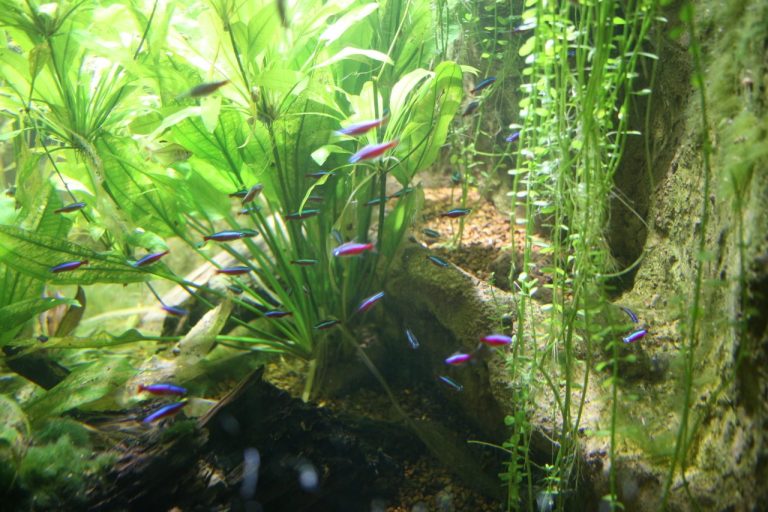
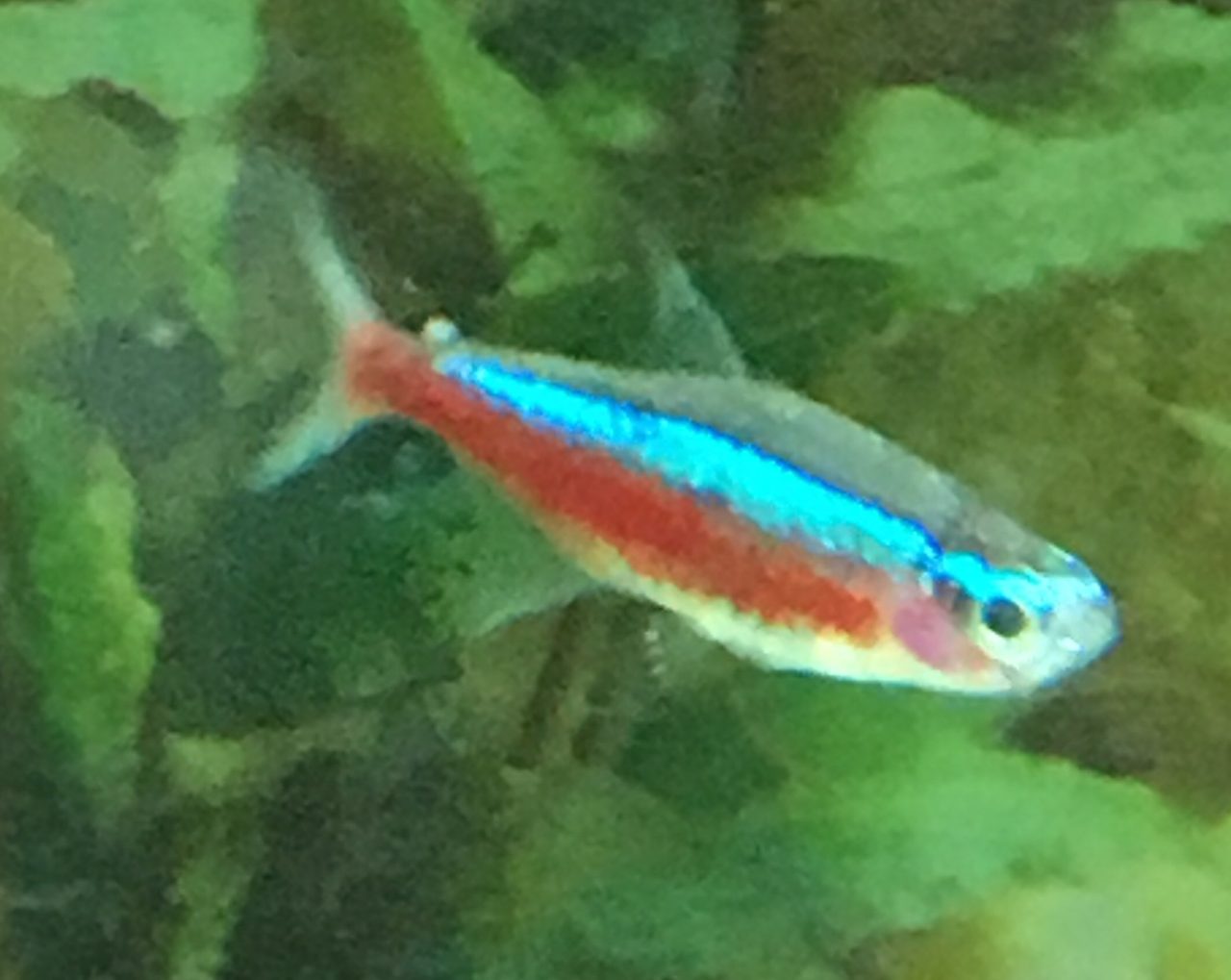
When you see your school swimming tightly together, their neon stripes glowing against the green of your plants, you will know that your hard work in water chemistry has paid off. Stay diligent, keep testing, and enjoy the beauty of a healthy aquarium.

- 2003First tank
- 20+Years keeping
- 40+Tanks kept
- 0Sponsored picks
Howard set up his first 10-gallon planted tank in 2003 and lost half of it within six weeks. Two decades and more than forty aquariums later, he writes the guides he wished he had then: clear numbers, the reasons behind them, and what actually goes wrong in home tanks.