Black Skirt Tetra Male Vs Female – How to Tell Them Apart
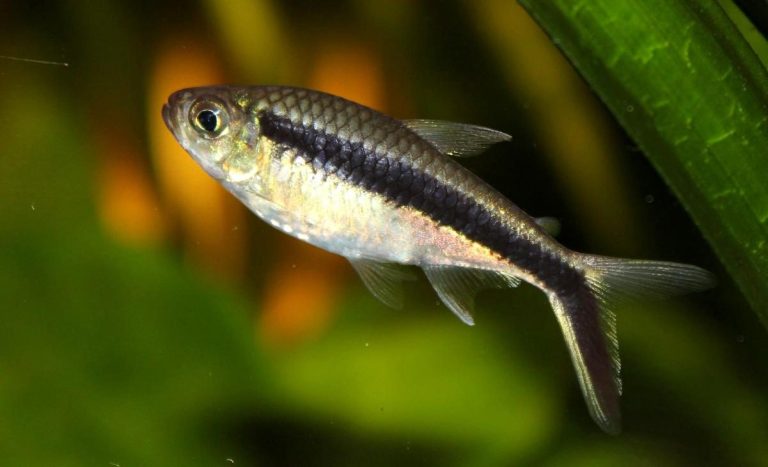
To identify a black skirt tetra male vs female, observe the body shape and anal fin. Males are slimmer with a wider, broader anal fin, while females are noticeably rounder and larger, especially when viewed from above.
Distinguishing between a black skirt tetra male vs female can feel like a daunting task for many hobbyists, especially when these fish are swimming rapidly in a tight school.
In my experience, Gymnocorymbus ternetzi is one of the most satisfying species to keep, but their subtle physical differences require a keen eye.
I remember when I first started keeping these “black widows” over a decade ago; I spent hours staring at my tank trying to figure out why some were “fatter” than others, only to realize I was witnessing natural sexual dimorphism.
Whether you are looking to start a breeding project or simply want to understand the dynamics of your aquarium, knowing the sex of your fish is a fundamental skill.
These members of the Characidae family are prolific and hardy, making them excellent candidates for those looking to explore oviparity (egg-laying).
In this comprehensive guide, I will share the exact methods I use to tell them apart and how to prepare them for a successful spawning event.
At a glance: Black skirt tetra (Gymnocorymbus ternetzi)
- Temperature
- 70–85°F (21–29°C)
- Water pH
- 6.0–7.5
- Adult size
- 2.5 in (6 cm)
- Minimum tank
- 20 gal
- Group size
- Groups of 6+
- Temperament
- Semi-peaceful, may nip fins
- Diet
- Omnivore: flakes, pellets, frozen foods
- Lifespan
- 3–5 years
Keeper’s tip: Keep them in a proper group; singles and pairs are the ones that harass bettas and angelfish.
Understanding the Physical Differences: black skirt tetra male vs female
The primary challenge in sexing these fish is that they are not sexually dichromatic, meaning they don’t have vastly different colors.
Instead, we must rely on morphology, specifically the ventral contour and the anal fin morphology, to make an accurate assessment.
When they are juveniles, they look almost identical, but as they reach maturity (usually around 1.5 to 2 inches), the differences become quite apparent to the trained eye.
Examining the Body Shape and Ventral Contour
The most reliable way to identify a black skirt tetra male vs female is by looking at the overall girth and the curve of the belly.
Females are significantly deeper-bodied than males, which is a common trait among many tetra species.
In my years of maintaining schools, I’ve noticed that the female’s ventral contour—the line along the bottom of the fish—is much more rounded and convex.
Males, by contrast, maintain a much more streamlined and slender profile throughout their lives.
If you look at your school from directly above the tank, the difference is even more striking; the females will look “bulky” in the midsection, while the males look like narrow slivers.
Analyzing Fin Morphology and the Dorsal Fin Profile
The fins offer the second most important set of clues for identification.
The anal fin morphology is particularly telling in this species.
Males typically possess a much broader, more flared anal fin that extends further back toward the tail.
This fin often has a more pronounced “skirt” appearance, which is where the fish gets its common name.
The dorsal fin profile can also provide a hint, though it is slightly more subtle.
In many males, the dorsal fin appears slightly more pointed and elongated compared to the somewhat more rounded dorsal fin of the female.
When a male is displaying for a female or defending a small patch of territory, he will flare these fins, making the differences even more obvious.
Pro Tip: To get the best view of the fins, try feeding a small amount of flake food. As the fish dart and turn to catch the food, they often flare their fins fully, allowing you to see the width of the anal fin much more clearly than when they are at rest.
Comparative Analysis Table
To help you visualize these differences, I have put together this comparison table based on my observations of healthy, adult specimens.
| Feature | Male Black Skirt Tetra | Female Black Skirt Tetra |
|---|---|---|
| Body Shape | Slender, streamlined, and relatively flat sides. | Rounder, deeper-bodied, and thicker when viewed from above. |
| Anal Fin | Broad, wide, and more pronounced “skirt” shape. | Narrower and runs more parallel to the body line. |
| Dorsal Fin | Often more pointed at the tip. | Generally more rounded or blunt at the tip. |
| Size | Slightly smaller on average. | Often grows larger and taller than the male. |
| Behavior | More active, prone to “dancing” or chasing. | Generally more passive unless being pursued. |
Behavioral Clues in the School
Beyond physical traits, behavior is a fantastic indicator of a black skirt tetra male vs female.
When you observe a school, you will often notice certain individuals “sparring” or chasing each other.
In most cases, these are males establishing a pecking order or attempting to court a female.
Males will often swim in tight circles around a female, shimmying their bodies to get her attention.
Females tend to be the ones being chased.
If you see a fish that seems to be the “target” of several others, and that fish is also the roundest in the group, you can be 99% certain it is a female.
Understanding these social interactions is key to maintaining a peaceful community and is vital if you want to know how to breed tetra fish successfully.
Preparing for Breeding: Water Chemistry and Environment
Once you have identified your black skirt tetra male vs female pairs, the next step is conditioning them for spawning.
These fish come from the Rio Paraguay and Rio Guaporé basins, where the water is soft and slightly acidic.
To trigger their natural breeding instincts, you need to replicate these conditions in a controlled environment.
The Importance of Humic Acid and Soft Water
In my experience, the addition of humic acid is a “secret weapon” for tetra breeders.
You can introduce this naturally by adding Indian Almond leaves (Catappa leaves) or high-quality peat moss to your filtration system.
This lowers the pH and also provides a more natural, “blackwater” feel that encourages oviparity.
You should also pay close attention to the carbonate hardness (KH) of your water.
Black skirt tetras prefer very soft water for egg development.
If the water is too hard, the eggs may fail to hydrate properly, leading to a poor hatch rate.
Aim for a KH of 1-3 degrees and a pH between 6.0 and 6.8 for the best results.
Setting Up the Spawning Tank
A dedicated spawning tank is much more effective than trying to breed them in a community setting.
I recommend a 10 to 20-gallon tank with a bare bottom or a mesh grid to protect the eggs.
Since these fish are egg-scatterers and have no parental instincts, they will eat their own eggs if given the chance.
You should provide plenty of fine-leaved plants like Java Moss or a synthetic spawning mop.
The spawning mop provides a safe place for the eggs to fall and hide from the hungry parents.
Before introducing your fish, make sure you have researched the ideal tetra tank size to help they have enough room to perform their spawning chase without hitting the glass.
Common Mistake: Many beginners forget to remove the adult fish immediately after spawning. Black skirt tetras are notorious egg eaters. Once you see the female looking “thin” and the male’s chasing behavior has stopped, remove the adults to a separate tank to ensure the fry survive.
Conditioning with High-Quality Nutrition
To make sure the female is “gravid” (full of eggs), you must provide superior nutrition.
While they will survive on flakes, they need protein-rich live or frozen foods to produce high-quality eggs.
I have found that a rotation of brine shrimp, daphnia, and bloodworms works wonders.
In my decade of keeping these fish, I’ve noticed that a well-fed female can significantly outlive a poorly fed one, which is an important factor when considering how long do black tetras live in a home aquarium.
Feed small amounts 3-4 times a day during the conditioning phase.
This mimics the abundance of food found in the wild during the rainy season, which is the natural time for spawning.
Within two weeks of this regimen, the ventral contour of the females should be noticeably distended, indicating they are ready to spawn.
Step-by-Step Spawning Guide
- Select the Pair: Choose the most sturdy male and the roundest female from your school.
- Transfer at Night: Move the pair to the prepared spawning tank in the evening.
- The Morning Trigger: Spawning usually occurs at dawn. The male will drive the female into the plants or spawning mop.
- Egg Deposition: The female will release up to 500-1000 eggs among the vegetation.
- Remove Parents: As soon as the activity ceases, return the parents to the main tank.
- Darkness is Key: Tetra eggs are often light-sensitive. Keep the tank lights off or cover the sides with paper for the first 24-48 hours.
Questions I get asked a lot
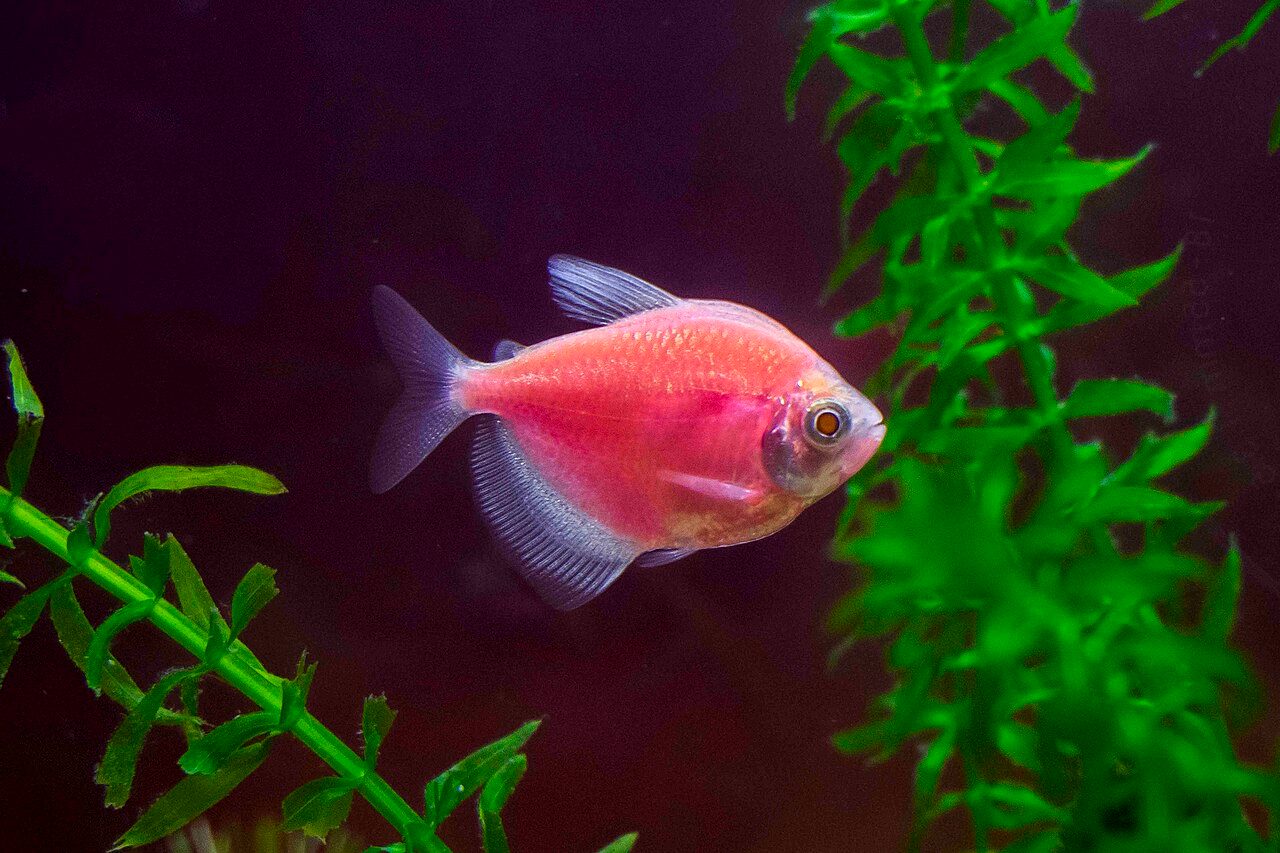
Can I tell the sex of a GloFish Black Skirt Tetra?
Yes, the rules for a black skirt tetra male vs female apply exactly the same way to the GloFish varieties.
The genetic modification for color does not change their anal fin morphology or body shape.
Look for the rounder belly in females and the wider “skirt” in males, just as you would with the wild-type fish.
At what age can you distinguish the sex?
Usually, you can begin to see the differences when the fish are about 4 to 6 months old.
In my experience, it is much easier to tell them apart once they reach their full adult size of about 2 inches.
Patience is key; trying to sex juveniles is often just a guessing game.
Does the color intensity vary between male and female?
Generally, no. Both sexes will lose some of their black coloration as they age, turning more of a smoky gray.
However, during spawning, the male may appear slightly darker or more “contrasted” as he displays for the female.
If your fish are very pale, it is usually a sign of stress or poor water quality rather than a gender trait.
What should I do if my female is fat but not laying eggs?
This is a common issue often called being “egg-bound.”
First, make sure your water parameters are correct, specifically the carbonate hardness and temperature.
Sometimes a slight temperature increase (to about 80°F) followed by a large cool water change can trigger the release of eggs.
If she remains bloated without spawning, it could also be a sign of internal parasites or dropsy, so monitor her behavior closely.
Final thoughts
Mastering the identification of a black skirt tetra male vs female is a milestone in the journey of any aquarist.
If you focus on the ventral contour and the anal fin morphology, you can accurately sex your fish and provide them with the specific care they need.
These fish are social creatures that settle in in schools of six or more.
Whether you are aiming to witness the miracle of oviparity or just want a balanced community, understanding these subtle differences improves your connection to the hobby.
Keep your water soft, provide plenty of humic acid, and enjoy the elegant “skirted” dance of these classic aquarium inhabitants.
With the right preparation and a bit of patience, you will find that breeding and maintaining Gymnocorymbus ternetzi is one of the most fulfilling experiences a fish keeper can have.

- 2003First tank
- 20+Years keeping
- 40+Tanks kept
- 0Sponsored picks
Howard set up his first 10-gallon planted tank in 2003 and lost half of it within six weeks. Two decades and more than forty aquariums later, he writes the guides he wished he had then: clear numbers, the reasons behind them, and what actually goes wrong in home tanks.