Neon Tetra And Betta – Can They Live Together?
Yes, neon tetras and bettas can coexist peacefully in a 20-gallon or larger planted aquarium. Success requires careful attention to water parameters, tank layout, and monitoring individual fish temperaments to prevent aggression or fin nipping.
Creating a rich community aquarium often starts with the dream of housing two of the most iconic freshwater fish together. I remember the first time I attempted to keep a neon tetra and betta combination in a 10-gallon tank; it was a stressful learning experience that taught me the value of space and environment.
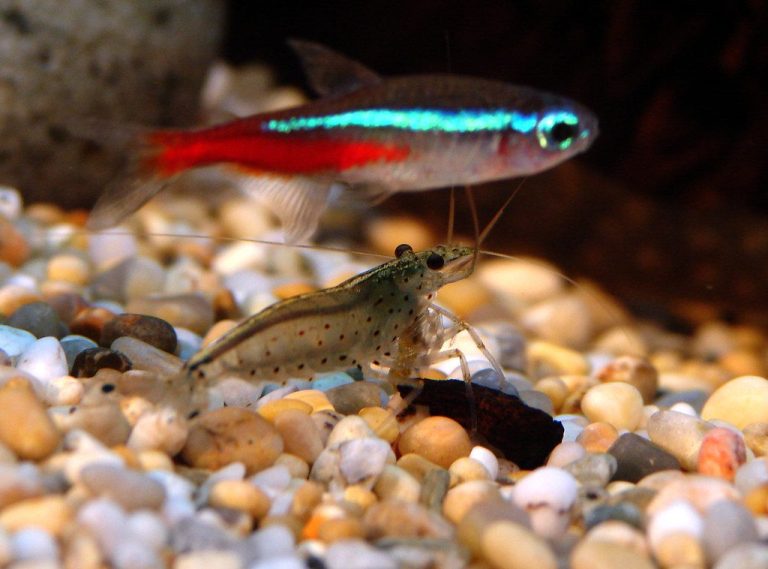
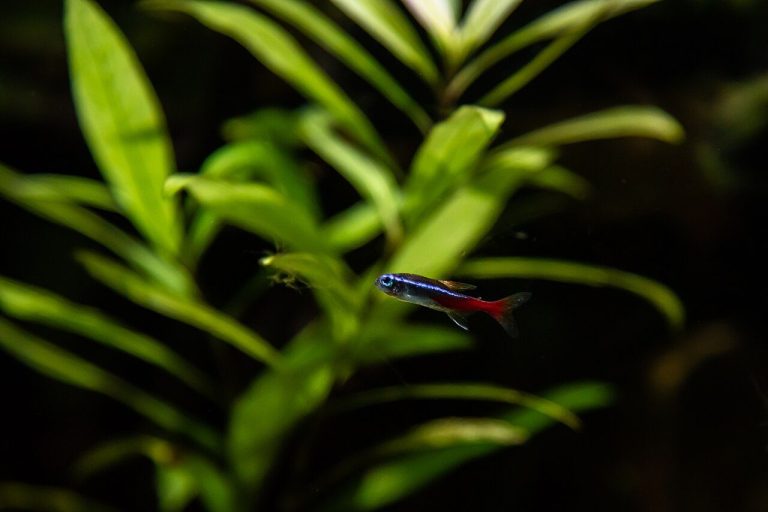
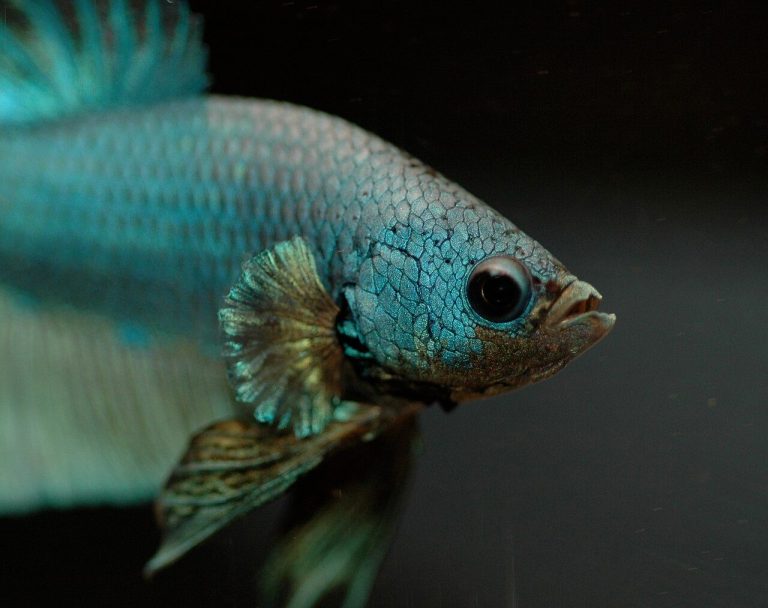
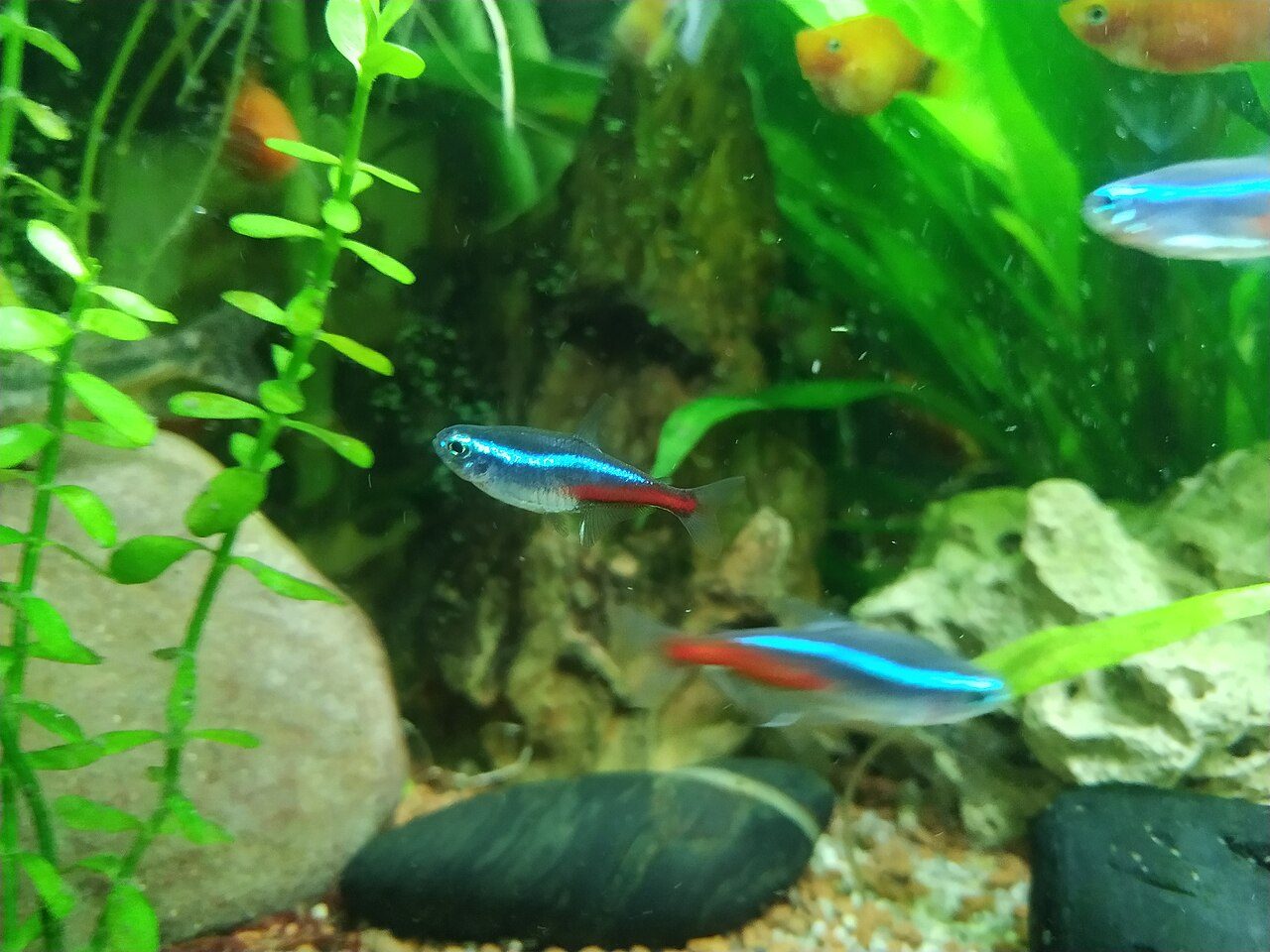
Over my ten years of fish keeping, I have found that while these two species have different personalities, they can share a home beautifully under the right conditions. The shimmering blue of the Paracheirodon innesi (Neon Tetra) provides a striking contrast to the flowing fins of a Betta splendens.
Achieving this balance isn’t just about luck; it is about understanding the biological needs and social behaviors of each species. This guide will walk you through everything you need to know to ensure your neon tetra and betta tank is a well-kept, stress-free environment for all its inhabitants.
At a glance: Neon tetra (Paracheirodon innesi)
- Temperature
- 72–78°F (22–26°C)
- Water pH
- 6.0–7.0
- Adult size
- 1.5 in (4 cm)
- Minimum tank
- 10 gal (20 gal for a proper school)
- Group size
- Groups of 8+
- Temperament
- Peaceful
- Diet
- Omnivore: micro pellets, flakes, frozen daphnia
- Lifespan
- 5–8 years
Keeper’s tip: Add neons only to a fully cycled, stable tank; they are among the first fish to suffer from ammonia swings.
Understanding the Compatibility of Neon Tetra and Betta
The success of a community tank depends heavily on the “personality” of your Betta. Some Bettas are remarkably laid back, while others will flare at their own reflection.
In my experience, neon tetras often serve as excellent dither fish. Their fast-moving nature and schooling behavior can actually help a shy Betta feel more secure in the open areas of the tank.
However, you must consider the physical requirements of both fish. Neons are energetic schoolers that need swimming room, while Bettas possess a labyrinth organ, allowing them to breathe atmospheric air from the surface.
Neon tetras are not solitary creatures and must be kept in groups of at least six to ten individuals. A smaller group often becomes stressed, which can lead to aggressive behavior or a weakened immune system.
When tetras are stressed, they are more likely to engage in fin nipping. This is a significant concern when their tank mate is a long-finned Betta who cannot swim fast enough to escape the “poking.”
Individual Betta Temperament
Before committing to this pairing, it is vital to assess your Betta’s attitude. If you notice your Betta attacking snails or shrimp, they may be too aggressive for a school of tetras.
I always recommend having a backup plan, such as a smaller cycled tank, just in case the introduction does not go as planned. Understanding the neon tetra care level will help you realize that while they are hardy, they still require a peaceful environment to sparkle.
Pro Tip: Try the “Mirror Test” before adding tank mates. Place a mirror outside the glass for two minutes; if your Betta becomes uncontrollably aggressive rather than just mildly curious, he might be better off in a solo setup.
Essential Tank Requirements for a Neon Tetra and Betta Setup
The most common mistake beginners make is choosing a tank that is too small. While a Betta can technically survive in a 5-gallon tank, a community including a neon tetra and betta requires significantly more volume.
I strongly recommend a minimum of a 20 gallon tank for this specific community. This volume provides enough “territory” for the Betta to claim a spot while allowing the tetras to school freely without invading the Betta’s personal space.
Water Parameters and Stability
Both species originate from similar environments in South America and Southeast Asia, respectively, preferring soft, slightly acidic water. Consistency is much more important than hitting a “perfect” number, as sudden swings can trigger diseases.
| Parameter | Ideal Range | Importance |
|---|---|---|
| Temperature | 75°F – 80°F (24°C – 27°C) | Balances the needs of both tropical species. |
| pH Level | 6.5 – 7.5 | Prevents stress and maintains slime coats. |
| General Hardness (GH) | 2 – 10 dGH | Makes sure proper osmoregulation in tetras. |
| Ammonia / Nitrite | 0 ppm | Essential for long-term survival. |
Filtration and Flow Management
Bettas are not strong swimmers due to their heavy fins and prefer low-flow environments. However, a school of tetras produces a decent amount of waste, requiring efficient filtration.
You must find a balance by using an adjustable filter or a pre-filter sponge to baffle the intake and outflow. This allows nitrifying bacteria to flourish in the filter media without creating a whirlpool that exhausts your Betta.
Designing the Perfect Habitat
The layout of your tank is the “secret sauce” to keeping a neon tetra and betta together successfully. A barren tank is a recipe for disaster, as the fish will be in constant visual contact.
In my years of scaping, I’ve found that a “broken line of sight” is the most effective way to reduce aggression. This means using tall plants, driftwood, and rocks to create natural barriers.
Replicating a Blackwater Habitat
Both species do well in environments that mimic a blackwater habitat. By adding Indian Almond leaves or driftwood, you release tannic acid into the water.
These tannins naturally lower the pH and provide mild antibacterial properties. The slightly stained, tea-colored water also helps the neon tetras’ colors “pop” while making the Betta feel more secure and less exposed.
Choosing the Right Plants
Live plants are essential for absorbing nitrates and providing hiding spots. I recommend floating plants like Amazon Frogbit or Salvinia, which provide shade that Bettas love.
For the midground and background, consider Java Fern or Amazon Swords. These hardy plants offer dense foliage where a tetra can duck away if the Betta decides to patrol his territory.
Pro Tip: Place a “Betta Hammock” or a broad-leafed plant near the surface. Since Bettas need to breathe air, providing a resting spot close to the surface prevents them from getting exhausted.
Managing Diet and Feeding Habits
Feeding a community tank can be tricky, especially when one resident is a slow, deliberate eater and the others are fast, “piranha-like” schoolers. Neon tetras are notorious for intercepting food before it reaches the bottom.
Bettas are primarily insectivores, while tetras are omnivores. You may wonder can neon tetras eat betta food? The answer is yes, but a varied diet is better for everyone.
Strategic Feeding Techniques
I’ve found that “distraction feeding” works best. Drop a small amount of micro-pellets or crushed flakes at one end of the tank for the tetras.
While the tetras are occupied, use a pair of feeding tongs to deliver high-quality Betta pellets directly to your Betta at the other end. This helps make sure the Betta gets his nutrients without having to compete with the speedy tetras.
Nutritional Variety
Offering frozen or live foods like daphnia or brine shrimp once or twice a week is highly beneficial. These foods are excellent for the digestive health of both species and encourage natural hunting behaviors.
Avoid overfeeding, as excess food will rot and spike your ammonia levels. A clean tank is a healthy tank, and healthy fish are far less likely to show aggression.
Potential Challenges and Health Risks
Even with a perfect setup, keeping a neon tetra and betta together presents certain risks. You must be vigilant and observe your fish daily for signs of stress or illness.
The most common issues arise from physical injury or environmental stress. Stress lowers the immune system, making fish susceptible to opportunistic pathogens.
Dealing with Fin Nipping and Aggression
If you notice the Betta’s fins looking ragged or “chopped,” you likely have a fin nipping problem. This usually happens if the tetra school is too small or the tank is too cramped.
Conversely, if a tetra is missing or has damaged scales, the Betta may be hunting them. If this behavior persists for more than 48 hours, you must separate the fish immediately.
Common Diseases
Both species are susceptible to Columnaris, a bacterial infection that often looks like white patches or “saddleback” disease. This often flares up in tanks with poor water quality or high stress levels.
Keep an eye out for “Ich” (white spot disease) as well. Because neons are sensitive to many medications, always research “half-dose” treatments or heat-based therapies if an outbreak occurs in a community setting.
Step-by-Step Introduction Process
How you introduce these fish to each other can determine the long-term success of the tank. I always recommend adding the tetras first.
By letting the neon tetras establish themselves for 2-3 weeks, they become familiar with the hiding spots. When you finally add the Betta, he is the “new guy” entering their territory, rather than the tetras invading “his” space.
The Acclimation Phase
- Cycle your tank completely until ammonia and nitrites are zero.
- Add your school of 10-12 neon tetras and monitor them for two weeks.
- Use a clear container or a breeder box to float the Betta in the tank for 30 minutes.
- Observe the Betta’s reaction; if he is flaring aggressively at the tetras through the plastic, take it slow.
- Release the Betta near a heavily planted area during a time when you can monitor them for several hours.
The 48-Hour Observation Rule
The first 48 hours are the most critical. Watch for “stalking” behavior from the Betta.
A little bit of curiosity is normal, but constant chasing is a red flag. If the tetras are hiding 100% of the time, they are too stressed, and the arrangement may not be working.
Questions and answers
Can I keep a female Betta with neon tetras? Yes, female Bettas are generally less aggressive and have shorter fins, making them less of a target for nipping and less likely to hunt the tetras. However, individual temperament still varies.
How many neon tetras can I keep with one Betta? In a 20-gallon tank, a school of 10 to 12 neon tetras with one male Betta is a perfect balance. This provides a full-looking tank without overstressing the biological filter.
Do neon tetras need a heater if kept with a Betta? Absolutely. Both are tropical fish. While tetras can tolerate slightly cooler water than Bettas, a stable temperature of 78°F is the “sweet spot” where both species stay healthy.
What should I do if my Betta is hiding all the time? If your Betta is hiding, the water flow might be too strong, or the neon tetras might be too hyperactive for his personality. Try reducing the filter flow or adding more floating plants to provide cover.
Where that leaves you
Successfully keeping a neon tetra and betta together is one of the most satisfying milestones for an intermediate hobbyist. It requires a blend of patience, environmental design, and a keen eye for fish behavior.
If you provide a spacious 20-gallon environment, plenty of live plants, and maintaining pristine water conditions, you create a miniature ecosystem where these two species can shine. Every fish is an individual; what works for one person might require adjustment for another.
In my experience, the key is never to rush the process. If you respect the needs of the Paracheirodon innesi and the Betta splendens, you will be rewarded with a peaceful, shimmering display that brings life and color to your home for years to come.

- 2003First tank
- 20+Years keeping
- 40+Tanks kept
- 0Sponsored picks
Howard set up his first 10-gallon planted tank in 2003 and lost half of it within six weeks. Two decades and more than forty aquariums later, he writes the guides he wished he had then: clear numbers, the reasons behind them, and what actually goes wrong in home tanks.