Neon Tetra With Betta – Can They Live Together?
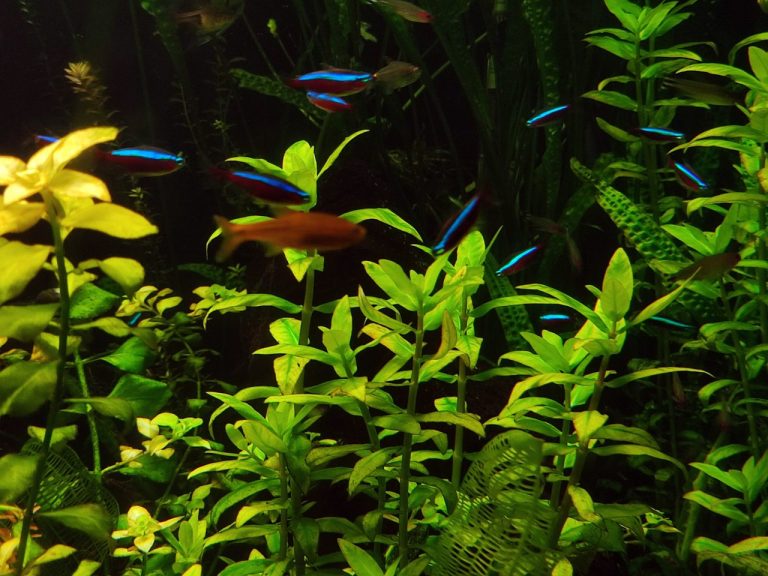
Making sure a neon tetra with betta is highly successful in tanks of 20 gallons or larger with dense live plants. Success relies on the betta’s temperament and providing enough space for the tetras to school safely.
The dream of a shimmering school of blue and red darting around a majestic, flowy-finned centerpiece is one shared by many hobbyists. When I first started keeping fish over a decade ago, one of my biggest questions was whether I could keep a neon tetra with betta companions without ending up with a disaster.
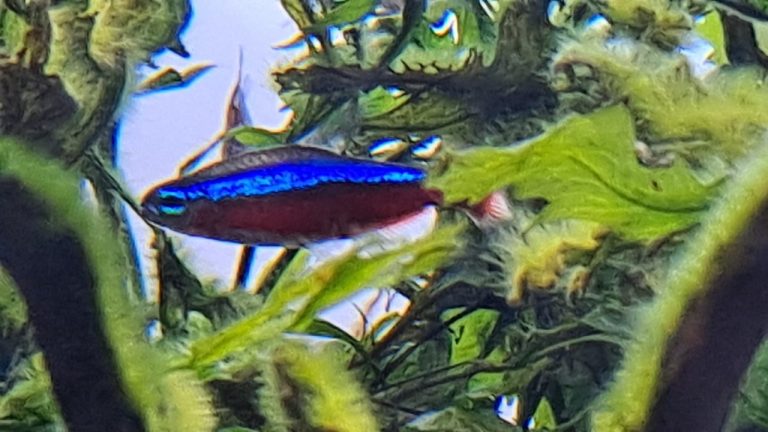
It is a classic pairing that brings together the iridescent beauty of Paracheirodon innesi and the bold personality of Betta splendens. While many beginners assume these two cannot coexist, I have found that with the right environment, they often do well together.
In this guide, I will share the exact strategies I use to maintain this community. We will cover everything from water chemistry and tank size to the specific behavioral cues you need to watch for.
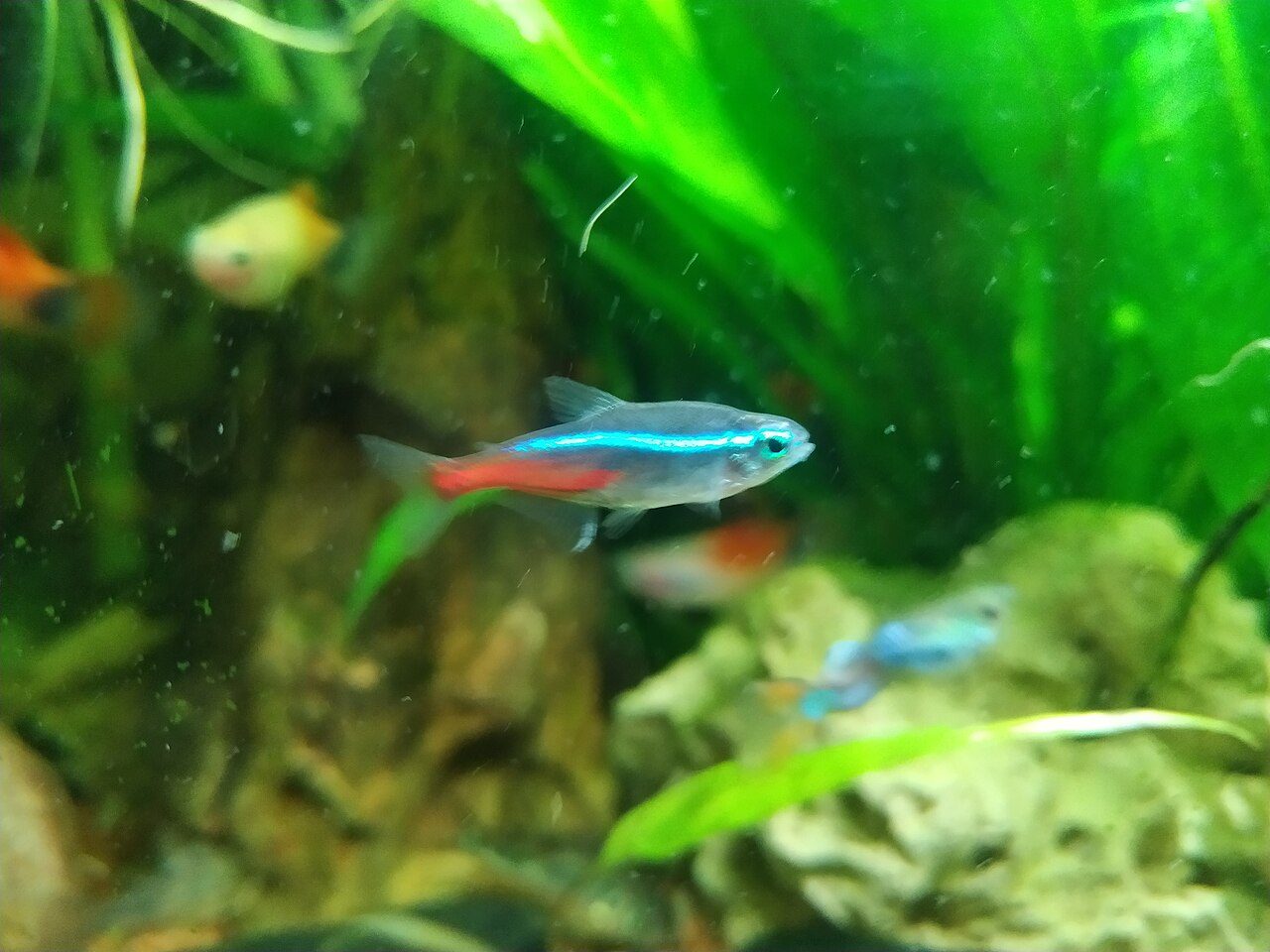
At a glance: Neon tetra (Paracheirodon innesi)
- Temperature
- 72–78°F (22–26°C)
- Water pH
- 6.0–7.0
- Adult size
- 1.5 in (4 cm)
- Minimum tank
- 10 gal (20 gal for a proper school)
- Group size
- Groups of 8+
- Temperament
- Peaceful
- Diet
- Omnivore: micro pellets, flakes, frozen daphnia
- Lifespan
- 5–8 years
Keeper’s tip: Add neons only to a fully cycled, stable tank; they are among the first fish to suffer from ammonia swings.
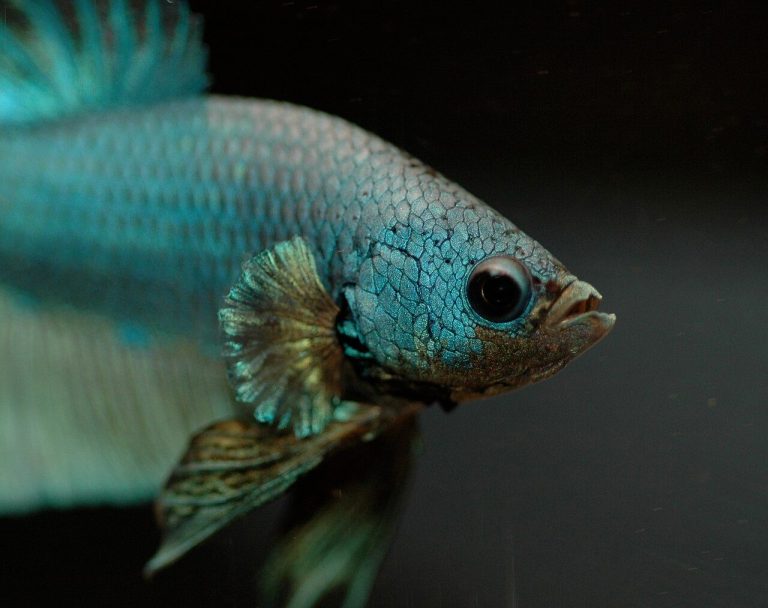
The primary concern when mixing these species is the predatory nature of the betta. Bettas are naturally territorial and may view smaller, bright fish as either intruders or food.
However, the neon tetra is a fast-moving species that tends to stay in the middle of the water column. In my experience, a healthy school of tetras can easily outmaneuver a long-finned betta if the tank is large enough.
The betta’s long fins, while beautiful, actually make them slower swimmers. This physical limitation gives the tetras a distinct advantage if a chase ever occurs.
Pro Tip: Always observe your betta’s personality before adding tank mates. If your betta constantly flares at its own reflection or attacks a snail, it is likely too aggressive for a community setting.
The Role of the Dither Fish
In the aquarium world, we often refer to schooling fish like neons as dither fish. Their constant, peaceful movement signals to the betta that the environment is safe and free of predators.
When the betta sees the tetras swimming calmly, it often reduces its own stress levels. This creates a much more peaceful environment for everyone involved.
It is vital to keep the tetras in a group of at least six to ten individuals. A larger school provides a sense of security for the tetras and prevents them from becoming nippy toward the betta’s fins.
Ideal Water Parameters for Both Species
To keep a neon tetra with betta successfully, you must find the “sweet spot” where their water requirements overlap. Fortunately, both species originate from similar soft-water environments in South America and Southeast Asia.
Both fish prefer slightly acidic to neutral water. They also require stable temperatures to prevent common ailments like Ichthyophthirius multifiliis (Ich).
| Parameter | Ideal Range | Importance |
|---|---|---|
| Temperature | 75°F – 80°F (24°C – 27°C) | Keeps metabolic rates stable. |
| pH Level | 6.0 – 7.0 | Supports healthy gill function. |
| General Hardness (dGH) | 2 – 10 dGH | Prevents osmotic stress. |
| Carbonate Hardness (dKH) | 1 – 5 dKH | Buffers pH to prevent crashes. |
Maintaining a consistent neon tetra temperature is the most critical factor here. If the water gets too cold, the betta’s immune system will drop; if it gets too hot, the tetras may suffer from shortened lifespans.
I recommend using a high-quality adjustable heater and a reliable thermometer. Even a two-degree swing can be enough to trigger a stress response in sensitive neons.
Setting Up the Perfect Environment
When planning for a neon tetra with betta community, tank size is non-negotiable. While you might see people keeping them in 10-gallon tanks, I strongly advise against it for beginners.
A 20-gallon “long” tank is the gold standard for this pairing. The extra horizontal swimming space allows the tetras to school properly and gives the betta enough room to establish a territory.
If the tank is too small, the betta will feel crowded. This leads to increased aggression and potential fin nipping from the tetras, who may pick at the betta out of boredom or stress.
The Importance of Live Plants
Live plants are your best friend in a community tank. They provide “line-of-sight” breaks, which are essential for keeping the peace.
If the betta cannot see the tetras at all times, it is much less likely to chase them. I love using tall plants like Amazon Swords or Vallisneria in the background and floating plants like Frogbit on the surface.
Floating plants are particularly helpful for bettas. Because they possess a labyrinth organ, they need to breathe air from the surface, and floating plants provide a safe resting spot near the top.
Adding Tannic Acid
In their natural habitats, both fish encounter leaf litter that releases tannic acid into the water. This slightly tints the water a tea color and provides natural antibacterial properties.
I often add Indian Almond Leaves or driftwood to my tanks. This mimics their natural environment and also helps lower the pH naturally and reduces fish stress.
When the water is rich in tannins, I’ve noticed that the colors of the neon colorful freshwater fish become much more colorful. The dark water makes their iridescent blue stripes pop significantly.
How to Introduce a Neon Tetra with Betta
The order in which you add your fish can determine the success of the entire project. If you add a betta to a tank first, it will claim the entire space as its territory.
When you later add the tetras, the betta sees them as invaders. This almost always leads to aggression.
Instead, I recommend adding the school of neon tetras first. Let them settle in for two to three weeks so they can learn the layout of the tank and find their favorite hiding spots.
Pro Tip: When finally adding the betta, try to do it during a time when you can monitor the tank for several hours. If the betta immediately begins pinning tetras into corners, you may need to remove it and try a more peaceful individual.
Feeding Your Community
Feeding can be a challenge because bettas are often “pigs” that will try to eat everything. You need to make sure the tetras get their share without the betta overeating.
Bettas require a high-protein diet, while neons are omnivores. I usually feed the betta in one corner of the tank with floating pellets and simultaneously scatter micro-granules or flakes for the tetras in the opposite corner.
If you are wondering can neon tetras eat betta food, the answer is yes, but it shouldn’t be their only source of nutrition. Neons need smaller particles that are easier for their tiny mouths to handle.
Common Health Issues and Prevention
Even in a well-managed tank, health issues can arise. Stress from a bullying tank mate is the number one precursor to disease.
Keep a close eye on the tetras for any signs of Columnaris, which looks like white, cottony growths. This bacterial infection can spread rapidly in a stressed community.
Another common issue is Ichthyophthirius multifiliis, or white spot disease. This often appears when there are sudden temperature fluctuations.
| Disease | Symptoms | Prevention/Treatment |
|---|---|---|
| Ich (White Spot) | Small white grains on skin/fins. | Raise temp slowly; use copper-based meds. |
| Fin Rot | Frayed or blackened fin edges. | Improve water quality; reduce stress. |
| Columnaris | Gray/white patches on body. | Antibiotics; lower water temperature slightly. |
If you notice the betta hiding constantly or the tetras losing their color, it is a sign that something is wrong with the social dynamic or the water quality. Always test your ammonia, nitrite, and nitrate levels first.
Common questions
Can I keep a neon tetra with betta in a 5-gallon tank?
Absolutely not. A 5-gallon tank is too small for a school of tetras and a betta. The lack of space will lead to extreme stress, aggression, and poor water quality.
Will the betta eat my neon tetras?
It is possible if the betta is large and the neons are very small juveniles. However, adult neons are usually too large and fast for a standard betta to catch and eat.
How many neon tetras should be in a tank with a betta?
I recommend a minimum of 10 tetras. A larger school makes the tetras feel safe and prevents them from nipping at the betta’s long fins.
What should I do if my betta is chasing the tetras?
First, try adding more plants to break the line of sight. If the chasing is persistent and the tetras are hiding all the time, you must separate them.
Final Thoughts on the Neon Tetra with Betta Combination
Successfully keeping a neon tetra with betta is one of the most satisfying experiences in the hobby. It creates a vivid, active display that shows off two of the most iconic species in the fish-keeping world.
The biggest factor lies in preparation. If you choose a 20-gallon tank, adding plenty of live plants, and introducing the tetras first, you set yourself up for a peaceful aquarium.
Every fish is an individual. While many bettas are perfectly happy in a community, some simply prefer to live alone. Always have a backup plan (like a second cycled tank) just in case your betta turns out to be a “loner.”
If you follow these guidelines and maintaining stable water parameters, you can enjoy the striking beauty of these fish for years to come.

- 2003First tank
- 20+Years keeping
- 40+Tanks kept
- 0Sponsored picks
Howard set up his first 10-gallon planted tank in 2003 and lost half of it within six weeks. Two decades and more than forty aquariums later, he writes the guides he wished he had then: clear numbers, the reasons behind them, and what actually goes wrong in home tanks.