Runny Nose Tetra – Care
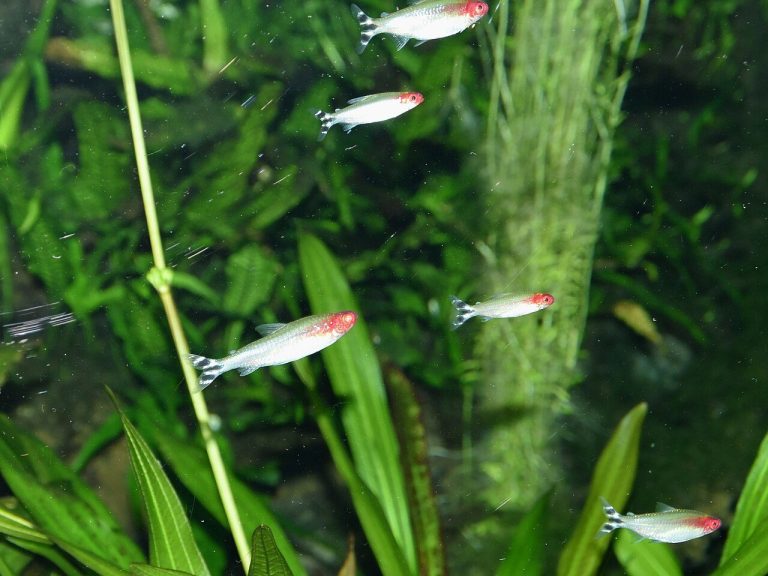
The runny nose tetra, scientifically known as Hemigrammus bleheri, is a peaceful schooling fish famous for its deep red head and striped tail. They require stable, soft, acidic water and a minimum tank size of 20 gallons to do well.
Few fish in the freshwater hobby capture the eye quite like the runny nose tetra. Over my ten years of maintaining South American biotopes, I have found that these fish act as the ultimate “canary in the coal mine” for aquarium health.
When their environment is perfect, their faces glow with an intense ruby red that is simply unmatched by other characins. However, they are also sensitive creatures that demand a specific approach to water chemistry and tank maintenance.
In this guide, I will share the exact methods I use to keep these striking fish healthy and colorful.
At a glance: Tetras (general) (Family Characidae and relatives)
- Temperature
- 72–80°F (22–27°C) for most species
- Water pH
- 6.0–7.5 for most species
- Adult size
- 1–3 in (2.5–8 cm)
- Minimum tank
- 10–30 gal depending on species
- Group size
- Groups of 6–10+
- Temperament
- Mostly peaceful schooling fish
- Diet
- Omnivores: quality flakes or micro pellets plus frozen foods
- Lifespan
- 3–8 years
Keeper’s tip: Schooling size matters more than tank size for most tetras: small groups hide, nip and stress.
Understanding the Runny Nose Tetra Species
While most hobbyists use the common name “rummy nose,” the search for runny nose tetra often leads to three very similar species. These include Hemigrammus bleheri, Petitella georgiae, and Petitella rhodostoma.
In my experience, Hemigrammus bleheri is the most popular in the trade because its red coloration extends further past the gill plates. All three species hail from the Rio Negro basin and various Amazonian tributaries, where they handle tea-colored, acidic waters.
These fish are biologically adapted to environments rich in humic acids and low in mineral content. This means they are not “plug-and-play” fish; they require an established biological filter and consistent monitoring to prevent stress.
Pro Tip: When purchasing these fish, look at the intensity of the red on their snout. If the red is pale or pinkish, the fish is likely stressed or the water quality in the shop is poor, making them harder to acclimate at home.
Ideal Tank Setup for Your Runny Nose Tetra
Setting up a home for these tetras requires more than just a glass box and some water. Because they are active swimmers and tight schoolers, they need plenty of horizontal space to move.
A 20-gallon long aquarium is the absolute minimum I recommend for a small school. Providing appropriate tank dimensions allows them to exhibit their natural “shoaling cohesion,” which is a sight to behold.
I prefer using a dark substrate, such as fine sand or specialized plant soil, to make their colors pop. In the wild, they are often found over leaf litter, so adding dried catappa leaves can provide a natural look and beneficial tannins.
| Parameter | Ideal Range |
|---|---|
| Temperature | 75°F to 84°F (24°C – 29°C) |
| pH Level | 5.5 to 6.8 |
| Carbonate Hardness (KH) | 2 to 4 dKH |
| Nitrate | < 20 ppm |
Filtration and Water Movement
The runny nose tetra appreciates a gentle to moderate current that mimics a slow-moving Amazonian stream. I suggest using a high-quality canister filter or a sponge filter with an air stone to keep high oxygenation.
Because they are sensitive to nitrogenous waste, your filtration must be sturdy. I always advise over-filtering a tetra tank to help the water remains crystal clear and free of ammonia spikes.
Lighting and Decoration
To see the best behavior, use floating plants like Amazon Frogbit or Salvinia to dim the light. These fish can be quite skittish under intense, direct lighting, which may cause them to hide.
Incorporate driftwood branches and dense clusters of plants like Java Fern or Cryptocoryne. This creates a complex environment where the fish feel secure enough to swim in the open.
Water Chemistry and the Blackwater Biotope
One of the biggest mistakes I see beginners make is keeping these fish in hard, alkaline tap water. To succeed with the runny nose tetra, you must pay attention to specific conductance and carbonate hardness.
These fish do well in a “blackwater biotope” where the water is stained by tannins. These tannins are not just for aesthetics; they provide antibacterial properties that protect the fish’s delicate slime coat.
Maintaining a low pH is key for their long-term health. If your local tap water is very hard, I recommend mixing it with RO (Reverse Osmosis) water to achieve the ideal water parameters for soft-water species.
The Importance of Stability
While they can adapt to slightly different ranges, they cannot handle rapid fluctuations. When performing water changes, ensure the new water matches the tank temperature and pH exactly.
I have found that small, frequent water changes (about 10-15% weekly) are much better than large, monthly ones. This keeps the water chemistry stable and prevents the fish from losing the red pigment on their faces.
Diet and Nutrition for Vivid Colors
A well-fed runny nose tetra is a healthy one, and their diet directly impacts their color intensity. In the wild, they are omnivores, consuming small insects, crustaceans, and plant matter.
In the home aquarium, they should be offered a variety of high-quality food options. I suggest a base of high-protein flakes or micro-granules supplemented with frozen or live foods.
Frozen baby brine shrimp, daphnia, and cyclops are excellent choices that encourage natural hunting behavior. These foods contain carotenoids, which are essential for maintaining that deep red “runny nose” appearance.
Common Mistake: Feeding only dry flakes can lead to nutritional deficiencies. Always rotate their diet with frozen foods at least three times a week to keep their immune systems strong.
Feeding Schedule
I prefer feeding my tetras twice a day in small amounts that they can consume within two minutes. This prevents excess food from rotting in the substrate and spiking the ammonia levels.
Watch closely during feeding time to make sure every fish is getting their share. Because they are fast swimmers, they usually outcompete slower tank mates, but shy individuals might need extra attention.
The most interesting aspect of the runny nose tetra is their incredible shoaling behavior. Unlike some other tetras that scatter, these fish stay in a tight group, moving as a single unit through the tank.
To see this behavior at its best, you should keep a group of at least 10 to 12 individuals. In smaller groups, they often become stressed, lose their color, and may even hide constantly.
When they feel safe, the school will patrol the middle and lower levels of the aquarium. If you notice the school breaking apart or fish nipping at each other, it is often a sign of a tank that is too small or a group that is too small.
Compatible Tank Mates
Choosing the right neighbors is vital for a peaceful community. You want to avoid large, aggressive, or overly boisterous fish that might intimidate your tetras.
Excellent tank mates include:
- Small Rasboras
- Corydoras Catfish
- Peaceful Dwarf Cichlids (like Apistogramma)
- Other peaceful tetras (Neon or Cardinal Tetras)
- Freshwater Shrimp (though shrimplets may be eaten)
Avoid keeping them with goldfish or large cichlids like Oscars, as the tetras will quickly become an expensive snack.
Common Health Issues and Prevention
The runny nose tetra is unfortunately quite susceptible to certain diseases if their environment is not maintained. The most common issue I encounter is Ichthyophthirius multifiliis, commonly known as Ich.
Ich appears as small white spots on the body and fins, often triggered by a sudden drop in water temperature. Because these fish are sensitive to medications, I always recommend a “half-dose” approach or using heat treatment (gradually raising the temp to 86°F) if the species allows.
Another concern is “Neon Tetra Disease,” which can occasionally affect other characins. Symptoms include a loss of color, cysts, and difficulty swimming. Unfortunately, there is no known cure for this, so quarantine is essential.
The Role of Stress
Most diseases in tetras are a direct result of stress. High nitrates, aggressive tank mates, or swinging pH levels weaken their immune system.
If you see the red color fading from their snout, check your water parameters immediately. This is the fish’s way of telling you that something in the environment is wrong before they actually get sick.
Breeding the Runny Nose Tetra
Breeding these fish is a challenge even for experienced aquarists, but it is incredibly satisfying. They are egg-scatterers and do not provide any parental care to their offspring.
To attempt breeding, you will need a separate spawning tank with very soft water (GH near 0) and a pH of around 5.5. Use a mesh bottom or dense layers of Java Moss to protect the eggs from the hungry parents.
Condition the adults with plenty of live foods like blackworms or brine shrimp for two weeks before moving them to the breeding tank. Once spawning occurs, which usually happens at dawn, the parents must be removed immediately.
The fry are exceptionally small and require “infusoria” or liquid fry food for the first few days. As they grow, you can transition them to freshly hatched brine shrimp.
Still wondering?
How long do runny nose tetras live?
With proper care and stable water parameters, they can live for 5 to 6 years. Their longevity is highly dependent on water quality and a stress-free environment.
What is the maximum size of a runny nose tetra?
They typically reach a maximum size of about 2 to 2.5 inches (5 to 6.5 cm). This makes them a perfect size for medium-sized community tanks.
Why is my tetra’s nose not red?
A pale nose is almost always a sign of stress. This can be caused by poor water quality, lack of oxygen, high nitrates, or being newly introduced to a tank.
Can they live with Bettas?
In a large enough tank (20+ gallons), they can coexist with a peaceful Betta. However, help the Betta is not overly aggressive, as the tetras’ fast swimming can sometimes stress a long-finned Betta.
Do they need a heater?
Yes, they are tropical fish and require a consistent temperature. A high-quality, adjustable heater is necessary to keep the water between 75°F and 84°F.
Wrapping up
The runny nose tetra is a showpiece of the aquatic world, offering both beauty and a helpful indicator of your tank’s health. While they require a bit more effort than the average hardy fish, the sight of a rich red school gliding through a planted tank is well worth the work.
If you focus on soft water, stable parameters, and a high-quality diet, you can enjoy these Amazonian gems for many years. Patience is the most important tool in any aquarist’s kit.
Keep your nitrates low, your tannins high, and your school large. Your tetras will thank you with a display of color and grace that defines the best of the fish-keeping hobby.

- 2003First tank
- 20+Years keeping
- 40+Tanks kept
- 0Sponsored picks
Howard set up his first 10-gallon planted tank in 2003 and lost half of it within six weeks. Two decades and more than forty aquariums later, he writes the guides he wished he had then: clear numbers, the reasons behind them, and what actually goes wrong in home tanks.