How Do You Breed Neon Tetras – Step-by-Step Guide
To breed neon tetras, you must provide a dedicated tank with very soft, acidic water (pH 5.0–6.0) and low lighting. Condition the parents with live foods and use spawning mops to protect the scattered eggs from being eaten.
Many hobbyists ask me, “how do you breed neon tetras” after they see their school darting through a planted tank. While they are common in the trade, getting these shimmering gems to spawn in a home aquarium requires precision and patience.
In my experience, the secret lies in mimicking the dark, soft-water environments of the Amazon basin. If you have ever struggled with eggs fungus-ing over or parents refusing to spawn, you are not alone.
This guide will walk you through the exact steps I have used over the last decade to successfully raise Paracheirodon innesi. From water chemistry to the first feeding of fry, we will cover everything you need to know to become a successful breeder.
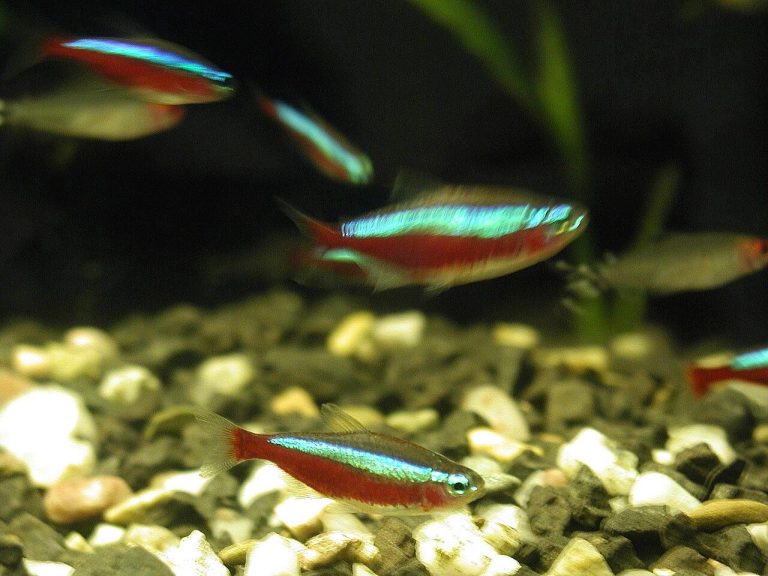
At a glance: Neon tetra (Paracheirodon innesi)
- Temperature
- 72–78°F (22–26°C)
- Water pH
- 6.0–7.0
- Adult size
- 1.5 in (4 cm)
- Minimum tank
- 10 gal (20 gal for a proper school)
- Group size
- Groups of 8+
- Temperament
- Peaceful
- Diet
- Omnivore: micro pellets, flakes, frozen daphnia
- Lifespan
- 5–8 years
Keeper’s tip: Add neons only to a fully cycled, stable tank; they are among the first fish to suffer from ammonia swings.
how do you breed neon tetras: Understanding the Setup
Before you even think about moving fish, you must understand that neon tetras are egg scatterers. They do not provide parental care and will eagerly eat their own eggs if given the chance.
The first step in answering how do you breed neon tetras is setting up a specialized breeding tank. You cannot realistically expect high success rates in a standard community tank due to water hardness and predation.
The Breeding Tank Environment
A small tank, such as a 5 or 10-gallon aquarium, is perfect for a breeding pair or a small group. You should keep the bottom bare to make cleaning easier and to help you spot the tiny, translucent eggs.
Lighting must be extremely dim, as the eggs of Paracheirodon innesi are light-sensitive. Many professional breeders cover the sides of the tank with black paper or keep the room in near darkness during the spawning phase.
Pro Tip: I have found that using a spawning mop made of dark green acrylic yarn works wonders. It provides the fish with a familiar “plant-like” texture to scatter eggs into while being much easier to sterilize than live moss.
Water Chemistry: The Golden Rule
Water parameters are the most critical factor in neon tetra breeding. In the wild, they live in “blackwater” which is incredibly soft and acidic due to decaying organic matter.
You will almost certainly need a reverse osmosis (RO) system to achieve the necessary softness. Using standard tap water is the most common reason for failure, as the minerals in hard water can prevent the eggs from being fertilized.
| Parameter | Ideal Range for Breeding |
|---|---|
| Temperature | 75°F – 77°F (24°C – 25°C) |
| pH Level | 5.0 – 6.0 |
| Water Hardness (dGH) | 1.0 – 2.0 |
| Specific Conductivity | Less than 50 µS/cm |
Selecting and Conditioning Your Breeding Pair
Success starts with healthy, mature adults. You should look for fish that are at least six to nine months old to make sure they are sexually mature and ready for the rigors of spawning.
Learning to sex your fish is vital. Females are generally rounder and have a slightly “bent” neon stripe due to their egg-carrying belly, while males are slimmer with a perfectly straight stripe.
The Conditioning Process
Conditioning is the process of preparing the fish for spawning by feeding them high-quality, nutrient-dense foods. This stimulates egg production in females and increases vigor in males.
I highly recommend using live foods like bloodworms, daphnia, or tubifex worms. If live food isn’t available, high-quality frozen alternatives are acceptable, but live prey often triggers the natural spawning instinct more effectively.
The Role of Tannic Acid
To mimic their natural habitat, consider using peat moss filtration. Adding peat to your filter or boiling it to create a “blackwater extract” adds tannic acid to the water.
This acid naturally lowers the pH and provides anti-fungal properties that protect the eggs. It also tints the water a tea-like color, which helps reduce the light intensity reaching the bottom of the tank.
Pro Tip: When conditioning, I keep the males and females in separate tanks for about a week. When I finally introduce them to the breeding tank, the sudden presence of the opposite sex often triggers immediate interest.
how do you breed neon tetras: The Spawning Process Step-by-Step
Once your fish are conditioned and your tank is ready, it is time to move them into the breeding aquarium. I usually do this in the evening, as neons typically spawn at the first sign of light the following morning.
When you ask how do you breed neon tetras, you are really asking how to trigger a biological response. The transition to the breeding tank should feel like the start of the rainy season to the fish.
The Introduction
Introduce the pair gently to the breeding tank. Keep the water temperature is a degree or two higher than their conditioning tank, as this slight warmth can encourage activity.
Keep the tank completely dark for the first night. The sudden change in water chemistry (the very soft RO water) acts as a massive trigger for the fish to begin their courtship.
Courtship and Egg Laying
In the morning, if you allow a tiny bit of ambient light into the room, you may see the male dancing around the female. He will attempt to drive her toward the spawning mop or fine-leaved plants.
The female will release dozens of tiny eggs, which the male fertilizes instantly. These eggs are non-adhesive or only slightly sticky, so they will fall through the mop or mesh to the bottom of the tank.
Removing the Parents
This is the part where many beginners fail. As soon as you notice the female is slimmer and the spawning behavior has stopped, you must remove the adults.
Neon tetras have no “parental instinct” and will spend the rest of the morning hunting down every egg they just laid. Once the parents are back in their community tank, the real work of raising the fry begins.
Caring for the Eggs and Hatchlings
Now that the parents are gone, your main enemy is fungus. Unfertilized eggs will turn white and fuzzy, and this fungus can quickly spread to healthy eggs.
This is where Methylene blue becomes an essential tool in your kit. Adding a few drops to the water can inhibit fungal growth and significantly increase your hatch rate.
| Stage | Timeline | Care Requirement |
|---|---|---|
| Egg Stage | 0 – 24 Hours | Total darkness; add anti-fungal agent. |
| Wiggler Stage | 24 – 48 Hours | Keep water still; do not feed yet. |
| Free-Swimming | 3 – 4 Days | Begin feeding Infusoria. |
The “Wiggler” Phase
After about 24 hours, the eggs will hatch into tiny “wigglers.” They will look like microscopic slivers of glass attached to the glass or the bottom of the tank.
During this time, they are still absorbing their yolk sacs. Do not attempt to feed them yet, as any uneaten food will rot and kill the sensitive larvae.
First Foods: Infusoria
Once the fry are free-swimming, they are far too small to eat crushed flakes or even baby brine shrimp. You must provide Infusoria, which are microscopic organisms.
I usually start an Infusoria culture a week before I plan to breed the fish. If you don’t have Infusoria, “green water” (algae-rich water) can also provide the necessary nutrients for the first few days of life.
Raising the Fry to Adulthood
After the first week of feeding Infusoria, the fry should be large enough to handle slightly bigger prey. This is the stage where you will see the most growth.
If you have experience breeding various tetra species, you know that water quality is the biggest hurdle. Small, frequent water changes are necessary, but they must be done with extreme care.
Transitioning to Brine Shrimp
At about the 10-day mark, you can introduce brine shrimp nauplii (newly hatched baby brine shrimp). These are packed with protein and fats that will help the fry develop their signature colors.
Seeing the tiny bellies of the fry turn orange from the brine shrimp is one of the most satisfying sights for a breeder. It is a sign that they are eating well and growing strong.
Maintaining Water Quality
When performing water changes in a fry tank, use a small airline tube to siphon out waste. This prevents you from accidentally sucking up the tiny fish.
Always help the new water matches the tank water in temperature and pH. A sudden shift in parameters can shock and kill an entire batch of fry in minutes.
Pro Tip: I use a sponge filter in all my fry tanks. It provides gentle filtration without the risk of sucking up the fry, and it also grows a layer of biofilm that the young fish can snack on between feedings.
Common Mistakes When Breeding Neon Tetras
Even experienced keepers run into issues. If you are wondering how do you breed neon tetras and failing, check these common pitfalls.
One major mistake is ignoring the light sensitivity of the eggs. If the tank is near a window or has bright overhead lights, the eggs will likely die before they ever hatch.
Another issue is water hardness. Even “moderately soft” water is often too hard for Paracheirodon innesi. Investing in a TDS (Total Dissolved Solids) meter can help you ensure your RO water is pure before you begin.
Finally, make sure you are not over-cleaning the tank. While waste must be removed, the fry need a stable environment. Drastic changes are often more dangerous than a small amount of debris on the bottom.
FAQ
Can I breed neon tetras in a community tank?
It is nearly impossible to successfully breed them in a community tank. Other fish will eat the eggs, and the water parameters required for spawning are often too extreme for other bright neon tetra companions.
How many eggs does a neon tetra lay?
A healthy female can lay anywhere from 60 to 130 eggs in a single spawning session. However, it is common for only about 30-50% of these to survive to the free-swimming stage for beginners.
How long does it take for neon tetra fry to show color?
You will usually start to see the first hints of the blue neon stripe at around 3 to 4 weeks. The full red and blue coloration typically develops by the 8-week mark.
Do I need a heater for the breeding tank?
Yes, a stable temperature is vital. However, make sure the heater is shielded or placed in a way that doesn’t create “hot spots” where eggs might settle and cook.
What is the best pH for breeding?
While they can live in a pH of 7.0, spawning requires a much lower range. Aim for a pH between 5.5 and 6.0 for the best results.
Putting it all together
Learning how do you breed neon tetras is a rite of passage for many serious aquarists. It moves you beyond simple fish keeping and into the world of true husbandry and conservation.
If you focus on soft water, low light, and high-quality live foods, you can recreate the magic of the Amazon in your own home. Patience is your best tool; your first few attempts might result in unfertilized eggs, but each try teaches you more about the needs of these incredible fish.
Once you see that first school of home-bred fry swimming together, you will realize that all the effort with RO water and Infusoria was worth it. Keep experimenting, stay diligent with your water changes, and enjoy the satisfying journey of breeding the iconic neon tetra.

- 2003First tank
- 20+Years keeping
- 40+Tanks kept
- 0Sponsored picks
Howard set up his first 10-gallon planted tank in 2003 and lost half of it within six weeks. Two decades and more than forty aquariums later, he writes the guides he wished he had then: clear numbers, the reasons behind them, and what actually goes wrong in home tanks.