How Big Do Neon Fish Get – The Ultimate Guide To Neon Tetra Growth
Neon fish, specifically Neon Tetras, typically reach a maximum size of 1.5 inches (4 cm) in home aquariums. While most stay around 1.25 inches, right diet and water quality allow them to reach their full potential.
The Neon Tetra, scientifically known as Paracheirodon innesi, is perhaps the most iconic fish in the freshwater hobby.
When beginners ask how big do neon fish get, they are often surprised to learn that these colorful jewels remain quite small throughout their lives.
In my experience over the last decade, understanding their growth potential is the first step toward creating a stable, stress-free community tank.
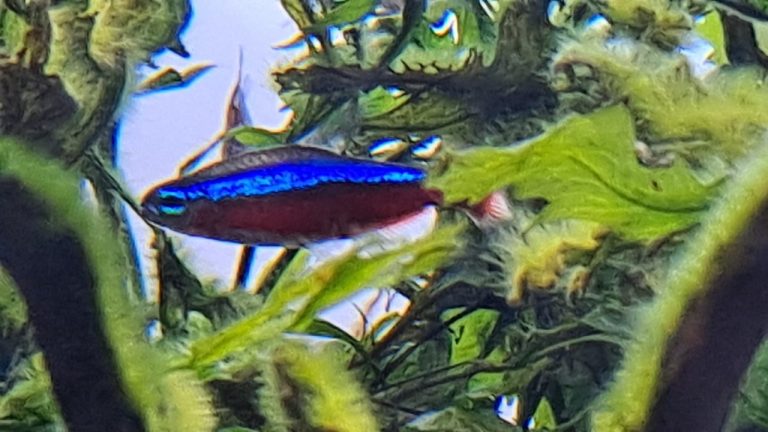
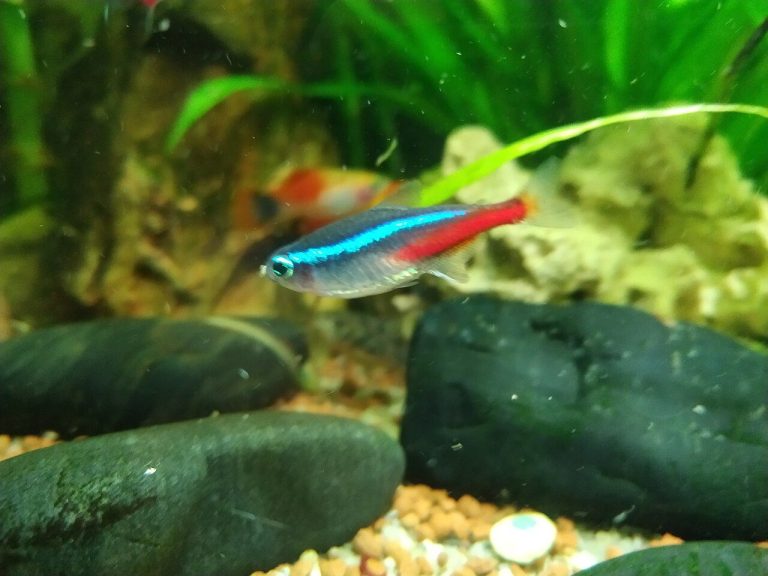
These fish belong to the Characidae family and are famous for their iridescent blue horizontal stripe and striking red tail.
While they are small, their impact on an aquarium’s aesthetics is massive, especially when kept in large schools.
In this guide, we will look closely at the specific measurements, growth factors, and care requirements that define the life of a Neon Tetra.
At a glance: Neon tetra (Paracheirodon innesi)
- Temperature
- 72–78°F (22–26°C)
- Water pH
- 6.0–7.0
- Adult size
- 1.5 in (4 cm)
- Minimum tank
- 10 gal (20 gal for a proper school)
- Group size
- Groups of 8+
- Temperament
- Peaceful
- Diet
- Omnivore: micro pellets, flakes, frozen daphnia
- Lifespan
- 5–8 years
Keeper’s tip: Add neons only to a fully cycled, stable tank; they are among the first fish to suffer from ammonia swings.
Understanding the Maximum Size of Neon Tetras
When discussing fish size, experts often differentiate between Standard Length (SL) and Total Length (TL).
Standard length measures from the tip of the snout to the base of the tail, while total length includes the entire tail fin.
For Paracheirodon innesi, the average total length is approximately 1.5 inches, though many in the hobby find their fish stay closer to 1.2 inches.
It is rare to see a Neon Tetra exceed 1.5 inches in a standard home aquarium.
If you see a “Neon” that looks significantly larger, perhaps reaching 2 inches or more, you likely have a Cardinal Tetra (Paracheirodon axelrodi) instead.
I have noticed that many hobbyists underestimate the space these small fish need because they focus solely on their physical dimensions.
Even though they are small, their active swimming nature means they require more horizontal space than their size might suggest.
Pro Tip: When planning your stocking, always use the adult size of 1.5 inches rather than the size they are at the pet store. Juveniles are often sold at just 0.5 to 0.75 inches, and they will grow quickly in the first few months.
| Measurement Type | Average Size (Inches) | Average Size (cm) |
|---|---|---|
| Standard Length (SL) | 1.0 – 1.2 inches | 2.5 – 3.0 cm |
| Total Length (TL) | 1.5 inches | 4.0 cm |
| Purchase Size | 0.5 – 0.75 inches | 1.3 – 1.9 cm |
Factors That Influence How Big Neon Fish Get
Genetics play a significant role, but environmental factors are the primary drivers of growth in your aquarium.
Water quality is the most critical element; high levels of nitrates can stunt growth and weaken the immune system.
In my early years, I realized that regular water changes were the “secret sauce” to seeing my tetras reach their full 1.5-inch potential.
Dietary variety is another major factor that influences how big do neon fish get over their lifespan.
Feeding only low-quality flakes will often result in smaller, less colorful fish that lack vitality.
Providing high-protein foods like Artemia nauplii (baby brine shrimp) or daphnia can significantly boost growth rates in younger fish.
Finally, the General Hardness (dGH) of your water matters more than most people think.
Neon Tetras are soft-water fish, and keeping them in excessively hard water can lead to mineral deposits in their organs, affecting their overall size and health.
The Role of Tank Volume
While you might think a small fish only needs a small tank, the volume of water directly affects growth hormones and waste dilution.
A larger volume of water provides a more stable environment, which is essential for consistent growth.
I always recommend checking out a guide on appropriate aquarium dimensions to help your school has enough room to do well.
Temperature and Metabolism
Neon Tetras are tropical fish, and their metabolism is regulated by the water temperature.
If the water is too cold, their metabolism slows down, and they may not grow as quickly or eat as much.
Conversely, temperatures that are too high can speed up their life cycle, potentially shortening their lifespan while increasing their caloric needs.
Sexual Dimorphism: Do Males or Females Grow Larger?
In Paracheirodon innesi, sexual dimorphism is subtle but present.
Females are generally the larger and “rounder” of the two sexes, especially when they are carrying eggs.
The blue horizontal line on a female often appears slightly curved or bent due to her deeper body shape.
Males, on the other hand, tend to be slimmer and more streamlined.
Their blue line usually remains perfectly straight from the eye to the adipose fin area.
When you are trying to determine how big do neon fish get in your specific school, you will likely notice the females hitting that 1.5-inch mark more consistently than the males.
I have found that observing them during feeding time is the best way to spot these differences.
The females will appear noticeably bulkier from a top-down view.
This difference in size is an important consideration if you are interested in breeding your fish, as the health of the female is the top priority for egg production.
Neon Tetra vs. Cardinal Tetra Size Comparison
One of the most common mistakes in the hobby is confusing the Neon Tetra with its cousin, the Cardinal Tetra.
While they look similar, their size and requirements differ significantly.
The Cardinal Tetra (Paracheirodon axelrodi) grows larger, often reaching 2 inches or more in length.
Cardinals also have a red stripe that runs the full length of their body, whereas the Neon’s red stripe only covers the back half.
If your “neons” seem to be outgrowing the 1.5-inch limit, take a close look at that red pigmentation.
Knowing the difference is vital for choosing compatible tank mates that won’t see your fish as a snack.
| Feature | Neon Tetra (P. innesi) | Cardinal Tetra (P. axelrodi) |
|---|---|---|
| Max Size | 1.5 inches | 2.0 – 2.5 inches |
| Red Stripe | Half-body only | Full-body length |
| Hardiness | Moderate (Tank bred) | Sensitive (Often wild caught) |
Growth Stages: From Fry to Adult
The journey of a Neon Tetra from an egg to a 1.5-inch adult is a unusual process.
In the first few weeks, the fry are microscopic and require specialized infusoria or liquid fry foods.
By week three or four, they can usually handle Artemia nauplii, which provides the fat and protein needed for rapid bone and muscle development.
During the juvenile stage (1-3 months), they will start to show their characteristic blue and red colors.
It is during this phase that they do most of their growing.
If they are kept in a cramped environment or fed poorly during this window, they may never reach their full potential size.
By six months of age, most Neon Tetras have reached their adult length.
While they may fill out and become “thicker” over the next year, their actual length usually plateaus.
In a well-maintained vivid neon tetra setup, these fish can live for 5 to 8 years, though 3 to 5 is more common in home tanks.
Common Growth Issues and Health Concerns
Sometimes, despite your best efforts, your fish might not reach the expected size.
One of the most devastating reasons for poor growth or sudden decline is Pleistophora hyphessobryconis, commonly known as Neon Tetra Disease.
This parasite affects the muscle tissue, causing the colors to fade and the spine to curve, which can make the fish appear shorter or stunted.
Stunting can also occur due to “Old Tank Syndrome,” where the water parameters slowly drift into dangerous territory over months or years.
High nitrates and low pH can inhibit the metabolic processes required for growth.
I’ve seen many hobbyists wonder how big do neon fish get when their fish are stuck at under an inch; usually, the culprit is a lack of water changes.
Pro Tip: Always quarantine new fish for at least 2-4 weeks. This prevents the introduction of diseases that can stunt the growth of your entire school or lead to mass die-offs.
The Impact of Stress on Growth
Stress is a silent growth killer in the aquarium.
If Neons are kept with aggressive tank mates, they will spend more energy on hiding and fleeing than on growth and repair.
Furthermore, stress weakens the immune system, making them more susceptible to common ailments like Ich or Fin Rot.
Making sure they have plenty of plants and hiding spots will help them feel secure enough to feed well and grow.
Ideal Tank Conditions for Maximum Growth
To help your fish reach their maximum 1.5-inch size, you must mimic their natural Amazonian habitat as closely as possible.
This means soft, slightly acidic water with plenty of tannins from driftwood or leaf litter.
The presence of live plants helps with water quality and also provides natural micro-foods for the fish to graze on.
| Parameter | Ideal Range |
|---|---|
| Temperature | 72°F – 78°F (22°C – 26°C) |
| pH Level | 6.0 – 7.0 |
| Water Hardness (dGH) | 2 – 10 dGH |
| Minimum Tank Size | 10 – 20 Gallons (Long preferred) |
Proper filtration is also key.
Because they are small, they can be easily buffeted by strong currents.
Using a sponge filter or a hang-on-back filter with an adjustable flow ensures they don’t exhaust themselves swimming against the tide.
Exhaustion leads to weight loss and can effectively stop growth in its tracks.
Dietary Secrets for Solid Neon Tetras
If you want to see your Neons hit that 1.5-inch mark, you need to think beyond the flake.
In the wild, they are omnivores, consuming tiny crustaceans, insects, and plant matter.
In the aquarium, I recommend a base of high-quality micro-pellets supplemented with frozen or live foods.
Frozen bloodworms, cyclops, and daphnia are excellent choices.
These foods are packed with the vitamins and minerals necessary for skeletal development and bright pigmentation.
I have noticed that fish fed a varied diet have much deeper body shapes and more intense iridescence than those on a single-food regimen.
Feeding small amounts twice a day is better than one large feeding.
This keeps their metabolism steady and makes sure that the smaller, less aggressive fish in the school get their fair share of the food.
Things people often ask
How long does it take for a Neon Tetra to grow to full size?
Most Neon Tetras reach their full adult size of 1.5 inches within 6 to 9 months, depending on water temperature and diet quality.
Can Neon Tetras live in a 5-gallon tank?
While they are small, a 5-gallon tank is generally too small for a school. They need horizontal swimming space and a stable environment, making a 10-gallon or 20-gallon tank much more suitable.
Why are my Neon Tetras staying small?
Stunted growth is often caused by high nitrate levels, poor diet, or a lack of space. It can also be a genetic factor if the fish come from a low-quality breeding line.
Do Neon Tetras stop growing if the tank is too small?
No, fish do not “grow to the size of their tank” in a healthy way. If a tank is too small, their growth is stunted by stress and poor water quality, which leads to internal organ damage and a shortened lifespan.
Are female Neon Tetras bigger than males?
Yes, females are typically slightly longer and noticeably rounder/deeper-bodied than males, especially when mature.
The short version
In summary, when asking how big do neon fish get, the answer is a modest but beautiful 1.5 inches.
Achieving this size requires a commitment to stable water parameters, a varied diet rich in proteins like Artemia nauplii, and an environment free from the stresses of aggression and poor filtration.
Once you understand the nuances of Paracheirodon innesi, from their sexual dimorphism to their preference for soft dGH levels, you can make sure your school lives a long, healthy, and colorful life.
Their small size is their strength, allowing you to keep a eye-catching, shimmering school that brings life and movement to any aquarium.
Provide them with the care they deserve, and they will reward you with years of vivid beauty.

- 2003First tank
- 20+Years keeping
- 40+Tanks kept
- 0Sponsored picks
Howard set up his first 10-gallon planted tank in 2003 and lost half of it within six weeks. Two decades and more than forty aquariums later, he writes the guides he wished he had then: clear numbers, the reasons behind them, and what actually goes wrong in home tanks.