Albino Black Neon Tetra – Care Guide
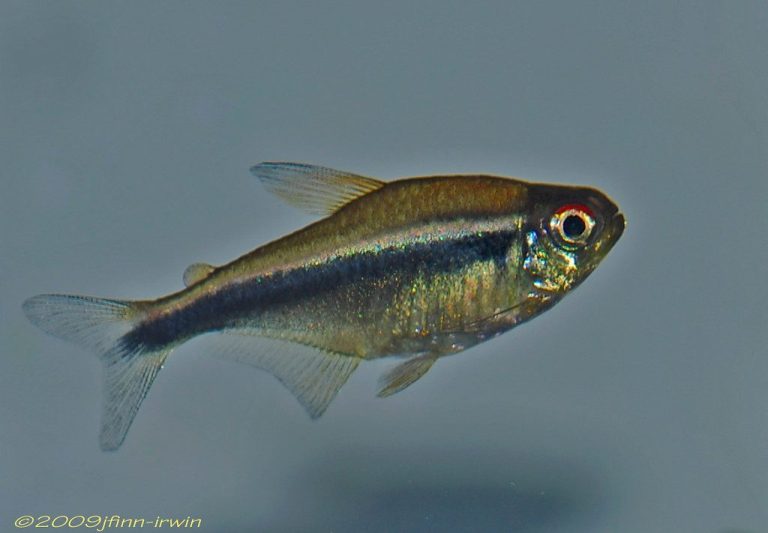
The albino black neon tetra is a captive-bred color morph of the black neon tetra, featuring a creamy-white body, glowing horizontal stripes, and red eyes. They are peaceful, hardy schooling fish perfect for community aquariums.
Bringing a unique aesthetic to the home aquarium often requires looking beyond the standard species found in every pet store. The albino black neon tetra is a spectacular variation of the classic Hyphessobrycon herbertaxelrodi, offering a ghostly, ethereal beauty that contrasts perfectly with leafy green plants.
In my decade of keeping characins, I have found that these fish are not just “white versions” of their cousins. They possess a distinct luminosity that makes them stand out even in dimly lit tanks.
Whether you are a beginner looking for a hardy first fish or an intermediate keeper designing a specialized aquascape, this guide will provide everything you need to know about the albino black neon tetra.
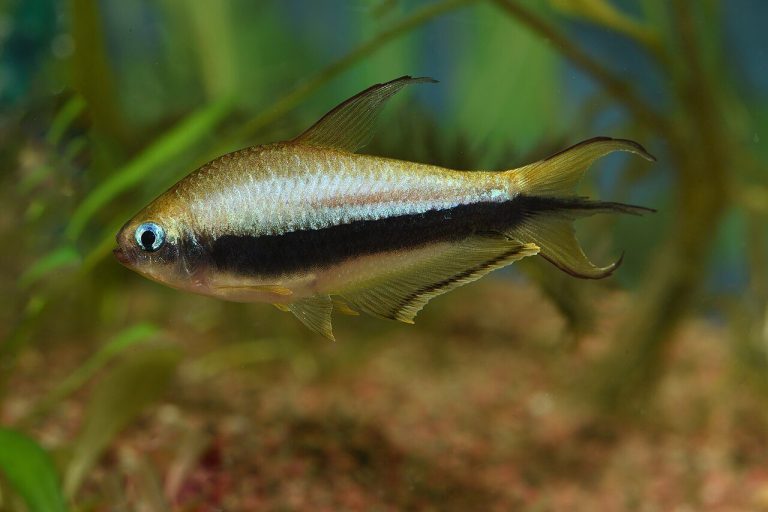
At a glance: Black neon tetra (Hyphessobrycon herbertaxelrodi)
- Temperature
- 73–81°F (23–27°C)
- Water pH
- 5.5–7.5
- Adult size
- 1.5 in (4 cm)
- Minimum tank
- 15 gal
- Group size
- Groups of 6+
- Temperament
- Peaceful
- Diet
- Omnivore: flakes, micro pellets, live or frozen foods
- Lifespan
- 5 years
Keeper’s tip: Hardier than the true neon and a good choice for beginners with slightly harder tap water.
What is an Albino Black Neon Tetra?
The albino black neon tetra belongs to the family Characidae. It is a selectively bred variety of the standard black neon tetra, which originates from the Paraguay River basin in Brazil.
Unlike their wild-type counterparts that feature deep black and silver stripes, these fish exhibit amelanism. This genetic condition results in a lack of dark pigment, leaving the fish with a pearlescent, cream-colored body.
Despite the “albino” name, they often retain a shimmering, iridescent line along their midsection. This line glows under high-quality aquarium lighting, mimicking the “neon” effect of their namesake.
Expert Insight: While they are called “albino,” many specimens are technically “lutino” or “xanthic” because they still produce some light pigments. Look for the characteristic red eyes, which is a true hallmark of albinism in this species.
Albino Black Neon Tetra Water Parameters
Providing the right environment is the foundation of a healthy aquarium. While these fish are remarkably adaptable, they flourish when you replicate the soft, slightly acidic conditions of their ancestral South American waters.
In my experience, stability is far more important than hitting a “perfect” number. Rapid fluctuations in temperature or pH can stress their immune systems, making them susceptible to pathogens.
The following table outlines the ideal ranges for keeping your school healthy and bright:
| Parameter | Ideal Range |
|---|---|
| Temperature | 72°F to 82°F (22°C – 28°C) |
| pH Level | 5.5 to 7.5 (6.5 is right) |
| Water Hardness (GH) | 4 to 12 dGH |
| Carbonate Hardness (KH) | 2 to 8 dKH |
| Ammonia / Nitrite | 0 ppm (Strict) |
| Nitrate | < 20 ppm |
Maintaining a consistent aquarium temp for tetras is critical. If the water gets too cold, their metabolism slows down, and their colors will fade significantly.
Setting Up the Perfect Aquarium Habitat
To appreciate the albino black neon tetra, you need to design the tank with their visual needs in mind. Because they are pale, a light-colored substrate can make them look “washed out” or nearly invisible.
I always recommend using a dark substrate, such as black sand or dark fluorite. This contrast makes their pearlescent bodies pop and provides a more natural feel for the fish.
They are active swimmers that occupy the middle and upper layers of the water column. Ensure there is plenty of open space in the center of the tank for schooling maneuvers.
Plants and Decoration
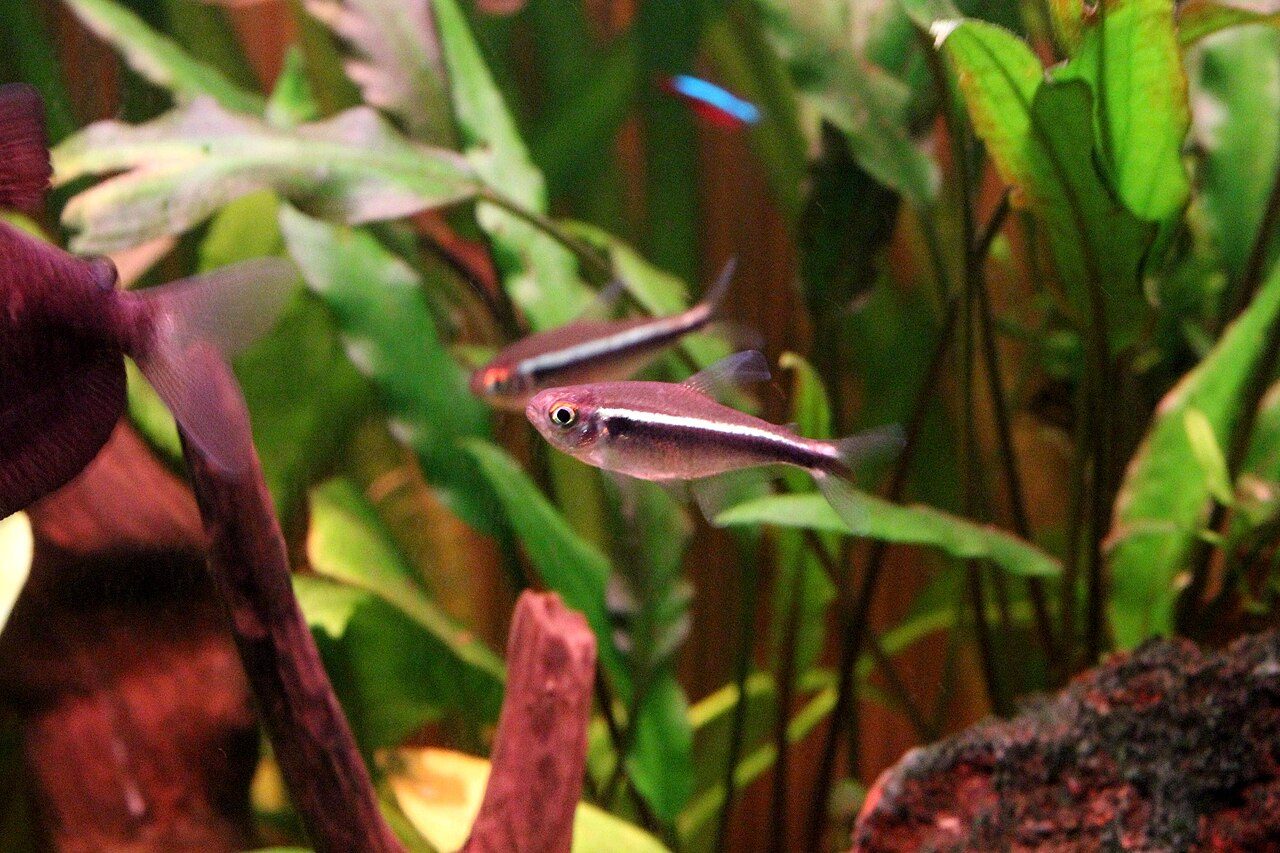
A heavily planted tank is the best way to make these tetras feel secure. Use tall background plants like Vallisneria or Amazon Swords to create “safe zones” where they can retreat if they feel threatened.
Floating plants are also a fantastic addition. They help diffuse the light, which is beneficial since albino fish can sometimes be sensitive to extremely bright, direct glare.
Adding driftwood can introduce beneficial tannic acid into the water. This slightly tints the water, mimicking the “blackwater” habitats where their ancestors thrived.
Filtration and Water Movement
These tetras prefer a gentle to moderate current. Avoid high-powered powerheads that create a whirlpool effect, as this can exhaust the fish over time.
Peat filtration is a “pro secret” for keeping South American tetras. By adding aquarium-safe peat to your filter media, you can naturally lower the pH and soften the water while adding health-boosting humic substances.
If you are just starting, you can find more details on setting up a black neon tetra aquarium to make sure your hardscape and equipment are perfect.
Diet and Nutrition: Feeding Your School
In the wild, these fish engage in micropredation. This means they spend their days hunting for tiny crustaceans, insect larvae, and zooplankton.
In the home aquarium, they are not picky eaters. However, providing a varied diet is the key to maintaining that beautiful white luster and ensuring a long lifespan.
I recommend a base of high-quality flake or micro-pellet food. Look for brands that prioritize whole protein sources like krill or squid meal rather than “fish meal” fillers.
Pro Tip: To see their best colors and most active behavior, offer frozen or live foods twice a week. Baby brine shrimp, daphnia, and cyclops are perfect sizes for their small mouths.
Choosing the right neon tetra food is essential. Because they have small throats, avoid large pellets that can cause choking or digestive blockages.
Behavior and Choosing the Right Tank Mates
The albino black neon tetra is a peaceful schooling fish. This means they must be kept in groups to feel safe and display natural behaviors.
I recommend a minimum of 6 fish, but a school of 10 to 15 is much more impressive. In larger groups, they exhibit a “tight” school, moving in unison across the tank.
When selecting tank mates, avoid large, aggressive, or predatory fish. Even a medium-sized angelfish might eventually view a small tetra as a snack.
| Compatible Tank Mates | Incompatible Tank Mates |
|---|---|
| Corydoras Catfish | Large Cichlids (Oscars, Jack Dempseys) |
| Other Tetras (Ember, Rummy Nose) | African Cichlids |
| Dwarf Gouramis | Large Goldfish |
| Harlequin Rasboras | Large Catfish (Pimelodus) |
| Cherry Shrimp & Mystery Snails | Tiger Barbs (can be too nippy) |
Breeding the Albino Black Neon Tetra
Breeding these fish can be a rewarding challenge for the intermediate hobbyist. They are egg-scatterers, meaning they do not provide any parental care and will actually eat their own eggs if given the chance.
To succeed, you will need a separate breeding tank. This tank should have very soft water (GH 1-2) and a slightly acidic pH (6.0).
Use a “spawning mop” or a thick layer of Java Moss on the bottom of the tank. This provides a place for the eggs to fall where the adults cannot reach them.
Condition the breeding pair with high-quality live foods for a week before moving them to the spawning tank. Once the female looks plump with eggs, move the pair in during the evening. Spawning usually occurs at dawn.
After you see eggs, remove the parents immediately. The fry are tiny and will require “infusoria” or specialized liquid fry food for the first few days before they can graduate to baby brine shrimp.
Common Health Issues and Prevention
Like all freshwater fish, the albino black neon tetra is susceptible to certain ailments. However, because of their albinism, it can sometimes be easier to spot external parasites against their pale skin.
The most common issue is Ichthyophthirius multifiliis, commonly known as “Ich” or “White Spot Disease.” It looks like small grains of salt sprinkled on the body.
Another concern for all members of the tetra family is Pleistophora hyphessobryconis, or “Neon Tetra Disease.” This is a parasitic condition that causes muscle wasting, spinal curvature, and loss of color.
Warning: There is no known cure for Neon Tetra Disease. The best defense is a strict quarantine protocol for all new fish and maintaining pristine water quality to keep the fishes’ immune systems strong.
Regular water changes (25% weekly) and avoiding overfeeding are the two most effective ways to prevent disease. If you notice a fish acting lethargic or separating from the school, move it to a hospital tank immediately.
Common questions
Are albino black neon tetras more sensitive than regular ones?
Generally, no. While some albino species in the animal kingdom are frail, the aquarium-bred albino black neon tetra is quite hardy. However, they may be slightly more sensitive to very bright light due to their lack of protective pigment.
How long do they live?
Looked after properly, these tetras can live for 3 to 5 years. A clean environment and a varied diet are the biggest factors in maximizing their longevity.
Can they live in a 5-gallon tank?
I do not recommend it. Because they are active schooling fish, they need horizontal swimming space. A 15-gallon or 20-gallon “long” tank is the ideal minimum for a healthy school.
Do they nip fins?
No, they are exceptionally peaceful. They may occasionally “spar” with each other within the school to establish a pecking order, but they rarely bother other species.
A last word
The albino black neon tetra is a beautiful, low-maintenance addition to the community aquarium. Their unique appearance provides a ghostly elegance that complements both minimalist and heavily planted “jungle” tanks.
If you keep stable water parameters, providing a high-quality diet, and keeping them in a proper school, you can enjoy these shimmering gems for many years. They are a sign of how selective breeding can bring a whole new dimension of beauty to a classic hobbyist favorite.
If you are looking for a fish that is easy to care for but offers a sophisticated look, the albino black neon tetra should be at the top of your list.

- 2003First tank
- 20+Years keeping
- 40+Tanks kept
- 0Sponsored picks
Howard set up his first 10-gallon planted tank in 2003 and lost half of it within six weeks. Two decades and more than forty aquariums later, he writes the guides he wished he had then: clear numbers, the reasons behind them, and what actually goes wrong in home tanks.