Neon Fish Crossword – Care Guide
The most common answer for a neon fish crossword clue is TETRA. These iconic fish, scientifically known as Paracheirodon innesi, are famous for their iridescent blue and red stripes and peaceful schooling behavior.
If you have ever found yourself stuck on a neon fish crossword clue, you are certainly not alone. The answer is almost always “Tetra,” a name that represents one of the most well-loved groups of fish in the entire aquarium hobby.
In my ten years of maintaining diverse aquatic systems, I have found that few species capture the imagination quite like the Neon Tetra. They are the quintessential “starter fish,” yet they possess a complexity that keeps even veteran aquarists engaged for decades.
Understanding these fish goes far beyond solving a simple word puzzle. To appreciate them, we must look at their biology, their natural history in the Amazon, and the specific care they require to stay healthy in a home environment.
Whether you are here because of a puzzle or because you want to build a striking community aquarium, this guide will provide everything you need. Let’s go through these glowing jewels of the Amazon.
At a glance: Neon tetra (Paracheirodon innesi)
- Temperature
- 72–78°F (22–26°C)
- Water pH
- 6.0–7.0
- Adult size
- 1.5 in (4 cm)
- Minimum tank
- 10 gal (20 gal for a proper school)
- Group size
- Groups of 8+
- Temperament
- Peaceful
- Diet
- Omnivore: micro pellets, flakes, frozen daphnia
- Lifespan
- 5–8 years
Keeper’s tip: Add neons only to a fully cycled, stable tank; they are among the first fish to suffer from ammonia swings.
The Identity Behind the neon fish crossword Clue
When you see a neon fish crossword hint, the puzzle is usually referring to the family Characidae. This massive family of fish includes hundreds of species, but the Neon Tetra is undoubtedly the most famous representative.
The scientific name for the common Neon Tetra is Paracheirodon innesi. They belong to the order Characiformes, which is characterized by the presence of a small, fleshy fin between the dorsal fin and the tail.
This feature is known as the adipose fin. While its exact purpose is still debated by ichthyologists, it is a hallmark of many tetras and their relatives.
Why the Name “Neon”?
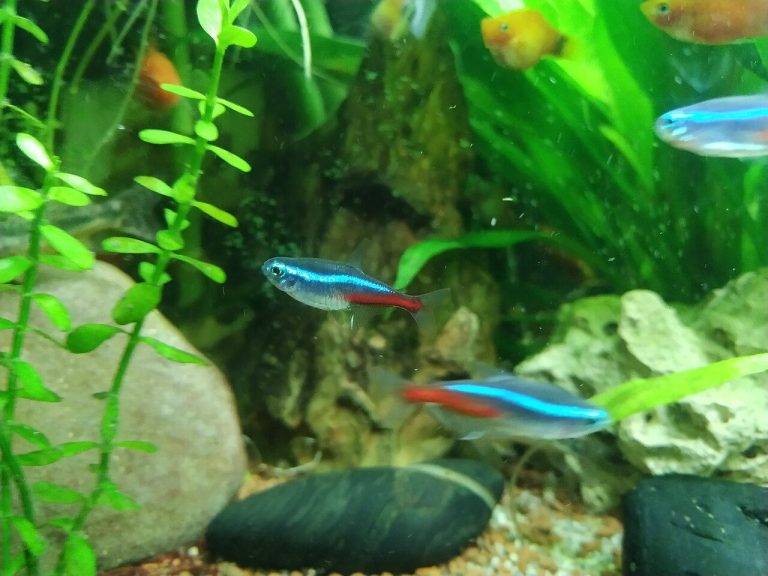
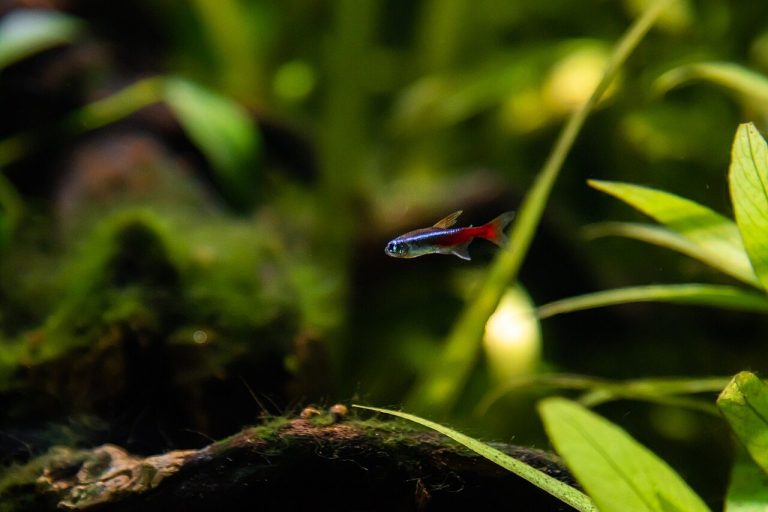
The “neon” part of their name comes from the striking, iridescent blue horizontal stripe that runs along each side of their body. Below this blue line, they sport a vivid red stripe that reaches from the mid-section to the base of the tail.
In the wild, these colors are not just for show; they serve a vital purpose. In the murky waters of their natural habitat, these glowing stripes help the school stay together, allowing individuals to track their companions in low-visibility conditions.
I have often noticed that under the right lighting, a school of twenty or more tetras creates a shimmering effect that is almost hypnotic. This is why they remain a staple in the hobby despite the hundreds of new species introduced every year.
Pro Tip: When choosing bright neon tetras at the store, look for fish that are actively schooling and have clear, bright colors. Avoid any individuals that appear pale or are swimming away from the group, as this can be a sign of early stress or illness.
The Natural Habitat: A Blackwater Biotope
To understand how to care for the fish from your neon fish crossword, we must look at where they come from. Neon Tetras are native to the blackwater streams of the Amazon Basin in South America.
These environments are characterized by slow-moving water and a heavy presence of decaying organic matter, such as fallen leaves and branches. This organic material releases tannic acid and humic acid into the water.
This process stains the water a tea-like color and significantly lowers the pH. In these blackwater biotope settings, the water is incredibly soft and acidic, which is quite different from the tap water found in most homes.
Mimicking the Amazon at Home
In my experience, Neon Tetras show their best colors and live much longer when we mimic these natural conditions. You can achieve this by adding driftwood or dried catappa leaves to your aquarium.
These additions release natural tannins, which provide a more authentic look and also offer mild antibacterial properties. The dark background of a blackwater tank makes the “neon” stripes of your fish pop with incredible intensity.
| Parameter | Ideal Range |
|---|---|
| Temperature | 70°F – 81°F (21°C – 27°C) |
| pH Level | 5.0 – 7.0 |
| Hardness (dGH) | 2 – 10 degrees |
| Ammonia/Nitrite | 0 ppm |
Anatomy and Sensory Systems
The fish mentioned in your neon fish crossword are more than just pretty faces. They possess highly evolved sensory systems that allow them to work through and survive in complex environments.
One of the most important systems is the lateral line system. This is a visible line of sensory organs that runs along the side of the fish’s body.
It allows the tetra to detect minute vibrations and pressure changes in the water. This “distant touch” is how they manage to school so tightly without ever bumping into one another, even when making sudden turns.
The Importance of the Adipose Fin
As mentioned earlier, the adipose fin is a key identifier for the Characidae family. While it doesn’t provide much propulsion, recent studies suggest it may have a sensory function related to swimming in turbulent water.
When you look closely at your tetras, you will see this tiny fin sitting just in front of the tail. It is a small detail, but it is one of the features that separates a true tetra from other small, colorful fish like rasboras or danios.
Essential Water Chemistry for Neon Tetras
If you want your fish from the neon fish crossword to stay healthy, you must pay close attention to water quality. These fish are sensitive to sudden changes in their environment.
One technical aspect often overlooked by beginners is specific conductance. This measures the water’s ability to conduct electricity, which is directly related to the amount of dissolved salts and minerals.
In their native Amazonian streams, the specific conductance is extremely low. While captive-bred Neons are more adaptable, they still prefer water that isn’t overly “hard” or mineral-heavy.
Managing Nitrogenous Waste
Like all aquarium fish, tetras produce waste that turns into ammonia. Because they are small and often kept in large groups, the biological load can sneak up on you.
Regular water changes are non-negotiable. I recommend changing 25% of the water weekly to keep nitrates low and make sure the water remains fresh and oxygenated.
Common Mistake: Adding Neon Tetras to a brand-new, uncycled aquarium is a recipe for disaster. These fish require a stable environment with an established colony of beneficial bacteria to process waste safely.
Diet and Nutrition: Fueling the Glow
The fish featured in your neon fish crossword are omnivores. In the wild, they spend their days foraging for tiny crustaceans, insect larvae, and small amounts of plant matter.
To maintain their health and color in an aquarium, you should provide a varied diet. High-quality micro-granules or flakes should form the base of their nutrition.
However, I have found that supplementing with live or frozen foods makes a world of difference. Brine shrimp, daphnia, and bloodworms are excellent choices that provide essential proteins and fats.
Feeding Frequency
It is better to feed your tetras small amounts twice a day rather than one large meal. This makes sure that all fish in the school have a chance to eat and prevents excess food from rotting at the bottom of the tank.
Watch them closely during feeding. If the fish are not rushing toward the food, it may be a sign of stress or poor water quality.
Choosing Compatible Tank Mates
When building a community around the neon fish crossword answer, you must choose companions carefully. Neon Tetras are peaceful and somewhat timid.
They should never be kept with large or aggressive fish that might view them as a snack. Angelfish, for example, are natural predators of tetras in the wild and will often eat them once the Angelfish grows large enough.
Good choices include other small tetras, rasboras, and peaceful bottom-dwellers like Corydoras catfish. You can find many compatible tank mates that share the same water requirements.
Schooling Dynamics
The most important “tank mate” for a Neon Tetra is another Neon Tetra. They are obligate schoolers, meaning they feel significant stress if kept in small numbers.
I always recommend a minimum of 6 to 10 individuals. However, if your tank size allows, a group of 20 or more is where you will see their most natural and remarkable behaviors.
Common Health Issues: Neon Tetra Disease
One of the most dreaded problems for the fish in your neon fish crossword is “Neon Tetra Disease.” This is caused by a microsporidian parasite known as Pleistophora hyphessobryconis.
Symptoms include a loss of color, cysts on the body, and a curved spine. Unfortunately, there is no known cure for this specific ailment, making prevention the only real strategy.
Prevention and Quarantine
The best way to protect your school is to quarantine any new arrivals for at least two weeks. This allows you to observe them for signs of illness before they enter your main display tank.
Maintaining high water quality and low stress levels also keeps their immune systems strong. Most “diseases” in the hobby are actually secondary infections that take hold when a fish is already weakened by poor environment.
The Art of Aquascaping for Tetras
To enjoy the fish from your neon fish crossword, the tank setup matters. These fish appreciate a densely planted environment.
Plants like Java Fern, Anubias, and Amazon Swords provide hiding spots and make the fish feel secure. When tetras feel safe, they spend more time in the open water where you can see them.
Substrate and Lighting
I prefer using a dark substrate, such as black sand or fine gravel. This mimics the dark forest floor of the Amazon and makes the fish’s colors appear much more vivid.
Lighting should be moderate. If the lights are too bright, the tetras may become skittish. Floating plants can help diffuse the light and create the dappled effect they enjoy in nature.
Breeding the neon fish crossword Star
Breeding Neon Tetras is considered a challenge for many hobbyists. They are “egg scatterers” and require very specific conditions to trigger spawning.
The water must be extremely soft and acidic, often with a pH as low as 5.0. Additionally, the breeding tank must be kept in near-total darkness, as the eggs are light-sensitive.
In my early years, I struggled with this until I realized how important water purity was. Even a small amount of calcium in the water can prevent the eggs from being fertilized correctly.
Raising the Fry
If you are successful in getting them to spawn, the next challenge is feeding the fry. They are incredibly tiny and require microscopic food sources like infusoria for the first few days.
As they grow, you can transition them to newly hatched brine shrimp. It is a satisfying process, but it requires patience and a dedicated setup.
Questions and answers
What is the 5-letter answer for a neon fish crossword?
The most common 5-letter answer is TETRA. Occasionally, a puzzle might use “NEONS,” but “TETRA” is the standard industry answer.
How many Neon Tetras can I keep in a 10-gallon tank?
You can comfortably keep a school of 6 to 8 Neon Tetras in a 10-gallon tank. Ensure you have adequate filtration and maintain a regular cleaning schedule.
Do Neon Tetras need a heater?
Yes, they are tropical fish and require a stable temperature between 70°F and 81°F. A high-quality submersible heater is essential for their health.
Can Neon Tetras live with Betta fish?
Generally, yes. Neon Tetras and Bettas can coexist in a well-planted tank of at least 10-20 gallons. However, individual Betta temperaments vary, so monitor them closely for any signs of aggression.
Why is my Neon Tetra losing its color?
Loss of color is usually a sign of stress, poor water quality, or illness. It often happens at night when the fish are “sleeping,” which is normal, but if it persists during the day, check your ammonia and nitrate levels immediately.
Where that leaves you
Solving a neon fish crossword is just the beginning of a journey into one of the most satisfying aspects of the aquarium hobby. The Neon Tetra is a masterclass in natural beauty and evolutionary adaptation.
Once you understand their need for soft, acidic water and the security of a large school, you can create a slice of the Amazon in your own home. These fish have taught me so much about the delicate balance of aquatic ecosystems over the last decade.
Focus on stability, provide a varied diet, and always keep their environment clean. If you do, your “crossword fish” will reward you with years of vivid color and peaceful energy.
Thank you for joining me in exploring the Neon Tetra. May your aquarium always be clear, and your fish always be glowing.

- 2003First tank
- 20+Years keeping
- 40+Tanks kept
- 0Sponsored picks
Howard set up his first 10-gallon planted tank in 2003 and lost half of it within six weeks. Two decades and more than forty aquariums later, he writes the guides he wished he had then: clear numbers, the reasons behind them, and what actually goes wrong in home tanks.