Diamond Tetra Breeding – Step-by-Step Guide
Successful Diamond Tetra breeding requires soft, acidic water, a dedicated spawning tank with fine-leaved plants, and conditioning parents with high-quality live foods. These egg scatterers stay healthy when water temperature is slightly raised to 80°F.
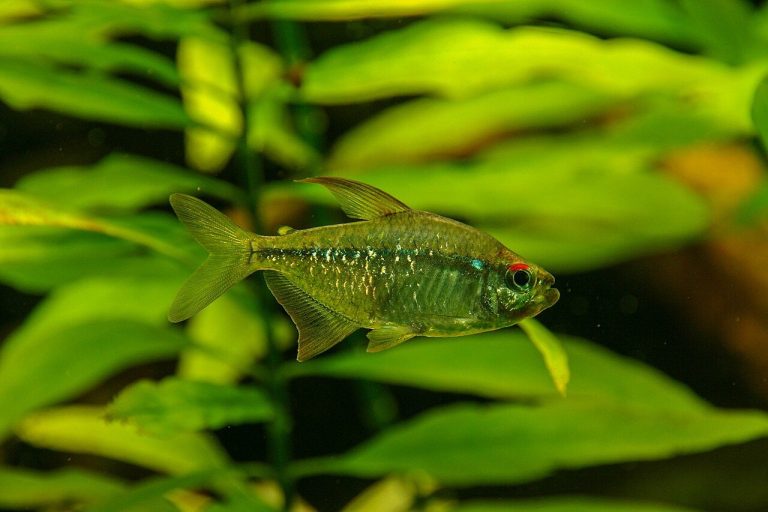
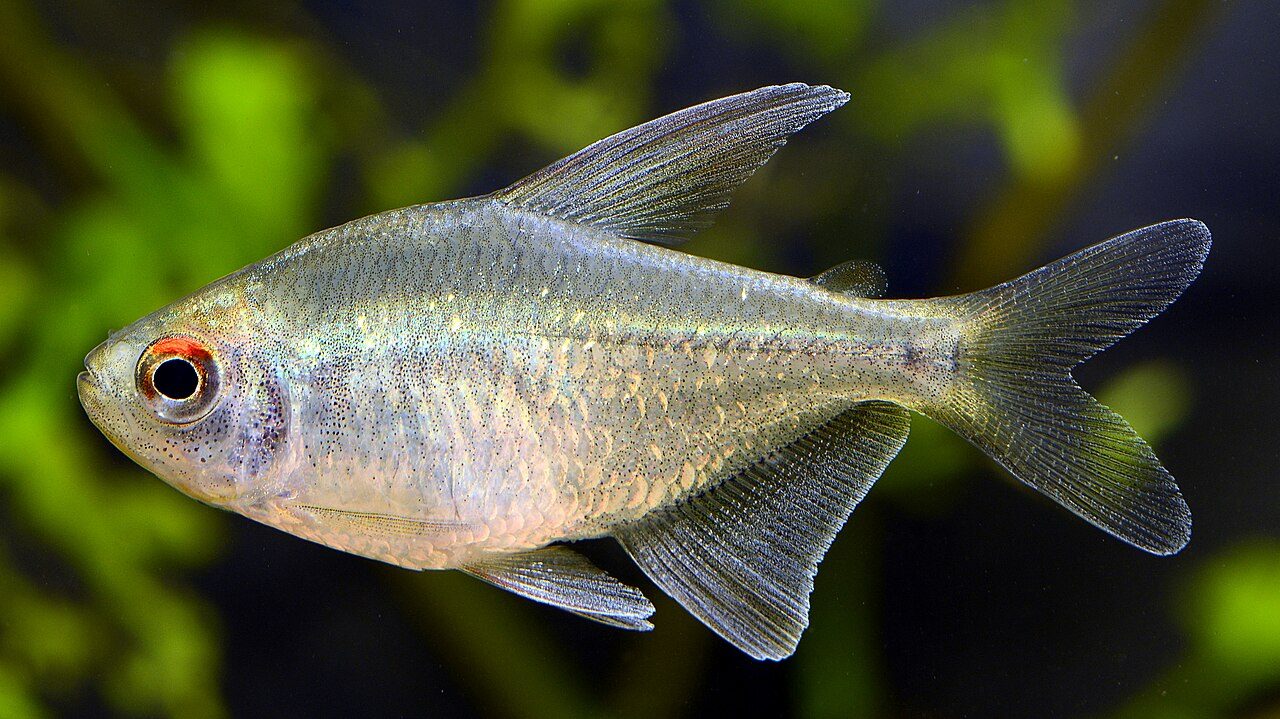
Few sights in the freshwater hobby compare to a mature school of Diamond Tetras catching the light. Their scales shimmer like crushed jewels, making them a centerpiece for any well-maintained community tank.
If you have mastered the basics of keeping these eye-catching fish, you might feel ready for the next challenge. Diamond Tetra breeding is a satisfying endeavor that allows you to witness the full life cycle of Moenkhausia pittieri.
In my experience, while they are not as difficult to breed as some wild-caught species, they do require specific environmental triggers. This guide will walk you through every step of the process, from identifying a pair to raising the tiny fry.
At a glance: Diamond tetra (Moenkhausia pittieri)
- Temperature
- 75–82°F (24–28°C)
- Water pH
- 6.0–7.5
- Adult size
- 2.5 in (6 cm)
- Minimum tank
- 20 gal
- Group size
- Groups of 6+
- Temperament
- Peaceful
- Diet
- Omnivore: flakes, pellets, live and frozen foods
- Lifespan
- 5–6 years
Keeper’s tip: The sparkling scales take months to develop; young fish in stores look fairly plain.
Understanding the Diamond Tetra (Moenkhausia pittieri)
Before you begin the breeding process, it is essential to understand the fish themselves. These characins hail from Lake Valencia in Venezuela, an environment characterized by soft water and plenty of vegetation.
Diamond Tetras are known as an egg scatterer species. This means they do not provide parental care and will actually eat their own eggs if given the chance.
Knowing this behavior is the first step toward success. You must create an environment that protects the eggs the moment they are released.
Sexual Dimorphism: Identifying Males and Females
To start Diamond Tetra breeding, you must be able to distinguish between the sexes. This is known as sexual dimorphism.
Males are generally more colorful and possess much longer, flowing dorsal fins. Their bodies are slightly slimmer but display a more intense iridescent shimmer.
Females are typically rounder and more solid, especially when they are carrying eggs. Their fins are shorter and less dramatic than those of the males.
| Feature | Male Diamond Tetra | Female Diamond Tetra |
|---|---|---|
| Dorsal Fin | Long, sickle-shaped, and pointed. | Shorter and more rounded. |
| Body Shape | Slimmer and more streamlined. | Deeper, rounder belly. |
| Coloration | Intense silver with violet highlights. | More subtle, less shimmering scales. |
Setting Up the Ideal Breeding Tank
While you might see occasional spawning in a community setting, the eggs will rarely survive. To be successful, you need a dedicated breeding aquarium.
A 10 to 20-gallon tank is usually sufficient for a single pair or a small group. The tank should be kept in a quiet area with dim lighting to reduce stress.
I have found that using a bare-bottom tank makes it much easier to clean and monitor the eggs. However, you must provide a “trap” for the eggs to fall into.
Water Chemistry and Parameters
Diamond Tetras require very specific water conditions to trigger spawning. They prefer soft, slightly acidic water that mimics their natural habitat.
Using peat filtration can help achieve the desired acidity and leach beneficial humic substances into the water. These substances have natural antifungal properties that protect the eggs.
| Parameter | Ideal Range for Breeding |
|---|---|
| Temperature | 79°F – 82°F (26°C – 28°C) |
| pH Level | 5.5 – 6.5 |
| Hardness (dGH) | 1 – 5 dGH |
| Ammonia / Nitrite | 0 ppm |
Pro Tip: Use Reverse Osmosis (RO) water mixed with a small amount of tap water to achieve the perfect softness. Adding Indian Almond leaves can also naturally lower the pH and provide a darker, more comfortable environment for the fish.
The Role of Plants and Spawning Media
Because these fish scatter their eggs, you need something to catch them. Fine-leaved plants like Taxiphyllum barbieri (Java Moss) are excellent for this purpose.
The thick mats of moss provide a soft landing spot for the eggs and prevent the parents from finding them easily. If you do not have live plants, a synthetic spawning mop made of acrylic yarn works just as well.
Keep the moss or mop covers a significant portion of the tank floor. This increases the survival rate of the eggs significantly.
Conditioning the Parents for Spawning
You cannot simply move fish into a breeding tank and expect immediate results. Conditioning is the process of preparing the adults for the physical demands of spawning.
For about two weeks before breeding, separate the males and females if possible. This builds up their drive to mate once they are reunited.
During this time, feed them the best fish food for tetras available. High-quality live foods are the biggest factor here.
The Importance of Live Foods
Live or frozen foods like bloodworms, daphnia, and brine shrimp are essential. They provide the protein and fats necessary for the female to develop a healthy egg clutch.
I’ve noticed that females conditioned on live foods produce larger batches of eggs with higher fertility rates. Avoid relying solely on flake food during this critical period.
Monitor the females closely. When they appear noticeably “fat” or gravid, they are ready to be moved to the breeding tank.
The Spawning Process Explained
Once the parents are conditioned and the breeding tank is ready, it is time to introduce them. I usually move the fish in the evening so they can settle in overnight.
Spawning typically occurs in the early morning hours, often triggered by the first rays of light. You may see the male chasing the female vigorously through the plants.
The male will shimmy alongside the female, and as they look at the Taxiphyllum barbieri, the eggs and sperm are released simultaneously.
Monitoring the Event
A single female can lay several hundred eggs in a single session. These eggs are small, semi-adhesive, and will fall deep into the moss or the spawning mop.
If you are not seeing any action, try a small water change with slightly cooler water. This can sometimes simulate the start of the rainy season, which triggers Diamond Tetra breeding in the wild.
Once the female looks “spent” or thinner, and the chasing has stopped, the process is likely over. It is now time to take immediate action to save the eggs.
Common Mistake: Leaving the parents in the breeding tank for too long after spawning is the number one cause of failure. Diamond Tetras will hunt for their eggs immediately after the “romance” is over. Remove the adults as soon as you see eggs.
Caring for the Eggs and Preventing Fungus
With the parents removed, your focus shifts entirely to the eggs. They are very sensitive to light and water quality at this stage.
Keep the tank dark by covering the sides with cardboard or a towel. Light can actually damage the developing embryos in some tetra species.
One of the biggest challenges is egg fungus. Unfertilized eggs will turn white and fuzzy, and this fungus can quickly spread to healthy eggs.
Using Methylene Blue
Many professional breeders use a few drops of Methylene blue to prevent fungal outbreaks. This antifungal agent keeps the water sterile enough for the eggs to hatch safely.
Help you have a very gentle air-stone running. You want just enough movement to keep the water oxygenated without tossing the delicate eggs around.
The eggs will generally hatch within 24 to 36 hours depending on the temperature. At this stage, they are known as “wigglers” and will survive on their yolk sacs for a few days.
Raising Diamond Tetra Fry
Raising the fry is often the most difficult part of Diamond Tetra breeding. The fry are incredibly small and require specialized microscopic food.
For the first few days after they become free-swimming, they cannot eat crushed flakes or even baby brine shrimp. They need Infusoria.
You can culture Infusoria at home using vegetable matter in a jar of aquarium water. Alternatively, high-quality liquid fry foods can work in a pinch.
Transitioning to Larger Foods
After about a week of feeding Infusoria, the fry should be large enough to handle Artemia nauplii (newly hatched brine shrimp). This is where you will see a massive growth spurt.
Feeding small amounts several times a day is better than one large feeding. This keeps the water quality stable and ensures the fry always have full bellies.
| Fry Age | Recommended Food |
|---|---|
| Days 1-4 (Free Swimming) | Infusoria, Vinegar Eels, or Liquid Fry Food. |
| Days 5-14 | Newly hatched Artemia nauplii, Microworms. |
| 2 Weeks – 1 Month | Golden Pearls, crushed high-quality flakes. |
Maintaining Water Quality for Fry
Small fry are extremely sensitive to nitrate buildup. However, they are also easily sucked into filters.
Use a seasoned sponge filter to provide biological filtration without risking the lives of your young tetras. Perform small, frequent water changes of about 10% daily.
Make sure the replacement water matches the tank water exactly in temperature and pH. Sudden shifts can be fatal to developing different kinds of tetra fish.
Common Troubleshooting Tips
Even with the best preparation, things can go wrong. If your fish aren’t spawning, check your water hardness first.
High mineral content often prevents the eggs from being fertilized properly. If the eggs are turning white immediately, the water is likely too hard or the male is not mature enough.
Also, make sure the fish are not being disturbed. Diamond Tetras can be skittish, and frequent movement around the tank will stall the process.
If you find that Diamond Tetras are too large for your current space, you might consider smaller species. Many people find success with breeding smaller tetras before moving up to Diamonds.
Things people often ask
How many eggs do Diamond Tetras lay?
A healthy, well-conditioned female can lay between 200 and 400 eggs. However, survival rates depend heavily on how quickly you remove the parents and the quality of the first foods provided.
How long does it take for the fry to look like adults?
Diamond Tetra fry grow relatively quickly. They will start to show their characteristic silver sheen around the two-month mark, though the full “diamond” sparkle and long fins of the males take 6 to 9 months to fully develop.
Can I breed them in a community tank?
It is highly unlikely. In a community tank, other fish (and the parents) will eat the eggs almost instantly. Furthermore, the water parameters in a community tank are often not soft or acidic enough to trigger a successful spawn.
What is the best temperature for Diamond Tetra breeding?
While they can live at 75°F, raising the temperature to 80°F or 81°F is a common trigger for spawning. This warmth speeds up the metabolic process and encourages the fish to mate.
Do I need to use a heater in the fry tank?
Yes, stability is vital. A small, reliable heater is necessary to keep the temperature consistent. Fluctuations can weaken the fry’s immune systems and lead to diseases like Ich or velvet.
The short version
Mastering Diamond Tetra breeding is a significant milestone for any aquarist. It requires a blend of patience, technical skill, and keen observation.
If you provide the right environment—soft water, plenty of moss, and high-quality live food—you can successfully raise a new generation of these glittering beauties. There is nothing quite like the pride of seeing a school of fish you raised yourself swimming in your display tank.
Focus on the details: the peat filtration, the Infusoria cultures, and the prompt removal of the parents. With these steps, your “Successful Aquarium” will soon be home to hundreds of shimmering Diamond Tetra fry.

- 2003First tank
- 20+Years keeping
- 40+Tanks kept
- 0Sponsored picks
Howard set up his first 10-gallon planted tank in 2003 and lost half of it within six weeks. Two decades and more than forty aquariums later, he writes the guides he wished he had then: clear numbers, the reasons behind them, and what actually goes wrong in home tanks.