Can Angelfish Live With Neon Tetras? The Ultimate Compatibility
Angelfish can live with neon tetras temporarily, but it is generally not recommended. As angelfish mature, their natural predatory instincts often lead them to eat neon tetras, which are small enough to be considered prey.
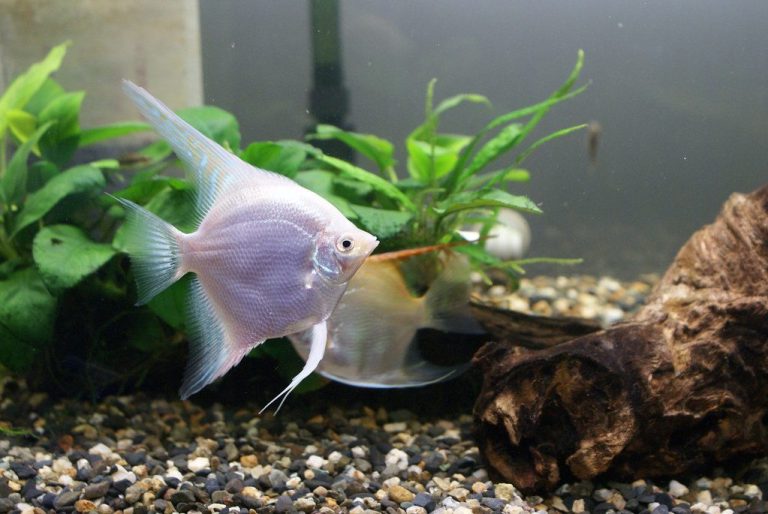
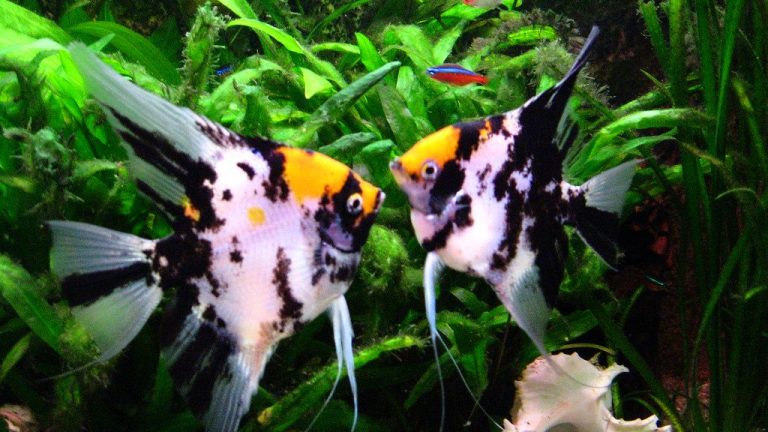
Few sights in the freshwater hobby are as iconic as the majestic, triangular silhouette of an angelfish gliding through a lushly planted tank. Many beginners hope to pair these elegant “kings of the aquarium” with the shimmering, iridescent schools of Paracheirodon innesi, commonly known as neon tetras.
In my 10 years of maintaining various Amazonian setups, I have seen this combination attempted dozens of times. While the visual contrast is striking, the biological reality of this pairing is far more complex than it appears on the surface.
The question of can angelfish live with neon tetras often leads to heated debates among hobbyists. To find success, you must understand the natural history, physical limitations, and behavioral traits of both species before introducing them to the same glass box.
Expert Pro-Tip: If you are determined to try this pairing, always introduce the neon tetras to the aquarium first. Let them establish their territory for several weeks before adding very young, juvenile angelfish to the mix.
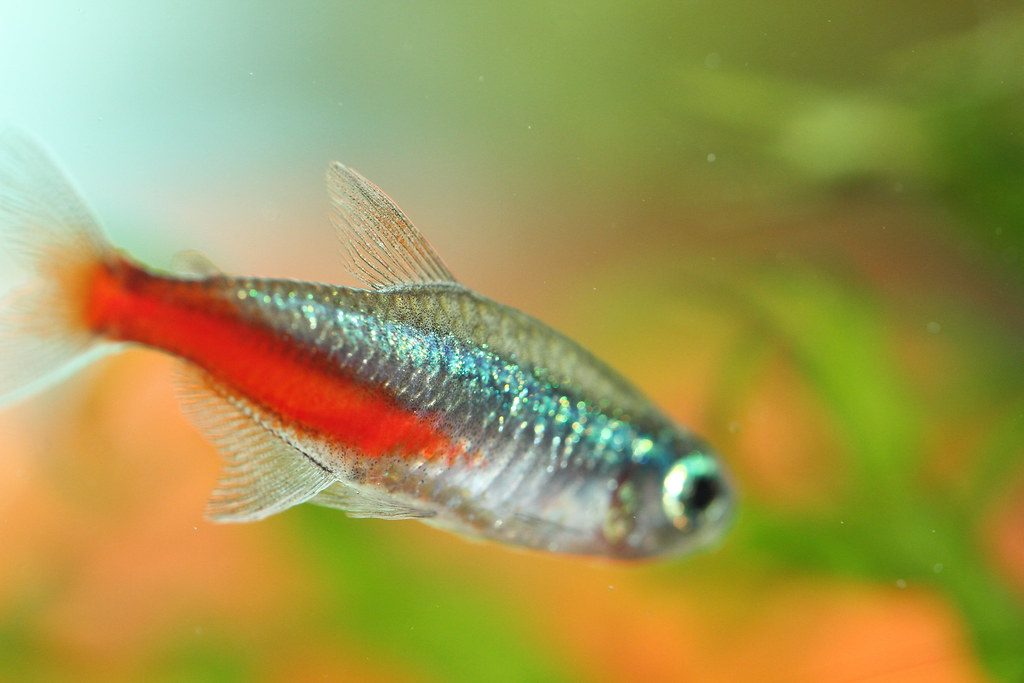
At a glance: Neon tetra (Paracheirodon innesi)
- Temperature
- 72–78°F (22–26°C)
- Water pH
- 6.0–7.0
- Adult size
- 1.5 in (4 cm)
- Minimum tank
- 10 gal (20 gal for a proper school)
- Group size
- Groups of 8+
- Temperament
- Peaceful
- Diet
- Omnivore: micro pellets, flakes, frozen daphnia
- Lifespan
- 5–8 years
Keeper’s tip: Add neons only to a fully cycled, stable tank; they are among the first fish to suffer from ammonia swings.
Can angelfish live with neon tetras? Understanding the Predator-Prey Dynamic
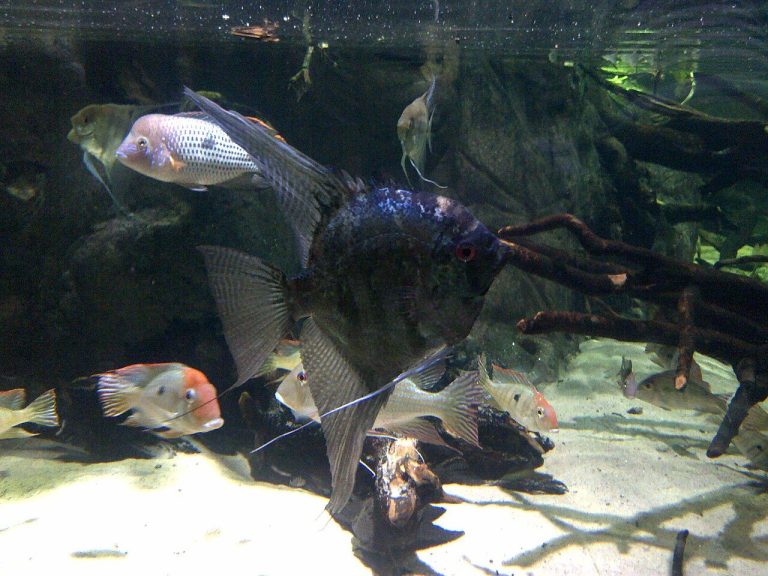
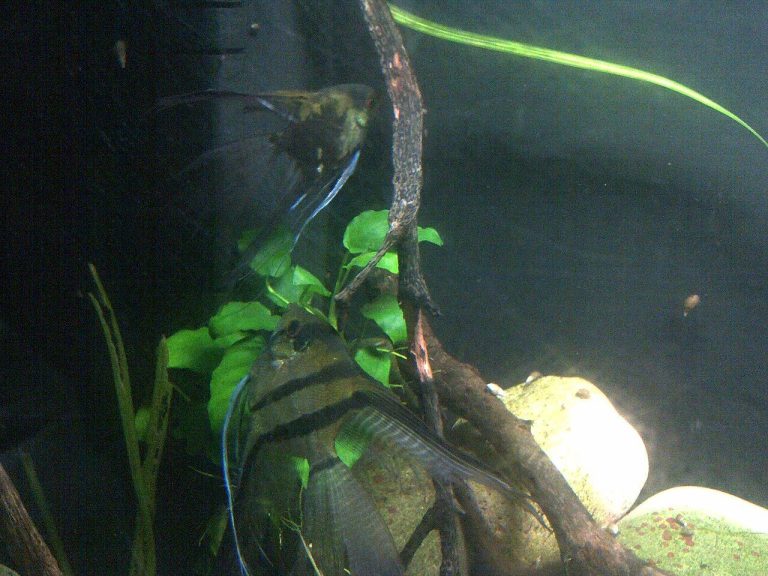
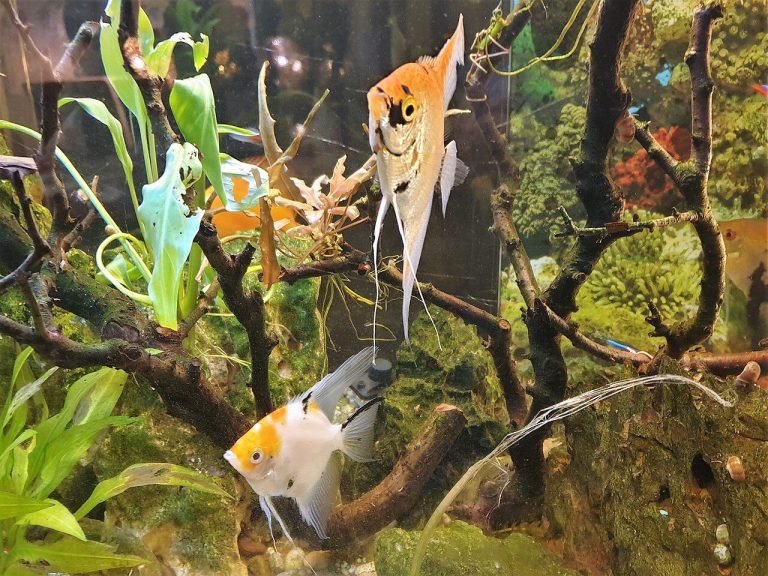
The primary reason why most experts advise against this pairing is rooted in the biology of the Pterophyllum scalare. In their natural habitat, angelfish are opportunistic predators that naturally consume smaller fish as part of their diet.
This behavior is known as piscivory. While your tank-raised angelfish might seem docile while eating flakes, their genetic hardwiring tells them that anything small and shimmering is potential food.
The Concept of Gape Limitation
In the ichthyology world, we often talk about “gape limitation.” This refers to the physical size of a predator’s mouth and its ability to swallow prey whole.
As an angelfish grows, its mouth becomes large enough to easily accommodate a full-grown neon tetra. Once the angelfish reaches its adult size, the “if it fits, it sits” rule applies to their stomach rather than a cardboard box.
The Natural Amazonian Biotope
Both of these species originate from the Amazon River basin, meaning they share similar water preferences. However, in the wild, the can angelfish live with neon tetras question is answered by the food chain.
In the vast, murky waters of the Amazon, neon tetras use their bright colors to stay together in massive schools for protection. In a confined aquarium, they lack the space to escape a hungry predator that is constantly patrolling the area.
Despite the predatory risks, these two species are remarkably similar in their environmental needs. This is why many hobbyists are tempted to keep them together in the first place.
They both stay healthy in soft, slightly acidic water that mimics the “blackwater” conditions of South American tributaries. Maintaining stability in these parameters is essential for preventing stress and disease.
| Parameter | Angelfish (P. scalare) | Neon Tetra (P. innesi) |
|---|---|---|
| Temperature | 76°F – 84°F | 70°F – 81°F |
| pH Level | 6.0 – 7.4 | 6.0 – 7.0 |
| Carbonate Hardness (KH) | 3 – 8 dKH | 2 – 6 dKH |
| General Hardness (GH) | 5 – 12 dGH | 2 – 10 dGH |
Managing Carbonate Hardness and pH
To keep both species healthy, you should aim for a “sweet spot” in water chemistry. A pH of around 6.8 and a temperature of 78°F usually keeps both species comfortable and active.
Low carbonate hardness can lead to dangerous pH swings, which are particularly stressful for neon tetras. I always recommend using driftwood or tannins to naturally buffer the water while providing a more authentic environment.
Temperature Overlap Issues
One subtle conflict is that neon tetras generally prefer slightly cooler water than angelfish. While angelfish settle in at 82°F, this high temperature can actually shorten the lifespan of your tetras by speeding up their metabolism too much.
Keeping the tank at a steady 78°F is the most common compromise. This provides enough warmth for the angelfish’s immune system while remaining within the safe range for the tetras.
Critical Factors for Successful Coexistence
If you are committed to discovering if can angelfish live with neon tetras in your specific setup, several environmental factors will determine your success. It is rarely a matter of luck; it is a matter of tank design.
The layout of your aquarium acts as the primary defense mechanism for the smaller fish. Without proper planning, the tetras will live in a constant state of fear, which suppresses their immune systems.
Tank Size and Vertical Space
Angelfish need tall tanks because of their body shape, but they also need horizontal swimming room. A cramped environment increases the likelihood of interspecific aggression.
I have found that a 55-gallon tank is the absolute minimum for attempting this community. Making sure you have appropriate tank dimensions allows the tetras to school in one area while the angelfish claims another.
The Role of Sight Lines and Hiding Spots
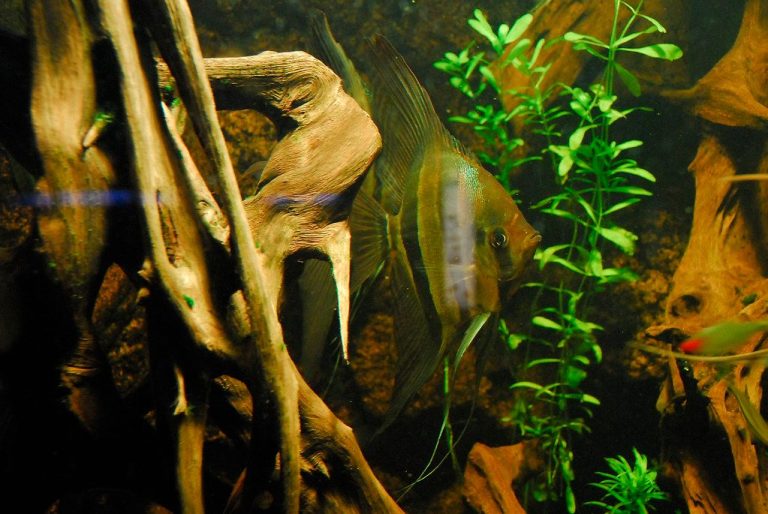
Visual barriers are your best friend in a community tank. Large pieces of driftwood and tall plants break up the line of sight for the angelfish.
By adding aquatic vegetation such as Amazon Swords or Jungle Val, you create a complex “jungle” where tetras can disappear. If the angelfish cannot see the tetras constantly, it is less likely to fixate on them as prey.
Common Mistake: Many keepers use sparse decorations in an angelfish tank to show off the fish. In a mixed tank, this is a death sentence for tetras, as they have nowhere to hide when the angelfish enters “hunting mode” at night.
Potential Risks and Health Challenges
Beyond the risk of being eaten, there are biological risks to mixing these species. Neon tetras are often more sensitive to water quality fluctuations than modern, tank-bred angelfish.
If one species becomes stressed, it can trigger an outbreak that affects the entire tank. Understanding these risks is part of providing comprehensive angelfish care.
Stress and Immune System Failure
When neon tetras are housed with a large predator, they spend a significant amount of energy staying alert. This chronic stress can lead to a weakened immune system, making them susceptible to common ailments.
One of the most frequent issues is Ichthyophthirius multifiliis, commonly known as Ich. Once Ich takes hold in a stressed school of tetras, it can quickly spread to the angelfish, creating a tank-wide crisis.
Feeding Dynamics
Angelfish are aggressive eaters and will often outcompete the smaller tetras for food. If the tetras are not getting enough nutrition, they become sluggish and easier for the angelfish to catch.
I recommend feeding the angelfish on one side of the tank with larger pellets while simultaneously offering crushed flakes or micro-pellets to the tetras on the opposite side. This helps keep everyone gets a full meal without a frantic scramble.
Practical Decision Table: Should You Mix Them?
To help you decide if can angelfish live with neon tetras in your home aquarium, I have developed this decision matrix based on common tank scenarios.
| Scenario | Risk Level | Recommendation |
|---|---|---|
| Juvenile Angelfish + Adult Neons | Low (Temporary) | Safe for now, but monitor growth closely. |
| Adult Angelfish + Juvenile Neons | Extreme | Do not attempt; tetras will likely be eaten overnight. |
| Heavily Planted 75+ Gallon Tank | Moderate | Possible with high-quality cover and careful feeding. |
| Breeding Pair of Angelfish | High | Avoid; parents will attack anything near their eggs. |
Better Alternatives to the Neon Tetra
If you love the look of a schooling fish with your angelfish but want to avoid the heartbreak of losing your stock, there are better options. Several other tetra species provide the same aesthetic appeal with much higher safety margins.
The goal is to find a fish that is too large to fit in the angelfish’s mouth but shares the same peaceful temperament.
Cardinal Tetras (Paracheirodon axelrodi)
Cardinal tetras look almost identical to neons but grow slightly larger and thicker. This small difference in body depth is often enough to prevent an adult angelfish from viewing them as a snack.
Furthermore, Cardinals prefer the warmer temperatures (80°F+) that angelfish love. This makes them a much more biologically compatible choice for a long-term display.
Rummy Nose Tetras
Rummy nose tetras are world-class schoolers. Their tight formation and larger adult size make them much more intimidating to a curious angelfish.
They are also excellent “canary” fish. Their red noses will fade if water quality drops, giving you an early warning sign to perform maintenance before the angelfish are affected.
A few common questions
Will angelfish eat neon tetras at night?
Yes, angelfish are known to hunt at dawn and dusk when tetras are less active. If the tetras are sleeping near the surface or in open water, they are easy targets for a hungry angelfish.
Can I keep them together if the angelfish is well-fed?
Feeding your angelfish well can reduce the urge to hunt, but it does not eliminate it. Hunting is an instinctual behavior that occurs even when the fish is not technically starving.
How many neon tetras should be in a school with angelfish?
If you choose to mix them, a larger school of at least 12-15 tetras is better. Larger groups provide a “confusion effect” that makes it harder for the angelfish to target a single individual.
Do angelfish get aggressive when they breed?
Absolutely. When angelfish form a pair and lay eggs, they become extremely territorial. They will chase and potentially kill any neon tetras that wander into their half of the aquarium.
Is it true that raising them together stops the predation?
Sometimes. If an angelfish grows up with neon tetras, it may view them as “tank mates” rather than food. However, this is never a 100% guarantee, and many hobbyists have seen their “peaceful” angelfish suddenly turn on the tetras after years of harmony.
In short
The answer to can angelfish live with neon tetras is a “yes, but with major caveats.” While they are striking together and share water requirements, the risk of predation is a constant shadow over the aquarium.
In my experience, the most successful community tanks are those where the keeper prioritizes the safety and stress levels of the smallest inhabitants. If you have a massive, heavily planted tank and start with young fish, you might achieve a peaceful balance.
However, for most hobbyists, choosing a slightly larger schooling fish like the Cardinal Tetra or Rummy Nose Tetra will result in a much more relaxing and successful aquarium experience. Always keep in mind that as a fish keeper, you are the guardian of their environment—choose their neighbors wisely.

- 2003First tank
- 20+Years keeping
- 40+Tanks kept
- 0Sponsored picks
Howard set up his first 10-gallon planted tank in 2003 and lost half of it within six weeks. Two decades and more than forty aquariums later, he writes the guides he wished he had then: clear numbers, the reasons behind them, and what actually goes wrong in home tanks.